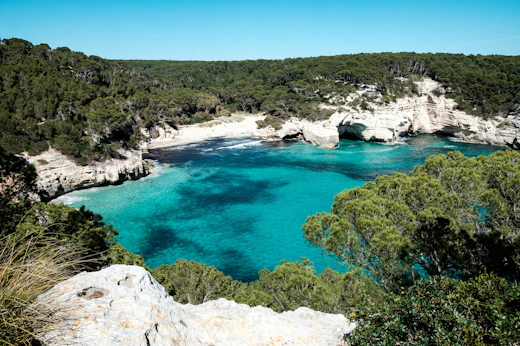
Start your Galician journey with an RV rental in Coruña, where ocean views meet historic charm. From here, drive along Spain's wild Atlantic coast toward Santiago de Compostela or the Picos de Europa. Indie Campers' modern campervans come with integrated heating for cooler nights and compact designs ideal for winding coastal routes. With unlimited kilometers and one-way options, your road trip across northern Spain is entirely your own. Indie Campers has delivered thousands of top-rated trips across Europe, ensuring your Galician escape is as smooth as it is unforgettable.


Our Road Trips Itineraries
A Coruña's geography creates a routing problem that only an RV solves efficiently. The Costa da Morte, Cabo Fisterra, the Rías Baixas, Santiago de Compostela, and the Rías Altas are all within 80 to 180 miles of the city, but the Galician coastline is so fragmented by rias that no single hotel base puts you within easy reach of more than one zone. A campervan parked at the Cabo Fisterra headland gives you the westernmost point of continental Spain at sunrise before the Camino de Santiago pilgrims arrive from the village. A night at a Rías Baixas campsite puts you at the Cíes Islands ferry dock in Vigo before the morning queue. Neither works from a city-centre hotel in A Coruña.
The circuit that makes the clearest case for an RV from A Coruña is the Galician Atlantic loop: south along the AC-552 through the Costa da Morte to Cabo Fisterra (95 miles, 1 hour 40 minutes), north through the Rías Baixas via Pontevedra and Vigo (120 miles, 1 hour 50 minutes), then inland to Santiago de Compostela and back north on the AP-9 and AG-55 (110 miles, 1 hour 15 minutes). Roughly 325 miles in a loop passing the wildest stretch of Atlantic coastline in Spain, two UNESCO-listed sites, and the most visited pilgrimage city in Europe. The hotel-based equivalent requires four different towns and four separate check-ins. The RV version requires one booking.
Unlimited mileage: Drive the full Costa da Morte circuit (300+ miles return from A Coruña), the Rías Altas route to Playa das Catedrais (380 miles), the inland route to Lugo, O Cebreiro, and the Ribeira Sacra (400+ miles), or any combination without watching a daily counter. Most Galicia competitors cap at 200-300 miles per day; Indie Campers sets no limit.
Portugal border coverage: The Portuguese Way and the A Coruña-Vigo-Porto coastal route are natural extensions of a Galicia campervan trip. A standard Indie Campers booking covers mainland Portugal without additional documentation at the Tui/Valença do Minho border crossing.
24/7 roadside assistance: Included on every booking. If something fails on the Costa da Morte at 2 a.m. between Finisterre and Cee, there is a number to call.
Flexible cancellation available: Cancel up to 31 days before pickup without penalty.
Book now, pay later: Lock in your vehicle for peak season (July and August in Galicia book out 3-5 months in advance) without paying the full amount at the time of reservation.
Winter (December to February)
Temperatures in A Coruña: 9-14°C. Precipitation: December and January are the wettest months (120-150 mm each); storms from the northwest are frequent and significant on the Costa da Morte. February begins to dry slightly.
The Costa da Morte in winter is the coast at its most elemental. The sea stacks at Cabo Fisterra and the rocks at Muxía receive Atlantic swells of 4-8 metres during northwest gale events; the Santuario da Virxe da Barca at Muxía, which stands 10 metres above the sea on bare granite, takes direct wave spray over the church roof in the largest storms. For coastal photography, winter storm conditions on the Costa da Morte produce images that no other Spanish Atlantic location can replicate; the combination of the Cabo Vilán lighthouse, the offshore reefs, and a gale-force northwest sea is specific to this 120-mile section of coast.
Best for: storm photography on the Costa da Morte, A Coruña city (Torre de Hércules, old town, lonxa market without tourist traffic), minimum rental prices.
Skip if: sea swimming and dry walking conditions are priorities. December and January are not walking months on the exposed clifftops.
Spring (March to May)
Temperatures: 12-18°C. Precipitation: declining from March; May averages 65 mm (versus 120 mm in January).
Spring on the Costa da Morte is the most photogenic season for the cliff vegetation: the maritime heathland (uces, Erica vagans and Calluna vulgaris, together with the coastal gorse, Ulex europaeus) turns the clifftops above Cabo Vilán and Punta da Barca a uniform burnt-orange and yellow from March to May before the summer growth cycle dries the tops. The Ría de Ortigueira wader reserve in April hosts the highest individual wader counts of the year as northern-breeding species pass through on the spring migration (godwits, knots, and sandpipers northbound from West Africa).
Best for: clifftop wildflower season (March to May), Ortigueira spring wader migration (April), pre-season prices, dry enough for coastal walks on the Costa da Morte, A Coruña city without summer crowds.
Skip if: sea temperature is a priority; the Atlantic at A Coruña reaches 16-17°C in May.
Summer (June to August)
Temperatures: 18-24°C. Precipitation: June to August are the driest months (30-50 mm each). The A Coruña coast receives the Galician summer anticyclone but also the characteristic coastal fog (the orballo, a light Atlantic mist that can sit on the coast for days in July-August without developing into rain).
A Coruña in summer is Galicia's primary domestic tourism season: Spanish families from Madrid, Castile, and Extremadura drive north to escape the heat (A Coruña in August averages 22°C versus 35-38°C in Madrid simultaneously). The Playa de Riazor and Playa del Orzán fill by midday; the Costa da Morte access roads to the main viewpoints (Cabo Vilán, Punta da Barca at Muxía) have tourist traffic from 11:00 to 17:00. The Festival Ortigueira (second week of July) makes Ortigueira campervans unavailable without a festival pass during the event.
Best for: sea swimming (Atlantic at A Coruña reaches 18-20°C in August), long evenings on the Costa da Morte (sunset at 21:45 in July), Festival Ortigueira (Celtic music, second week of July), Santiago de Compostela feast day of Saint James (July 25, the most important pilgrimage day of the year; the city is at maximum animation).
Skip if: quiet campervan areas are a priority; July and August are fully booked at most A Coruña area sites.
Autumn (September to October)
Temperatures: 17-21°C in September, 14-17°C in October. Precipitation: September is still relatively dry (55 mm); October marks the return of Atlantic systems (90-100 mm).
September is the optimal month for an A Coruña campervan circuit. Atlantic sea temperature peaks at 18-19°C in late August-September (the warmest the water gets on this coast), tourist traffic on the Costa da Morte drops sharply after the first week, and the September light on the granite cliffs and ría mouths is directionally longer and warmer-toned than the flat summer midday light. The Ortigueira ría begins its winter wader arrivals in September-October; the first bar-tailed godwits from Siberia appear in late August.
Best for: best sea temperature of the year (September), post-season prices, Costa da Morte without tourist traffic, September wader arrivals at Ortigueira, autumn mushroom season in the inland A Coruña province (September-November; catering to foragers, the A Coruña provincial Mercado municipal sells wild mushrooms in autumn at €8-15/kg for níscalos, Lactarius deliciosus, and €25-45/kg for boletus, Boletus edulis).
Skip if: guaranteed dry conditions are essential; October systems can be prolonged on the Costa da Morte clifftops.
The highest-demand rental months in A Coruña are July and August. Book 2-3 months ahead for peak season.
A Coruña and the Costa da Morte (approx. 300 miles, 4 days)
Full A Coruña Circuit: Costa da Morte, Rías Altas, and Santiago (approx. 500 miles, 8 days)
A Coruña to Porto: The Atlantic Coast One-Way (approx. 700 miles)
Fuel Stations
LPG / Autogas
Dump Stations and Water
Age and Licence Requirements
Minimum rental age: 21 years.
EU licence holders: a full EU driving licence is valid throughout Spain.
International visitors (non-EU, including UK citizens post-Brexit): an International Driving Permit (IDP) is recommended alongside your national licence. Obtain from your home automobile association before departure.
Credit Card and Deposit
A credit card in the primary driver's name is required at pickup. Debit and prepaid cards are not accepted. The deposit amount varies by vehicle class and selected protection plan.
AP-9 Motorway Tolls
The AP-9 (A Coruña to Santiago and A Coruña to Ferrol) is a tolled motorway. Budget approximately €5-10 for the Santiago leg in each direction depending on vehicle weight class. The N-550 (free) is the viable alternative and adds approximately 20 minutes to the journey.
Reservation Systems for Campgrounds
Advance booking essential for:
Speed Limits
Road Conditions
RV-Specific Notes
A Coruña city driving: The Ciudad Vieja has narrow 3-4 metre streets inaccessible for any campervan. Navigate to the port campervan area or the Paseo Marítimo surface car parks and enter the old town on foot (10 minutes from the port). The Torre de Hércules access road has a large surface car park at the base.
Costa da Morte meeting places: The AC-552 single-track sections have numbered passing places (ensanchamentos). Spanish traffic law requires the descending vehicle (the vehicle going downhill) to reverse to the nearest passing place when meeting an ascending vehicle on a section without room for both. On the Fisterra road, tour coaches run from approximately 10:00 to 16:00; early morning or late afternoon driving avoids the worst meeting situations.
Atlantic crosswinds: The Costa da Morte headlands (Cabo Vilán, Punta da Barca, Cabo Fisterra) regularly receive northwest winds of 40-60 mph in summer and 60-90 mph in autumn and winter. High-profile campervans should reduce speed on the exposed cliff road sections above the headlands and avoid parking broadside to the wind on the exposed car parks.
RV rental: €600-1,600 (varies by vehicle size and season; July-August highest; November to March lowest)
Fuel: €55-90 (diesel approximately €1.50-1.60/litre; a 7-day A Coruña circuit covers 350-480 miles total; Galicia's compact geography keeps fuel costs low)
Tolls: €10-30 (AP-9 A Coruña to Santiago and A Coruña to Ferrol; approximately €5-10 each leg depending on vehicle weight class; the free N-550 eliminates tolls entirely if preferred)
LPG: €8-12 (one refill)
Campgrounds and campervan areas: €70-175 (€10-25/night x 7; municipal areas €10-15/night; fully serviced campsites in peak season €20-25/night)
Food: €100-270 (self-catering from Mercadona and the A Coruña municipal market: €18-22/day; set lunch in a Costa da Morte village restaurant: €16-20/person; seafood dinner in A Coruña or Camariñas: €25-45/person)
Activities: €30-70 (Torre de Hércules €3; Santiago Cathedral nave free, roof tour €10; Catedral roof tour €10; Jardines de San Carlos free; Ría de Ortigueira walk free; Cíes Islands ferry; Carabela Pinta, Baiona €3)
Budget: approx. €600 - Compact vehicle, all municipal campervan areas at €10-12/night, Costa da Morte and Rías Altas (all free access), self-catering from Mercadona, AP-9 replaced with N-550 throughout, Torre de Hércules the only paid attraction.
Mid-range: approx. €1,200 - Mid-size vehicle, mix of municipal areas and one serviced campsite, Santiago day with Cathedral roof tour, Cíes Islands ferry, set lunch menus in Costa da Morte restaurants, Albariño wine from the Mercat de Abastos.
Premium: approx. €2,200+ - Large motorhome, full cultural circuit, percebes and centolla from the A Coruña lonxa, dinner at O Nautico (rodaballo at market price, €40-60/person), Cíes Islands, Festival Ortigueira campervan pass (July), fully serviced campsites throughout.
A Coruña → Porto (320 miles, 3 hours via AP-9 and A-3) — Drive south through Santiago de Compostela and Vigo, cross into Portugal at the Tui-Valença bridge, and follow the A-3 through Braga to Porto. The Cíes Islands ferry from Vigo and the medieval centre of Baiona (Carabela Pinta replica, €3) sit directly on this route. Add 2 nights without significant detour.
A Coruña → Bilbao (570 miles, 5 hours via A-8) — The A-8 Cantabrian motorway runs the full north coast east through Oviedo and Santander. Stop at the Prerrománico Asturiano churches of Santa María del Naranco and San Miguel de Lillo outside Oviedo (both 9th century, UNESCO-listed, free exterior access) and the Picos de Europa access at Cangas de Onís before the final leg to Bilbao.
A Coruña → Madrid (615 miles, 5 hours 45 minutes via A-6) — Southeast through the Galician interior and the Castilian plateau. Lugo (100 miles, 1 hour) has the only complete Roman wall in the world still standing at its original height; Salamanca (400 miles) and Ávila (500 miles) are natural overnight stops on a 4-day inland corridor.
A Coruña → Faro (870 miles, 7 hours 30 minutes via A-3 and A-22) — Full Atlantic south to Porto, then cross-country through the Alentejo to the Algarve. Best as a 7 to 10-day trip.
A Coruña Airport (LCG, GPS: 43.3026° N, 8.3776° W, Avenida de Ángel Senra, 15120 Culleredo, 10 miles southeast of the city centre) serves direct routes from Madrid (Iberia, Vueling, Air Nostrum, multiple daily), Barcelona (Vueling, daily), Palma de Mallorca (seasonal), London Heathrow (Iberia, BA, daily), and Frankfurt (Lufthansa, seasonal). For UK visitors, the Brittany Ferries Plymouth to Santander service (vehicle + passengers, 20 hours; ferries from Santander to A Coruña via the A-8 motorway, 110 miles, 1 hour 5 minutes) offers a drive-on-drive-off option that eliminates the LCG leg entirely and lands the vehicle directly in northern Spain.
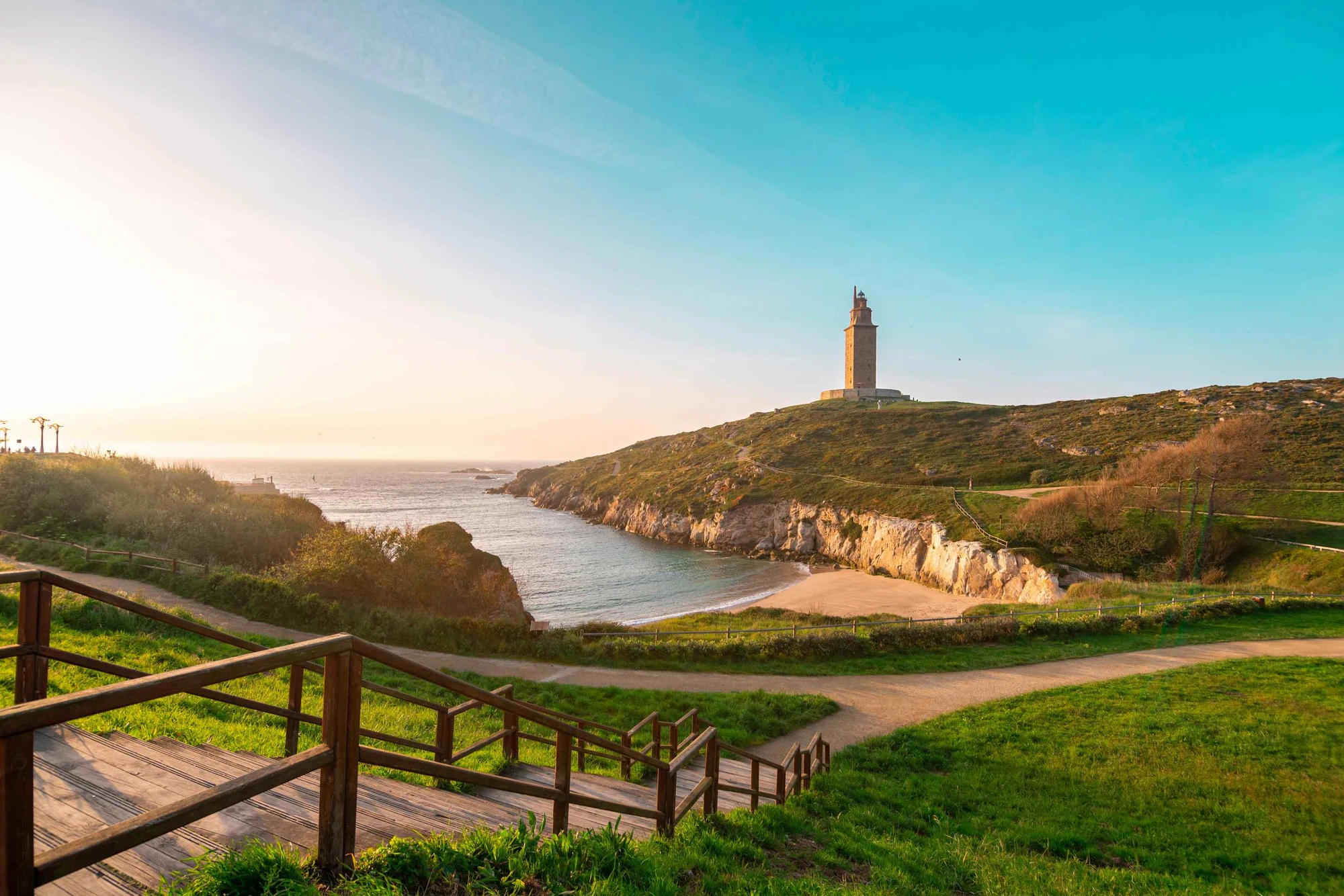
Three specific factors make A Coruña the right pickup point for the Costa da Morte and Rías Altas circuit. First, no hub in Spain has direct road access to both the Cabo Fisterra headland and the Rías Altas estuaries in a single day's driving; A Coruña is within 2 hours of both. Second, the Torre de Hércules as a city landmark is unique: the only functioning Roman lighthouse in the world, 3 miles from the city centre, accessible on foot from any campervan area in the port zone. Third, A Coruña's lonxa (fish market) and the Mercado municipal supply the most cost-effective fresh Galician seafood provisioning of any city on the Atlantic coast: percebes, centolla, and pulpo bought at market price and cooked in the campervan is the single biggest food cost saving available to a self-catering traveller in northwest Spain.
In general, a special licence is not required to rent our RVs in A Coruña. However, a valid driving license is required to operate our vehicles. For some non-EU citizens, a IDP is required, in addition to their home country's drivers licence. Other considerations such as a valid vehicle licence to the vehicle type (manual or automatic) will also be required. For more information regarding our licence requirements read this.
Yes, our RVs are pet-friendly. Just make sure to purchase the extra cleaning service during your booking. This service includes professional anti-allergic cleaning after your trip. Please note that only one pet is allowed per motorhome, and it must weigh no more than 30kg. Keep in mind, we are not responsible for any legal fees related to traveling with your pet. For marketplace bookings, check the "vehicle rules" section for the pet-friendly icon to confirm if pets are allowed in that specific vehicle.
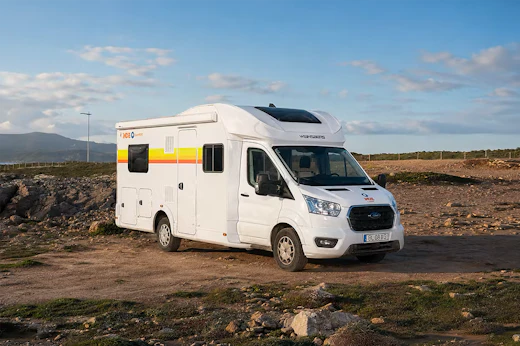
The number of people who can sleep in our RVs will depend on the size of the vehicle and the model. In general, our class C motorhome models can sleep up to 4-8 people, whereas our class B motorhomes can sleep up to 2-4. For cars with a rooftop tent, around 2 people can sleep in this vehicles. More details on our models and sleeping capacities can be found here.
If you are travelling in an RV, motorhome or caravan around A Coruña, it is important to understand official camping rules of the country you are visiting. As natural areas are generally protected by laws, using an official campsite or designated overnight parking area is highly recommended. This helps protect local communities and ensures you can all enjoy safely. Read more safety tips and protocols here.
We offer three protection plans to cover incidents and damages during your rental period. All Indie Campers motorhomes come with insurance for third-party vehicles and property damage (valid insurance will depend on the country). For marketplace vehicles, insurance options may vary based on the host.
Learn more about our protection plans here.
Yes, our search filter allows you to find an RV near your location using a 60km radius system. This means depending on the location you are searching from, you will be able to find an Indie campervan rental pick-up center near you.
Yes, a selected number of Indie Campers RV rentals in A Coruña include unlimited mileage, allowing you to explore freely and make the most of your road trip! Please note that unlimited mileage applies exclusively to Indie Campers RVs and is subject to responsible use.
RVs, Motorhomes & Campervans for Every Kind of Traveller

/night
/night
/night
/night

/night
Our Road Trips Itineraries
“Easy to book and pick up, reasonable price for what it allows you to do!”
“Our experience was great this trip; every camper should have solar, it makes the trip so much better. The staff at pick up and drop off were fantastic.”
“Joao served us very well, super friendly, and flexible with everything. Grateful for the treatment.”