Begin your journey through Italy with an RV rental in Italy and uncover a land of sun-drenched coastlines, rolling vineyards, and centuries-old towns. From the hills of Tuscany to the dramatic curves of the Amalfi Coast and the cultural richness of Sicily, every region offers a new adventure. Choose the campervan that suits your plans from Indie Campers' diverse fleet, all with unlimited kilometers, flexible one-way travel, 24/7 online assistance, and practical extras like kitchen kits, outdoor furniture, or child seats. Rated 4.8 stars by travelers across Europe, Indie Campers is the trusted choice for exploring Italy with comfort, freedom, and style.


Our Road Trips Itineraries
Italy's most compelling landscapes are frequently in places where a fixed hotel base works against you, not just against your budget. The Amalfi Coast's towns are squeezed onto near-vertical cliffsides with genuinely limited room capacity; the best-positioned hotels in Positano book out eight to twelve months ahead for July and August, which means most visitors are commuting in by car or ferry from somewhere else entirely. A campervan based on the Sorrento peninsula removes that planning problem: you're already there, with the same 20-minute access to Positano, Amalfi, and Ravello, without needing to have locked in a room a year in advance. Tuscany rewards the same logic in a different way: the actual experience of the Val d'Orcia, the cypress-and-wheat landscape at first light or at dusk, is something a day-tripper driving in from Florence or Siena never gets, because they're gone before the light changes and the tour groups clear out. Sardinia's interior and much of inland Sicily have patchy, unevenly distributed hotel coverage outside the coastal resorts; an RV simply removes that constraint and opens up slower island exploration that a resort-based trip structurally can't offer.
The flexibility argument matters just as much on a country shaped like Italy. A 1,200km peninsula plus two major islands means the itinerary that actually makes sense, Milan to Naples, or a full Sicily or Sardinia traverse, rarely starts and ends in the same place. Thirteen depots mean you can pick up in one region and drop off in another without paying for a flight or a train back to your starting point, which a hotel-and-rental-car trip forces you into by design. That one-way flexibility, more than the nightly rate, is what actually changes how much of the country you can cover in a fixed number of days.
None of this means cost is irrelevant. Campground pitches in Tuscany or on the Sorrento peninsula run €25-50 a night against €180-450 for an equivalent-location July hotel room, and self-catering from Italy's exceptional regional markets, something a campervan makes genuinely easy, is a real saving against dining out for every meal in towns where restaurant pricing has climbed sharply. But that's a byproduct of the format, not the reason to choose it. The reason is that Italy's best experiences, the early-morning Val d'Orcia light, an overnight on the Sorrento peninsula instead of a day trip in from Naples, a full island traverse instead of a single resort base, are structurally easier to reach in a vehicle you sleep in than in one you don't.
Italy's infrastructure supports this kind of travel at real scale, though with more regional variation than in Germany or France. The country's coastal and mountain campground network, concentrated in Tuscany, Liguria, the Adriatic coast, and around the major lakes (Como, Garda, Maggiore), is dense, well-rated, and used heavily by Italians themselves every summer. The autostrada network connects every major region efficiently, though historic town centres nationwide, from Siena to Lucca to the Amalfi Coast villages, restrict vehicle access with ZTL zones that an itinerary needs to plan around rather than through. Combined with a domestic camping culture dating to the postwar tourism boom, Italy is one of the most content-rich countries in the network for a campervan trip, provided the itinerary respects its narrower roads and historic centres.
Here's what sets Indie Campers apart from other Italy rental companies:
Unlimited mileage — Drive the full Milan to Naples traverse, a complete Sicily or Sardinia island circuit, or the Amalfi Coast Road without watching the odometer. Most competitors cap you at 200-250km per day.
13 pickup locations across Italy — Start in Milan and end in Naples. Pick up in Palermo and drop off in Catania. Traverse Sardinia from Cagliari to Olbia. No backtracking required across a country shaped like a 1,200km peninsula plus two major islands.
One-way rentals across 70+ locations globally — Extend your Italy trip into France, Austria, or Switzerland on a single booking.
24/7 road assistance — Included on every booking, regardless of which region, or which island, you're in when something goes wrong.
Basic Protection Plan included — Covered from day one. Optional upgrades available.
Flexible cancellation available — Cancel up to 31 days before pickup without penalty.
Book now, pay later — Secure your dates today; full payment isn't due until closer to departure.
The Amalfi Coast Road (50km, 4-6 days recommended)
Start: Sorrento → End: Salerno
Passes through: Positano, Praiano, Amalfi, Ravello
Italy's most photographed coastal drive, a narrow, hairpin-heavy road carved into the cliffside above the Tyrrhenian Sea, connecting a string of towns that have drawn travellers since the Grand Tour era. Lemon groves terrace the hillsides above the road; the towns themselves, Positano's stacked pastel houses above all, define a specific image of the Italian coast recognized worldwide. This route rewards patience: traffic is heavy in peak season, and the road's narrowness makes a compact campervan the sensible choice.
Highlights: Positano's cliffside old town and beach; Ravello's Villa Cimbrone gardens with their famous clifftop terrace; Amalfi's cathedral and historic paper mills
Best season: May, June, September, October; July and August bring severe congestion
One-way option: Yes, drive from the Naples depot area toward Sorrento, then on to Salerno; return to the Naples depot via the inland A3
The Tuscan Hill Towns Circuit (200km, 5-7 days recommended)
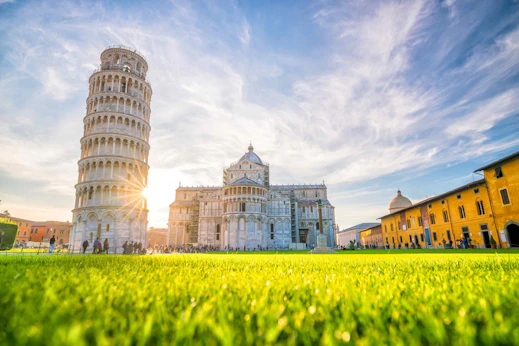
Start: Florence → End: Florence (loop) or Pisa
Passes through: Siena, San Gimignano, Montalcino, Pienza, Montepulciano
Italy's most internationally recognized rural landscape circuit, connecting Renaissance Florence and medieval Siena through the Chianti wine hills and the cypress-and-wheat panorama of the Val d'Orcia. Every stop on this route, San Gimignano's medieval tower skyline, Montalcino's Brunello wine cellars, Pienza's Renaissance urban planning, is genuinely distinct from the others despite the short distances involved.
Highlights: The Val d'Orcia's cypress avenue near San Quirico; San Gimignano's 14 surviving medieval towers; Montepulciano's underground wine cellars
Best season: April through June, September and October; the wine harvest in September and October adds cellar door activity throughout the region
One-way option: Yes, Florence depot to Pisa depot
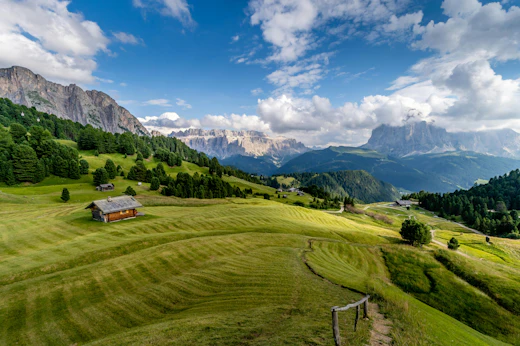
The Great Dolomites Road (110km, 3-5 days recommended)
Start: Bolzano → End: Cortina d'Ampezzo
Passes through: The Val di Fassa, Canazei, the Pordoi Pass, the Falzarego Pass
One of the great mountain drives of the Alps, crossing the Pordoi Pass (2,239 metres) and the Falzarego Pass (2,105 metres) through a UNESCO World Heritage limestone landscape of vertical rock towers and high alpine meadows. The route connects the German-influenced South Tyrol around Bolzano to the more Venetian-influenced Cortina d'Ampezzo, reflecting the region's layered Austro-Italian history.
Highlights: The Marmolada glacier viewpoint from the Pordoi Pass; the Sella Ronda circuit of peaks visible from Canazei; Cortina d'Ampezzo's dramatic mountain amphitheatre setting
Best season: June through September; the high passes typically close from late October to May
One-way option: Yes, drive from a Milan, Bergamo, or Venice depot toward Bolzano, then finish near Venice via Cortina and the Veneto lowlands
Lake Garda and Lake Como Circuit (200km, 4-6 days recommended)
Start: Milan or Bergamo → End: Milan or Bergamo (loop)
Passes through: Como, Bellagio, Sirmione, Malcesine, Riva del Garda
Italy's most accessible lake district circuit, connecting Lake Como's glamorous villa-lined shore with Lake Garda's larger, more varied coastline, ranging from Sirmione's Roman ruins and thermal springs at the southern end to Riva del Garda's mountain-backed watersports scene in the north. Both lakes are within an hour or two of the Milan and Bergamo depots, making this one of the most efficient scenic circuits in the country.
Highlights: Bellagio's lakeside promenade on Como; Sirmione's Grotte di Catullo Roman villa ruins; Riva del Garda's cliff and mountain backdrop
Best season: April through October; May, June, and September avoid both spring rain and peak August crowds
One-way option: No, standard loop from Milan or Bergamo depot
The Sicily Traverse: Palermo to Catania (approx. 350km, 7-10 days recommended)
Start: Palermo → End: Catania
Passes through: Monreale, Agrigento, Piazza Armerina, Mount Etna
A full west-to-east crossing of Sicily, combining Palermo's Norman-Arab-Byzantine architecture, the Greek temples at Agrigento (the best-preserved outside Greece itself), the Roman mosaics at Piazza Armerina's Villa del Casale, and Mount Etna's active volcanic slopes above Catania. This route uses both Sicilian depots as intended, avoiding the backtracking a single-base Sicily trip would require.
Highlights: The Valley of the Temples at Agrigento; the Villa Romana del Casale mosaics; Mount Etna's guided crater access from Rifugio Sapienza
Best season: April, May, September, October; June through August run genuinely hot inland
One-way option: Yes, Palermo depot to Catania depot
The Sardinia Coastal Traverse: Cagliari to Olbia (280km, 7-10 days recommended)
Start: Cagliari → End: Olbia
Passes through: Villasimius, the Ogliastra coast, Orosei, the Costa Smeralda
A full south-to-north traverse of Sardinia's eastern coastline, moving from Cagliari's Poetto beach and Sella del Diavolo headland through the dramatic limestone cliffs of the Ogliastra coast to the glamorous Costa Smeralda near Olbia. This route uses both Sardinian depots as designed, covering a coastline widely rated among the best in the Mediterranean for water clarity.
Highlights: The Poetto beach and Sella del Diavolo in Cagliari; the Ogliastra coast's Cala Goloritzé cove (a UNESCO-recognized natural monument); the Costa Smeralda beaches near Porto Cervo
Best season: May, June, September for beach weather without peak crowds; July and August for full beach season, particularly in the Costa Smeralda
One-way option: Yes, Cagliari depot to Olbia depot
The Grand Traverse: Milan to Naples (approx. 900km, 14+ days recommended)
Start: Milan → End: Naples
Passes through: Bologna, Florence, Tuscany, Rome, the Amalfi Coast
The comprehensive north-to-south Italian itinerary, connecting the Lombard lakes, the Emilia-Romagna food region, Tuscany's hill towns, Rome's ancient core, and the Amalfi Coast in a single continuous drive using four of Italy's 13 depots as natural handoff points along the route.
Highlights: Lake Como or Garda; the Tuscan hill towns; Rome's historic centre; the Amalfi Coast
Best season: May, June, September, October for the most comfortable temperatures across every region covered
One-way option: Yes, Milan depot to Naples depot, with intermediate one-way legs available at Bologna, Florence, Pisa, or Rome
Spring (April through May)
National picture: Italy at its most comfortable for driving and sightseeing nationwide: warm enough for coastal and hill town exploration without the summer's heat or crowds. Northern mountain passes, including the Dolomites' high routes, may remain snow-affected into May.
Regional variation:
Best for: Tuscany and lake district touring; avoiding peak Amalfi Coast traffic; budget-conscious travellers
Skip if: The Great Dolomites Road's highest sections or beach swimming anywhere in the country are the priority
Booking note: Campsites are bookable with minimal lead time outside the Easter week, which shifts annually and fills coastal and Tuscan sites regardless of date
Summer (June through August)
National picture: Peak season nationwide, and the only window in which the Dolomites' high passes, every coastal region, and both islands are simultaneously at full access. August specifically sees Italy's own domestic population take its Ferragosto (15 August) holiday en masse; coastal campgrounds nationwide run at or near capacity for the surrounding two weeks.
Regional variation:
Best for: Families with school-age children; full beach and mountain access across the entire country simultaneously
Skip if: Avoiding Italy's own domestic Ferragosto exodus (roughly 10-20 August) is a priority; late June and early September offer nearly identical conditions with dramatically less competition for campsites and roads
Booking note: Book Amalfi Coast, Cinque Terre, Tuscany, and both islands' campsites 2-4 months ahead for July and August; the two weeks around Ferragosto require the earliest booking of the year nationwide
Autumn (September through October)
National picture: Widely considered the best overall season for a comprehensive Italian road trip: summer heat and crowds recede through September, the wine harvest (vendemmia) runs across Tuscany, Piedmont, and Sicily from September into October, and the weather remains workable through much of the country into November in the south.
Regional variation:
Best for: Wine harvest tourism across Tuscany and Sicily; photographers; anyone wanting full route access with meaningfully reduced crowds
Skip if: The Dolomites' highest passes are the priority; most close by mid-to-late October
Booking note: 4-8 weeks ahead is typically sufficient outside the early September shoulder crowd
Winter (November through March)
National picture: Northern Italy's high mountain passes close, and much of the coastal and Tuscan campground network scales back significantly. Sicily and the far south remain the mildest option for a reduced-scope winter trip; Rome and the major cities function normally with reduced crowds.
Regional variation:
Best for: Rome city-based trips; a reduced-scope Sicily itinerary; ski-adjacent trips in the Dolomites
Skip if: A campground-based itinerary outside Sicily or the major cities is the plan; much of the rest of the country's coastal and Tuscan campsite network is closed
The most popular months for Italy campervan rentals are June, July, and August.
7 to 10 Days: One Region in Depth
A week is enough to properly cover one Italian region: Tuscany's hill towns, the Amalfi Coast and Naples area, the northern lakes and Dolomites, or one of the two islands from a single depot. It is not enough to connect two distant regions, Milan to Naples alone is close to 900km, without the trip becoming mostly transit; be realistic about Italy's length when planning a shorter visit.
Best approach: One iconic named route from start to finish
The Tuscan Hill Towns Circuit (200km, 7 days)
Day 1: Florence depot → provision, city walk, overnight near Florence
Day 2: Florence → Chianti wine road → Siena (75km via SR222, approximately 1 hour 30 minutes), overnight near Siena
Day 3: Siena full day, Piazza del Campo and the Duomo
Day 4: Siena → San Gimignano (40km), medieval tower skyline, overnight nearby
Day 5: San Gimignano → Montalcino (60km), Brunello wine tasting, overnight near Montalcino
Day 6: Montalcino → Pienza → Montepulciano (35km), the Val d'Orcia cypress landscape, overnight near Montepulciano
Day 7: Return toward Florence (approx. 120km, 1 hour 45 minutes) or continue to Pisa depot for a one-way finish
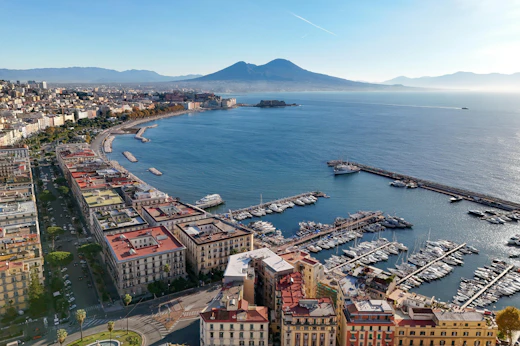
The Amalfi Coast and Naples (150km, 7 days)
Day 1: Naples depot → provision, Pompeii day trip, overnight near Naples
Day 2: Naples → Sorrento (50km via A3), overnight near Sorrento
Day 3: Sorrento → Positano (20km along the SS163), full day, overnight near Positano
Day 4: Positano → Amalfi → Ravello (15km), Villa Cimbrone gardens, overnight near Amalfi
Day 5: Amalfi → Salerno (25km), old town and cathedral
Day 6: Return along the SS163 toward Sorrento, second look at any missed viewpoint
Day 7: Return Naples depot
14 to 16 Days: Two Regions or One Full Circuit
Two weeks allows the combination of two connected regions, or a full traverse using two depots as intended: Tuscany combined with Rome and the Amalfi Coast, or a full Sicily or Sardinia island traverse with time to spare.
Florence to Naples via Rome and the Amalfi Coast (approx. 550km, 14 days)
Days 1-4: Florence depot → the Tuscan hill towns circuit, as above (shortened)
Days 5-7: Florence → Rome (280km, approximately 3 hours), the historic centre and the Castelli Romani
Days 8-10: Rome → Naples (220km, approximately 2.5 hours), Pompeii and the Naples old town
Days 11-14: Naples → the Amalfi Coast Road, as per the 7-day itinerary above, finishing at the Naples depot
21 Days or More: The Full Italian Traverse
A three-week itinerary uses Italy's depot network as it was designed: pick up in Milan, cover the northern lakes and the Great Dolomites Road (4-5 days), continue to Bologna and Florence for Emilia-Romagna and Tuscany (5-6 days), south to Rome (3-4 days), and finish on the Amalfi Coast from the Naples depot (5-6 days). Total driving distance is approximately 1,200-1,400km with regional detours. A separate two-week extension to Sicily or Sardinia, flown or ferried to from the mainland, adds an entirely different dimension for travellers with the time.
Northern Italy
Central Italy
Southern Italy
Sicily
Sardinia
Minimum age: 21 years. Confirm any young driver surcharge at the time of booking.
License requirements: EU license holders require no IDP. Non-EU holders should carry an IDP alongside their national license, obtained before departure; Italian traffic police check this documentation more consistently than in some other European countries.
Credit card and deposit: A credit card in the primary driver's name is required at pickup. Debit and prepaid cards are not accepted. The deposit amount varies by vehicle class and protection plan; confirm the exact figure during booking at indiecampers.com.
ZTL zones: Confirm the ZTL boundaries of any historic centre you plan to visit before driving toward it; these zones are camera-enforced with no warning at the point of entry for a first-time visitor unfamiliar with the signage. Use designated peripheral parking (often signed camper) in every historic town and city centre nationwide.
Toll transponder (Telepass): Confirm the toll payment arrangement with Indie Campers at pickup; a Telepass tag speeds passage through dedicated lanes and avoids barrier queues on a longer autostrada itinerary such as Milan to Naples.
National park and attraction passes: Italy has no unified national park pass; entry to most national parks is free, with specific sites (archaeological areas, museums) ticketed separately. Some cities offer combined tourist cards (the Roma Pass, the Firenze Card) bundling public transport and museum entry; check whether these offer genuine savings against your specific itinerary.
Reservation systems: Book campsites through Camping.it, individual campground websites, or Park4Night for Aree di Sosta and informal stops. Book Amalfi Coast, Tuscany, Cinque Terre, and both islands' coastal sites 2-4 months ahead for July and August, and especially around the mid-August Ferragosto holiday.
License and Age Requirements
Minimum rental age for Indie Campers in Italy: 21 years. EU license holders may drive in Italy without an International Driving Permit. Non-EU visitors should carry an IDP alongside their national license, obtained from their home country's automobile association before departure; Italy is one of the more strictly enforced countries in Europe on this requirement, and traffic police do check.
Italy drives on the right; gear shifts and controls follow continental European standards.
Speed Limits
Toll Roads
Italy's autostrada network is predominantly tolled, operated primarily by Autostrade per l'Italia, at rates broadly comparable to France, roughly €0.07-0.10 per km depending on vehicle class. Campervans are typically classified in a higher toll category than standard passenger cars. Tolls are paid at barrier stations by card or cash, or via the Telepass electronic tag for faster passage through dedicated lanes. A typical Milan-to-Naples run costs in the range of €55-75 in tolls one way. Confirm the toll payment arrangement with Indie Campers at pickup.
Road Rules Specific to Italy
ZTL (Zona a Traffico Limitato) restricted traffic zones exist in the historic centres of nearly every Italian city and town of any size, including Florence, Siena, Lucca, and the Amalfi Coast villages. These zones are camera-enforced, and driving into one without authorization results in an automatic fine mailed to the vehicle's registered owner, in this case Indie Campers, who will pass the fine and an administrative charge to the renter. Never drive into a historic centre marked with a ZTL sign; use designated peripheral parking, which is standard practice for every visitor, Italian or foreign. Priority to the right applies at unmarked intersections. Roundabout priority goes to vehicles already inside. Italian urban driving style is notably assertive; maintain a defensive approach, particularly in Naples and Palermo.
RV-Specific National Rules
Height clearance on Italian autostrade and main roads is generally generous, with no major restrictions on the core network. The Amalfi Coast Road (SS163) and many Tuscan hill town approach roads are genuinely narrow, with hairpins and limited passing space; a compact campervan is strongly recommended for these routes over a larger motorhome. Historic centres nationwide are governed by ZTL restrictions and are not campervan-navigable regardless of vehicle size; use designated peripheral parking, often signed specifically for camper (the Italian term for motorhome).
BAC Limit
0.5g/L (0.05%), zero tolerance (0.0g/L) for drivers with less than three years' driving experience or under 21. First-offense penalties for exceeding 0.5g/L: a fine of €543-2,170 and licence suspension of 3-6 months; higher readings or repeat offences carry criminal prosecution, vehicle confiscation in the most severe cases, and longer suspension.
7 Days (One Region: Tuscany, Amalfi Coast, or the Northern Lakes)
Fuel: Approximately 700-1,000km; consumption 10L/100km = 70-100 litres; at approximately €1.80/litre diesel = approximately €125-180
Tolls: €30-90 depending on region and autostrada usage
Propane: €15-30 (one refill if needed)
Campgrounds: €175-350 (€25-50/night x 7 nights)
Food: €280-560 (self-catering from Conad, Esselunga, or local markets approximately €40-50/day; mixed cooking and dining out approximately €80-90/day)
Activities: €60-200 (Pompeii approximately €18/adult; Uffizi Gallery in Florence approximately €25/adult; Valley of the Temples in Agrigento approximately €14/adult; Mount Etna guided crater excursion approximately €65/adult)
Budget (per couple, 7 days, vehicle rental not included): approximately €700-950
Mid-range: approximately €1,150-1,600
Premium: approximately €2,000-2,800
14 Days (Full Milan-to-Naples Traverse or a Full Island Circuit)
Fuel: Approximately 1,300-1,600km = 130-160 litres = approximately €235-290
Tolls: €90-180
Propane: €30-60
Campgrounds: €350-700
Food: €560-1,120
Activities: €150-450 (adds multiple museum and archaeological site entries, a Cinque Terre or Etna excursion, and Amalfi Coast boat tours)
Budget (per couple, 14 days, vehicle rental not included): approximately €1,450-2,000
Mid-range: approximately €2,300-3,200
Premium: approximately €4,000-5,600
Italy sits in the middle of the Indie Campers European network for overall trip cost, more expensive than Portugal or Germany given restaurant and coastal accommodation pricing, particularly on the Amalfi Coast and in the Cinque Terre, but comparable to or slightly below France once tolls and campground pricing are accounted for together. The single biggest cost lever is timing: a trip that avoids the two to three weeks around Ferragosto (mid-August) and the peak Amalfi Coast season captures meaningfully better campground pricing and availability at the same underlying quality of trip.
Domestic One-Way Routes
Milan → Naples (approximately 780km via A1, approximately 8 hours direct, 10-14 days recommended with stops) — The full north-to-south traverse, covering the lakes, Tuscany, Rome, and the Amalfi Coast.
Florence → Rome (approximately 280km via A1, approximately 3 hours) — The Tuscany-to-Lazio connector, a natural midpoint leg on a longer Italian circuit.
Rome → Naples (approximately 220km via A1, approximately 2.5 hours) — The final leg into the Amalfi Coast and southern Italy region.
Naples → Bari (approximately 260km via A16, approximately 2.5-3 hours) — The Tyrrhenian-to-Adriatic connector, linking the Amalfi Coast to Puglia's trulli country and the Salento peninsula.
Palermo → Catania (approximately 210km via A19, approximately 2.5-3 hours) — The standard Sicily traverse, covering Agrigento and the island's interior en route.
Cagliari → Olbia (approximately 280km via SS131 and SS125, approximately 3.5 hours) — The standard Sardinia traverse, covering the island's eastern coastline.
Milan → Venice (approximately 280km via A4, approximately 3 hours) — The northern lakes-to-lagoon connector, a natural short one-way for a focused northern Italy trip.
Bologna → Florence (approximately 100km via A1, approximately 1.5 hours) — The Emilia-Romagna-to-Tuscany connector, a short and efficient one-way linking the two regions' food and wine cultures.
International One-Way Routes
Milan → Geneva, Switzerland (approximately 320km via A9/A5, approximately 3.5 hours) — Crosses into Switzerland via the Mont Blanc tunnel or the Great St Bernard Pass; confirm Swiss vignette requirements and cross-border terms at indiecampers.com.
Milan → Nice, France (approximately 330km via A10 and A8, approximately 3.5 hours) — Connects the Italian network to the French Riviera and the wider Indie Campers French network; confirm cross-border rental terms at indiecampers.com.
One-way fees vary by route and season. Confirm availability and cross-border authorization at the time of booking.
In general, a special licence is not required to rent our RVs in Italy. However, a valid driving license is required to operate our vehicles. For some non-EU citizens, a IDP is required, in addition to their home country's drivers licence. Other considerations such as a valid vehicle licence to the vehicle type (manual or automatic) will also be required. For more information regarding our licence requirements read this.
Yes, our RVs are pet-friendly. Just make sure to purchase the extra cleaning service during your booking. This service includes professional anti-allergic cleaning after your trip. Please note that only one pet is allowed per motorhome, and it must weigh no more than 30kg. Keep in mind, we are not responsible for any legal fees related to traveling with your pet. For marketplace bookings, check the "vehicle rules" section for the pet-friendly icon to confirm if pets are allowed in that specific vehicle.
The number of people who can sleep in our RVs will depend on the size of the vehicle and the model. In general, our class C motorhome models can sleep up to 4-8 people, whereas our class B motorhomes can sleep up to 2-4. For cars with a rooftop tent, around 2 people can sleep in this vehicles. More details on our models and sleeping capacities can be found here.
If you are travelling in an RV, motorhome or caravan around Italy, it is important to understand official camping rules of the country you are visiting. As natural areas are generally protected by laws, using an official campsite or designated overnight parking area is highly recommended. This helps protect local communities and ensures you can all enjoy safely. Read more safety tips and protocols here.
We offer three protection plans to cover incidents and damages during your rental period. All Indie Campers motorhomes come with insurance for third-party vehicles and property damage (valid insurance will depend on the country). For marketplace vehicles, insurance options may vary based on the host.
Learn more about our protection plans here.
Yes, our search filter allows you to find an RV near your location using a 60km radius system. This means depending on the location you are searching from, you will be able to find an Indie campervan rental pick-up center near you.
Yes, a selected number of Indie Campers RV rentals in Italy include unlimited mileage, allowing you to explore freely and make the most of your road trip! Please note that unlimited mileage applies exclusively to Indie Campers RVs and is subject to responsible use.

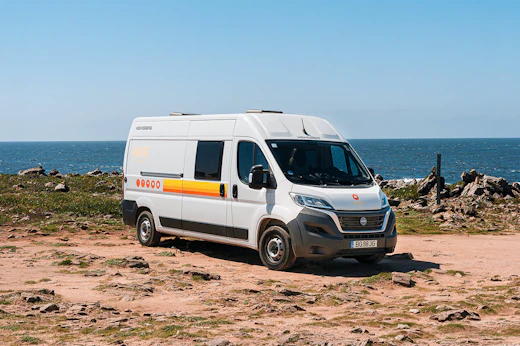
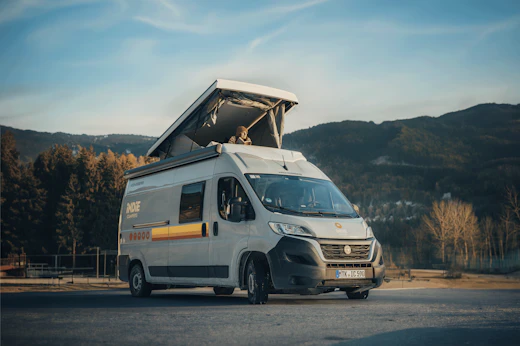
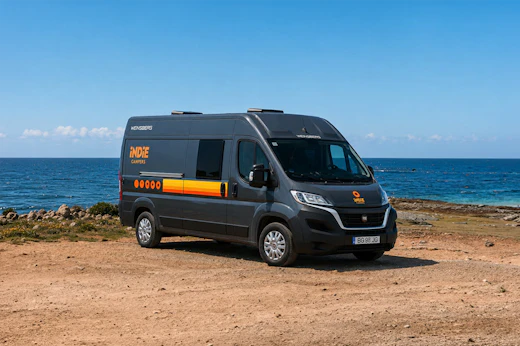
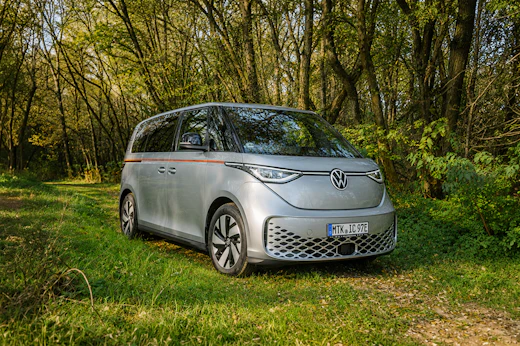
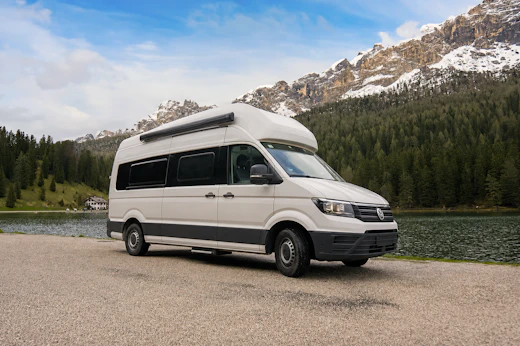
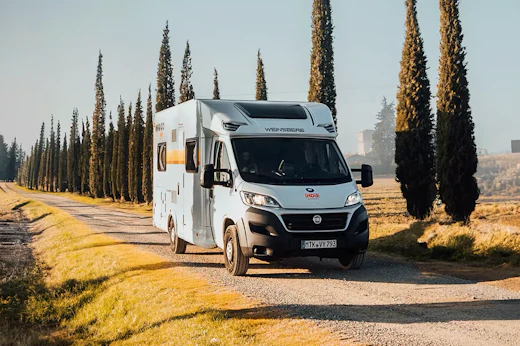
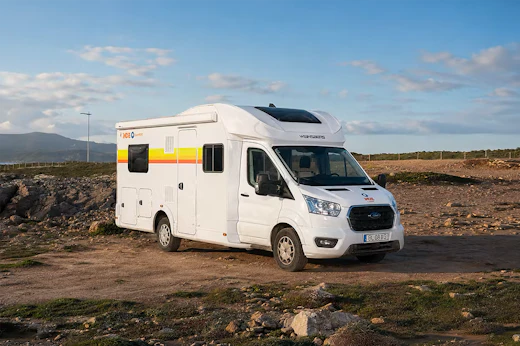
RVs, Motorhomes & Campervans for Every Kind of Traveller





Our Road Trips Itineraries
“Everything with the service was perfect. The people we talked to were so kind and efficient. 10/10 service from the workers.”
“Everything was perfect, a message appeared on the panel but the technical service gave me the steps to follow. The check-in with Enrico and the check-out with Davide was perfect.”
“Our Joa was home for 2 months and we loved it!”