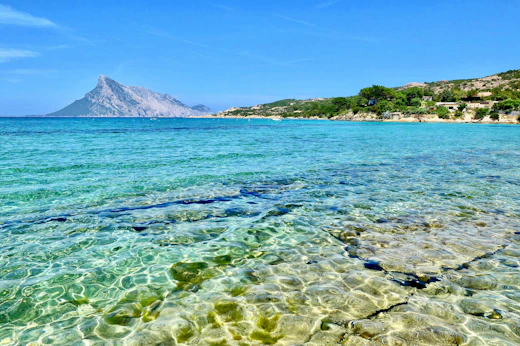
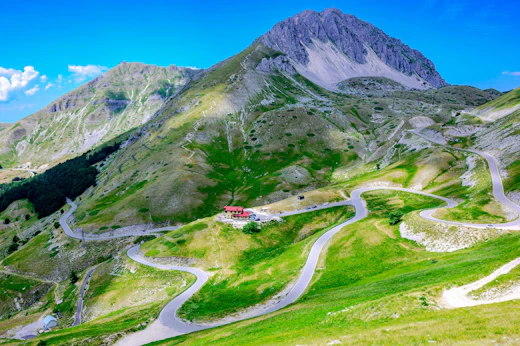
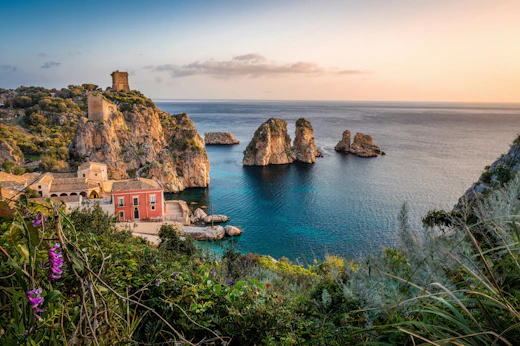
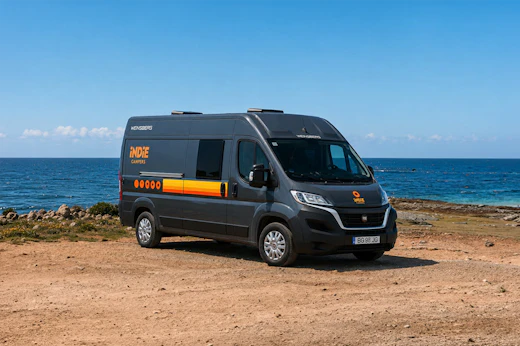
Experience the best of Sardinia with an RV rental in Cagliari, where city life meets untouched coastline. Drive from the historic Castello district to dreamy beaches like Chia and Villasimius, or head inland toward the Supramonte mountains. Indie Campers offers vans designed for island exploration, with great fuel efficiency, air conditioning, and beach-ready extras. Pick up your camper and set out on a flexible road trip with unlimited kilometers and the freedom to stop wherever you wish. With thousands of five-star journeys across Europe, Indie Campers ensures your Sardinian getaway is seamless from start to finish.


Our Road Trips Itineraries
Sardinia's most compelling beaches and most remote landscapes sit in places where hotel infrastructure ranges from sparse to non-existent, and where the island's geography actively requires the kind of flexible movement only a campervan provides. The Costa Verde's Piscinas dune system, the Ogliastra sea caves, and the Barbagia interior's highland pasture villages are not connected by a hotel network; they are connected by Sardinia's road system, and an RV is what turns those connections into a continuous itinerary rather than separate day trips from a fixed coastal resort. A hotel at Villasimius in the south and another at the Costa Smeralda in the north are two holidays; a campervan that picks up in Cagliari and drops off in Olbia is one journey that crosses the entire island and misses nothing significant in between.
The route that most specifically requires an RV is the SS125 Orientale Sarda from Cagliari to the Ogliastra coast: the road runs for 280km through coastal mountains and limestone gorges before reaching Olbia, with the Supramonte sea caves, the Gola di Gorropu canyon, the Barbagia highland villages, and the wild flamingo lagoons of the Cagliari southern coast all strung along it at intervals. There is no way to do this route justice from a fixed base. Cala Goloritzé is accessible only by boat or by a 7km descent from the plateau above Baunei; combining that excursion with a dawn walk in the Gennargentu foothills the next morning requires sleeping somewhere between those two points. An agriturismo campsite on the Golgo plateau above Baunei, at approximately 900 metres with views across the Supramonte limestone and the sea below, is one of the most specific overnight experiences available in the Italian network and exists only because a campervan can reach it.
The cost case in Sardinia is island-specific: July and August hotel pricing in the Villasimius area runs €180-380 per night for a property within reasonable walking distance of the best beaches, and the Costa Smeralda's property rates are among the highest in the Mediterranean. Campground pitches in the same coastal areas run €25-55 per night, and the Barbagia interior campgrounds run €15-25, a fraction of the coastal resort rate for a landscape that is, by most objective measures, as rewarding as the coast in a different register. For airports: Cagliari Elmas Airport (CAG, GPS 39.2514°N, 9.0542°E) sits 6km northwest of the city centre, approximately 10-15 minutes from the Cagliari depot. Direct connections run from Rome Fiumicino, Milan Malpensa, Milan Bergamo, Venice, Bologna, Naples, and Turin on domestic routes, plus international connections from London (Gatwick, Stansted, Luton), Manchester, Dublin, Paris, Frankfurt, Barcelona, and Brussels, with Ryanair and easyJet carrying the majority of the UK and northern European traffic to the island. CAG is a small, straightforward airport with a single terminal; taxi to the depot costs approximately €12-18 and takes 10-15 minutes. Car hire desks and Indie Campers pickup coordination should be confirmed at the time of booking.
Here's what sets Indie Campers apart from other Cagliari rental companies:
Unlimited mileage — Drive the SS125 Orientale Sarda from Cagliari to Olbia in full, stopping at every beach access road and canyon trailhead along 280km of Sardinian coast, without watching the odometer. Most competitors cap you at 200-250km per day; the SS125 alone uses nearly that allowance before reaching the Ogliastra's best beaches.
One-way rentals to Olbia — Pick up in Cagliari, drop off in Olbia after a full island traverse. No backtracking on an island where the south and north are separated by 280km of genuinely different landscape; the Sardinia traverse is the single most logical one-way itinerary in the Italian network.
24/7 road assistance — Included on every booking. If something goes wrong at 2am on the SP10 track above Baunei, or on the unpaved access road to the Piscinas dunes with no cell service, you have a number to call.
Basic Protection Plan included — Covered from day one. Optional upgrades available at booking.
Flexible cancellation — Cancel up to 31 days before pickup without penalty, useful given how substantially Sardinian coastal campground availability and pricing shift between peak July and September.
Book now, pay later — Secure your vehicle today; full payment is not due until closer to departure.
Spring (April through May)
Temperatures: 13-23°C (55-73°F); sea temperatures 16-18°C, cool for sustained swimming but comfortable for walking and driving.
Sardinia's interior is at its most visually distinctive in spring: the Giara di Gesturi plateau's seasonal lakes are full, concentrating the wild Giara horses near the water; the Barbagia highland pastures are in full wildflower growth across the cork oak clearings; and the flamingo colonies in the Cagliari lagoons and the Villasimius Porto Giunco lagoon are at their most active before the summer heat drives water levels down. The Piscinas access track dries out from April and becomes passable for compact campervans after winter rains have cleared. Campground availability is excellent outside Easter week, which fills the Villasimius and Costa del Sud coastal sites regardless of calendar date.
Best for: the Giara di Gesturi wild horses in April and May; Barbagia interior hiking without summer heat; Su Nuraxi and the Nora archaeological site without peak crowds; budget-conscious travellers before June pricing.
Skip if: beach swimming in the sea is the priority; water temperatures stay cool through May.
Summer (June through August)
Temperatures: 24-34°C (75-93°F) on the coast; the Barbagia interior at 900-1,000 metres stays 6-10°C cooler and is the genuinely comfortable summer escape from the coastal heat. Sea temperatures 23-27°C; peak beach season across the entire island.
The Villasimius coast, the Costa del Sud, and the Ogliastra beaches are at full access and at their warmest; the boat services to Cala Goloritzé, Cala Sisine, and Cala Biriola run at their most frequent schedule. August brings Sardinia's domestic tourism surge; the island's coastal campgrounds are at or near capacity from the first week of August through Ferragosto (15 August) and the week following. The Cortes Apertas Barbagia village festival season does not begin until October, but the summer sagre (village food festivals) in the interior, including the Aritzo chestnut festival preparations and the Tonara torrone tastings, add texture to an inland detour.
Best for: families with school-age children; full beach and sea-cave boat access; the Ogliastra and Villasimius coasts at their warmest; all campgrounds and services fully operational.
Skip if: avoiding the Ferragosto compression on coastal roads and campgrounds is the priority; the two weeks around 15 August require the earliest booking of the year for every coastal site.
Booking note: Villasimius, Chia/Costa del Sud, and the Ogliastra coast campgrounds require booking 2-3 months ahead for July and August; Ferragosto week requires the earliest booking.
Autumn (September through October)
Temperatures: 18-28°C (64-82°F) through September; cooling to 13-22°C in October. Sea temperatures remain above 22°C through September, making this the period of best value beach access on the island.
September in Sardinia carries summer warmth without August's campground pressure, and the water temperature lags the air temperature by several weeks, meaning September sea swimming is often warmer than August at the same locations. The Cortes Apertas Barbagia open-house village festival runs through October and into December, with different villages hosting on different weekends; this is the primary window for experiencing the Barbagia interior in its most culturally active period. The Piscinas dune system is at its most manageable in September as the summer tourist volume drops and the access track remains dry. Wild boar and deer are most active at dawn and dusk in September and October throughout the Sarrabus and Barbagia hills.
Best for: September beach swimming with meaningfully reduced campground rates; the Barbagia Cortes Apertas village festivals in October; Ogliastra boat services still fully running through September; Giara di Gesturi wild horse viewing as seasonal lakes begin refilling.
Skip if: guaranteed peak boat service to Cala Goloritzé from Santa Maria Navarrese in October; services reduce after mid-October.
Winter (December through February)
Temperatures: 8-15°C (46-59°F); the Barbagia at altitude receives snow above 900 metres from December; the Gennargentu summit is accessible only by snowshoe from December through March.
Cagliari city and the southern coast remain mild year-round; this is the most affordable and quietest season for a Cagliari-area circuit focusing on the archaeological sites (Nora, Su Nuraxi, Barumini), the Sulcis-Iglesiente geopark mine tours, and the flamingo lagoons, which actually hold their highest flamingo concentrations in winter when the birds are not competing for lagoon space. Most coastal campgrounds reduce services significantly or close entirely from November; the urban and inland aree di sosta remain operational. Winter visits are suited to Cagliari city sightseeing, the Marmilla plateau, and the Sulcis mining heritage, rather than beach-based itineraries.
Best for: flamingo colony viewing in the Cagliari and Villasimius lagoons at peak winter numbers; Sulcis geopark and archaeological site visits without any crowds; budget travellers at the lowest island pricing of the year.
Skip if: a campground-based coastal beach circuit is the plan; most coastal sites are closed.
The most popular months for Cagliari campervan rentals are June, July, and August.
3 to 5 Days
Three to five days covers Cagliari and the southern coastal circuits: the Costa del Sud, Villasimius, and Nora are all within an hour of the depot and form a logical short loop. A detour north to Barumini adds one well-justified half-day without significantly extending the driving distance.
Cagliari, Costa del Sud, and Villasimius Loop (approx. 250km, 4 days)
Day 1: Cagliari depot. Provision at the Mercato di San Benedetto. Walk the Molentargius lagoon flamingo circuit and the Sella del Diavolo Calamosca trailhead. Overnight near Poetto beach or on the western outskirts of Cagliari.
Day 2: Cagliari → Pula → Nora archaeological site (35km via SS195, approximately 40 minutes). Morning at Nora. Continue southwest to Chia and the Costa del Sud (30km, approximately 30 minutes). Torre di Chia and the Cala Cipolla beach. Overnight near Chia.
Day 3: Chia → Villasimius via the SS195 and SS125 (120km, approximately 1 hour 45 minutes). Porto Giunco beach and the lagoon flamingo circuit. Afternoon at Spiaggia di Simius. Overnight near Villasimius.
Day 4: Villasimius → Cagliari via the SS125 (40km, approximately 45 minutes). Return to depot.
Cagliari, Barumini, and the Giara di Gesturi (approx. 200km, 3 days)
Day 1: Cagliari depot. Provision. City walk: Castello district and Bastione di Saint Remy viewpoint. Overnight near Cagliari.
Day 2: Cagliari → Barumini via SS131 and SP44 (60km, approximately 1 hour). Su Nuraxi guided tour (book ahead). Continue to Las Plassas viewpoint (4km). Giara di Gesturi plateau (15km via SP50 and SP71); wild horse circuit. Overnight near Gesturi or Barumini.
Day 3: Return to Cagliari via SS131 (65km, approximately 50 minutes). Return depot.
7 to 10 Days
Cagliari, Sulcis, Costa Verde, and the Marmilla Plateau (approx. 700km, 8 days)
Day 1: Cagliari → Pula → Nora (35km, 40 minutes). Overnight near Pula.
Day 2: Pula → Chia → Costa del Sud (30km). Afternoon at the Cala Cipolla and lagoon circuit. Overnight near Chia.
Day 3: Chia → Iglesias via SS293 and SS130 (80km, approximately 1 hour 15 minutes). Afternoon at the Sulcis mining heritage area. Overnight near Iglesias.
Day 4: Iglesias → Grotta di San Giovanni, Domusnovas (15km) → Piscinas dune access via SP83 and Is Arenas track (compact campervans only; larger vehicles park at Is Arenas junction, approximately 90 minutes' walk each way). Overnight near Buggerru or at the Is Arenas campsite.
Day 5: Buggerru → Oristano via SP83 and SS126 (120km, approximately 2 hours). Tharros Phoenician site on the Sinis peninsula (25km west of Oristano, SP6). Overnight near Oristano or San Giovanni di Sinis.
Day 6: Oristano → Barumini via SS131 (55km, approximately 45 minutes). Su Nuraxi guided tour. Giara di Gesturi plateau and wild horses. Overnight near Barumini.
Day 7: Barumini → Cagliari via SS131 (60km, approximately 50 minutes). Afternoon free in Cagliari. Overnight near Cagliari.
Day 8: Return depot.
14 Days or More
One-Way: Cagliari to Olbia via the SS125 Orientale Sarda and the Barbagia (approx. 550km, 14 days)
Days 1-4: Cagliari, Costa del Sud, Nora, and Villasimius as per the 4-day loop above.
Days 5-6: Villasimius → Muravera → Ogliastra coast (SS125 north, 130km from Villasimius to Santa Maria Navarrese, approximately 2 hours). Boat trip to Cala Goloritzé and Cala Sisine. Overnight near Santa Maria Navarrese.
Day 7: Santa Maria Navarrese → Baunei → Golgo plateau (20km via SP10 for compact vehicles). Su Sterru sinkhole walk. Overnight near Baunei or on the Golgo plateau agriturismo.
Day 8: Baunei → Dorgali → Gola di Gorropu canyon trailhead, Urzulei (50km via SS125, 1 hour). Canyon descent hike (4 hours round trip). Overnight near Dorgali or Cala Gonone.
Day 9: Dorgali → Nuoro → Fonni (70km via SS125 and SS131 dir, approximately 1 hour 15 minutes). Afternoon at the Barbagia interior; Barbagia village atmosphere and Cortes Apertas if October. Overnight near Fonni or Aritzo.
Day 10: Fonni → Gennargentu foothills → Aritzo (40km). Punta La Marmora approach hike from Bruncu Spina (full day; summit option for fit hikers). Overnight near Aritzo.
Days 11-12: Aritzo → Nuoro → Orosei → Siniscola, continuing north along the coast toward Olbia (170km via SS131 and SS125, approximately 2 hours 30 minutes). Overnight near Siniscola or San Teodoro.
Days 13-14: San Teodoro → Olbia (45km via SS125 and SS131, approximately 40 minutes). Olbia area beaches. Drop vehicle at the Olbia depot. Fly home from Olbia Costa Smeralda Airport (OLB).
Fuel Stations
ENI/Agip, SS131 northbound exits near Cagliari: multiple well-serviced stations on or immediately adjacent to the SS131 Carlo Felice, Sardinia's main north-south artery. Fill here before heading north toward Barumini, Oristano, or the SS125 Orientale Sarda junction; the SS131 has no autostrada tolls and the roadside stations offer the best pricing on the island.
IP, SS195 Via Sulcitana, near Pula (GPS approximately 38.9833°N, 9.0167°E): the most practical fill point before the Costa del Sud and the Chia beach complex; fuel availability thins significantly on the protected coastal road itself beyond this point.
ENI/Agip, Iglesias (SS130 junction, GPS approximately 39.3167°N, 8.5333°E): the critical fill point before the Sulcis coast and the SP83 toward Buggerru and the Costa Verde; no fuel on the coastal SP83 between Iglesias and Arbus (approximately 60km).
Sardoil/API, Tertenia (SS125, GPS approximately 39.7000°N, 9.6500°E): the last convenient fill before the Ogliastra coast section between Tortolì and Baunei; fill here before continuing north along the SS125 toward Santa Maria Navarrese and Baunei (approximately 50km with no fuel).
Q8, Oristano (SS131 junction, GPS approximately 39.9167°N, 8.5833°E): the standard fill point before heading southwest onto the Sinis peninsula toward Tharros, or east toward the Barbagia interior via the SS388.
Sardinia fuel note: Sardinian fuel prices are broadly comparable to mainland Italian averages; the island has no autostrada network and therefore no autostrada service area premium applies. Average diesel approximately €1.75-1.90/litre; petrol approximately €1.80-1.95/litre.
LPG/Autogas Refill
Sardinia's GPL network is moderate in the Cagliari metropolitan area and the SS131 corridor but significantly limited along the coastal routes and in the interior.
ENI/Agip, via Roma area, Cagliari (GPS approximately 39.2233°N, 9.1153°E): GPL available in the city; the most reliable fill point before any circuit departing from the Cagliari depot.
GPL availability drops sharply south of Pula on the SS195, along the entire SP83 Sulcis coast, on the SS125 south of Muravera, and throughout the Barbagia interior beyond Nuoro. Fill completely in Cagliari before any extended circuit, and again in Oristano if heading northwest; do not rely on finding GPL between Iglesias and Arbus or between Cagliari and Baunei on the SS125. Average LPG price approximately €0.72-0.88/litre.
Dump Stations
Sardinia has a growing but unevenly distributed network of motorhome service areas; the Cagliari metropolitan area and the main SS131 corridor have the best provision, with coverage thinning along the southern and western coastal routes.
Area di Sosta Cagliari, via Lungo Saline (GPS approximately 39.2167°N, 9.1417°E, near the Molentargius lagoon): water, grey water disposal, and cassette service close to the Poetto beach and the city's eastern edge; available to non-registered visitors for a small fee. Confirm current facilities via Park4Night.
Area di Sosta Pula (GPS approximately 38.9833°N, 9.0083°E, near the Pula municipality car park): basic services including fresh water and cassette disposal; positioned for the Nora and Costa del Sud circuit. Confirm current facilities via Park4Night.
Area di Sosta Villasimius (GPS approximately 39.1167°N, 9.5167°E): full services near the Villasimius port; one of the best-equipped service stops on the southeastern coast. Confirm current facilities and overnight parking terms via Park4Night.
Area di Sosta Oristano (GPS approximately 39.9167°N, 8.5833°E): services on the SS131 corridor; the most practical service stop between Cagliari and the Sinis peninsula circuit.
Essential Apps
Park4Night: locates aree di sosta, campgrounds, and legal overnight motorhome positions throughout Sardinia; essential given the island's more dispersed and variable service area network compared to the mainland.
Mappe Sardegna (or downloaded Google Maps offline for the island): cell coverage in the Barbagia interior, on the Golgo plateau above Baunei, along the SP83 Sulcis coast, and on the Piscinas access track is patchy to non-existent; download the entire island offline before departing from Cagliari. Maps.me is a reliable free offline alternative with good Sardinian road coverage.
ARPA Sardegna: Sardinia's environmental agency publishes sea condition forecasts relevant to boat access scheduling for Cala Goloritzé and the Ogliastra sea caves; check before any planned boat excursion from Santa Maria Navarrese.
Trenitalia app: for travellers wanting to combine the Sardinian RV circuit with the narrow-gauge Trenino Verde (Green Train), a tourist rail service running through the Barbagia interior on vintage rolling stock through summer months; the train does not transport vehicles but provides a useful day excursion option from campgrounds near Mandas, Arbatax, or Palau.
Best Campgrounds Near Cagliari
Camping Village Pini e Mare — near Cagliari, Quartu Sant'Elena (GPS 39.2333°N, 9.2000°E, €22-40/night, approximately 8km east of the Cagliari city centre toward Poetto beach). Positioned between the Molentargius lagoon and the Poetto beach road, with bus connections to the Cagliari centre in approximately 20-25 minutes. Full hookups; the most practical first or last night base for any Cagliari-area circuit. Book 4-6 weeks ahead for July and August.
Camping Agricampeggio Is Cannoneris — near Pula, Costa del Sud approach (GPS 38.9667°N, 9.0083°E, €18-32/night, approximately 35km southwest of Cagliari via the SS195). Set in a cork oak and eucalyptus forest inland of the SS195, approximately 5km from the Nora archaeological site and 20km from the Chia beach complex. Basic to mid-range facilities; a practical base for combining Nora with the Costa del Sud circuit without a long daily drive. Book 3-4 weeks ahead for July and August.
Camping Torre Chia — Chia, Costa del Sud (GPS 38.9083°N, 8.8667°E, €28-55/night, approximately 65km southwest of Cagliari). Directly positioned for the Cala Cipolla beach and the Torre di Chia watchtower; the primary base for the Costa del Sud protected coastal road and the Sulcis archipelago views. Full hookups; beach access on foot. One of the most sought-after pitches on the southern Sardinian coast; book 2-3 months ahead for July and August.
Camping Capo Ferrato — Muravera, southeastern coast (GPS 39.4167°N, 9.6167°E, €25-48/night, approximately 65km east of Cagliari via the SS125). A beachfront campground on the Costa Rei south of Muravera, positioned as the natural first stop on the SS125 northbound before the Ogliastra section begins. Full hookups; direct beach access. Book 6-8 weeks ahead for July and August.
Camping Flumendosa — near Villasimius (GPS 39.1167°N, 9.5083°E, €25-50/night, approximately 38km east of Cagliari via the SS125). The standard base for the Villasimius and Capo Carbonara Marine Protected Area circuit, within cycling distance of the Porto Giunco beach and lagoon. Full hookups; pool and restaurant on site. Book 6-8 weeks ahead for July and August; Villasimius campgrounds fill among the earliest on the island.
Camping Is Arenas — near Piscinas dunes, Costa Verde (GPS 39.5000°N, 8.6167°E, €18-30/night, approximately 120km northwest of Cagliari via SS130 and SP83). The only campground adjacent to the Piscinas dune system and beach, accessed via the unpaved Is Arenas track (suitable for compact campervans in dry conditions). Basic facilities; the most remote campground in this itinerary and the one that most specifically justifies the campervan format — there is no practical alternative accommodation within reasonable distance of the Piscinas beach. Book directly with the campground, which has limited capacity.
Camping Tanca Manna — near Nuoro, Barbagia gateway (GPS 40.3167°N, 9.3167°E, €18-28/night, approximately 190km north of Cagliari via SS131). Positioned as the northern Barbagia base for Nuoro city visits and as a staging point for the Gennargentu approach from the west via Fonni. Basic to mid-range facilities; a practical overnight on a 14-day traverse between the Ogliastra coast and the Olbia depot. Book 2-3 weeks ahead for July and August.
Camping Selene — near Santa Maria Navarrese, Ogliastra coast (GPS 40.0333°N, 9.6500°E, €22-42/night, approximately 180km northeast of Cagliari via SS125). The primary base for the Cala Goloritzé boat excursions from the Santa Maria Navarrese port; within walking distance of the departure pier and positioned for the SS125 access toward Baunei and the Golgo plateau. Book 4-6 weeks ahead for July and August; the Ogliastra coast's campground capacity is limited relative to its reputation.
Age and License Requirements
Minimum rental age: 21 years. Confirm any applicable young driver surcharge at indiecampers.com. EU license holders require no additional documentation. Non-EU visitors should carry an International Driving Permit alongside their national license; obtain it from your home country's automobile association before departure.
Credit Card and Deposit
A credit card in the primary driver's name is required at pickup. Debit and prepaid cards are not accepted. The security deposit amount varies by vehicle class and protection plan; confirm the exact figure during booking at indiecampers.com.
Sardinia Ferry Note
Arriving on the island by private vehicle ferry from Civitavecchia (Rome), Genova, Naples, Livorno, or Palermo is an option for travellers who want to drive from mainland Italy rather than fly; Tirrenia, Grimaldi Lines, and Moby Lines operate multiple daily crossings to Cagliari and Porto Torres. However, a rental campervan collected at the Cagliari depot is island-only unless specific cross-island or cross-border written authorization has been obtained at the time of booking. If you plan to combine a mainland Italian driving itinerary with a Sardinian circuit, discuss the logistics with Indie Campers at booking rather than assuming a ferry transfer is automatically permitted.
National Park Passes and Pre-Booking
Italy has no unified national park pass. Su Nuraxi di Barumini requires a pre-booked timed guided tour (fondazionebarumini.it); the Nora archaeological site can normally be accessed without pre-booking but timed entry may apply in peak summer. The Gennargentu National Park and the Supramonte coastal trails are free to access at the park boundary. The Capo Carbonara Marine Protected Area's Cala Goloritzé boat services from Santa Maria Navarrese can be booked directly with operators at the port or through local tour agencies in Baunei; pre-booking 2-3 days ahead in August is advisable as daily passenger limits apply to the protected cove.
Reservation Systems
Book campsites through individual campground websites, Camping.it, or Park4Night. Torre Chia, Flumendosa, and Capo Ferrato campgrounds: book 2-3 months ahead for July and August. Is Arenas: book directly and early given the limited capacity. Interior Barbagia campgrounds: 2-3 weeks ahead is typically sufficient.
Speed Limits
National roads outside built-up areas (SS131, SS125, SS195, SS130): 90km/h standard; 110km/h on selected divided sections of the SS131 Carlo Felice between Cagliari and Sassari, posted and signed at the relevant sections.
Urban areas: 50km/h standard; 30km/h in designated residential zones.
Rural secondary roads (SP-roads): 90km/h standard, often impractical given road width and condition in the interior.
Fixed speed cameras operate on the SS131 Carlo Felice on the Cagliari approach sections; mobile cameras are active throughout the island.
Road Conditions
SS131 Carlo Felice (Cagliari to Sassari): the island's best road, a divided highway for most of its length; no campervan restrictions.
SS125 Orientale Sarda (Cagliari to Olbia via the east coast): two-lane throughout, well-maintained between Cagliari and Muravera, narrower and more demanding through the Sarrabus and Ogliastra mountain sections; manageable for all vehicle sizes but slower than mainland national roads due to continuous gradient and curve changes. Allow significantly more time than the direct distance suggests.
SS195 Via Sulcitana (Cagliari to Chia): two-lane divided highway to Pula; single-lane through the protected coastal section west of Chia.
SP83 Sulcis coast road (Iglesias toward Buggerru and Costa Verde): progressively narrower; suitable for campervans up to approximately 8m; the final sections toward the Piscinas access track are narrow and not recommended for larger motorhomes.
SP10 Baunei to Golgo plateau: narrow, partially unpaved; compact campervans only; check current surface conditions at the Baunei municipality before ascending.
Check road conditions at the ANAS app (national roads) or at sardegnaturismo.it for current closures on the SP-road network before any interior or coastal secondary road itinerary.
Driving Culture
Sardinia's road culture is notably more relaxed than mainland Italy. The SS131 sees efficient, disciplined driving; the secondary SP-road network in the interior carries local agricultural traffic (tractors, livestock trailers, occasional sheep herds crossing) that requires patience and appropriate speed reduction. Horn use is infrequent outside Cagliari city. Roundabout priority to traffic inside the circle applies; in smaller interior villages, priority intersections may be unsigned and require vigilance. The SS125 through the Barbagia foothills is used by local drivers at speeds that a tourist-loaded campervan will not match on the curves; use passing places to allow overtaking.
RV-Specific Notes
Height: no general height restrictions on the SS131, SS125, or SS195; covered car parks in Cagliari's historic centre carry standard 2m-2.4m barriers. Use open surface parking throughout.
Length: the SP83 Sulcis coast and the SP10 Golgo plateau track impose practical limits; compact vehicles (up to approximately 6m) manage both routes comfortably. The SS125 Ogliastra section is passable for any vehicle up to approximately 9m but requires careful positioning on the narrowest hairpin sections between Baunei and Arbatax.
Wildlife: wild boar crossings are extremely common at dawn and dusk throughout the SS125 Sarrabus hills and the Barbagia interior; reduce speed on any unlit rural road after sunset. Semi-wild Sardinian horses (cavallini della Giara and feral populations in the Barbagia interior) occasionally cross road surfaces; the Fonni-Aritzo road is particularly noted for horse crossings at dawn. Sardinian deer (cervo sardo) are present in the Gennargentu area and the Sulcis-Iglesiente scrub.
ZTL: applies to Cagliari's Castello district and parts of the marina waterfront; camera-enforced. Do not attempt to drive into the Castello district with any vehicle; use surface parking below the walls and ascend on foot via the lift at Via Cima 43 or the steps from Piazza Yenne.
Legal Notes
Blood alcohol limit: 0.5g/L general; 0.0g/L for drivers with less than three years' experience. Penalties from fine to licence suspension; criminal prosecution at higher readings.
Mobile phone use without hands-free: prohibited; enforcement active.
Seatbelts mandatory for all occupants.
Warning triangle and high-visibility vest compulsory in the vehicle at all times.
Practical Logistics
Tolls
Sardinia has no autostrada network and therefore no motorway tolls of any kind. The SS131 Carlo Felice (Cagliari to Sassari, the island's main north-south artery), the SS125 Orientale Sarda (Cagliari to Olbia via the eastern coast), the SS195 Via Sulcitana, and all other Sardinian national roads are free. The only toll-bearing road infrastructure on the island is the Cagliari urban ring road, where certain sections carry a modest toll; confirm specific routing with Park4Night or the Italian road authority app before entering the Cagliari metropolitan area. A complete 14-day traverse from Cagliari to Olbia accumulates zero motorway toll charges, making Sardinia the most toll-efficient island itinerary in the Indie Campers Italian network.
Traffic
Cagliari's urban road network runs at or near capacity during morning and evening commuting hours (7:30-9:00am and 4:30-6:30pm on weekdays) on the SS131 ring approach roads and the Via Roma waterfront. Departure toward the SS125 east (Villasimius direction) or the SS195 southwest (Pula and Costa del Sud direction) before 8am clears the city with minimal friction. The SS125 through the Sarrabus hills becomes progressively busier on weekend mornings in July and August as Cagliari residents head to Villasimius; a midweek departure eliminates this almost entirely. The Piscinas access track (SP83 junction and Is Arenas unpaved section) has a natural visitor cap imposed by its single-track width; arriving before noon avoids the worst of the peak-season queueing on the track itself.
Getting from the Airport
Cagliari Elmas Airport (CAG): GPS 39.2514°N, 9.0542°E. 6km northwest of the Cagliari city centre, approximately 10-15 minutes from the depot by road. Taxi to the depot approximately €12-18 and takes 10-15 minutes. The ARST airport bus service connects the terminal to the Piazza Matteotti bus station in central Cagliari (approximately €4, 15-20 minutes) for travellers using public transport to reach the depot. CAG's proximity and simplicity make it the most straightforward pickup airport in the Italian island network; same-day vehicle collection is logistically uncomplicated even after a long-haul connection via Rome or Milan.
Essential Apps
Park4Night: see above under dump stations; the primary tool for all Sardinian overnight and service stop navigation.
Mappe Sardegna or Google Maps offline: download before departure from the depot.
ARPA Sardegna: sea condition forecasts for Ogliastra boat access planning.
Trenitalia app: for Trenino Verde day excursion information from interior campground bases.
Cagliari, Costa del Sud, Villasimius, and Barumini Circuit (approx. 500km)
RV rental: €600-1,600 (compact Adventure to large Comfort category; July and August add 20-30%; Sardinian peak season pricing is comparable to other Italian coastal depots in the same months; book 3-4 months ahead for summer)
Fuel: €88-110 (500km at 10L/100km = 50 litres; at approximately €1.75-1.90/litre; Sardinia has no autostrada premium and the standard roadside rates apply throughout)
LPG/Autogas: €15-35 (fill in Cagliari before departure; GPL coverage on the coastal circuits drops quickly beyond Pula and Iglesias)
Tolls: €0 (Sardinia has no autostrada toll network; the SS131, SS125, SS195, and all other Sardinian national roads are free; this is the lowest-toll itinerary in the Indie Campers Italian network)
Campgrounds: €126-385 (€18-55/night × 7; interior and agriturismo campgrounds at the low end €15-25; Torre Chia and Villasimius coastal sites in August at the high end)
Food: €280-595 (self-catering from Conad or Eurospin approximately €35-45/day for two; mixed cooking and one or two restaurant meals including Su Cumbidu and Mercato di San Benedetto street food approximately €60-80/day)
Activities: €35-130 (Su Nuraxi di Barumini guided tour approximately €15/adult; Nora archaeological site approximately €10/adult; National Archaeological Museum Cagliari approximately €5/adult; Cala Goloritzé boat excursion approximately €35-40/adult if included; flamingo lagoon and Giara plateau free; all national and regional park entry free)
Parking: €5-20 (designated outer parking at Villasimius beach areas €3-5/day; Cagliari city centre surface areas below the Castello €2-4/day; all campsite overnight parking included above)
Budget (per couple, 7 days, vehicle rental not included): approximately €700-900 — compact vehicle, all self-catering from Eurospin and Conad, aree di sosta and lower-cost interior campgrounds, free activities (Molentargius flamingo walk, Sella del Diavolo trail, Giara di Gesturi plateau, all national park areas, beach access)
Mid-range: approximately €1,150-1,600 — mid-size vehicle, mix of cooking and restaurant meals including Su Cumbidu dinner and Mercato di San Benedetto street food, mid-price coastal campgrounds with hookups, Su Nuraxi and Nora entries included
Premium: approximately €2,200-3,200 — large motorhome, frequent dining including Dal Corsaro, full-hookup coastal sites throughout the circuit, all archaeological and museum entries, Cala Goloritzé boat excursion from Santa Maria Navarrese included
Cagliari sits at the lower-to-mid range of the Indie Campers Italian network for overall trip cost, and is the most toll-efficient Italian depot given the complete absence of autostrada infrastructure on the island. The single largest cost variable after the rental itself is campground positioning: the Villasimius and Costa del Sud coastal sites at peak August pricing run significantly higher than the Barbagia interior agriturismo campgrounds, and a circuit weighted toward the Marmilla plateau and the Sulcis interior in the same period captures comparable landscape quality at meaningfully lower overnight rates. The island's absence of autostrada tolls and the relatively short driving distances involved in a southern Sardinian circuit (500-700km for a full week) keep fuel costs unusually low relative to mainland Italian itineraries of equivalent content.
Cagliari → Olbia (approximately 280km via SS131, approximately 3 hours 30 minutes direct; 400-550km over 10-14 days via the SS125 coastal route) — the defining Sardinian one-way traverse, crossing the entire island from south to north and covering the Costa Verde, the Barbagia, the Ogliastra coast, the Gennargentu foothills, and the Costa Smeralda approach. Fly into Cagliari Elmas (CAG) and home from Olbia Costa Smeralda (OLB); the most logical two-airport itinerary in the island network. Allow 10-14 days via the SS125 coastal route for a proper traverse.
Cagliari → Olbia via the SS131 interior (approximately 280km, 3 hours 30 minutes direct; allow 5-7 days with stops in the Marmilla, Oristano, and Nuoro) — the faster, inland alternative traverse for travellers with less time; covers Su Nuraxi, the Giara di Gesturi, Tharros, and Nuoro's Barbagia gateway without the longer Ogliastra coastal detour.
One-way fees vary by route and season. Confirm availability and pricing at the time of booking. Note that Sardinia is an island and cross-island one-way travel between the two depots is the primary use case for the one-way rental structure here; extensions to the Italian mainland require a vehicle ferry crossing and specific written cross-island and mainland authorization obtained at the time of booking, not at pickup.
Cagliari is the only depot in the Indie Campers network that places you within 2km of an active flamingo colony before you have left the city. The Molentargius lagoon's birds are not a managed wildlife attraction with a viewing platform and a ticket booth; they are a self-sustaining colony of up to 10,000 greater flamingos living in a former salt-flat system between the city's eastern residential districts and the Poetto beach road, visible from the public cycle path around the lagoon perimeter at any time of day. Starting a Sardinian circuit from Cagliari and driving east on the SS125 toward Villasimius means passing within 200 metres of the flamingo concentration within 10 minutes of leaving the depot. No other island starting point in Italy offers this.
The singular experience that only a Cagliari start delivers is the Sella del Diavolo summit at dawn. The quartzite headland at the western end of the Poetto beach rises 143 metres above the water and is reachable by a 4km return trail from the Calamosca trailhead in approximately 2 hours; starting from the trailhead at 6am in June places you on the summit at the moment the sun clears the eastern horizon above the Sarrabus hills and illuminates both the Gulf of Cagliari below and the Sulcis archipelago to the southwest simultaneously. The Punta La Marmora summit in the Gennargentu will show you all of Sardinia on a clear day, but it takes a 5-hour hike and a 2-hour drive from Cagliari to get there; the Sella del Diavolo delivers a panorama of the island's southern geography from a trailhead accessible on the morning of vehicle pickup.
The morning of departure: order a mirto granita at the Antico Caffe Cagliari on Piazza Costituzione (open from 7:30am) at the foot of the Bastione di Saint Remy steps, then spend 20 minutes on the Bastione terrace above it looking north across the city to the lagoon and south across the Gulf. Then collect the vehicle and take the SS125 east toward Villasimius, where the first significant beach is 45 minutes from the depot and the water is already waiting.
In general, a special licence is not required to rent our RVs in Cagliari. However, a valid driving license is required to operate our vehicles. For some non-EU citizens, a IDP is required, in addition to their home country's drivers licence. Other considerations such as a valid vehicle licence to the vehicle type (manual or automatic) will also be required. For more information regarding our licence requirements read this.
Yes, our RVs are pet-friendly. Just make sure to purchase the extra cleaning service during your booking. This service includes professional anti-allergic cleaning after your trip. Please note that only one pet is allowed per motorhome, and it must weigh no more than 30kg. Keep in mind, we are not responsible for any legal fees related to traveling with your pet. For marketplace bookings, check the "vehicle rules" section for the pet-friendly icon to confirm if pets are allowed in that specific vehicle.
The number of people who can sleep in our RVs will depend on the size of the vehicle and the model. In general, our class C motorhome models can sleep up to 4-8 people, whereas our class B motorhomes can sleep up to 2-4. For cars with a rooftop tent, around 2 people can sleep in this vehicles. More details on our models and sleeping capacities can be found here.
If you are travelling in an RV, motorhome or caravan around Cagliari, it is important to understand official camping rules of the country you are visiting. As natural areas are generally protected by laws, using an official campsite or designated overnight parking area is highly recommended. This helps protect local communities and ensures you can all enjoy safely. Read more safety tips and protocols here.
We offer three protection plans to cover incidents and damages during your rental period. All Indie Campers motorhomes come with insurance for third-party vehicles and property damage (valid insurance will depend on the country). For marketplace vehicles, insurance options may vary based on the host.
Learn more about our protection plans here.
Yes, our search filter allows you to find an RV near your location using a 60km radius system. This means depending on the location you are searching from, you will be able to find an Indie campervan rental pick-up center near you.
Yes, a selected number of Indie Campers RV rentals in Cagliari include unlimited mileage, allowing you to explore freely and make the most of your road trip! Please note that unlimited mileage applies exclusively to Indie Campers RVs and is subject to responsible use.

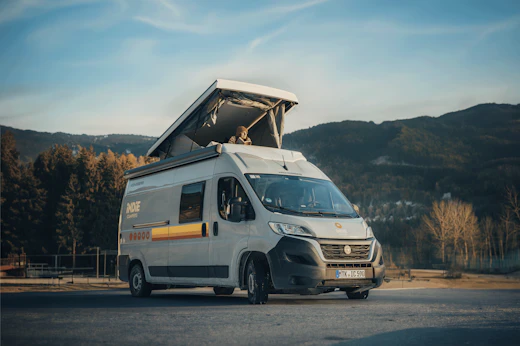
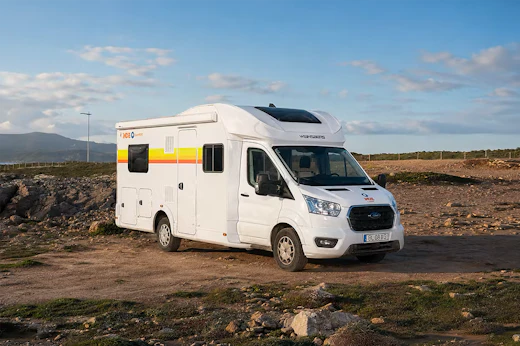
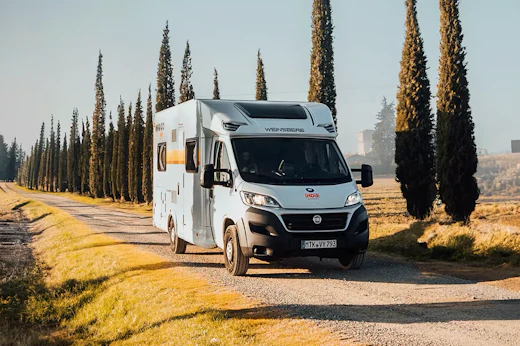
RVs, Motorhomes & Campervans for Every Kind of Traveller
/night

/night
/night
/night
/night
/night

/night

/night
Our Road Trips Itineraries
“Perfect experience to discover a country or a region that is closest to nature.”
“Great service & team. Ivan welcomed us and everything was great. Happy to come back!”
“Fantastic, everything perfect. Really nothing to add.”