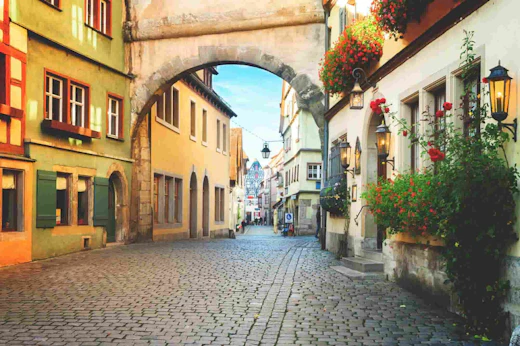
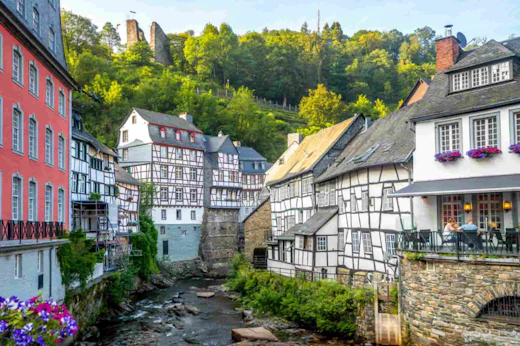
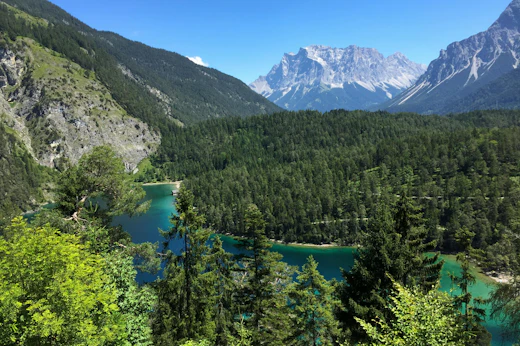
Embark on an RV rental in Germany journey with Indie Campers and discover a country filled with scenic routes, cultural gems, and natural beauty. Cruise along the Romantic Road past castles and vineyards, wander through the deep woods of the Black Forest, or unwind by alpine lakes and quiet countryside towns. Choose from our modern fleet of campervans suited to every kind of traveler, all with unlimited kilometers, one-way rental options, 24/7 online assistance, and thoughtful extras like heating kits, outdoor furniture, or kitchen gear. Trusted by thousands of travelers and backed by a 4.8-star rating, Indie Campers helps you experience Germany with comfort, freedom, and your own rhythm.



Our Road Trips Itineraries
Germany's national park network distributes its major natural assets across the country in a way that makes point-to-point road travel the only logical format. Berchtesgaden National Park, the only Alpine national park in Germany, sits in the southeast corner of Bavaria adjacent to the Austrian border. Saxon Switzerland National Park, with its sandstone monoliths and the Bastei Bridge viewpoint, is in Saxony near Dresden. The Wadden Sea National Parks (three separate parks covering the North Sea coast of Lower Saxony, Hamburg, and Schleswig-Holstein) are UNESCO World Heritage and only accessible by vehicle from the northern coastal road corridor. No train covers these connections efficiently; the campervan connects them on a single itinerary that would require five flight segments and five separate hotel bases to replicate conventionally.
The cost comparison holds in Germany, though it operates differently than in countries with expensive national park entry. German national park entry is free: there is no equivalent of the America the Beautiful Pass because there is no general entry fee to most parks. The cost saving comes from campground pricing versus German hotel rates. A hotel in Munich's city center during Oktoberfest (late September to early October) costs €180-€400/night for a standard room. The Campingplatz München Thalkirchen (GPS: 48.0977° N, 11.5395° E), 5 miles south of the city center by bicycle and 15 minutes by subway, runs €25-€38/night for a campervan pitch with electric hookup and full shower facilities. That price differential, applied across 14 nights of a Germany circuit, generates a campground total of €350-€530 against a hotel equivalent of €2,500-€5,600 for the same locations and dates.
Germany's campground infrastructure requires qualification: it is excellent but it is not identical to the US or Australian models. The ADAC CampingApp catalogues approximately 3,000 rated campgrounds, and the Stellplatz network adds 6,000+ motorhome-only overnight areas that range from free municipal parking to €5-€15/night service areas with water, waste disposal, and electricity. The road network is maintained to autobahn standard on federal highways (Bundesstraßen) and to a solid standard on most Landesstraßen (state roads). Remote areas in the Bavarian Alps, the Harz Mountains, and the Eifel region have narrower roads with passing places, manageable in a standard campervan but requiring attention at width.
Here is what sets Indie Campers apart from other Germany rental companies:
Unlimited mileage — Drive from Hamburg to Berchtesgaden (800 miles), along the full Romantic Road (460 miles), and back without a per-day distance calculation. Most competitors in Germany cap at 200-250 km/day; exceeding that on a typical German circuit generates significant overage charges.
6 pickup locations across Germany — Start in Frankfurt and end in Munich. Pick up in Düsseldorf-Essen and drop off in Stuttgart. Or begin in Berlin and finish in Hamburg. No backtracking to your start city and no return flight from the wrong end of the country.
One-way rentals across 70+ locations globally — Cross from Germany into France, Austria, the Netherlands, or Denmark, on a single booking. The central European network connects German centers to Amsterdam, Paris, Vienna, and Malmö.
24/7 road assistance — Included on every booking, regardless of which federal state you are in when something goes wrong.
Basic Protection Plan included — Covered from day one. Upgrade options available at booking.
Flexible cancellation — Cancel up to 31 days before pickup without penalty.
Book now, pay later — Full payment is not required until 30 days before pickup.
Romantische Straße (Romantic Road) (460 miles, 4-7 days recommended)
Pick up: Frankfurt or Stuttgart → Drop off: Munich(one-way)
Passes through: Würzburg, Rothenburg ob der Tauber, Dinkelsbühl, Nördlingen, Augsburg, Landsberg am Lech, Füssen
The Romantic Road is Germany's oldest tourist route, established as a tourism concept in 1950 along a medieval trading and pilgrimage corridor that predates modern tourism by several centuries. The route moves south from the Main River wine country of Franconia through the Swabian highlands and into the Bavarian foothills, ending at Füssen 5 miles from Neuschwanstein. Every town on the route has a functioning medieval center, a town wall or castle, and a market square that dates to before the Thirty Years War. The concentration of intact pre-industrial German urban architecture in a 460-km corridor has no parallel in the country.
From Frankfurt depot, drive 110 miles northeast to Würzburg (1.5 hours via A3) to begin the route at its northern terminus. From Stuttgart depot, drive 170 miles north to Würzburg (1.5 hours via A81 and A6) for the full route, or join the midpoint at Augsburg (90 miles, 1 hour) for a condensed southern half. All options end at the Munich depot (130 miles from Füssen via B17 or A96, 1.5 hours).
Highlights: Rothenburg ob der Tauber's complete town walls and Night Watchman tour; the Nördlingen town center built inside a visible meteor impact crater (the Ries Crater, 24 miles diameter, 15 million years old); the Wieskirche (GPS: 47.6841° N, 10.8914° E, UNESCO, the most extravagant rococo interior in Germany, a pilgrimage church in an Alpine meadow)
Best season: April through October; autumn foliage through the Franconian vineyards in October is the visual high point
One-way note: Frankfurt depot or Stuttgart depot to Munich depot. One-way fees apply; confirm at booking.
Day-by-Day: Romantische Straße, 7 Days (Frankfurt Depot)
Day 1: Frankfurt → A3 to Würzburg (110 miles, 1.5 hours) → Residenz Würzburg → Würzburg old town → overnight Campingplatz Würzburg (GPS: 49.7855° N, 9.9316° E, ADAC-rated, electric hookup)
Day 2: Würzburg → Romantic Road south via B19 → Bad Mergentheim (70 miles) → Weikersheim → Creglingen (Herrgottskirche, the finest limewood altarpiece in Germany by Tilman Riemenschneider) → overnight near Rothenburg
Day 3: Rothenburg ob der Tauber full day (GPS: 49.3754° N, 10.1796° E) → Night Watchman tour (8 p.m.) → overnight Campingplatz Tauberromantik (GPS: 49.3670° N, 10.1670° E)
Day 4: Rothenburg → Dinkelsbühl (50 miles) → Nördlingen (35 miles further, the meteor crater town) → Donauwörth → overnight near Augsburg
Day 5: Augsburg → Roman ruins (Augsburg is a Roman foundation, Augusta Vindelicum, 15 BC) → Landsberg am Lech → overnight near Wieskirche
Day 6: Wieskirche (open from 8 a.m., arrive before tour buses at 10 a.m.) → Füssen (30 miles) → Neuschwanstein timed entry (book at hohenschwangau.de) → Hohenschwangau → overnight Campingplatz am Forggensee (GPS: 47.5803° N, 10.7019° E, lake views toward the Alps)
Day 7: Füssen → Munich (130 miles via B17 or A96, 1.5 hours)
Alternatively from Stuttgart center: Pick up in Stuttgart → A8 west to Ulm (90 miles) → B28 north to Dinkelsbühl, joining the Romantic Road midpoint → cover the southern half of the route to Füssen → drop off Munich depot. Adds the Ulm Minster (GPS: 48.3984° N, 9.9910° E, the tallest church in the world at 161.5 meters) as a bonus stop on day one.
Deutsche Alpenstraße (German Alpine Road) (450 miles, 5-7 days recommended)
Pick up: Stuttgart → Drop off: Munich (one-way)
Passes through: Lake Constance (Lindau), Füssen, Garmisch-Partenkirchen, Bad Tölz, Chiemsee, Berchtesgaden
Germany's highest and most scenically concentrated road trip route follows the northern Alpine foot from Lake Constance to the Berchtesgaden Massif, reaching elevations of up to 1,738 meters and providing constant Bavarian Alps panoramas throughout its western two-thirds. The route is a series of lake crossings connected by mountain pass and valley road: Bodensee, Hopfensee, Bannwaldsee, Alpsee near Füssen, Walchensee, Tegernsee, and Chiemsee. The Chiemsee (GPS: 47.8700° N, 12.4200° E), Germany's largest Alpine lake at 80 km², has the Herrenchiemsee palace (GPS: 47.8544° N, 12.3730° E, Ludwig II's Versailles replica on an island, accessible by boat from Prien am Chiemsee).
From Stuttgart pick up center, drive 190 miles southwest to Lindau on Lake Constance (approximately 2 hours via A8 and A96) to join the Alpine Road at its western terminus. The route ends at Berchtesgaden (GPS: 47.6318° N, 13.0003° E) on the Austrian border; from there, drive 180 miles north to Munich depot via A8 (approximately 2 hours).
Highlights: Neuschwanstein and Hohenschwangau at the route's western start near Füssen; the Zugspitze cable car from Garmisch-Partenkirchen; Berchtesgaden National Park and the Königssee at the eastern end; the Walchensee (Germany's deepest lake at 192 meters) at mid-route
Best season: June through September for full road access; some high sections close in winter; May for wildflower meadows at lower elevations
One-way note: Stuttgart to Munich. One-way fees apply; confirm at booking.
Rhine and Moselle Loop (700 miles, 5-8 days recommended)
Pick up: Frankfurt or Düsseldorf-Essen → Drop off: Frankfurt or Düsseldorf-Essen (loop or one-way between the two depots)
Passes through: Rüdesheim, Bacharach, Koblenz, Trier, Bernkastel-Kues, Cochem, Cologne
The Rhine Gorge south from Rüdesheim (GPS: 49.9791° N, 7.9247° E) to Koblenz on the B9 west bank road covers the UNESCO World Heritage section of the Rhine in a 65-km stretch with a castle in view at nearly every river bend. At Koblenz (the Deutsches Eck, GPS: 50.3638° N, 7.5953° E, where the Moselle meets the Rhine), the route turns west up the Moselle to Trier, following 200 miles of vineyard corridor to Germany's oldest city. The loop returns via the Eifel plateau and Cologne's cathedral (GPS: 50.9413° N, 6.9583° E, UNESCO, the largest Gothic cathedral in northern Europe, 157 meters high) before returning to the start depot.
From Frankfurt, the Rhine Gorge begins 90 miles west at Rüdesheim (1 hour via A66). From Düsseldorf-Essen, the gorge begins 90 miles south at Koblenz (1 hour via A3 and A61), making the northern depot the natural starting point for driving the Rhine Gorge from north to south.
Highlights: The Loreley viewpoint from the east bank; Burg Eltz (the most intact medieval castle in the country, completely off the Rhine main road, accessible only on foot from the parking area); the Moselle slate vineyard landscape at Bremm; Trier's Porta Nigra and Roman amphitheater
Best season: May through October; wine harvest September-October for both Rhine Riesling and Moselle Riesling at peak cellar door activity; the Moselle valley in October produces the most consistent autumn color of any German wine region
One-way note: Düsseldorf-Essen to Frankfurt (230 miles, 2 hours via A3). One-way fees apply; confirm at booking.
Baltic Coastal Route (550 miles, 5-7 days recommended)
Pick up: Hamburg → Drop off: Hamburg (loop) or Berlin (one-way)
Passes through: Lübeck, Wismar, Rostock, Stralsund, Rügen island, Usedom
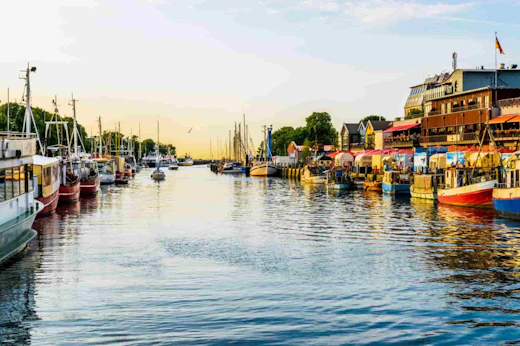
The Baltic coastal route follows the Hanseatic trading corridor from Hamburg east through the medieval UNESCO port cities (Lübeck, Wismar, Stralsund) to the chalk cliff coast of Rügen. The route combines urban history with coastal camping in a format that requires no mountain passes or narrow roads: the Baltic highway corridor (A20 and A24) is straightforward, and the most interesting sections are the diversions onto the coastal B roads through fishing villages and into the national park interior. From Rügen or Usedom, continue southwest to the Berlin depot (approximately 280-350 miles, 3-3.5 hours via A20 and A10) for a one-way drop-off, or return west to Hamburg (approximately 280 miles, 3 hours via A20 and A24) to complete the loop.
Highlights: Lübeck's Holstentor (GPS: 53.8671° N, 10.6825° E) and marzipan culture (Niederegger marzipan factory, operating since 1806); the chalk cliffs of Jasmund National Park at Rügen; the Prora beach complex on Rügen (GPS: 54.4200° N, 13.6200° E, a 4.5-km-long Nazi-era beach resort, one of the strangest architectural artifacts on the German coast); the Stralsund aquarium and the causeway approach to Rügen
Best season: June through August for swimming; May and September for coastal camping without crowds; winter storms on the Baltic are dramatic but cold
One-way note: Hamburg to Berlin (290 miles direct, 2.5 hours via A24). One-way fees apply; confirm at booking.
Eastern Germany Cultural Circuit (900 miles, 7-10 days recommended)
Pick up: Berlin → Drop off: Berlin (loop) or Frankfurt (one-way via A4 from Erfurt)
Passes through: Wittenberg, Dresden, Saxon Switzerland, Leipzig, Weimar, Erfurt, Eisenach
Germany's cultural and historical circuit through the former GDR covers the landscape where the Reformation, the Enlightenment, German literary culture, and 20th-century division left their most visible marks. Wittenberg (GPS: 51.8659° N, 12.6477° E, 100 miles south of Berlin) is where Luther posted his 95 Theses in 1517; Weimar is where Goethe, Schiller, Bach, and Liszt all spent their most productive years within 2 miles of each other; Erfurt hosted Luther's monastic years; Dresden holds the Zwinger and the rebuilt Frauenkirche. Saxon Switzerland adds the only genuinely wild landscape to the circuit. Travelers choosing the one-way option continue from Eisenach west on the A4 to Frankfurt depot (360 miles, 3.5 hours).
Highlights: The Bastei Bridge in Saxon Switzerland; the Bach Museum and the Nikolaikirche in Leipzig (GPS: 51.3397° N, 12.3741° E, where the 1989 Monday Demonstrations that ended GDR rule began); Checkpoint Charlie and the Berlin Wall Memorial on the circuit's bookend
Best season: May through October; Christmas markets in Dresden (Striezelmarkt) and Erfurt are among Germany's best in November and December
One-way note: Berlin to Frankfurt (550 miles direct, 5 hours via A9 and A4; or 360 miles from Eisenach via A4, 3.5 hours). One-way fees apply; confirm at booking.
The Fairy Tale Route (Märchenstraße) (600 miles, 5-7 days recommended)
Pick up: Frankfurt→ Drop off: Hamburg (one-way)
Passes through: Hanau, Steinau, Marburg, Kassel, Hameln (Hamelin), Bremen
The Märchenstraße follows the geography of Brothers Grimm folklore from Hanau north through Hessen and Lower Saxony to Bremen. From Frankfurt depot, drive 25 miles east to Hanau (the brothers' birthplace) to begin the route. The route ends in Bremen, 120 miles south of Hamburg depot (1.5 hours via A1); continue north to complete the one-way drop-off in Hamburg. The route connects Sleeping Beauty's castle (the Sababurg, GPS: 51.3837° N, 9.5023° E, the oldest wildlife park in the world in the surrounding forest), Hamelin (Hameln, GPS: 52.1044° N, 9.3556° E, the original Pied Piper town, with the story re-enacted in the market square every Sunday at noon from May through September), and Bremen's Town Musicians statue (GPS: 53.0758° N, 8.8072° E). It is the least internationally known of Germany's named routes and for that reason often the most authentic experience: the towns are smaller, the campgrounds less pressured, and the folklore geography genuinely embedded in the landscape.
Highlights: The Wilhelmshöhe Water Features and Hercules Monument in Kassel (GPS: 51.3127° N, 9.4001° E, UNESCO, Europe's largest hill park, the water cascade from the Hercules statue to the palace runs every Wednesday and Sunday afternoon May through October); Marburg's entirely car-free medieval old town on a hill; the Brothers Grimm Museum in Kassel
Best season: May through September; the Fairy Tale Route Christmas market season in November and December adds additional context to the folklore theme
One-way note: Frankfurt to Hamburg (490 miles direct via A5 and A7, 4.5 hours; or 5-7 days via the full route through Bremen). One-way fees apply; confirm at booking.
Summer (June through August)
National picture: Germany's peak travel season. All campgrounds, attractions, and ferry services are fully operational. Temperatures across most of Germany reach 22-28°C (72-82°F); the Bavarian lakes reach swimming temperature of 20-23°C by July. Daylight extends to 9:30-10 p.m. at northern latitudes.
Regional variation:
Best for: Families with children (school holidays synchronize nationally); cycling and swimming; festival season (Oktoberfest begins the third Saturday of September, but the broader Bavarian summer festival calendar runs from June)
Skip if: Avoiding crowds at major sites (Neuschwanstein, Rügen chalk cliffs, Rothenburg ob der Tauber) is a priority
Booking note: Book Bavarian Alpine campgrounds, Rhine Gorge sites, and Baltic coast campgrounds 3-6 months in advance for July and August dates
Autumn (September through October)
National picture: The best overall season for a German campervan trip. Oktoberfest runs from the third Saturday of September through the first Sunday of October in Munich: 6.5 million visitors over 16-18 days, 7+ million liters of beer served. Outside Munich, autumn is the country's quietest and most visually rewarding window.
Regional variation:
Best for: Wine harvest tourism; Oktoberfest without the cost of Munich hotels (commute from the campsite by S-Bahn); hiking in clear Alpine conditions; photography
Skip if: High Alpine road access required (some passes close in October)
Booking note: Munich area campgrounds for Oktoberfest dates require 6-12 months advance booking; other Germany regions are bookable 4-8 weeks out in autumn
Spring (April through May)
National picture: Campgrounds begin reopening from April 1; most major sites are operational by late April. Temperatures: 10-18°C (50-64°F) across central Germany; higher in the Rhine Valley microclimate. Wildflowers and orchard blossom across Franconia and the Moselle valley.
Regional variation:
Best for: Budget travel (spring rates are 20-30% below summer peak at most German campgrounds); avoiding queues at major sites; the Moselle valley in May blossom
Skip if: Swimming or guaranteed warm evenings are required
Booking note: Spring bookings can typically be made 4-8 weeks in advance without difficulty except around Easter, which moves Germany's school holiday calendar significantly and fills campgrounds for 2 weeks
Winter (November through March)
National picture: Most campgrounds outside the Alps and the south close from November through March. Stellplätze (motorhome parking areas) remain available year-round in many towns and cities. The Christmas market season (late November through December 23) is Germany's most internationally attended seasonal event.
Regional variation:
Best for: Christmas market touring in December; skiing in Bavaria; the unique experience of a German winter city by campervan with Stellplatz access
Skip if: Camping comfort without hookup is required; overnight temperatures drop to -5 to -15°C in the Bavarian interior and Harz in January and February
The most popular months for Germany campervan rentals are July, August, and September.
One week is enough to cover a single German region properly: Bavaria from Munich, the Rhine and Moselle from Frankfurt or Düsseldorf-Essen, the Black Forest from Stuttgart, the Baltic coast from Hamburg, or the eastern circuit from Berlin. It is not enough to cover Germany north to south (Munich to Hamburg is 800 km; a proper journey requires 12+ days minimum). Be honest about the geography: Germany is a larger country than France in practical driving terms because the interesting parts are distributed across the width of the country rather than concentrated on a single coast or corridor.
Best approach: One iconic named route from start to finish, or one region with day-trip depth
Romantische Straße: Würzburg to Füssen (460 miles, 7 days)
Day 1: Frankfurt → A3 to Würzburg (110 miles, 1.5 hours) → Residenz Würzburg → Würzburg old town → overnight Campingplatz Würzburg (GPS: 49.7855° N, 9.9316° E, ADAC-rated, electric hookup)
Day 2: Würzburg → Romantic Road south via B19 → Bad Mergentheim (70 miles) → Weikersheim → Creglingen (Herrgottskirche, the finest limewood altarpiece in Germany by Tilman Riemenschneider) → overnight near Rothenburg
Day 3: Rothenburg ob der Tauber full day (GPS: 49.3754° N, 10.1796° E) → Night Watchman tour (8 p.m.) → overnight Campingplatz Tauberromantik (GPS: 49.3670° N, 10.1670° E)
Day 4: Rothenburg → Dinkelsbühl (50 miles) → Nördlingen (35 miles further, the meteor crater town) → Donauwörth → overnight near Augsburg
Day 5: Augsburg → Roman ruins (Augsburg is a Roman foundation, Augusta Vindelicum, 15 BC) → Landsberg am Lech → overnight near Wieskirche
Day 6: Wieskirche (open from 8 a.m., arrive before tour buses at 10 a.m.) → Füssen (30 miles) → Neuschwanstein timed entry (book at hohenschwangau.de) → Hohenschwangau → overnight Campingplatz am Forggensee (GPS: 47.5803° N, 10.7019° E, lake views toward the Alps)
Day 7: Füssen → return Munich (130 miles via B17 or A96, 1.5 hours)
Alternatively from Stuttgart: Pick up in Stuttgart → A8 west to Ulm (90 miles) → B28 north to Dinkelsbühl, joining the Romantic Road midpoint → cover the southern half of the route to Füssen → drop off Munich. Adds the Ulm Minster (GPS: 48.3984° N, 9.9910° E, the tallest church in the world at 161.5 meters) as a bonus stop on day one.
Two weeks allows the combination of two connected regions: Bavaria and the Alps plus the Rhine and Moselle; or the Baltic Coast plus Eastern Germany from Berlin; or the full Black Forest and Lake Constance circuit from Stuttgart combined with Bavaria from Munich. It is also enough for the full Romantic Road followed by the German Alpine Road, which together form the most comprehensive southern Germany circuit.
Southern Germany: Romantic Road and Alpine Road Combined (1,000 miles, 14 days)
Extend the 7-day Romantische Straße above from Füssen, then pivot onto the Deutsche Alpenstraße heading east. The combined route from Frankfurt (or Stuttgart) to Berchtesgaden via both named roads covers the complete Bavarian geography: Franconian medieval architecture in the north, Alpine lakes and peaks in the south, the Chiemsee and Berchtesgaden massif in the east. Return to Munich depot from Berchtesgaden is 180 miles (2 hours via A8).
Day 8: Füssen → Deutsche Alpenstraße east → Garmisch-Partenkirchen (80 miles)
Day 9: Garmisch full day: Zugspitze cable car → Partnachklamm gorge (GPS: 47.4725° N, 11.0847° E, 2.5 miles round trip, €6/adult)
Day 10: Garmisch → Walchensee (GPS: 47.5986° N, 11.3308° E, 30 miles, the deepest lake in Germany at 192 meters) → Tegernsee → overnight campground, Tegernsee area
Day 11-12: Tegernsee → Chiemsee → Herrenchiemsee boat and palace tour → overnight Chiemsee campground
Day 13-14: Chiemsee → Berchtesgaden (80 miles) → Königssee boat tour → Berchtesgaden National Park → overnight near Berchtesgaden → return Munich
21 Days or More: The Full Germany North to South
A three-week itinerary uses Germany's full six pick up centers network as it was designed. The logical sequence: pick up in Hamburg, drive the Baltic coast to Rügen (3-4 days), south through the Harz (2 days), west to the Rhine Gorge and Moselle via Düsseldorf-Essen or Frankfurt (3-4 days), south to the Black Forest from Stuttgart (2-3 days), and east into Bavaria ending in Munich (3-4 days). The total driving distance is approximately 2,000-2,400 miles with regional detours. No backtracking; each depot is a natural handoff point on the corridor.
Bavaria
Baden-Württemberg
Rhineland and West
Central Germany
Northern Germany
Eastern Germany
Minimum age: 21 years.
License requirements: EU license holders require no IDP. Non-EU holders (United States, Canada, Australia, New Zealand, United Kingdom, and others) should carry an IDP issued under the 1968 Vienna Convention alongside their national license. IDPs are issued by national motoring organizations and are valid for 12 months.
Credit card and deposit: A valid credit card in the primary driver's name is required at pickup. A security deposit (the amount varies by vehicle class and protection plan tier) is held on the credit card and released upon return of the vehicle in undamaged condition.
Umweltplakette: Confirm at pickup whether the vehicle already has a green environmental sticker fitted to the windshield. If not, obtain one before entering any German city center with a Low Emission Zone. Applicable at all six depot cities.
Campground booking: Germany does not have a centralized national campground booking system. Individual campgrounds book through their own websites, ADAC CampingApp (adac.de), Pitchup.com, and Camping.info. For peak summer (July-August) and Oktoberfest (late September), book Bavaria campgrounds 3-6 months ahead. For spring and autumn, 4-8 weeks is typically sufficient except around Easter.
ACSI CampingCard: The European CampingCard system (campingcard.com) provides discounted rates (typically €12-€19/night for two people including electric hookup) at 3,500 campgrounds across Europe, including approximately 800 in Germany, during low and shoulder season. The two-person card costs approximately €20 and pays for itself in 3-4 nights at participating campgrounds. Worth buying for spring or autumn Germany trips.
Fuel price monitoring: Germany's ADAC fuel price monitor (adac.de/tanken) tracks current fuel prices at stations across the country in real time. Aldi and Lidl petrol stations regularly offer the lowest prices in their regions. The TankenApp provides real-time German fuel price comparison for stations along your route.
Winter tire confirmation: If renting between October and April, confirm at pickup that the vehicle has winter or all-season tires (marked with the snowflake Alpine symbol). This is both a legal requirement under winter conditions and an insurance coverage condition.
License and Age Requirements
Minimum rental age for Indie Campers in Germany: 21 years. European Union licenses are valid in Germany without an International Driving Permit (IDP). Travelers holding licenses issued outside the EU (including the United States, Canada, Australia, New Zealand, and the United Kingdom) should carry an IDP alongside their national license. Germany accepts IDPs issued under the 1968 Vienna Convention. Non-EU visitors driving with a non-German license without an IDP risk a €25-€75 fine if stopped. IDPs are available from national motoring organizations (AAA in the US, AA and RAC in the UK) for approximately $20-£20 and take 1-10 business days to issue.
Germany drives on the right; gear shifts and controls are identical to North American and continental European standards.
Speed Limits
The autobahn carries Germany's most internationally discussed driving rule: there is no general national speed limit on approximately 70% of the autobahn network. The Richtgeschwindigkeit (advisory speed) of 130 mph applies across the full network but is not legally enforceable. Approximately 30% of autobahn sections carry enforced speed limits of 80, 100, or 120 mph, indicated by posted signs and automated camera enforcement. Campervans classified as passenger vehicles (under 3,500 kg gross vehicle weight) are subject to the same limits as passenger cars on all roads.
Speed camera enforcement on German country roads and in built-up areas is significantly more common than on the autobahn itself. The B9 Rhine Gorge road (50 mph through riverside villages) and the Romantic Road through Rothenburg (50 mph with cameras on the approach roads) are frequently enforced.
Toll Roads
Germany charges no motorway tolls for private passenger vehicles and campervans under 3,500 kg gross vehicle weight. This is one of Germany's most significant practical advantages over France (approximately €80-€100 in motorway tolls on a comparable cross-country route), Switzerland (CHF 40 annual vignette), and Austria (€29.90 annual vignette). The HGV toll (Lkw-Maut) applies to trucks and vehicles over 7.5 tonnes; it is not applicable to standard campervans.
Toll-free national driving eliminates one layer of route planning complexity entirely: you drive on the autobahn as needed without financial calculation. The only toll roads relevant to a Germany campervan trip are certain bridges and tunnels. [DATA NEEDED: confirm any relevant bridge or tunnel tolls on standard campervan routes.]
Umweltzonen (Low Emission Zones)
Germany operates Low Emission Zones (Umweltzonen) in most major cities including Berlin, Munich, Frankfurt, Hamburg, Cologne, Stuttgart, Düsseldorf, Freiburg, and 70+ additional towns. Vehicles must display a valid Umweltplakette (environmental sticker) to enter these zones. Modern campervans (Euro 4 and above, generally post-2006 for diesel) receive a green sticker. The sticker is not always pre-fitted by the rental company; confirm at pickup. Stickers are available from TÜV stations and ADAC offices for approximately €5-€10. The fine for entering an Umweltzone without the correct sticker is €80.
Road Rules Specific to Germany
Rechts vor Links (Priority to the Right): At unmarked intersections with no traffic signs, vehicles approaching from the right have priority. This rule operates in residential areas and on minor roads wherever no priority signs are posted. It is the rule that catches the most international drivers in Germany and the most common cause of urban junction accidents. If in doubt at any unsigned intersection, yield.
Roundabouts: Vehicles inside the roundabout have priority over those entering. Follow the in-roundabout priority rule unless specifically signed otherwise.
Winter tires: Germany requires situational winter tire compliance: when snow, ice, or frost conditions exist, your vehicle must be fitted with winter or all-season tires (marked M+S, and from 2024 onward specifically the Alpine snowflake symbol for new tires). This is weather-condition-based, not calendar-based. Driving in winter conditions on summer tires carries a €60-€120 fine and can void your insurance in the event of an accident. Confirm seasonal tire fitment with the depot if traveling between October and April.
BAC limit: 0.05% for drivers over 21 with a full license. Drivers under 21 or with less than 2 years of license experience: 0.00% (absolute zero). First offense over 0.05%: €500 fine, 1 point in the Federal Central Traffic Register, 1-month driving ban. Over 0.16% BAC or repeat offenses: criminal proceedings, license suspension, mandatory medical-psychological assessment. Cannabis was legalized for adult recreational use in Germany in April 2024; driving under the influence of cannabis carries the same DUI-equivalent penalties as alcohol impairment.
Handheld phone use: €100 fine and 1 point. Germany's distracted driving enforcement is active, including unmarked police vehicles.
7 Days (One Region: Bavaria or Rhine/Moselle)
Budget (per couple, 7 days, vehicle rental not included): approximately €950-€1,400
Mid-range (per couple, 7 days, vehicle rental not included): approximately €1,600-€2,200
Premium (per couple, 7 days, vehicle rental not included): approximately €2,800-€3,800 (adds Zugspitze cable car, fine dining in Munich and the Starnberger See area, Herrenchiemsee palace boat and tour, premium ADAC campground sites, Oktoberfest beer tent reservation)
14 Days (Full Southern or Northern Germany Circuit)
Budget (per couple, 14 days, vehicle rental not included): approximately €1,850-€2,700
Mid-range (per couple, 14 days, vehicle rental not included): approximately €3,200-€4,500
Premium (per couple, 14 days, vehicle rental not included): approximately €5,500-€8,000
Germany sits at the affordable end of the Western European campervan cost spectrum. No motorway tolls, campground prices 20-30% below Swiss and Austrian equivalents, and a supermarket network (Aldi, Lidl, Rewe, Edeka) covering all campground regions keep costs predictable. The primary cost variable is fuel; confirm current prices via the ADAC fuel price monitor (adac.de/tanken) before departure.
Domestic One-Way Routes
Hamburg → Munich (800 miles, approximately 7-8 hours direct via A7; or 7-12 days with stops) — The north-to-south German cross-country one-way. Covers the Harz, Franconia, Romantic Road, and Bavaria in a single southbound corridor. The most comprehensive domestic one-way in the German network.
Frankfurt → Munich (400 miles, 3.5 hours via A9 or B17 scenic) — The Romantic Road one-way: pick up in Frankfurt, drive the full Romantische Straße from Würzburg to Füssen, drop off in Munich. The single most popular Germany one-way in the Indie Campers network.
Stuttgart → Munich (220 miles, 2 hours via A8) — The Alpine approach: complete the Black Forest and Lake Constance circuit from Stuttgart and continue east into Bavaria for a Munich drop-off. Natural combination for a Baden-Württemberg into Bavaria itinerary.
Düsseldorf-Essen → Frankfurt (230 miles, 2 hours via A3) — The Rhine Gorge one-way: pick up in Düsseldorf-Essen, drive south through Cologne, the UNESCO Rhine Gorge, and the Moselle Valley to Trier, drop off in Frankfurt.
Düsseldorf-Essen → Stuttgart (350 miles, 3 hours via A3 and A5) — Rhine Gorge south into the Black Forest: pick up in Düsseldorf-Essen, drive the Rhine Gorge corridor south through Frankfurt and continue into Baden-Württemberg, drop off in Stuttgart.
Frankfurt → Stuttgart (210 miles, 2 hours via A5 or A6) — The Black Forest opener: complete the Rhine and Moselle circuit from Frankfurt and continue into the Black Forest and Lake Constance region with a Stuttgart drop-off.
Hamburg → Berlin (290 miles, 2.5 hours via A24) — Baltic Coast east to west: begin in Hamburg, drive the Baltic coast to Rügen and Usedom, end in Berlin.
Berlin → Hamburg (290 miles, 2.5 hours via A24) — Eastern Germany circuit ending at Hamburg for a North Sea or Scandinavian ferry connection.
Munich → Berlin (590 miles, 5.5 hours direct via A9; or 7-10 days scenic via Dresden and Saxon Switzerland) — South-to-east one-way: Bavaria and Alps from Munich, the A9 north through Franconia and Saxony into Berlin with detours to Dresden and Saxon Switzerland.
International One-Way Routes
Munich → Vienna (Wien), Austria (450 miles, 4 hours via A8 and A1) — Complete the German Alpine Road to Berchtesgaden, cross into Salzburg, and continue to Vienna. Austrian Autobahn vignette required (€29.90 for 10 days). Confirm cross-border authorization at booking.
Frankfurt → Amsterdam, Netherlands (400 miles, 3.5 hours via A3 and A67) — Drive the Rhine Gorge and Cologne, cross into the Netherlands at the German border, and continue to Amsterdam. Confirm cross-border vehicle authorization.
Düsseldorf-Essen → Brussels or Amsterdam (230-280 miles, 2-2.5 hours) — The Benelux connector from the western depot: the A3 and A40 westbound from Düsseldorf reach the Belgian and Dutch borders within 90 minutes. Confirm cross-border authorization.
One-way fees vary by route and season. Confirm availability and cross-border vehicle authorization at the time of booking.
In general, a special licence is not required to rent our RVs in Germany. However, a valid driving license is required to operate our vehicles. For some non-EU citizens, a IDP is required, in addition to their home country's drivers licence. Other considerations such as a valid vehicle licence to the vehicle type (manual or automatic) will also be required. For more information regarding our licence requirements read this.
Yes, our RVs are pet-friendly. Just make sure to purchase the extra cleaning service during your booking. This service includes professional anti-allergic cleaning after your trip. Please note that only one pet is allowed per motorhome, and it must weigh no more than 30kg. Keep in mind, we are not responsible for any legal fees related to traveling with your pet. For marketplace bookings, check the "vehicle rules" section for the pet-friendly icon to confirm if pets are allowed in that specific vehicle.
The number of people who can sleep in our RVs will depend on the size of the vehicle and the model. In general, our class C motorhome models can sleep up to 4-8 people, whereas our class B motorhomes can sleep up to 2-4. For cars with a rooftop tent, around 2 people can sleep in this vehicles. More details on our models and sleeping capacities can be found here.
If you are travelling in an RV, motorhome or caravan around Germany, it is important to understand official camping rules of the country you are visiting. As natural areas are generally protected by laws, using an official campsite or designated overnight parking area is highly recommended. This helps protect local communities and ensures you can all enjoy safely. Read more safety tips and protocols here.
We offer three protection plans to cover incidents and damages during your rental period. All Indie Campers motorhomes come with insurance for third-party vehicles and property damage (valid insurance will depend on the country). For marketplace vehicles, insurance options may vary based on the host.
Learn more about our protection plans here.
Yes, our search filter allows you to find an RV near your location using a 60km radius system. This means depending on the location you are searching from, you will be able to find an Indie campervan rental pick-up center near you.
Yes, a selected number of Indie Campers RV rentals in Germany include unlimited mileage, allowing you to explore freely and make the most of your road trip! Please note that unlimited mileage applies exclusively to Indie Campers RVs and is subject to responsible use.

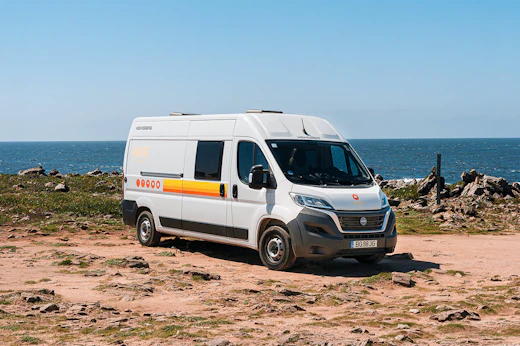
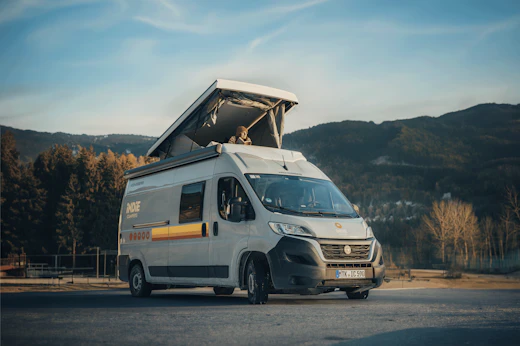
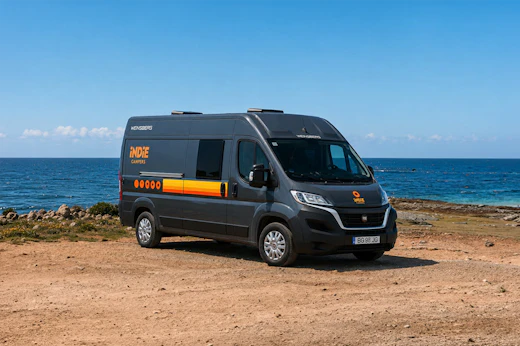
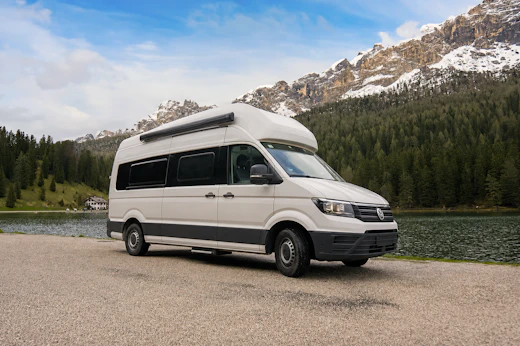
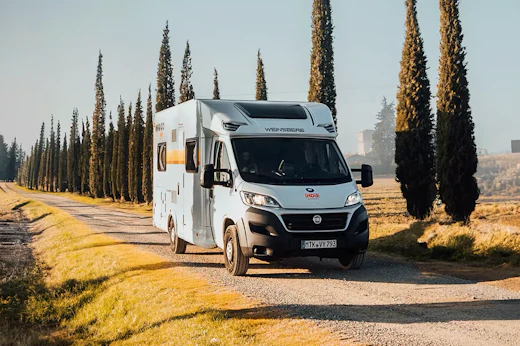
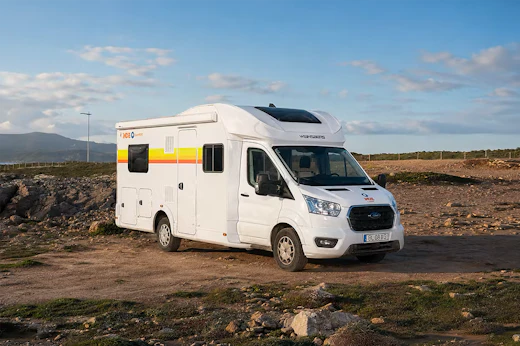
RVs, Motorhomes & Campervans for Every Kind of Traveller





Our Road Trips Itineraries
“Sarah did a great job and made our trip as pleasant as possible.”
“Sarah and David from Hamburg were super nice 🙏”
“This was such a great experience I recommend that you guys try it. We cooked, ate, and slept, so overall it was a great and comfortable experience.”