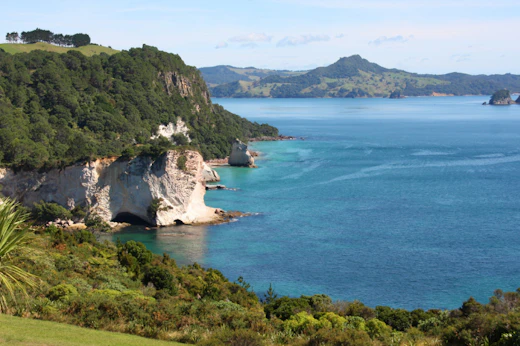
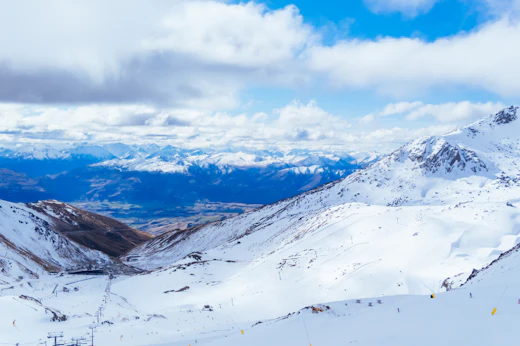
New Zealand lies in the southwest Pacific Ocean, about 2,000 miles southeast of Australia, and is a perfect country for road trips. It features two main islands, 13 national parks, and a diverse landscape that includes glaciers, geothermal fields, fjords, and volcanic plateaus, all accessible with a campervan.
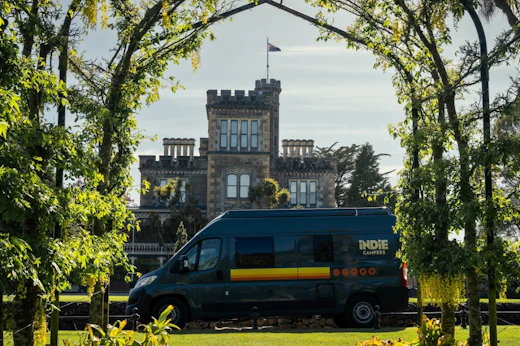
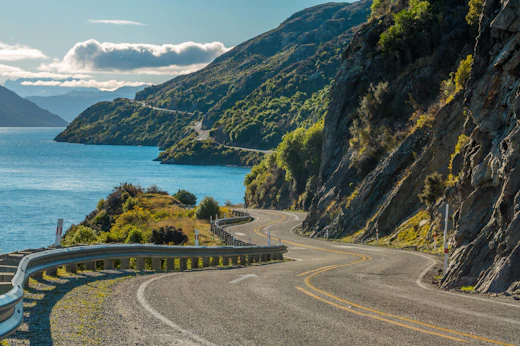

Our Road Trips Itineraries
The national park access argument is the first reason. New Zealand's 13 national parks were not built around proximity to towns with hotel beds. Fiordland, which covers Milford Sound in the southwest of the South Island, has one small town at its edge and nothing inside the park boundary except the road to Milford itself. Aoraki/Mount Cook has a single small village, a DOC campground, and the Hooker Valley Track trailhead. Camping at the base of these parks puts you at the trailheads before the day-trip coaches from Queenstown arrive and keeps you there for the evening light, which at Milford Sound is a different experience entirely from the midday rush.
The one-way rental network is the second reason. New Zealand's two islands are a natural one-way route: Auckland in the north to Queenstown in the south, with the Cook Strait ferry connecting the two midway. Most visitors fly into one city and out of another. A campervan handles that transition without forcing a return journey. Pick up in Auckland, cross from Wellington to Picton on the Interislander, drive the South Island south, and drop off in Queenstown. The geography points in one direction; the rental network is built to follow it.
The camping infrastructure makes the numbers work. The Department of Conservation operates campgrounds throughout the national park network at $15-22 NZD per person per night. The Freedom Camping Act allows self-contained vehicles to camp legally on a significant portion of public land at no cost. Apps like Campermate and the DOC Camping App map legal overnight stops across both islands. A week of DOC campgrounds costs a fraction of what hotel rooms in Queenstown or Auckland run in peak season, and the locations are considerably better.
Three depots that match how people actually travel New Zealand. Auckland covers North Island arrivals. Christchurch covers South Island arrivals and travelers coming south off the Cook Strait ferry. Queenstown is the most common South Island end point, with direct flights to Australian cities and onward international connections. One-way travel between all three depots is supported.
Basic Protection Plan included as standard. Upgrade options are available at booking for fuller coverage.
Flexible cancellation up to 31 days before pick-up without penalty, and book-now-pay-later for booking security without full upfront payment.
New Zealand is in the Southern Hemisphere. Its seasons run opposite to those in Europe and North America: summer is December through February, winter is June through August.
Temperatures: 20-28°C in most lowland areas; cooler in the Southern Alps and Fiordland at elevation
Summer is peak season and the most reliable window for high-altitude hiking. The Tongariro Alpine Crossing is accessible without snow gear from December through February. Milford Sound receives visitors year-round but summer offers the longest daylight hours. DOC campgrounds at Milford, Aoraki/Mount Cook, and Lake Tekapo fill weeks in advance over the Christmas and New Year period. Ferry reservations, campground bookings, and Milford Sound cruise tickets should be secured before departure.
Best for: High-altitude hiking, glacier access, long days, full North and South Island accessibility
Skip if: Arriving with last-minute campground plans over the Christmas-New Year period
Booking note: Book DOC campgrounds and the Interislander ferry as early as the system allows for December and January dates.
Temperatures: 12-22°C; noticeably cooler in the South Island by May
Autumn is the strongest season in the South Island for landscape photography and comfortable driving. Crowds from peak summer thin after mid-March. The Mackenzie Basin (Lake Tekapo, Aoraki/Mount Cook) and the Queenstown Lakes region show autumn colour in the poplar and willow trees lining the riverbeds from April through May. Milford Road conditions remain generally good through April; snow becomes possible on high passes by May. The West Coast receives heavy rainfall year-round, but autumn typically produces more settled weather windows than winter.
Best for: South Island landscapes, fewer crowds, autumn colour in the Mackenzie Basin and Wanaka
Skip if: The Tongariro Alpine Crossing after late April without appropriate alpine gear
Booking note: Campgrounds are more available from mid-March; ferry bookings less urgent
Temperatures: 5-15°C in lowland areas; frequent snow on the Southern Alps and Central Plateau
Winter is ski season. The ski fields above Queenstown (Remarkables, Coronet Peak), Mount Hutt near Christchurch, and the Central Plateau fields near Tongariro operate from late June through September. Check road status on the NZTA website or via 0800 4 HIGHWAYS before any Milford trip between June and October. The North Island remains accessible and less crowded in winter; Rotorua and the geothermal areas are year-round destinations.
Best for: Skiing, off-peak South Island driving, quieter campgrounds
Booking note: Campground pressure is low; ferry bookings straightforward.
Temperatures: 10-20°C, warming through October and November; variable in the mountains
Spring is the least-crowded shoulder season with weather improving steadily through October and November. The Tongariro Alpine Crossing reopens reliably for day hikers in October, though snow remains possible on the summit section in September. Wildflower displays appear along West Coast roadsides from October onward. By November, conditions are effectively summer in character without the peak-season campground competition.
Best for: Avoiding crowds, the Tongariro Alpine Crossing from October, shoulder-season campground pricing, improving weather across both islands
Skip if: Early September high-altitude hiking without appropriate alpine experience
Booking note: Book summer itinerary dates early even if departing in November; peak-season campground windows open months ahead
The most popular months for New Zealand campervan rentals are December, January, and February.
Seven to ten days is enough to cover one island well. The South Island is the priority choice for most international visitors with limited time because it concentrates the most distinctive New Zealand scenery (fjords, glaciers, alpine lakes) in a compact geography. Attempting both islands in under ten days results in too much driving and too little time in any single place.
Two to three weeks is the right duration for a complete two-island trip. The Cook Strait ferry adds approximately half a day to the itinerary but connects the islands without backtracking. The most logical structure: pick up in Auckland, drive south through the North Island's highlights over 5-7 days, cross from Wellington to Picton on the Interislander, then take 7-10 days south to Queenstown via Kaikōura, Christchurch, the Mackenzie Basin, the West Coast, and Fiordland.
Auckland International Airport (AKL) — approximately 24 miles from the Auckland depot
The primary international gateway, with direct connections from London (via various hubs), Los Angeles, San Francisco, Singapore, Hong Kong, Tokyo, Sydney, Melbourne, and throughout the Pacific. Best for two-island itineraries starting in the North Island.
Christchurch International Airport (CHC) — approximately 10 miles from the Christchurch depot
The South Island's main international hub, with direct connections from Sydney, Melbourne, Brisbane, and Singapore. The natural arrival point for visitors focusing exclusively on the South Island circuit. The most common one-way: pick up in Christchurch, drop off in Queenstown.
Queenstown Airport (ZQN) — approximately 5 miles from the Queenstown depot
Primarily domestic and trans-Tasman (Sydney, Melbourne, Brisbane, Gold Coast). Convenient for travelers connecting through an Australian hub. Best used as a departure airport after completing the South Island route
The minimum age to rent from Indie Campers in New Zealand is 21.
Traffic drives on the LEFT in New Zealand. The steering wheel is on the right. All vehicles are right-hand drive. For drivers accustomed to right-hand traffic (USA, continental Europe), the most common adjustment points are left turns, roundabout navigation, and staying left on rural roads. The first day of driving demands specific attention to these habits.
Speed cameras operate across New Zealand on open roads, in school zones, and on urban arterials. Fixed and mobile cameras both operate throughout the country. Fines scale with speed over the limit.
New Zealand's Freedom Camping Act 2011 establishes where self-contained vehicles can camp on public land. A self-contained vehicle must have a fixed toilet, a freshwater supply for at least three days, and a grey water holding tank. Indie Campers vehicles that meet this standard carry a valid self-contained warrant.
Where freedom camping is legal: On DOC land outside restricted areas and on local authority land where councils permit it. The DOC camping finder at doc.govt.nz maps all designated and freedom camping areas across the country.
Where it is not legal: Inside national park boundaries, areas with explicit no-camping signage, private land, and many areas within 200 metres of water.
For finding legal overnight stops, Campermate, Rankers Camping NZ, and the DOC Camping App cover both islands with user-reviewed locations that work offline. Freedom camping outside designated areas without self-contained certification carries on-the-spot fines.
Campermate: Best for freedom camping locations, holiday parks, and current user reviews of specific sites. Works offline.
Rankers Camping NZ: Comprehensive user-reviewed database of campgrounds and freedom camping areas across both islands.
DOC Camping App: Covers all Department of Conservation campgrounds and designated freedom camping areas. Essential for national park regions.
Freedom camping outside designated areas without self-contained certification carries on-the-spot fines from local enforcement officers. Check signage on arrival at any new location.
All figures in New Zealand dollars. Exchange rates vary; verify before travel.
For a 7 to 10-day South Island circuit, expect to spend $200-400 NZD on fuel, $105-220 NZD on DOC campgrounds, $80-120 NZD per adult for a Milford Sound cruise, and $200-400 NZD on food if self-catering. All-in travel costs excluding the rental run approximately $700-1,200 NZD at the budget end, $1,500-2,500 NZD at mid-range, and $3,500+ NZD for a premium trip with helicopter additions and guided experiences. New Zealand national parks charge no entry fee.
For a 14 to 21-day two-island itinerary, add $400-800 NZD for fuel, $200-400 NZD for the Interislander ferry crossing from Wellington to Picton, and $210-460 NZD for DOC campgrounds. Total travel costs excluding the rental sit at approximately $1,700-2,500 NZD budget, $3,000-4,500 NZD mid-range, and $6,000+ NZD premium.
In general, a special licence is not required to rent our RVs in New Zealand. However, a valid driving license is required to operate our vehicles. For some non-EU citizens, a IDP is required, in addition to their home country's drivers licence. Other considerations such as a valid vehicle licence to the vehicle type (manual or automatic) will also be required. For more information regarding our licence requirements read this.
Yes, our RVs are pet-friendly. Just make sure to purchase the extra cleaning service during your booking. This service includes professional anti-allergic cleaning after your trip. Please note that only one pet is allowed per motorhome, and it must weigh no more than 30kg. Keep in mind, we are not responsible for any legal fees related to traveling with your pet. For marketplace bookings, check the "vehicle rules" section for the pet-friendly icon to confirm if pets are allowed in that specific vehicle.
The number of people who can sleep in our RVs will depend on the size of the vehicle and the model. In general, our class C motorhome models can sleep up to 4-8 people, whereas our class B motorhomes can sleep up to 2-4. For cars with a rooftop tent, around 2 people can sleep in this vehicles. More details on our models and sleeping capacities can be found here.
If you are travelling in an RV, motorhome or caravan around New Zealand, it is important to understand official camping rules of the country you are visiting. As natural areas are generally protected by laws, using an official campsite or designated overnight parking area is highly recommended. This helps protect local communities and ensures you can all enjoy safely. Read more safety tips and protocols here.
We offer three protection plans to cover incidents and damages during your rental period. All Indie Campers motorhomes come with insurance for third-party vehicles and property damage (valid insurance will depend on the country). For marketplace vehicles, insurance options may vary based on the host.
Learn more about our protection plans here.
Yes, our search filter allows you to find an RV near your location using a 60km radius system. This means depending on the location you are searching from, you will be able to find an Indie campervan rental pick-up center near you.
Yes, a selected number of Indie Campers RV rentals in New Zealand include unlimited mileage, allowing you to explore freely and make the most of your road trip! Please note that unlimited mileage applies exclusively to Indie Campers RVs and is subject to responsible use.

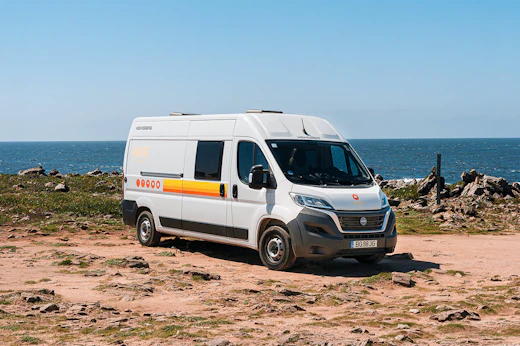
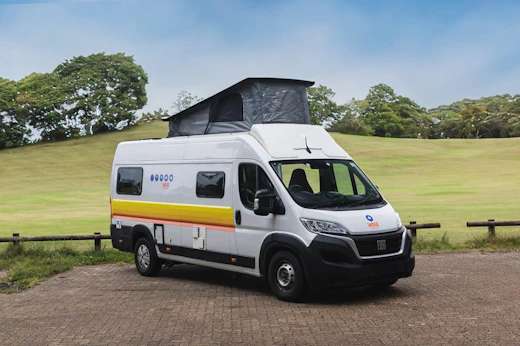
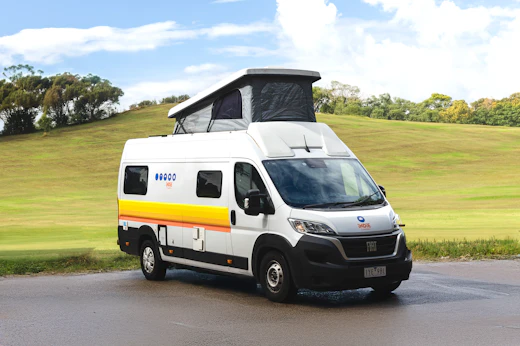
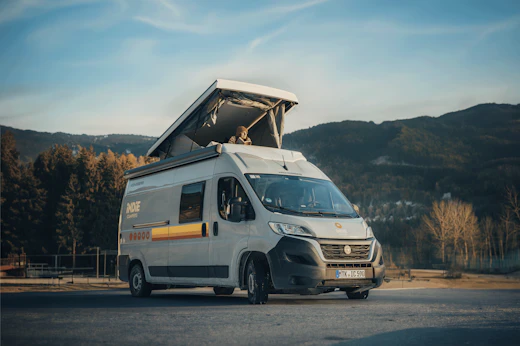
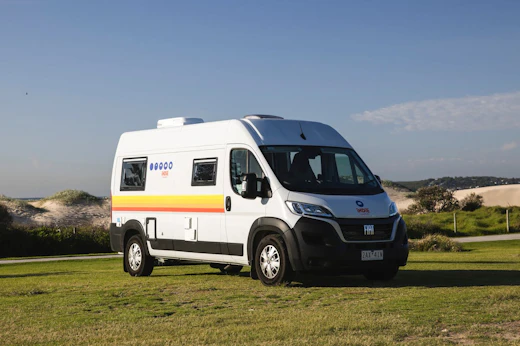
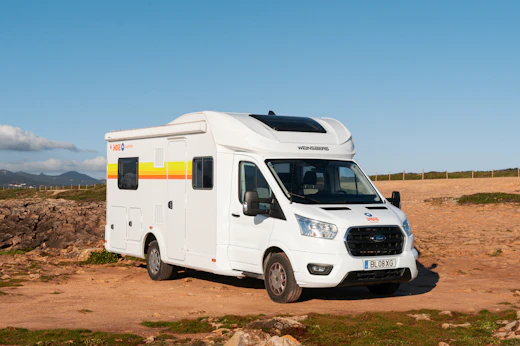
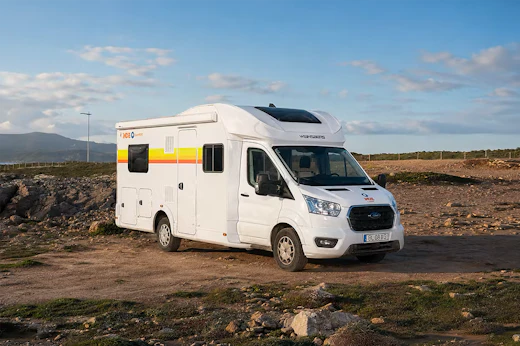
RVs, Motorhomes & Campervans for Every Kind of Traveller


Our Road Trips Itineraries
“Amazing in every aspect. I also want to thank Kate for her kindness and professionalism.”
“Easy camper to use. Very comfortable for 2 people. All round good experience.”
“Luis was amazing and so helpful! Employee of the month!”