Embark on the ultimate American road trip with an RV rental in USA from Indie Campers and experience a land built for adventure, from legendary highways to breathtaking national parks. Cruise down Route 66, wind along the Pacific Coast Highway, or explore the wonders of Yellowstone and beyond. Choose from a wide range of Class A, B, and C RVs designed for both comfort and discovery, each offering unlimited miles, flexible one way rentals, 24/7 online support, and thoughtful extras like bedding kits, outdoor furniture, or child seats. Trusted across North America and backed by a 4.7 star rated fleet, Indie Campers is your dependable partner for coast to coast journeys filled with freedom, exploration, and unforgettable memories.




Our Road Trips Itineraries
The national park system is the most practical reason. The US has 63 national parks covering 84 million acres, and the most visited ones (Yellowstone, Yosemite, Zion, the Grand Canyon, Glacier) sit in locations where the nearest towns with hotel beds are 20-50 miles away from the actual park. Camping inside the parks puts you at the trailheads before the day-tripper crowds arrive and keeps you there for the sunset. At Zion, the narrows hike through the Virgin River gorge is a fundamentally different experience at 7 a.m. with no one else in the water than at 11 a.m. when the canyon fills up.
The one-way rental network is the second reason. Most rental car companies charge prohibitive fees for one-way drops between states. With +20 Indie Campers depots spread from Anchorage to Miami, you can structure a trip that follows the natural geography rather than the logistics of returning to a starting point. The Pacific Coast Highway only makes sense going one direction. Route 66 is a one-way road. The Colorado Plateau's national parks form a natural arc from Salt Lake City through Las Vegas. Building these routes as one-ways and flying home from the destination city is the right way to travel them.
The infrastructure across the US is genuinely built for RVs. Every interstate highway has Pilot Flying J, Love's, and TA truck stops at predictable intervals with pull-through fueling, dump stations, and propane fills. Recreation.gov covers federal campground reservations across the entire national park and national forest system. Walmart and Cracker Barrel locations across the country allow overnight RV parking in their lots at no charge, which provides a free emergency option on any night when campgrounds fill up. Apps like iOverlander, Campendium, and The Dyrt have mapped tens of thousands of free dispersed camping sites on Bureau of Land Management and US Forest Service land across the West.
Here's what sets Indie Campers apart from other US RV rental companies:
Unlimited mileage on all Indie Campers fleet vehicles. A San Diego to Seattle trip covers 2,300 miles. The Grand Circle from Las Vegas covers 2,400 miles. Route 66 from Chicago to Los Angeles covers 3,940 miles. Most competitors cap you at 100-200 miles per day. We don't cap at all.
20 pickup locations across the US from Anchorage to Miami. Pick up in New York and drop off in Miami, or start in Las Vegas and end in Salt Lake City after five national parks. The network is sized to match the actual geography of road tripping here rather than forcing you to retrace your route.
One-way rentals across multiple locations globally including Canada. Extend a US trip into the Canadian Rockies from Seattle, or connect with our European network if your trip is part of a longer international journey.
24/7 road assistance included on every booking. In a country where some stretches of road are 60+ miles from the nearest town, having a number to call at any hour matters more than it does in Europe.
Basic Protection Plan included as standard. Upgrade options available at booking if you want fuller coverage for backcountry routes or high-risk areas.
Flexible cancellation up to 31 days before pick-up without penalty, and book-now-pay-later for booking security without upfront full payment.
Pacific Coast Highway: San Diego to Seattle (2,300 miles, 10-14 days)
Start: San Diego End: Seattle (or Portland for a shorter version)
Passes through: Los Angeles, Malibu, Santa Barbara, Big Sur, Monterey, San Francisco, the Redwood Coast, Crater Lake, Portland
The Pacific Coast Highway is the most famous road trip drive in the world by pure name recognition, and the reputation is mostly earned. The Big Sur section alone, 145 miles of CA-1 where the Santa Lucia Mountains fall directly into the Pacific, justifies the route by itself. The Redwood forests in Northern California and the Oregon coast's haystack rock formations add 600 miles of material that most people never see because they fly San Francisco to Portland. The full run from San Diego to Seattle covers every major landscape the West Coast offers and works perfectly as a one-way trip: pick up in San Diego, drop off in Seattle, fly home.
Highlights: Bixby Creek Bridge (Big Sur), Avenue of the Giants (Humboldt Redwoods), Cannon Beach (Oregon), Olympic National Park rain forest
Best season: May through October
One-way option: Yes, San Diego to Seattle or Portland
The Grand Circle (approx. 2,400 miles, 10-14 days)
Start/End: Las Vegas (loop) or one-way Las Vegas to Salt Lake City
Passes through: Zion, Bryce Canyon, Capitol Reef, Canyonlands, Arches, Moab, Monument Valley, Page (Antelope Canyon, Horseshoe Bend), Grand Canyon South Rim
Seven national parks and monuments within a 1,500 miles loop. No other region in the world concentrates UNESCO-quality landscapes this densely. Zion and Bryce in the same day is a legitimate option; they're 85 miles apart. The stretch from Moab south through Monument Valley to Page on US-163 and US-89 is the drive people picture when they imagine the American Southwest. The Grand Canyon closes the loop with something that genuinely earns its reputation as one of the world's great natural features.
Highlights: The Narrows at Zion, Bryce Canyon at sunrise, Dead Horse Point (Canyonlands), Delicate Arch (Arches), The Wave (permit required, North Coyote Buttes), Horseshoe Bend (Page)
Best season: March through May and September through November
One-way option: Las Vegas to Salt Lake City via the park circuit
Route 66: Chicago to Los Angeles (3,940 miles, 14-21 days)
Start: Chicago End: Santa Monica, Los Angeles
Passes through: Springfield, St. Louis, Joplin, Tulsa, Oklahoma City, Amarillo, Albuquerque, Flagstaff, the Mojave Desert
The original US highway, decommissioned in 1985 and now followed via a patchwork of surviving segments alongside the modern interstate. The route runs from Chicago's western suburbs through the agricultural Midwest, the Oklahoma and Texas panhandles, New Mexico's high desert, and the Arizona plateau before dropping into the Mojave and ending on the Santa Monica Pier. It takes more planning than a highway drive because significant sections require deliberate detours off the modern road to find the original pavement. The reward is a version of American small-town history that the interstates bypassed literally and figuratively.
Highlights: Cadillac Ranch (Amarillo), Blue Hole (Santa Rosa, NM), Painted Desert and Petrified Forest National Park (Arizona), Wigwam Motel (Holbrook, AZ), Santa Monica Pier
Best season: April through June and September through October (Texas and Oklahoma in July are genuinely hot)
One-way option: Chicago to Los Angeles, pick up at Chicago depot, drop off at LA depot
New York to Miami: East Coast (2,200 miles, 10-14 days)
Start: New York End: Miami
Passes through: Philadelphia, Washington DC, Richmond, the Outer Banks (NC), Charleston (SC), Savannah (GA), Jacksonville (FL), the Space Coast
The East Coast run follows the I-95 corridor as a framework but branches east to the barrier islands and coastal routes at every opportunity. The Outer Banks of North Carolina, 320 miles of barrier island with wild horses and Cape Hatteras National Seashore, are the route's most underrated section. The antebellum architecture of Savannah and the Spanish moss boulevards of Charleston add a layer that the West Coast routes don't offer. Florida's Space Coast, Kennedy Space Center, and the Atlantic beaches carry the route through to Miami.
Highlights: Cape Hatteras National Seashore, Savannah's Forsyth Park, Cumberland Island National Seashore (Georgia), Kennedy Space Center
Best season: October through April (Florida in summer is hurricane season; the Carolinas and Georgia are best in spring and fall)
One-way option: New York to Miami, pick up at New York depot, drop off at Miami depot
Yellowstone, Grand Teton, and Glacier Loop (1,400 miles, 10-12 days)
Start/End: Bozeman or Denver
Passes through: Yellowstone, Grand Teton, Jackson Hole, Idaho Falls, Sun Valley, Missoula, Glacier
The northern Rocky Mountain circuit hits the three most significant mountain and wildlife parks in the continental US in a single loop. Yellowstone's Lamar Valley in early morning is the best place to watch wild wolves in the world outside of East Africa. The Teton Range's reflection in the Snake River oxbows at dawn is the photograph that ends up on the wall. Glacier's Going-to-the-Sun Road, crossing the Continental Divide at Logan Pass, is the best mountain drive in the country for vehicles under 21 feet.
Highlights: Lamar Valley wolves, Old Faithful, Grand Prismatic Spring, Jenny Lake (Grand Teton), Logan Pass (Glacier)
Best season: Late June through September
One-way option: Bozeman to Salt Lake City via Grand Teton and eastern Idaho
Alaska: Anchorage to Denali and the Kenai Peninsula (730-1,400 miles, 7-14 days)
Start/End: Anchorage
Passes through: Palmer, Talkeetna, Denali, Seward, Homer, Soldotna
The most concentrated Alaska road trip covers Denali National Park to the north and the Kenai Peninsula to the south in a single trip from Anchorage. The Parks Highway to Denali passes through the Matanuska-Susitna Valley with Denali's 6,190-meter peak visible on clear days from 200 miles away. The Seward Highway south runs along Turnagain Arm, where beluga whales feed in the inlet and bore tides roll in twice daily. Kenai Fjords at the end of the Seward Road offers boat tours through glacier-calving fjords.
Highlights: Denali from the Parks Highway, Turnagain Arm bore tide, Exit Glacier (Kenai Fjords), Homer Spit
Best season: June through August
One-way option: Not available; Anchorage is the single Alaska pick up center
Summer (June through August)
Temperatures: 70-95°F (21-35°C) across most of the country; 95-115°F in the Southwest desert; 60-75°F along the Pacific Coast; 60-80°F in Alaska
Summer is peak season for the national park system, the New England and Great Lakes states, and Alaska. Campgrounds at Yellowstone, Zion, Yosemite, and the Grand Canyon require reservations 6 months ahead. Yosemite Valley operates a timed entry permit system that needs to be secured well in advance. The Southwest desert is genuinely dangerous in July and August; Death Valley records the highest reliably documented air temperatures on earth, and Joshua Tree and the Grand Canyon require careful water management on any hike. Alaska in summer gets midnight sun from mid-May through late July, which extends hiking days but disrupts sleep without blackout blinds.
Best for: Alaska and the Pacific Northwest, New England, national park trips with reservations locked in
Skip if: Southwest desert travel without planning water and shade logistics; last-minute bookings for any major park campground
Booking note: Book campgrounds 6 months ahead for Yosemite, Zion, Yellowstone, Glacier, and any major state park coastal site
Fall (September through November)
Temperatures: 40-75°F (4-24°C) nationally; warm in the Southwest; foliage peak in the Northeast mid-September through late October
Fall is the single best season for the American Southwest, the Appalachians, and New England. The desert heat breaks in September and stays comfortable through November. Zion, Bryce, and Arches see a significant crowd reduction after Labor Day while the weather stays ideal for hiking. New England's foliage corridor hits its peak between Columbus Day weekend (mid-October) and early November depending on the year and the latitude. The Smoky Mountains in October draw significant foliage traffic but the park is large enough to absorb it.
Best for: Southwest desert national parks, New England foliage, the Appalachians, the Pacific Coast
Skip if: Alaska (park roads closing October onward); high-elevation Rockies (first snow possible late September)
Booking note: Fall is the most competitive booking window for Southwest desert campgrounds. Book as early as the system allows for October dates at Zion and Bryce.
Winter (December through February)
Temperatures: Extreme variation by region; 60-80°F in Florida and the Southwest desert lowlands; below 0°F in the northern Rockies and Great Plains; 40-55°F along the California coast
Winter is the reason the Florida and Southwest depot network exists. While New York, Chicago, and Seattle are inhospitable for camping, Miami's Everglades, the Florida Keys, Big Bend National Park in Texas, Saguaro National Park in Arizona, and the lower desert areas of California are at their most comfortable. The RV parks along Florida's Gulf Coast charge premium rates in January and February but fill to capacity because the combination of warmth, low humidity, and cheap campground costs vs. northeast winter is compelling. Death Valley is best visited in November through March; summer temperatures make it actively dangerous.
Best for: Florida, the Arizona desert, Big Bend, Death Valley, Southern California coastal camping
Skip if: Alaska, the northern Rockies, New England, any high-elevation park
Spring (March through May)
Temperatures: 45-75°F nationally; warmer in the South and Southwest; variable in the mountains
Spring is the wildflower window for the California desert (Anza-Borrego and the Antelope Valley Poppy Reserve peak late February through April after wet winters), the Texas Hill Country (bluebonnets along US-290 in April), and the Pacific Northwest. Snow lingers in the Rockies through May at elevation; Glacier's Going-to-the-Sun Road typically opens to RVs in late June. Spring is also when the Southwest desert transitions from ideal to warm, making March through May the last reliable window before summer heat arrives.
Best for: California wildflowers, Texas Hill Country, the Appalachians, any trip to the Southwest before summer
Skip if: Glacier, the Beartooth Highway, and any high-elevation Rocky Mountain driving before late June
The most popular months for USA campervan rentals are July, August, and October.
Seven to ten days is enough to go deep on one region of the country. The mistake people make with a US road trip at this duration is trying to cover too much geography. The distances between significant landscapes in the US are real: San Diego to the Grand Canyon is 7 hours. New York to Acadia is 7 hours. Budget your daily driving at 3-4 hours maximum to have enough time to actually be somewhere rather than transit between places.
The Grand Circle: Las Vegas to Salt Lake City (1,400 miles, 7-10 days)
Day 1: Pick up in Las Vegas, drive to Zion National Park via I-15 north (260 miles, 2 hr 45 min), Zion Canyon Visitor Center, Watchman Trail (3.2 miles), overnight at Watchman Campground or South Campground
Day 2: The Narrows hike (depart by 7 a.m., full day), overnight at Watchman Campground
Day 3: Zion to Bryce Canyon via UT-9 east and US-89 north and UT-12 (85 miles, 1 hr 30 min), Navajo Loop and Queen's Garden trail, sunset at Sunset Point, overnight at Bryce Canyon Campground
Day 4: Bryce Canyon to Capitol Reef via UT-12 (the Scenic Byway through Boulder and Torrey, 190 miles, 2 hr 30 min, one of the best drives in the country), overnight near Torrey
Day 5: Capitol Reef Scenic Drive and Cassidy Arch Trail, drive to Moab via UT-24 and I-70 and US-191 (280 miles, 3 hours), overnight at Moab
Day 6: Arches National Park full day: Delicate Arch, Windows Loop, Landscape Arch. Moab overnight.
Day 7: Canyonlands Needles or Island in the Sky District, drive north toward Salt Lake City (360 miles, 4 hours), drop-off next morning
Florida Keys: Miami to Key West (550 miles round trip or one-way, 4-7 days)
Day 1: Pick up in Miami, drive south via US-1 to Key Largo (60 miles, 1 hour), snorkeling at John Pennekamp Coral Reef State Park, overnight at Key Largo Kampground and Marina
Day 2: Key Largo to Islamorada and Marathon (80 miles), Florida Keys National Marine Sanctuary, Bahia Honda State Park snorkeling, overnight at Bahia Honda State Park ($43/night, book 11 months ahead)
Day 3: Marathon to Key West (80 miles), Duval Street, Mallory Square sunset ritual, Ernest Hemingway Home, overnight at Boyd's Key West Campground
Day 4-5: Key West day two, snorkeling or kayaking at Dry Tortugas day trip (ferry from Key West, $220/adult), drive back to Miami or continue to Orlando as one-way
Two weeks is the right length for the Pacific Coast Highway end to end or the Rocky Mountain circuit with real time in each park. The trick at this duration is accepting that the drive itself is half the point. An itinerary with 500+ miles days every day is just an expensive way to watch the inside of a windshield.
Pacific Coast: San Diego to Seattle (2,300 miles, 14 days)
Day 1-2: San Diego, Balboa Park, pick up RV, drive north to San Elijo State Beach (35 miles)
Day 3: Drive PCH through Laguna Beach and Malibu to Leo Carrillo State Beach (180 miles)
Day 4-5: Los Angeles (Griffith Observatory, Getty, Santa Monica)
Day 6: Santa Barbara via US-101 (155 miles), overnight at El Capitan State Beach
Day 7: Drive UT-1 through San Luis Obispo to Big Sur (200 miles), overnight at Kirk Creek Campground
Day 8-9: Big Sur full exploration, Pfeiffer Beach, McWay Falls, Julia Pfeiffer Burns State Park, overnight at Pfeiffer Big Sur State Park
Day 10: Monterey and Carmel, Fisherman's Wharf, 17-Mile Drive, overnight at Monterey area
Day 11: Santa Cruz Boardwalk, drive to San Francisco (120 miles), overnight at Half Moon Bay State Beach
Day 12-13: San Francisco (Golden Gate, Marin Headlands, Mission District, Ferry Building)
Day 14: Drive US-101 north through the Redwoods to Crescent City (600 miles, 2 nights broken up), overnight in the Redwood Coast
Day 15: Continue north to Portland (400 miles) or Astoria and the Oregon coast
Day 16: Portland drop-off
Three weeks unlocks the genuine cross-country options. New York to Los Angeles via Route 66 (3,940 miles, 21 days) or New York to Miami combined with the Appalachian back roads (2,200 miles, 14-16 days) are the two routes that justify this duration. At three weeks, the daily driving average comes down to 180-200 miles, which is a reasonable 2-3 hour drive with time to stop.
Route 66: Chicago to Los Angeles (3,940 miles, 21 days)
Chicago (Day 1-2) → Springfield, IL (Day 3) → St. Louis Gateway Arch (Day 4) → Meramec Caverns (Day 5) → Joplin, MO (Day 6) → Oklahoma City (Day 7-8) → Amarillo and Cadillac Ranch (Day 9) → Tucumcari to Santa Fe detour (Day 10-11) → Albuquerque (Day 12) → Petrified Forest and Painted Desert (Day 13) → Flagstaff and Grand Canyon (Day 14-15) → Seligman and Kingman (Day 16) → Mojave Desert (Day 17) → Barstow to San Bernardino (Day 18) → Los Angeles: Santa Monica Pier end point (Day 19-21). Drop off at LA depot.
Pacific Coast
Southwest Desert
Rocky Mountains
Southeast
Northeast
Alaska
Minimum age: 21.
License requirements: Valid driver's license required. Non-English-script licenses require an IDP. International visitors from countries outside the US should carry both their home license and an IDP obtained before departure from their country's automobile association.
America the Beautiful Annual Pass: $80 at any national park entrance or at usgs.gov/national-parks-pass. Covers entrance fees at all 63 national parks and 2,000+ NPS fee sites for 12 months from date of purchase. If your route includes two or more national parks, it pays for itself before the second entry.
Recreation.gov: The federal campground reservation system for all national park, national forest, and BLM-developed campgrounds. Create an account and add payment before your trip window opens. Peak-season campgrounds (Yosemite Valley, Zion, Yellowstone, Acadia, Glacier) open reservations 6 months ahead and fill within minutes. Enable notifications for cancellations if your target dates are already full.
ReserveCalifornia: California State Parks uses a separate system from Recreation.gov at reservecalifornia.com. Required for San Elijo State Beach, South Carlsbad, El Capitan, Leo Carrillo, and all other California state park campgrounds.
Toll transponders: Set up E-ZPass (East Coast), SunPass (Florida), FasTrak (California), or TxTag (Texas) before arrival if your route passes through major toll corridors. Without a transponder, rental company processing fees for mail invoices significantly exceed the toll amount.
Propane: Fill before entering any remote stretch. Most U-Haul locations, Tractor Supply stores, and Camping World locations across the country handle propane fills ($3-5/gallon). No propane refills inside any national park. Fill in gateway towns (Springdale for Zion, Moab for Arches/Canyonlands, West Yellowstone for Yellowstone, Twentynine Palms for Joshua Tree).
License and Age Requirements
The minimum age to rent from Indie Campers in the US is 21. A valid driver's license is required for all drivers; the license must be in Roman script or accompanied by an International Driving Permit (IDP). An IDP is required alongside any non-English-script license and recommended for all international visitors regardless. Credit card in the primary driver's name is required at pick-up for the security deposit.
All Indie Campers North America vehicles are automatic transmission with left-hand drive. Traffic drives on the right in all 50 states.
Speed Limits
Speed cameras are less common in the US than in Europe, but automated enforcement exists on school zones in multiple states and in some urban highway corridors in Arizona (Scottsdale was an early adopter of highway speed cameras). California Highway Patrol, Texas DPS, and Florida Highway Patrol actively patrol interstates. Fines vary by state; California speeding fines start at $238 for 1-15 mph over the limit.
Toll Roads
The US has one of the world's most fragmented toll systems because roads are managed at the state level. The general rule: the Northeast and Florida have the most tolls; the West and rural Midwest have the fewest.
Key transponder systems by region:
Without a transponder, most modern US toll roads use license plate billing with a mail invoice sent to the rental company, which is then charged to your account. The processing fees are significantly higher than the actual toll. If your itinerary includes the Northeast, Florida, or major Texas urban corridors, confirm transponder options at pickup.
Driving Rules Specific to the USA
Right on red: In most states, turning right at a red light after a complete stop is legal unless a sign explicitly prohibits it. California and New York City are the most likely places you'll encounter a "No Turn on Red" sign.
Four-way stops: At an intersection where all four directions have stop signs, the first vehicle to stop goes first. When two vehicles arrive simultaneously, the vehicle on the right has priority. This requires more attention than it sounds at busy intersections.
Roundabouts: Less common than in Europe, but increasingly present in newer suburban developments. Vehicles inside the roundabout have right of way over entering traffic.
Passing: On multi-lane highways, passing on the right is technically legal in most states but discouraged. Keep right except to pass is the posted standard; enforcement is inconsistent.
BAC limit: 0.08% in all 50 states (0.05% in Utah). DUI consequences are severe: a first-offense DUI in California carries mandatory license suspension, a minimum $390 fine, and total costs including legal fees and DUI program enrollment typically running $13,000-17,000. Zero tolerance (0.00% BAC) applies to drivers under 21 in all states.
RV-Specific Rules
Vehicle height: Standard Indie Campers campervans range from approximately 9 to 12 feet in height. Know your vehicle's exact height before entering any urban area with older highway infrastructure. New York City has the highest concentration of low-clearance bridges and overpasses in the country; stay on GPS routes set for your vehicle dimensions.
Propane: Propane tanks must be turned off at all fuel stops. The Fort McHenry Tunnel in Baltimore (I-95) and the Baltimore Harbor Tunnel prohibit LPG vehicles. If your East Coast route passes through Baltimore, use the I-695 Baltimore Beltway instead of the tunnels. Several mountain tunnels in Colorado and the Rockies have similar restrictions; check tunnel-specific rules before any major mountain route.
Weight restrictions: Secondary and rural roads, particularly in the Great Plains and Northern Rockies, can have seasonal weight restrictions during spring thaw (roughly March through May). Stay on US highways and interstates to avoid this issue.
7 Days
Budget: $1,450 (smaller RV, cook all meals, BLM dispersed camping in the West, America the Beautiful Pass, no tolls)
Mid-range: $2,900 (mid-size family van, mix of cooking and dining, national park campgrounds with hookups, one paid activity)
Premium: $5,000+ (largest motorhome, frequent dining, full-hookup national park campgrounds throughout, multiple paid activities, northeastern toll corridor)
14 Days
Budget: $2,750 (smaller RV, cook all meals, BLM dispersed camping combined with no-hookup national park sites, America the Beautiful Pass, western routes with no tolls)
Mid-range: $5,200 (mid-size family van, mix of cooking and dining, national park campgrounds with electrical hookups, one or two paid activities, moderate mileage route)
Premium: $9,000+ (largest motorhome, frequent dining, full-hookup campgrounds throughout, multiple paid activities per stop, high-mileage cross-country route with toll corridors)
The US sits in the middle of the Indie Campers global network for total trip cost. It's more expensive than Portugal or Spain for fuel and campgrounds, comparable to Australia, and significantly cheaper than Norway or Iceland. The BLM free camping system in the West meaningfully reduces the campground line for any route that runs through Arizona, Utah, Nevada, Colorado, or Oregon. The America the Beautiful Pass at $80 is the single best-value purchase for any US trip covering two or more national parks.
In general, a special licence is not required to rent our RVs in USA. However, a valid driving license is required to operate our vehicles. For some non-EU citizens, a IDP is required, in addition to their home country's drivers licence. Other considerations such as a valid vehicle licence to the vehicle type (manual or automatic) will also be required. For more information regarding our licence requirements read this.
Yes, our RVs are pet-friendly. Just make sure to purchase the extra cleaning service during your booking. This service includes professional anti-allergic cleaning after your trip. Please note that only one pet is allowed per motorhome, and it must weigh no more than 30kg. Keep in mind, we are not responsible for any legal fees related to traveling with your pet. For marketplace bookings, check the "vehicle rules" section for the pet-friendly icon to confirm if pets are allowed in that specific vehicle.
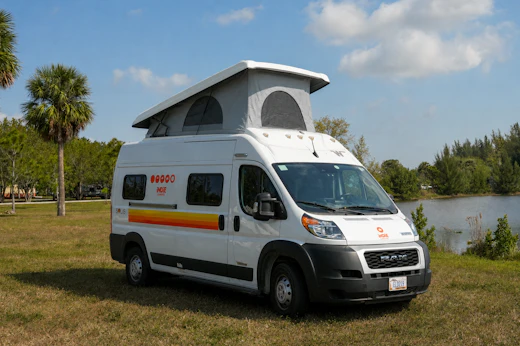
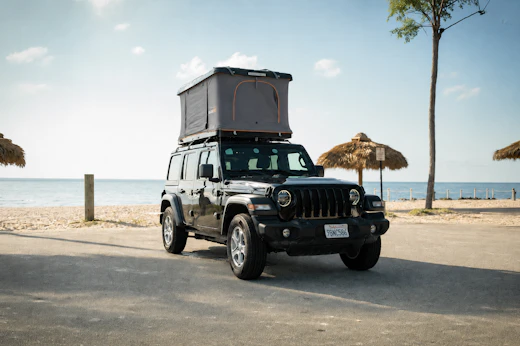
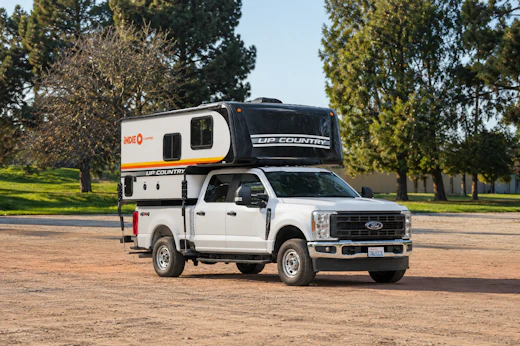
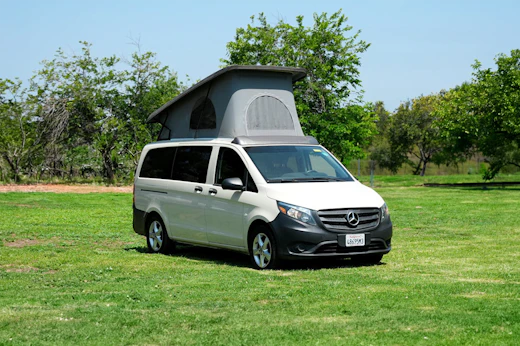
The number of people who can sleep in our RVs will depend on the size of the vehicle and the model. In general, our class C motorhome models can sleep up to 4-8 people, whereas our class B motorhomes can sleep up to 2-4. For cars with a rooftop tent, around 2 people can sleep in this vehicles. More details on our models and sleeping capacities can be found here.
If you are travelling in an RV, motorhome or caravan around USA, it is important to understand official camping rules of the country you are visiting. As natural areas are generally protected by laws, using an official campsite or designated overnight parking area is highly recommended. This helps protect local communities and ensures you can all enjoy safely. Read more safety tips and protocols here.
We offer three protection plans to cover incidents and damages during your rental period. All Indie Campers motorhomes come with insurance for third-party vehicles and property damage (valid insurance will depend on the country). For marketplace vehicles, insurance options may vary based on the host.
Learn more about our protection plans here.
Yes, our search filter allows you to find an RV near your location using a 60km radius system. This means depending on the location you are searching from, you will be able to find an Indie campervan rental pick-up center near you.
Yes, a selected number of Indie Campers RV rentals in USA include unlimited mileage, allowing you to explore freely and make the most of your road trip! Please note that unlimited mileage applies exclusively to Indie Campers RVs and is subject to responsible use.

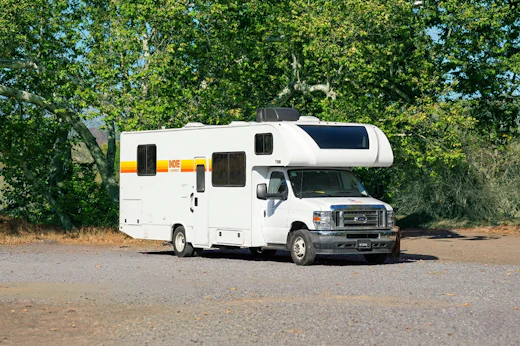
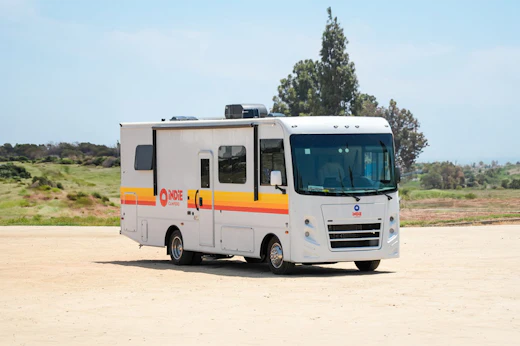
RVs, Motorhomes & Campervans for Every Kind of Traveller






Our Road Trips Itineraries
“Tray was super knowledgeable and helpful at the Atlanta location.”
“Jeremy Walsh did an incredible job to make us feel excited about our trip with Indie Campers we are so grateful for him :)”
“indiecampers made us happy! nice trip. thanks!”