Begin your Norwegian fjord adventure with an RV rental in Bergen and explore the dramatic coastlines, mountain passes, and historic villages of western Norway. Drive north along the Sognefjord, venture inland through mountain valleys and glaciers, or head south toward Stavanger and the famous Preikestolen cliff. Choose from Indie Campers' California, Active, or Comfort models, all equipped with unlimited kilometers, flexible one-way travel, 24/7 online assistance, and winter-ready extras like snow chains, heating kits, and outdoor furniture. With a trusted Europe-wide fleet and 4.8-star reviews, Indie Campers makes exploring Norway's fjords accessible, comfortable, and unforgettable.


Our Road Trips Itineraries
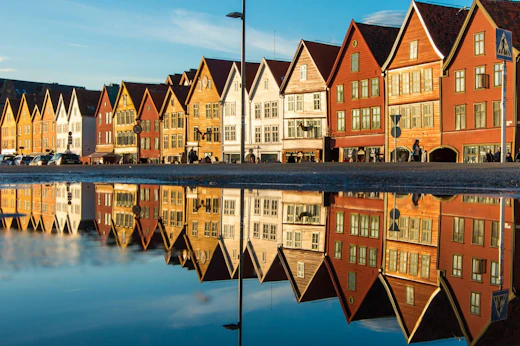
Bergen sits at the junction of seven mountains and the western fjord system, and that geography is the entire argument for renting a campervan here. The city itself is a starting point, not the destination; what surrounds it within a three-hour drive is the highest concentration of UNESCO-inscribed fjord landscape, National Scenic Routes, and mountain plateau wilderness in Europe.
The Hardangerfjord begins 60km southeast, the longest arm of the Hardangerfjord system reaching 179km into the interior with orchard villages on its lower shores and the Hardangervidda plateau (the largest mountain plateau in Europe, 8,000 square kilometres at 1,200 metres) forming its southern wall. The Sognefjord, Norway's longest and deepest fjord at 204km and 1,308 metres, begins 100km north; its inner arms include the Nærøyfjord (UNESCO World Heritage, the narrowest fjord in Europe at 250 metres wide at its tightest point) and the Aurlandsfjord, above which the Stegastein viewpoint platform (GPS 60.8693°N, 7.1011°E) cantilevers 30 metres over a 650-metre vertical drop. Trollstigen and the Geirangerfjord are 250km north; the Atlantic Road is 300km north.
The campervan is not a convenience here; it is the correct vehicle for this landscape. The Norwegian ferry system is built around car and campervan transport; most fjord crossings last 10 to 45 minutes and cost NOK 100 to 350 for a vehicle, running continuously from early morning to midnight or later in summer. A campervan eliminates the hotel booking problem on a road that passes through Gudvangen (one hotel), Aurland (two hotels), and Eidfjord (three hotels), all of which fill in June, July, and August months ahead. And in Norway, Allemannsretten, the right of public access to uncultivated land, gives every campervan driver the legal right to camp on any unfenced outfield terrain 150 metres or more from the nearest inhabited dwelling for up to two consecutive nights without permission. The entire Norwegian mountain and fjord landscape is legally open overnight to anyone with a self-contained vehicle. No other country in western Europe offers this.
Depot location — The Bergen depot gives direct access to both main western Norway axes: the E16 east toward Voss, Flåm, and the Sognefjord, and the RV7 southeast toward the Hardangerfjord, without any urban transit required. Pick up the vehicle and be in fjord country within 30 minutes.
One-way flexibility — Indie Campers supports one-way rentals between Bergen and other Norwegian depots including Oslo, removing the need to retrace the same road twice. A Bergen pickup and Oslo drop covers the entire western Norway circuit in a single direction; fly in to BGO, fly home from OSL. One-way fees and availability vary by route and season; confirm at indie-campers.com during booking.
Unlimited mileage — Western Norway is not a destination where you cover 200km and stay put. A comprehensive circuit taking in the Hardangerfjord, Nærøyfjord, Trollstigen, Geirangerfjord, and the Atlantic Road covers 1,500km or more. Indie Campers charges no daily kilometre cap; the entire route is covered under the rental rate.
24/7 support — Indie Campers provides 24-hour roadside assistance throughout Norway. Given the distances between service points on the Hardangervidda plateau, the Geiranger mountain roads, and the Gargano equivalent Scandinavian interior roads, having a support line available at any hour is a practical consideration rather than a marketing point.
Flexible booking and cancellation available — Changes and cancellations accepted up to 31 days before pickup. Norwegian summer weather and fjord ferry availability make itinerary flexibility a genuine operational requirement; the booking terms reflect that.
Spring (March-May)
Temperatures: 4-13°C (39-55°F)
The mountain pass roads are still closed through most of spring; Trollstigen and the Aurlandsfjellet Snow Road typically open in late May, Sognefjellet in late May or early June depending on snowpack. The lower Hardangerfjord is accessible year-round and the Hardanger orchard blossom (400,000 fruit trees flowering simultaneously) peaks in late April to early May, one of the most visited natural events in western Norway. Campsite availability is good outside Easter weekend; most sites run at 30 to 50% capacity. Bergen city is uncrowded and fully operational throughout spring.
Best for: Travellers targeting the Hardanger blossom; photographers wanting fjord landscapes without summer crowds; anyone combining Bergen city with the lower fjord circuit before the passes open.
Skip if: Your itinerary depends on Trollstigen, the Aurlandsfjellet Snow Road, or the Sognefjord inner mountain routes; all remain closed until late May at the earliest.
Summer (June-August)
Temperatures: 13-22°C (55-72°F)
All mountain pass roads open, all 18 National Scenic Routes accessible, and up to 20 hours of usable daylight at the June solstice. The most complete window for a western Norway circuit. July is peak season across the entire region; Geiranger campsites fill from January for July pitches, Sognefjord ferry standby queues reach 2 to 3 sailings on peak weekends, and the Trollstigen carries slow-moving convoy traffic between 10am and 5pm. June and late August offer the same access with significantly lower campsite pressure. Book all campsites, Flåmbanen tickets, and ferry vehicle deck spaces simultaneously with the vehicle reservation for any July departure.
Best for: Families with school-age children; first-time Norway visitors wanting guaranteed access to every route; travellers combining Nærøyfjord, Geirangerfjord, and Trollstigen in a single itinerary.
Skip if: You want to avoid peak crowds at Geiranger, Flåm, and the Trollstigen; all three are at maximum capacity throughout July.
Autumn (September-October)
Temperatures: 7-15°C (45-59°F)
Arguably the best month for experienced campervan travellers. The mountain birch forest turns gold and amber across the Hardangervidda and the Sognefjell from mid-September; the autumn colour in western Norway is among the most dramatic in northern Europe. Campsite rates drop, ferry queues disappear, and Trollstigen and the Aurlandsfjellet road remain open through most of September. The Hardanger orchards are at peak fruit production in early September with roadside apple and plum stalls operating throughout the Sørfjord. The first Atlantic storms arrive in late September and October; the weather window narrows but the landscape quality and absence of crowds make the trade-off worthwhile for most travellers.
Best for: Photographers targeting autumn colour on the Hardangervidda and Sognefjell; travellers wanting full route access with 30 to 40% fewer visitors than July; anyone prioritising the Hardanger fruit harvest.
Skip if: You are planning the full northern circuit including Trollstigen and Geiranger in October; both roads close in late October and conditions become unpredictable from mid-October onward.
Winter (November-February)
Temperatures: -3 to 4°C (27-39°F)
The Aurlandsfjellet Snow Road, Trollstigen, and Sognefjellet all close by November. The inner Hardangerfjord and Nærøyfjord are accessible year-round but the mountain outfield routes that define the western Norway circuit are unavailable. Bergen city operates fully through winter; the Christmas market at Festplassen (late November through December) and the Bryggen wintertime atmosphere are genuine draws. A small number of campsites remain open year-round in the Bergen area. Winter RV travel in western Norway requires a vehicle with rated heating, winter tyres, and a pre-planned itinerary of confirmed open campsites; confirm seasonal opening with each site before departure.
Best for: Bergen city breaks combined with the lower Hardangerfjord; travellers comfortable with cold-weather camping and reduced route options.
Skip if: Your itinerary requires any mountain pass roads or the full fjord circuit; virtually all defining western Norway routes are seasonally closed from November through April.
3 to 5 Days
Bergen City and Hardangerfjord Loop (approx. 300km, 4 days)
7 to 10 Days
Bergen, Sognefjord, and Nærøyfjord Circuit (approx. 700km, 8 days)
14 Days or More
The Full Western Norway Arc: Bergen to Oslo via Geiranger and Trollstigen (approx. 1,200km, 14 days)
One-way Bergen to Oslo pricing and availability vary by season; confirm at indie-campers.com. Book all Geiranger area campsites and Sognefjord ferry vehicle deck spaces simultaneously with the vehicle reservation for any July or August departure.
Fuel Stations
Norway fuel note: Norwegian fuel prices are among the highest in Europe despite Norway being a major oil producer; domestic pricing reflects full taxation. Diesel typically runs NOK 18 to 22 per litre; petrol NOK 20 to 24 per litre in summer 2026. Fill whenever the tank drops below half on mountain circuits; fuel gaps on the Hardangervidda, Geiranger approach roads, and the Atlantic Road are significant.
Average fuel price: NOK 18-22/litre diesel; NOK 20-24/litre petrol (2026 estimate).
LPG/Autogas Refill
LPG (autogas) is significantly less common in Norway than in central Europe. The network is sparse outside the main urban centres; plan LPG fills carefully before entering any fjord or mountain circuit.
. Uno-X, Åsane (GPS 60.4668°N, 5.3299°E) — LPG available; the most reliable north-Bergen fill point before the E39 Sognefjord approach.
Average LPG price in Norway: approximately NOK 10-13/litre (2026 estimate).
Dump Stations (Tømmestasjoner)
Norway's RV waste infrastructure runs primarily through formal campsites and municipal tømmestasjoner rather than a dense Stellplatz-style network.
Essential Apps
Age and License Requirements
Minimum rental age: 21 years.
EU license holders: A full EU driving license is valid in Norway without additional documentation. Norway participates in the European driving license mutual recognition framework through the EEA agreement.
UK license holders: A full UK driving license is valid in Norway for short-term visits without an IDP.
International visitors (non-EU/non-EEA): An International Driving Permit (IDP) is recommended alongside your national license. Norway recognises the 1968 Vienna Convention IDP. Obtain before departure; IDPs are not available at Norwegian airports or rental counters.
Credit Card and Deposit
A credit card in the primary driver's name is required at pickup. Debit cards and prepaid cards are not accepted. The security deposit is held on the credit card at pickup; the amount varies by vehicle class and selected protection plan. Confirm the exact deposit amount during the booking process at indie-campers.com.
National Park and Attraction Passes
Norway has no unified national park pass. All 18 National Scenic Routes are free to drive; viewpoint architecture including Stegastein and the Trollstigen Visitor Centre is free to access. National park land (Hardangervidda, Folgefonna, Jostedalsbreen) is free to enter; individual guided activity charges apply for glacier walks and organised excursions. The Flåmbanen, Fløibanen funicular, and Ulriksbanen cable car are ticketed individually; no combination pass covers all three.
Reservation Systems
There is no single Norwegian booking platform equivalent to Recreation.gov. Book campsites through Camping.no (the official Norwegian campsite directory), ACSI, or directly with individual campsite websites.
Speed Limits
Road Conditions
Driving Culture
Norway drives on the right-hand side of the road; overtake on the left. Norwegian driving culture is methodical, rule-abiding, and patient by European standards; the conventions that require the most active adjustment for drivers coming from southern Europe or the UK are:
Yield to the right (høyreregelen): At unmarked junctions throughout Norway, the vehicle approaching from the right has priority. This rule is actively observed and not merely theoretical; yield to all traffic from the right at any unmarked crossroads, parking exit, or slip road junction on the Norwegian road network.
Headlights: Dipped headlights (not daytime running lights) are mandatory at all times on all Norwegian roads, regardless of light conditions. This is a legal requirement, not a convention; it applies in full summer daylight.
Reindeer and elk (elg) on roads: Western Norway above 600 metres carries significant reindeer populations on the Hardangervidda, the Sognefjell plateau, and the Geiranger mountain outfield; the Hardangervidda herd of approximately 8,000 animals crosses the RV7 regularly in the migration period (June and September). Elk (moose) are present in the forested valleys of the E16 corridor and the Voss lowland areas. Reduce speed to 60km/h on all mountain and forested SP and RV roads at dawn and dusk; an adult Norwegian elk weighs 400 to 600kg and an impact at road speed is invariably fatal to the animal and seriously damaging to the vehicle. The annual Norwegian road statistics record approximately 5,500 elk collisions per year; the majority occur between September and November but summer road users are not exempt.
Mountain road width (single-track sections with passing places): Many RV and SP roads in the western Norway fjord interior are single-track with designated passing places (møteplasser). The convention is universal: the vehicle that is closer to the nearest passing place reverses to accommodate the other; this applies regardless of direction of travel. On the Stalheimskleiva and the Trollstigen, tour coaches require the full road width on the inner hairpin and all other traffic waits at the outer edge; this is not discourtesy but simple geometry.
Speed enforcement: The Norwegian Police (Politiet) and the Norwegian Public Roads Administration operate both fixed speed cameras (ATK) and mobile speed traps throughout the western Norway road network. The speed limits in Norway are low by European standards (80km/h on two-lane rural roads versus 90 to 100km/h in most European countries) and are consistently and seriously enforced; the fines are proportional to income (day-fine system) and are significantly higher than Italian speed fines at equivalent excess speeds.
Fjord ferry behaviour: On Norwegian vehicle ferries, drivers are expected to switch off the engine immediately on parking, remain on the vehicle deck until the crew give permission to go to the passenger deck, and return to the vehicle before the arrival announcement. Campervans occupy specific wide-load positions on the ferry deck; follow the crew marshalling to these positions rather than self-selecting a parking spot.
RV-Specific Notes
Height: Standard campervans run 2.9 to 3.2 metres. Norway-specific height considerations:
Length:
Winter tyres / equipment: If the trip extends into October or the vehicle is collected in late spring, confirm with Indie Campers that the vehicle carries the seasonal tyre requirements for Norwegian mountain roads; winter tyres are mandatory on Norwegian roads when conditions require them, typically from October. For a summer itinerary (June through September), standard tyres are appropriate throughout.
Waste disposal: The Norwegian motorhome service station (tømmestasjon) network is less dense than the Italian or French campsite infrastructure but is concentrated at the main campsite nodes. All formal campsites on the Bergen circuit carry cassette disposal, grey water, fresh water fill, and EHU. Free tømmestasjoner are located at multiple fjord municipality car parks; the Eidfjord municipal car park, the Flåm campsite area, the Geiranger National Park car park, and the Voss camping area all carry grey water disposal and fresh water fill. Check Bobil.no or Park4Night for current service point GPS locations on any specific route day.
Legal Notes
Blood alcohol limit (Norway): 20mg per 100ml of blood (0.02%). This is among the lowest in Europe: effectively zero tolerance. One standard Norwegian unit of alcohol (0.33cl beer at 4.5%, one glass of wine) can take a 75kg person to the 0.02% limit. Do not drive after any alcohol consumption in Norway. The Politiet conduct random roadside breath tests throughout the Norwegian road network, with particular focus on tourist-heavy roads in the Hardangerfjord and Sognefjord corridors in summer.
Penalties: 0.02% to 0.05%: fine (calculated as a proportion of annual income, typically NOK 10,000 to 50,000) and 6 months' licence suspension. Above 0.05%: criminal prosecution, unconditional licence suspension, and for repeat offenders or high readings, imprisonment. The Norwegian day-fine system means the actual fine for a Norwegian national exceeding 0.02% at a reasonable income level can reach NOK 30,000 to 100,000; visitors are fined at an equivalent rate based on their declared income.
Mobile phone use while driving: Illegal to hold a phone while driving; fine of NOK 6,000 for a first offence (2026 rates). Hands-free via a mounted holder is legal.
Seatbelts: Mandatory for all occupants in all seats. The Norwegian Traffic Act does not distinguish between habitation area passengers and front-seat passengers; all must be belted in designated travel seats when the vehicle is moving.
Compulsory equipment: A warning triangle is legally required in Norway for foreign-registered vehicles or vehicles driven by foreign nationals. A high-visibility vest is required for the driver on exiting after a breakdown. Confirm at pickup that the Indie Campers vehicle carries both. Fire extinguisher and first-aid kit are not legally compulsory for private vehicles in Norway but are standard Indie Campers equipment.
Allemannsretten legal obligations: As detailed in the overnight parking section; the right of public access carries legal obligations. Leaving any waste (including grey water discharge onto open land), making an open fire within 150 metres of forest between 15 April and 15 September, or damaging vegetation are all contraventions of the Outdoor Recreation Act and subject to fines. The right to camp on outfield land does not include the right to make noise, damage fences, or interfere with livestock or agricultural operations.
Norwegian toll invoicing: Unregistered toll passage (driving through a Norwegian toll point without a transponder) is not a fine; it is an automatic invoice to the registered keeper, typically arriving 2 to 3 weeks after the passage. Indie Campers will pass on toll invoices to the renter with an administrative handling charge; confirm the toll handling procedure at pickup to understand the invoicing timeline and any pre-registration options that reduce the per-passage administration fee.
RV rental: NOK 7,000–18,000 / €600–1,600 (varies by vehicle size and season; July adds 20–30% across all categories; book 3–4 months ahead for July and August to lock in lower rates)
Fuel: NOK 2,200–3,800 / €200–350 (diesel approximately NOK 20/litre; typical weekly distance 800–1,000km divided by 10L/100km = 80–100 litres; Hardangervidda and Trollstigen mountain gradients add 10–15% to consumption)
LPG/Autogas: NOK 150–400 / €15–35 (if a mid-trip refill is needed; fill in Bergen before departure; LPG availability drops sharply beyond the urban area and is unavailable in Flåm, Eidfjord, and Geiranger)
Tolls and AutoPASS: NOK 400–1,200 / €35–110 (Bergen Bomring charges on every city entry; Hardangerbrua bridge toll; individual road and tunnel tolls on the E16 and E39; accumulated charges on a full western Norway circuit reach NOK 800–1,500 without careful routing; register the AutoPASS transponder at pickup to avoid per-passage administration charges)
Ferry crossings: NOK 300–900 / €27–82 (vehicle deck fees on required Sognefjord and Hardangerfjord crossings; Mannheller-Fodnes approximately NOK 220–280 per crossing; Halhjem-Sandvikvåg approximately NOK 180–240; budget for 2–4 ferry crossings on a standard 7-day circuit)
Campgrounds: NOK 1,400–3,500 / €130–320 (NOK 200–500/night x 7; Allemannsretten open-fell positions at zero cost; municipal tømmestasjoner NOK 50–100/night without EHU; full-hookup Geiranger and Flåm campsites at the high end)
Food: NOK 2,500–6,000 / €230–550 (self-catering from Rema 1000 or Kiwi approximately NOK 350/day; mixed cooking and dining out approximately NOK 600/day; restaurant meals in Bergen and Flåm NOK 900+/day per person)
Activities: NOK 500–2,500 / €45–230 (Flåmbanen return approximately NOK 500–600/adult; Fløibanen funicular return approximately NOK 145/adult; Ulriksbanen cable car approximately NOK 200/adult; Folgefonna guided glacier walk approximately NOK 400–600/adult; Hardangervidda Naturenter entry approximately NOK 100–150/adult; all National Scenic Route viewpoints and national park entries free)
Parking: NOK 0–400 / €0–37 (Allemannsretten overnight positions free; municipal tømmestasjoner NOK 50–100/night; formal campsite pitches as above; Bergen city centre surface car parks NOK 30–60/hour; avoid multi-storey car parks throughout, 2.0–2.2m height restrictions throughout)
Total estimates:
Budget: approximately NOK 14,000 / €1,280 — Compact vehicle, all self-catering from Rema 1000 and Kiwi, maximum Allemannsretten overnight positions on the Hardangervidda and Aurlandsfjellet, Bergen city only on public transport, free attractions only (National Scenic Route viewpoints, Hardangervidda National Park, Bryggen exterior, Fisketorget fish market), 2 ferry crossings.
Mid-range: approximately NOK 22,000 / €2,000 — Mid-size vehicle, mix of self-catering and 2 to 3 restaurant meals including Bergen fish market and one Bryggen restaurant, formal campsites with EHU at Flåm and Eidfjord, Flåmbanen return ticket, Fløibanen funicular, 3 to 4 ferry crossings, full AutoPASS toll coverage.
Premium: approximately NOK 38,000+ / €3,500+ — Larger Comfort category motorhome, frequent dining including Enhjørningen and Lysverket tasting menu, full-hookup campsites throughout including Geiranger, Flåmbanen, Fløibanen, Ulriksbanen, Folgefonna glacier walk, Dalsnibba plateau road toll, all ferry crossings booked in advance, full AutoPASS transponder registered at pickup.
Norway sits at the high end of the Indie Campers European network for overall trip costs, driven primarily by fuel prices, campsite rates, and restaurant pricing rather than activity entry fees. The biggest cost variable is how many nights you spend in formal campsites versus Allemannsretten open-fell positions; a circuit using three or four legal free overnight positions on the Hardangervidda or above the Aurlandsfjord reduces the accommodation budget by NOK 1,000 to 2,000 on a 7-day itinerary. The AutoPASS toll accumulation is the most commonly underestimated cost on a Norwegian campervan trip; budget for it explicitly rather than treating it as a rounding error.
Bergen to Oslo (approximately 500km via E16, approximately 6.5 hours direct) — The most natural Norwegian one-way. Pick up in Bergen; cover the Hardangerfjord, Nærøyfjord, Flåm, and Borgund Stave Church; drop in Oslo. Fly home from Oslo Airport Gardermoen (OSL), Norway's main international hub with the broadest European and intercontinental connections. Allow 7 to 10 days for a full western Norway circuit before the Oslo drop.
Bergen to Trondheim (approximately 700km via E39 and E6, approximately 9 to 10 hours direct with ferry crossings) — The full western Norway arc in a single direction. Bergen pickup; Hardangerfjord; Sognefjord; Trollstigen; Geirangerfjord; Atlantic Road; drop in Trondheim (GPS 63.4305°N, 10.3951°E). Trondheim Airport Værnes (TRD) connects to London, Amsterdam, and Copenhagen. Allow 12 to 14 days for a comprehensive itinerary covering all major National Scenic Routes between Bergen and Trondheim.
Bergen to Tromsø (approximately 1,750km via E6, approximately 22 hours direct) — The long-haul one-way for travellers targeting the Arctic. Bergen pickup; western Norway circuit; continue north on the E6 through Trondheim, the Helgeland coast, the Lofoten Islands (accessible via the E10 from Fauske), and the Troms region to Tromsø. Tromsø Airport (TOS) connects to Oslo, London, and Copenhagen. Allow 18 to 21 days minimum for a Bergen to Tromsø itinerary that covers the western fjords and the Arctic north without rushing either section.
One-way pricing and availability vary by route and season. Book Geiranger area campsites and Sognefjord ferry vehicle deck spaces simultaneously with the vehicle reservation for any July or August departure. Confirm all cross-border logistics and one-way fees at indiecampers.com before finalising the booking.
Bergen Airport Flesland (BGO, GPS 60.2934°N, 5.2181°E) is Norway's second busiest airport after Oslo Gardermoen, handling direct connections from London, Amsterdam, Copenhagen, Frankfurt, Munich, Zurich, Paris, Brussels, Stockholm, and a comprehensive European network via British Airways, Lufthansa, KLM, SAS, Norwegian Air, and Widerøe. For UK travellers, British Airways operates a daily Bergen Heathrow service and Norwegian operates seasonal Gatwick routes; Bergen is significantly closer by air from the UK than Oslo for road trippers targeting the western fjords specifically. Ryanair operates seasonal routes from London Stansted to Bergen. The airport sits 18km southwest of Bergen city centre on the E39 approach road; a campervan collected at or near the airport can be on the E16 eastbound toward Voss and the Hardangerfjord within 25 minutes, or on the E39 northbound toward Sognefjord and Ålesund within 20 minutes.
For travellers arriving by train, Bergen Station (GPS 60.3906°N, 5.3338°E, Strømgaten 4) is the western terminus of the Bergen Railway (Bergensbanen), the most celebrated train journey in Norway: 7 hours 15 minutes from Oslo Sentralstasjon (497km), crossing the Hardangervidda plateau at 1,222 metres with stops at Geilo (GPS 60.5323°N, 8.2003°E) and Myrdal (GPS 60.7292°N, 7.1032°E, the junction for the Flåm Railway, described in Attractions below). The Bergen Railway connects western Norway to Oslo for road trippers doing a Bergen pickup and Oslo drop, or arriving in Norway via Oslo for a westbound itinerary.
For travellers arriving by sea, the Bergen Strandkaiterminal and Bontelabo cruise terminal handle Color Line and Fjord Line ferries from Hirtshals, Denmark (Fjord Line, approximately 16 hours, vehicle deck capacity for motorhomes) and Stavanger and Kristiansand connections. Road trippers arriving from Denmark by overnight ferry disembark at Bergen with a full fjord circuit ahead of them without any airport transit; this is a practical option for travellers from Denmark, Germany, and the Netherlands who prefer to drive to Hirtshals and take the ship rather than flying.
In general, a special licence is not required to rent our RVs in Bergen. However, a valid driving license is required to operate our vehicles. For some non-EU citizens, a IDP is required, in addition to their home country's drivers licence. Other considerations such as a valid vehicle licence to the vehicle type (manual or automatic) will also be required. For more information regarding our licence requirements read this.
Yes, our RVs are pet-friendly. Just make sure to purchase the extra cleaning service during your booking. This service includes professional anti-allergic cleaning after your trip. Please note that only one pet is allowed per motorhome, and it must weigh no more than 30kg. Keep in mind, we are not responsible for any legal fees related to traveling with your pet. For marketplace bookings, check the "vehicle rules" section for the pet-friendly icon to confirm if pets are allowed in that specific vehicle.
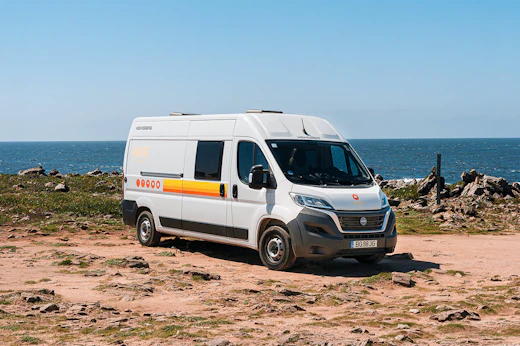
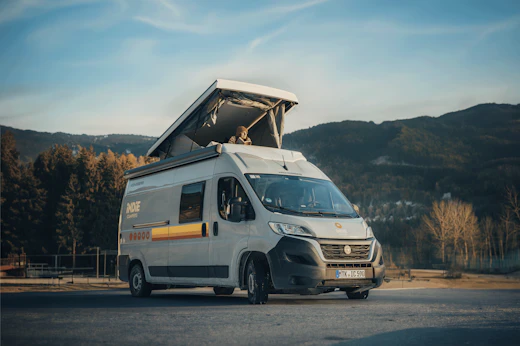
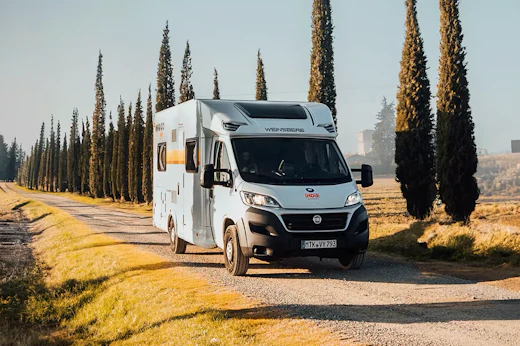
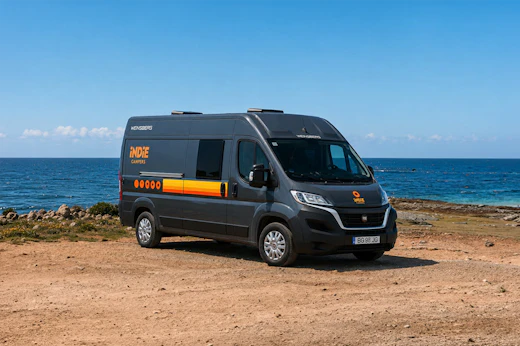
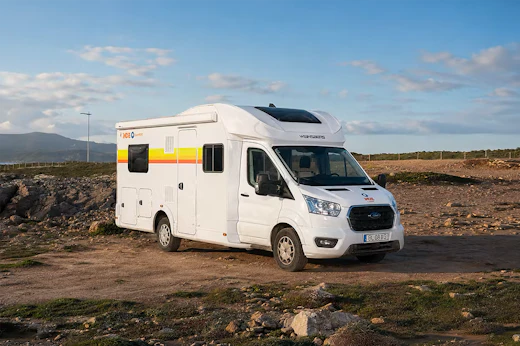
The number of people who can sleep in our RVs will depend on the size of the vehicle and the model. In general, our class C motorhome models can sleep up to 4-8 people, whereas our class B motorhomes can sleep up to 2-4. For cars with a rooftop tent, around 2 people can sleep in this vehicles. More details on our models and sleeping capacities can be found here.
If you are travelling in an RV, motorhome or caravan around Bergen, it is important to understand official camping rules of the country you are visiting. As natural areas are generally protected by laws, using an official campsite or designated overnight parking area is highly recommended. This helps protect local communities and ensures you can all enjoy safely. Read more safety tips and protocols here.
We offer three protection plans to cover incidents and damages during your rental period. All Indie Campers motorhomes come with insurance for third-party vehicles and property damage (valid insurance will depend on the country). For marketplace vehicles, insurance options may vary based on the host.
Learn more about our protection plans here.
Yes, our search filter allows you to find an RV near your location using a 60km radius system. This means depending on the location you are searching from, you will be able to find an Indie campervan rental pick-up center near you.
Yes, a selected number of Indie Campers RV rentals in Bergen include unlimited mileage, allowing you to explore freely and make the most of your road trip! Please note that unlimited mileage applies exclusively to Indie Campers RVs and is subject to responsible use.

RVs, Motorhomes & Campervans for Every Kind of Traveller
/night
/night
/night
/night

/night
/night

/night
/night

/night
“Thanks a lot, really great service and friendly pick up and drop off contact!”
“Excellent experience, always available and efficient in communication.”
“Great experience, would use again!”