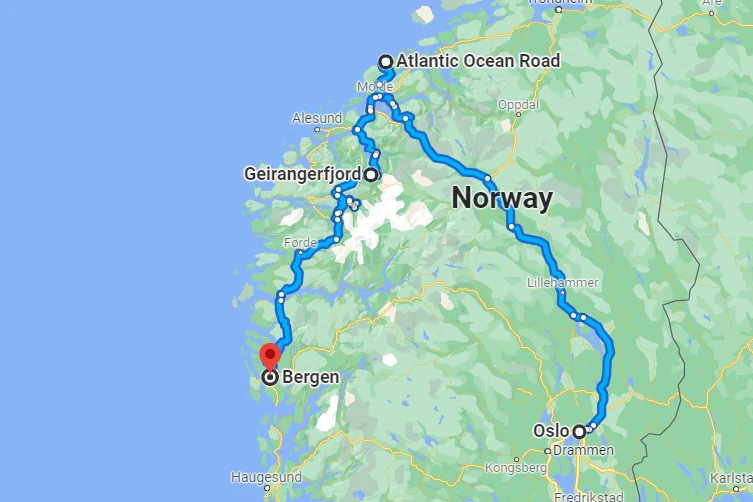

The capital of Norway, Oslo, sits on the country’s southern coast at the head of the Oslofjord. It’s renowned for its green spaces, being awarded the world’s greenest city more than once. It’s also home to a wealth of museums, including the Norwegian Maritime Museum and the Viking Ship Museum – the latter of which displays Viking ships from the 9th century.
Oslo is a notoriously beautiful city that mixes the old and the new. It has some stunning old-world areas that will make you feel like you’ve stepped back in time, nestled right next to modern skyscrapers.
If you want to visit Norway, starting in Oslo is a great option. It’ll help you get a feel for the country and its people before you set off to see the sights.
This iconic zig-zag road goes by a few names: Atlanterhavsveien, Atlanterhavsvegen, or the Atlantic Ocean Road. It traverses Møre og Romsdal county, linking up an archipelago of skerries and small islands with the help of a handful of bridges.
Driving the Atlantic Ocean Road puts you practically right on the ocean – particularly if it’s storming at the time! If you’d rather walk and take in the scenery, there are adjacent fishways built for that purpose – stroll their length or take in a spot of fishing while you’re at it.
An 8.3-km stretch, the Atlantic Ocean road is the perfect spot to pull up your campervan and take in some of the most breathtaking views in Norway.
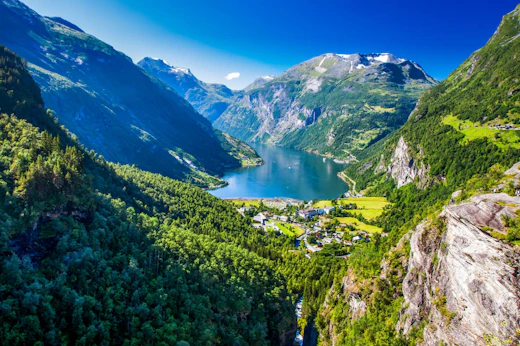
Geirangerfjord is a fjord in the Sunnmøre region of Møre og Romsdal county, Norway. Located completely in the Stranda Municipality, it’s a 15-km branch off the Sunnylvsfjorden.
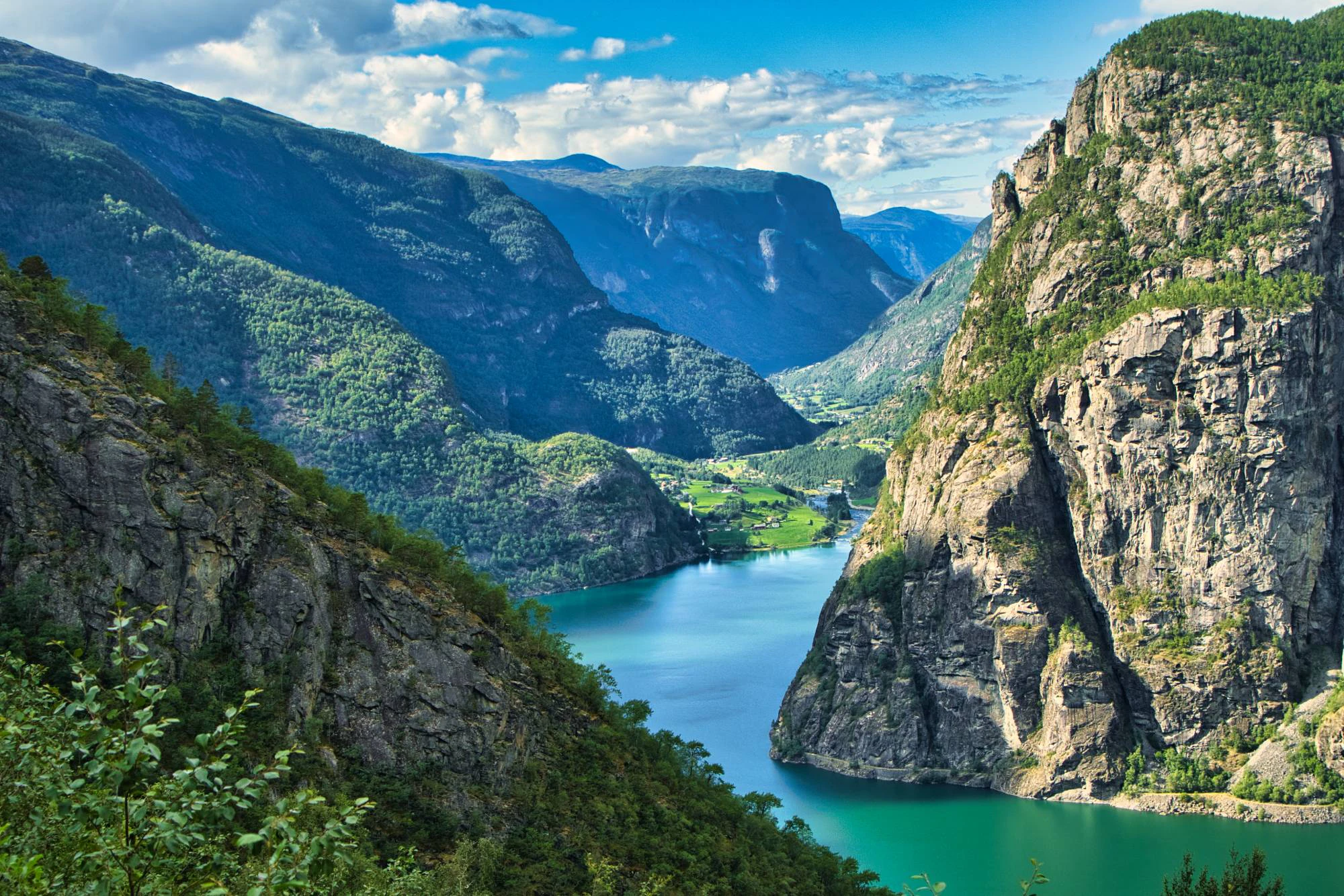
Geirangerfjord is a UNESCO World Heritage Site, and it’s easy to see why. Some call it the most astonishing fjord on the planet. Renowned for its towering mountain peaks, abundant waterfalls, and deep blue waters, the Geirangerfjord isn’t to be missed if you’re in Norway.
Whether you like a good hike or a leisurely sightseeing expedition, this fjord has everything you could want and more. Certified as a sustainable destination, the park works to reduce the negative impacts of tourism on the environment.
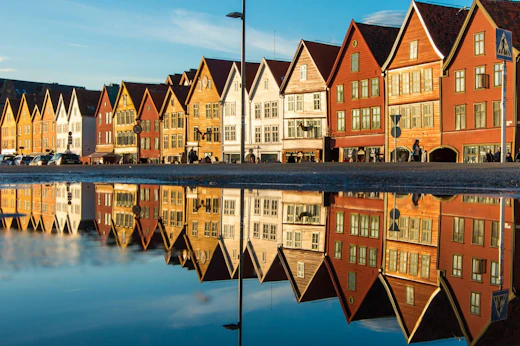
Located on Norway’s southwestern coast, Bergen is hemmed in by mountains and fjords, including Sognefjord, the area’s deepest and longest. Once a centre of the Hanseatic League’s trading empire, the city’s old wharf is now home to colourful wooden houses with a lot of charm and history.
Bergen is renowned for its university, which in turn is renowned for its world-class museum collections. If you’re a history buff, then you can’t miss the Natural History Collection, the Seafaring Museum, and the Cultural History Collection.
The city rates highly for its environmentalism, healthcare, and quality of living. Whether you’re a foodie, an outdoors aficionado, or a museum buff, there’s something for everyone in Bergen.