Start your adventure with an RV rental in Dublin from Indie Campers and explore Ireland's rugged coastlines and rolling green hills. Follow the crashing waves of the Wild Atlantic Way, circle the legendary Ring of Kerry, or trace a route through ancient castles, seaside villages, and towering cliffs from Cork to Donegal. Whether you're chasing surf, sunsets, or Celtic history, our campervans come with unlimited kilometers, kitchen and cleaning kits, and helpful extras like outdoor furniture, child seats, and pet-friendly gear. With a Europe-wide fleet and 4.8 star reviews, Indie Campers is trusted by travelers exploring Ireland their way.


Our Road Trips Itineraries
Ireland's road network, geography, and accommodation economics make a compelling case for campervanning that applies nowhere else in the English-speaking world quite as directly. The Wild Atlantic Way runs 2,500km from Donegal in the northwest to Cork in the southwest, passing through Connemara, Mayo, Clare, and Kerry along a coastline that ranks among the most dramatic in Europe. The majority of this route has no train line, minimal bus service, and hotel infrastructure that is either absent or priced at a significant premium in July and August. A campervan resolves all three constraints in a single booking.
Ireland is compact in a way that rewards road travel. Dublin to Galway is 220km. Dublin to Cork is 260km. Dublin to the Dingle Peninsula is 310km. The entire island, north to south, is approximately 480km. A campervan picked up in Dublin can reach any point on the Irish coastline within a single day's drive, making it the ideal vehicle for an itinerary that covers multiple regions without the logistical complexity of multi-city hotel bookings and luggage transfers.
The Wild Atlantic Way, Ireland's Ancient East, and Ireland's Hidden Heartlands are three nationally signed touring routes that are specifically designed for self-contained road travel. The signage is consistent and GPS-independent; a campervan traveller can follow the Wild Atlantic Way waymarkers from Malin Head to Mizen Head without a printed map. No equivalent infrastructure exists for public transport users on the same routes.
Wild camping legislation in the Republic of Ireland does not provide the same statutory right as Scotland's Land Reform Act. However, Ireland has a strong tradition of informal tolerance for responsible overnight parking on unenclosed land, particularly on the western coast and in the national parks. In practice, campervans overnight on the shores of Connemara loughs, Dingle strand car parks, and Achill Island beaches throughout the summer with minimal interference, provided waste is managed responsibly and the vehicle is moved on within 24 hours. Park4Night is the primary tool for finding these locations; the Irish community of verified spots is well-developed.
Unlimited mileage: A standard Ring of Kerry and Wild Atlantic Way circuit from Dublin covers approximately 1,800 to 2,500km over 10 to 14 days. A Dublin to Belfast, Causeway Coast, and return circuit adds approximately 600km. A Dublin to Connemara and Donegal loop adds approximately 1,200km. There is no scenario in which a 7 to 14-day Ireland campervan trip fits within the 100 to 150 miles per day cap that most standard Irish rental companies apply. No daily mileage cap applies on any Indie Campers rental.
One-way rentals across 100+ locations: Dublin to Belfast (166km, 2 hours) is the most natural Irish one-way: cover the Republic first, complete the Causeway Coast from the south, and drop in Belfast before flying home. Confirm route availability and one-way pricing at booking.
24/7 road assistance: Included. Relevant specifically on the N59 in Connemara (limited services between Clifden and Westport), the Kerry peninsula roads in poor weather, and the remote Donegal coast roads, where breakdown coverage is the difference between an inconvenience and a genuinely difficult situation.
Flexible cancellation available: Cancel up to 31 days before pick-up without penalty.
Book now, pay later: Secure the vehicle; payment due closer to departure.
Spring (April to June)
Temperatures: 10 to 17°C. The Atlantic coast from Clare to Donegal is at its clearest before the summer sea haze builds; the light on the Cliffs of Moher in May, photographed before 9am, has the edge definition of spring air. The Ring of Kerry is at its quietest in April (Killarney's horse-drawn jaunting cars are fewer; the N70 coach tour traffic has not yet peaked). Glendalough in April — before the Dublin day-tripper season builds — is as good as it gets: the oak woodland is in new leaf from late April, the waterfalls are high from winter rain, and the monastic ruins are not competing with the audio of a nearby tour guide.
The Cat Laughs Comedy Festival in Kilkenny (approximately early June, [VERIFY 2026 dates]) and the start of the Galway Arts Festival in late July mean the shoulder-season cultural calendar is active.
Skip if: Guaranteed warm swimming weather. Atlantic temperatures in April and May rarely exceed 12°C; the turquoise water of Dog's Bay looks extraordinary but swimming it in April is a specific choice.
Best for: Ring of Kerry; Dingle Peninsula; Cliffs of Moher; Connemara before peak crowds; Glendalough and Wicklow; distillery tours in Kerry and Antrim operating full schedules.
Summer (July to August)
Temperatures: 16 to 22°C on good days, averaging 16 to 18°C. The longest days: Dublin is at 53°N latitude; midsummer gives approximately 17 hours of light. The entire Wild Atlantic Way is at full operational capacity. CalMac equivalent: the Aran Island ferries from Doolin and Rossaveal run maximum frequency. Skellig Michael landing permit boats are fully booked from May onwards; July availability requires a March or April booking.
Galway race week (late July/early August) fills all Galway-area accommodation. Reek Sunday on Croagh Patrick (last Sunday July, 26 July 2026) means 25,000 people on one mountain; nearby overnight parking fills before dawn.
Best for: Maximum daylight; warmest Atlantic swimming; Aran Islands fully accessible; Skellig Michael (booked far ahead); full cultural programme in Galway and Kilkenny; warmest Connemara bog weather.
Skip if: Quiet roads and easy parking are priorities. The N70 Ring of Kerry in August has coach traffic from approximately 9am to 5pm; counterclockwise driving is essential, not optional.
Autumn (September to October)
Temperatures: 12 to 17°C in September, 8 to 13°C in October. The bracken and heather on the Wicklow Mountains and Connemara blanket bog turns copper and amber from mid-September. September is arguably the strongest single month in Ireland for a campervan trip: the summer visitor pressure is over, campsite prices drop, and the Atlantic coast weather window before the November storm season is typically good. The Lisdoonvarna Matchmaking Festival (September and early October, Lisdoonvarna, Co. Clare) is the largest matchmaking festival in the world and one of the more specific cultural experiences available to a traveler passing through the Burren area.
Skellig Michael landing is still possible in September (the season typically closes in October); Aran Islands ferry still operating; Ring of Kerry N70 coach traffic reduced to manageable levels after the first week of September.
Best for: Autumn colour on the Wicklow and Connemara uplands; post-peak road and campsite availability; September Lisdoonvarna; Kilkenny Arts Festival (August); Clifden Arts Week (September).
Skip if: Some smaller west coast campsites begin closing from mid-October; Skellig Michael boat trips end in October; Doolin to Aran Islands ferry may reduce to minimum schedule in October.
Winter (November to March)
Temperatures: 3 to 10°C. The Wild Atlantic Way in winter is the WAW without the crowds and with the full Atlantic weather: squalls, rainbow light, and swells breaking on the cliff bases that cannot be seen in summer because the sea is relatively calm. The Newgrange Winter Solstice (21 December) is the most significant annual event in Irish prehistory; the solar alignment illuminates the chamber at dawn. The lottery for the chamber is dramatically oversubscribed; applications open in September and the chances of selection are approximately 1 in 30 in most years. The external experience on the winter solstice is free and unrestricted.
The Dublin literary scene — the International Literature Festival, the Olympia Theatre winter programme, the Irish Film Institute — is active through January to March. St Patrick's Day (17 March) is the obvious seasonal marker; the Dublin parade draws approximately 500,000 spectators along O'Connell Street and the surrounding streets, and city-centre movement in a campervan on 17 March requires no more careful planning than in a large delivery vehicle on a city-closing holiday.
Best for: Off-peak pricing; Newgrange winter solstice; atmospheric Atlantic coast views; St Patrick's Day; Dublin cultural season; uncrowded Ring of Kerry and Wicklow.
Skip if: Many smaller campsites in Clare, Kerry, and Connemara close November to February; Skellig Michael inaccessible; Aran Islands reduced ferry schedule. Driving the Conor Pass in icy conditions requires winter tyre capability.
Most popular months for Dublin campervan rentals: June, July, August, and September.
3 to 5 Days
Wicklow and the Ancient East (3 days, approximately 250km)
Day 1: Pick up campervan; N3/M3 north to Brú na Bóinne; Newgrange shuttle bus (book in advance); Hill of Tara (25 minutes from Newgrange); return south; overnight near Wicklow or Rathnew
Day 2: Military Road (R115) south from Rathfarnham; Glenmacnass Waterfall; Glendalough (visitor centre, Upper Lake walk, lunch in Laragh); R755 north via Roundwood; Powerscourt Waterfall (afternoon); Enniskerry; overnight near Enniskerry or Bray area
Day 3: Powerscourt Estate gardens (morning); return to Dublin via N11; drop campervan
Ring of Kerry (4 to 5 days, approximately 800km)
Day 1: Dublin south on M8; Rock of Cashel stop (160km, 2 hours from Dublin); continue M8/N22 to Killarney (308km total, 3.5 hours); overnight Killarney area
Day 2: Muckross House and Killarney National Park; Ladies' View; Gap of Dunloe (on foot from Kate Kearney's Cottage); overnight Killarney
Day 3: Ring of Kerry counterclockwise (N71 Kenmare; N70 south coast; Waterville; Cahersiveen; back to Killarney) — full day circuit
Day 4: Dingle (N22/N86, 51km from Killarney, approximately 1 hour); Slea Head Drive; Gallarus Oratory; Conor Pass (fuel in Dingle first); overnight near Dingle or Tralee
Day 5: Return N21/M8 north; Cahir Castle option (GPS approximately 52.3758°N, 7.9259°W, OPW, [VERIFY admission]) on return; Dublin
7 to 10 Days
Wild Atlantic Way South (7 to 8 days, approximately 1,500km)
Day 1: Dublin; M7/M8 south; Rock of Cashel; overnight Tipperary area
Day 2: Continue south; Cork city (English Market morning); Kinsale afternoon; overnight near Kinsale or Clonakilty
Day 3: N71 west; Mizen Head (GPS approximately 51.4476°N, 9.8254°W, the southwesternmost point of the Irish mainland, admission to the visitor centre approximately €6 [VERIFY], dramatic suspension bridge over the sea stack); Schull; Bantry; overnight Bantry or Glengarriff area
Day 4: Glengarriff (Garinish Island, formal Italian garden on an island in Bantry Bay, OPW, boat trip plus admission required [VERIFY pricing]); Healy Pass (R574, the Cork/Kerry mountain pass, max gradient approximately 1 in 5 from the Cork side, suitable for standard campervans, dramatic in both directions); Kenmare; Ring of Kerry counterclockwise; overnight Kerry
Day 5: Dingle Peninsula: Slea Head Drive; Conor Pass; overnight Dingle area
Day 6: Dingle to Killarney (51km); N23/R523 west; Tralee; N69 north along Shannon Estuary; Tarbert; Shannon Ferry to Killimer (crossing 20 minutes, adult car approximately €18 return [VERIFY: current 2026 Tarbert-Killimer Shannon Ferry prices at shannonferries.com]); Kilkee; Doonbeg; Lahinch; Cliffs of Moher
Day 7: Doolin morning (session music evening previous night); Aran Islands ferry if time; Burren (Poulnabrone Dolmen, Ailwee Cave); Lisdoonvarna; Galway overnight
Day 8: Galway city; return Dublin via M6 (219km, 2.5 hours); or extend to Connemara
Dublin to the Causeway Coast One-Way (7 days, approximately 900km)
Day 1: Dublin; N11 south; Glendalough; overnight Wicklow area
Day 2: Return north; M1 to Brú na Bóinne (Newgrange); continue M1 north; Cross border; Belfast; Titanic Belfast and city; overnight Belfast area
Day 3: A2 Causeway Coastal Route north; Dark Hedges (early morning); Giant's Causeway; Bushmills Distillery; overnight Ballycastle or Bushmills area
Day 4: Carrick-a-Rede Rope Bridge; Dunluce Castle; Portrush; east Antrim coast; Belfast airport (BHD) or continue to Larne ferry to Cairnryan for Scotland connection; or return to Dublin for drop (166km, 2 hours via A1/M1)
14+ Days
Ireland Full Circuit (Dublin pickup, Dublin or Belfast drop)
Days 1 to 2: Dublin; Ancient East (Newgrange, Tara, Kilkenny)
Days 3 to 4: M8 south; Rock of Cashel; Cork; Kinsale
Days 5 to 6: Mizen Head; Sheep's Head Peninsula; Killarney; Ring of Kerry counterclockwise
Days 7 to 8: Dingle Peninsula; Slea Head Drive; Conor Pass; Shannon Ferry
Days 9 to 10: Cliffs of Moher; Burren (Poulnabrone, Ailwee); Doolin; Aran Islands (day trip Inis Mór); Galway overnight
Days 11 to 12: Connemara; Kylemore Abbey; Sky Road; Clifden; N59 north to Westport; Croagh Patrick
Days 13 to 14: Achill Island; Keem Bay (compact vehicle only); Sligo; Yeats Grave (Drumcliffe); Carrowmore
Days 15 to 16: Donegal; Slieve League; Glenveagh National Park; Fanad Head
Days 17 to 18: Malin Head; south on N13/N14; Derry (free Walled City, Bogside murals); A2 Causeway Coast; Giant's Causeway; Belfast
Day 19: Titanic Belfast; fly from BHD (George Best Belfast City) or return M1 south to Dublin for Dublin drop — 166km, 2 hours.
Fill the tank in Dublin before departure on any route. Petrol and diesel in rural Ireland — particularly on the Wild Atlantic Way and on the peninsulas of Kerry and Donegal — are significantly more expensive than Dublin prices.
Best Dublin departure fuel stations:
Applegreen on the M50 (multiple locations on the M50 orbital, specifically the M50 Motorway Services at Liffey Valley, exit 7, and at the Red Cow area). The M50 service stations are the cleanest departure point for any outbound route.
Tesco Extra, Clearwater Shopping Centre (Finglas, D11) — directly on the M50 north, near junction 4, convenient for M1 north toward Belfast and Drogheda.
Lidl and Tesco supermarkets near the M50 ring: consistently the cheapest pump prices in Dublin. Check pumps.ie for current lowest prices before departure.
Key fuel stops on main routes:
M8 south to Cork and Kerry: Cashel town (before and after Rock of Cashel visit); Mitchelstown; Fermoy; Cork City Ring Road has all major supermarket forecourts. Killarney town (N22, good choice of stations). Fill in Killarney before the Ring of Kerry; stations on the N70 west coast section are fewer and more expensive.
N70 Ring of Kerry: Kenmare (fill here before N71 or N70 south coast); Cahersiveen (fill here before Portmagee and Valentia Island); Killorglin on N70 return. Do not rely on stations in Waterville or Sneem; they may be closed outside business hours.
Dingle Peninsula (N86): Dingle town has fuel; fill here before the Conor Pass or the Slea Head Drive. There are no fuel stations on the Slea Head loop or over the Conor Pass.
M6 west to Galway and Connemara: Athlone has multiple stations (good stop midway). Galway city ring road. Clifden (fill here before the N59 north; the N59 from Clifden to Westport, approximately 66km, has no filling stations).
N59 Clifden to Westport: No fuel stations. Confirmed gap of approximately 66km. Fill at Clifden and, if the tank is less than half, do not attempt this stretch without Clifden fuel.
Donegal coast: Killybegs (fill here before Slieve League and the south Donegal coast); Glencolmcille area has limited fuel; Dungloe/Dunlewy area has stations. Letterkenny is the main provisioning town for north Donegal.
LPG in Ireland: Extremely limited. Some Maxol stations in major towns carry Autogas (LPG). Do not plan a WAW circuit around LPG availability; fill in Dublin at the one confirmed LPG station near your departure route.
Northern Ireland fuel: Priced in pence-per-litre sterling; generally slightly cheaper than the Republic on a unit-cost basis, though the exchange rate determines the actual cost to euro-paying travelers. Fill in Newry (just across the border from the Republic, the first significant town northbound on A1/M1) if coming from the Republic on the Belfast/Causeway Coast route — Newry has multiple supermarket forecourts and is consistently one of the cheapest fuel options on the island.
Age and License Requirements
Minimum rental age: 21 years.
Irish and UK license holders: A full Irish or UK driving license is valid throughout the Republic of Ireland without additional documentation.
EU license holders: A full EU driving license is valid in the Republic of Ireland without additional documentation. No IDP is required for EU nationals driving in Ireland.
International visitors (non-EU, non-EEA): An International Driving Permit (IDP) is recommended alongside your national license for visitors from non-EU countries. Ireland recognises the 1949 and 1968 Geneva Convention IDPs. Obtain your IDP from your home country's automobile association before departure; IDPs cannot be obtained at Irish airports or rental counters. [VERIFY: confirm current IDP requirements for your nationality at gov.ie before departure.]
Driving in Northern Ireland: If the itinerary crosses into Northern Ireland (Derry, Belfast, the Causeway Coast), the same license documentation applies; the border between the Republic and Northern Ireland is an open border with no vehicle inspection or documentation check under the current arrangements. Confirm cross-border driving permissions with Indie Campers at booking.
Credit Card and Deposit
A credit card in the primary driver's name is required at pickup. Debit cards and prepaid cards are not accepted. The security deposit is held on the credit card at pickup; the amount varies by vehicle class and selected protection plan. Confirm the exact deposit amount during the booking process at indie-campers.com.
Low Emission Zone
Dublin does not currently operate a formally enforced Low Emission Zone equivalent to the UK CAZ or LEZ system. [VERIFY: current status of any Dublin city centre Zero Emission Zone or Low Emission Zone proposals at dublincity.ie before departure; Dublin City Council has published plans for a Zero Emission Zone covering the city centre but enforcement timelines have been subject to revision.]
Toll Roads:
Ireland operates a network of barrier-free electronic tolls on motorways and national roads. The most important for Dublin-based campervan itineraries:
National Park and Attraction Passes
Ireland has no unified national park pass equivalent to the US America the Beautiful Pass. Entry to Ireland's six national parks (Killarney, Connemara, Wicklow Mountains, Glenveagh, Ballycroy, and Burren) is free; no admission charge applies to enter the park areas themselves.
OPW Heritage Card: The Office of Public Works (OPW) Heritage Card covers entry to over 90 state-managed heritage sites across Ireland for 12 months from first use. Priced at approximately €40 for an adult. [VERIFY: current 2026 OPW Heritage Card pricing at heritageireland.ie.] From a Dublin-based itinerary, relevant OPW sites include: Kilmainham Gaol, Glendalough Visitor Centre, the Rock of Cashel, Newgrange and Brú na Bóinne Visitor Centre (Meath, 50km north of Dublin), Clonmacnoise (Offaly), and dozens of sites along the Wild Atlantic Way and Ireland's Ancient East. The card pays for itself within three to four OPW site visits; Newgrange alone is approximately €14 adult walk-up.
Newgrange and Brú na Bóinne: Access to the Newgrange passage tomb interior is by timed shuttle bus from the Brú na Bóinne Visitor Centre only; walk-in access to Newgrange directly is not permitted. Book shuttle bus tickets in advance at heritageireland.ie; July and August morning slots sell out weeks ahead. The OPW Heritage Card covers the shuttle bus entry.
Reservation Systems
There is no single Irish booking platform equivalent to Recreation.gov. Book campsites through Pitchup.com, Campsites.co.uk (covers Ireland as well as the UK), or directly through individual campsite websites.
RV rental: €700 to €1,500 (compact Adventure in May or September at the lower end; large Comfort motorhome in July at the upper end; verify current rates at indie-campers.com)
Fuel: €90 to €180 (estimated 500 to 750km for a 7-day Wicklow/Ring of Kerry/Cliffs of Moher circuit; Dublin city pump prices approximately €1.55 to €1.70/litre diesel; rural Kerry and Connemara 10 to 15c/litre above Dublin prices; fill at Tesco/Lidl before departure).
Tolls: €15 to €40 (M50 tolls at approximately €4 to €6 per transit for motorhome category; M8 Portlaoise toll; M6 Galway tolls; total tolls over a 7-day circuit with M50 daily use approximately €20 to €35 depending on route; verify current rates at tii.ie).
Campgrounds: €105 to €280 (Camac Valley Dublin first night approximately €25 to €35; Killarney Fossa approximately €25 to €35; Doolin approximately €20 to €30; Salthill Galway approximately €30 to €40; 7 nights averaging €25 to €40/night depending on season and site)
Ferries and boat trips: €0 to €200 (Aran Islands day return from Doolin approximately €25 to €30 per person; Skellig Michael boat trip approximately €95 to €115 per person if booked; Shannon Ferry Tarbert to Killimer approximately €18 return per car; no ferry required for all-land 7-day circuit)
Food and provisioning: €140 to €350 (Lidl or Tesco provisioning Dublin departure approximately €40 to €60 for two people for several days; Kinsale seafood lunch approximately €35 to €55 for two; Loch Fyne-equivalent Doolin pub session food approximately €25 to €40; Ring of Kerry local pub food; Galway McDonagh's fish and chips approximately €25 for two)
Activities and admissions: €40 to €180 (OPW Heritage Card adult €40 [VERIFY] covers Newgrange, Rock of Cashel, Muckross House, Kilmainham Gaol — pays for itself on sites covered; Cliffs of Moher approximately €9 adult; Blarney Castle approximately €18 adult; Kylemore Abbey approximately €13 adult; Glendalough visitor centre approximately €5 adult; all beaches, cliffs, hill walks, and lochside access free)
Total estimates:
Budget (€1,100): Compact Adventure in May; Camac Valley Dublin first night; Glendalough free ruins; Rock of Cashel OPW Heritage Card; Ring of Kerry self-catered; Doolin Camping; Cliffs of Moher admission; Connemara National Park free; supermarket provisioning throughout; no Skellig Michael or Aran Islands ferry.
Mid-range (€2,000): California campervan in September; full OPW Heritage Card (Newgrange, Rock of Cashel, Muckross, Kilmainham Gaol); Salthill Caravan Park Galway; Clifden Eco Beach; Kylemore Abbey; Aran Islands day trip from Doolin; Kinsale seafood dinner; Ring of Kerry counterclockwise.
Premium (€3,600): Comfort motorhome in August; all full-service sites with EHU; Skellig Michael boat trip (two people); Blarney Castle; Kylemore Abbey; Titanic Belfast; full OPW Heritage Card; Galway Aniar tasting menu; Dublin Thornton's or Bastible dinner before departure; Bushmills Distillery premium tour.
Dublin → Belfast (approximately 170km via M1, approximately 1 hour 45 minutes): The most direct Irish one-way and the natural choice for a northern Ireland itinerary. Pick up in Dublin; drive north through County Louth, the Boyne Valley (Newgrange, Trim Castle), and County Down; drop in Belfast. Alternatively cover the Causeway Coast (Giant's Causeway, Carrick-a-Rede, Dunluce Castle) before dropping in Belfast. Belfast City Airport (BHD) and George Best Belfast City Airport serve UK domestic routes; Belfast International Airport (BFS) covers European and transatlantic connections.
Dublin → Edinburgh (approximately 650km via ferry Holyhead to mainland UK and M6/M74, approximately 8 to 10 hours total including ferry): The primary Ireland-to-Scotland one-way. Drive from Dublin to Dún Laoghaire or Dublin Port; take the Stena Line or Irish Ferries crossing to Holyhead (approximately 2 to 3.5 hours depending on route); drive north through Wales and England via the A55, M6, and M74 into Scotland; drop in Edinburgh. Book the ferry vehicle space at stenaline.ie or irishferries.com at least 4 to 6 weeks ahead in summer; motorhome spaces are limited per sailing. Edinburgh Airport (EDI) provides extensive European and transatlantic connections.
Dublin → Glasgow (approximately 600km via ferry and M74, approximately 7 to 9 hours total including ferry): Similar routing to Edinburgh but continuing on the M74 into Glasgow rather than the M8 east. Dublin ferry to Holyhead; A55 east through North Wales; M6 north; M74 into Glasgow. A logical one-way for a west of Scotland itinerary covering Loch Lomond, Argyll, and the Inner Hebrides after crossing from Ireland. Glasgow Airport (GLA) serves European routes and select transatlantic services.
Dublin → London (approximately 700km via ferry and M1, approximately 9 to 11 hours total including ferry): The full Ireland-to-England one-way. Dublin to Holyhead by ferry; A55/A5/M1 south through the Midlands to London. Alternatively, Rosslare to Pembroke (Irish Ferries, approximately 4 hours crossing); A48/M4 east to London. The Rosslare routing adds distance but allows coverage of South Wales (Pembrokeshire, Brecon Beacons) en route. Not intended as a single-day transit; plan 8 to 12 days minimum. London Heathrow and Gatwick provide the broadest range of international departures for the return flight.
Dublin → Bristol (approximately 580km via Rosslare to Pembroke ferry and M4/M5, approximately 8 to 10 hours total including ferry): The most natural Ireland-to-Southwest-England one-way. Rosslare to Pembroke by Irish Ferries (approximately 4 hours); A48/M4 east through South Wales; M5 south to Bristol. The routing allows coverage of the Pembrokeshire Coast National Park, the Brecon Beacons, and the Wye Valley en route. Book the Rosslare to Pembroke ferry at irishferries.com at least 4 to 6 weeks ahead in peak season.
One-way pricing and availability vary by route and season; confirm at booking.
Dublin Airport (DUB) is Ireland's primary international gateway, handling direct transatlantic routes to New York, Boston, Chicago, Los Angeles, Toronto, and Washington, alongside European connections across more than 180 destinations. For road trippers arriving from North America, Dublin is frequently the most direct entry point to the island of Ireland, eliminating the need to connect through London or another European hub before beginning the road trip.
The airport's US pre-clearance facility, one of only a handful outside the United States, means transatlantic arrivals from the US clear US customs and immigration at Dublin before departure and arrive into the US domestic terminal. For the return journey, this reduces end-of-trip airport processing time significantly.
Dublin also sits at the eastern end of Ireland's most important road corridors. The M1 north reaches Belfast in approximately 1 hour 45 minutes. The M7 southwest reaches Limerick in under 2 hours. The M8 south reaches Cork in approximately 2.5 hours. The M4 and M6 west reach Galway in just over 2 hours. Starting in Dublin gives immediate access to all four primary Irish touring directions from a single depot, with motorway-standard roads in every direction for the first 100 to 150km before the network transitions to national and regional roads.
For travelers combining Ireland with a broader UK itinerary, Dublin and Edinburgh or Glasgow bracket a logical two-country road trip. Pick up in Dublin, cover Ireland's west coast, cross to Northern Ireland, continue through Scotland, and drop in Edinburgh or Glasgow. The ferry connections from Dublin Port (Stena Line and Irish Ferries to Holyhead) and from Rosslare (to Pembroke and Cherbourg) allow the campervan to move between Ireland and the UK or mainland Europe without air travel.
In general, a special licence is not required to rent our RVs in Dublin. However, a valid driving license is required to operate our vehicles. For some non-EU citizens, a IDP is required, in addition to their home country's drivers licence. Other considerations such as a valid vehicle licence to the vehicle type (manual or automatic) will also be required. For more information regarding our licence requirements read this.
Yes, our RVs are pet-friendly. Just make sure to purchase the extra cleaning service during your booking. This service includes professional anti-allergic cleaning after your trip. Please note that only one pet is allowed per motorhome, and it must weigh no more than 30kg. Keep in mind, we are not responsible for any legal fees related to traveling with your pet. For marketplace bookings, check the "vehicle rules" section for the pet-friendly icon to confirm if pets are allowed in that specific vehicle.
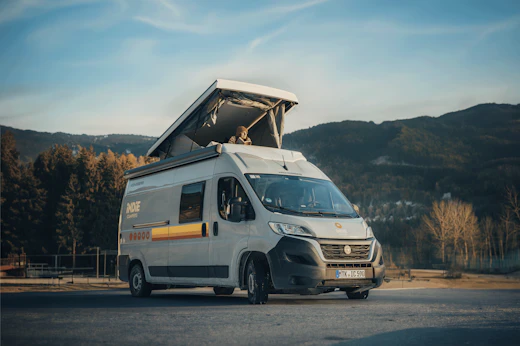
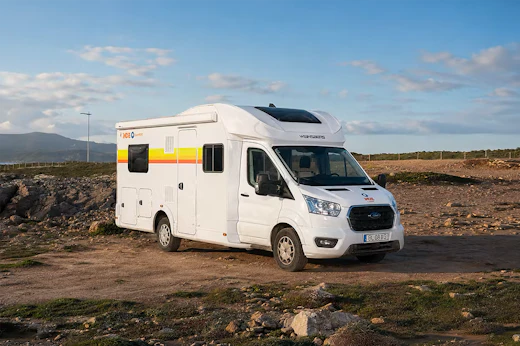
The number of people who can sleep in our RVs will depend on the size of the vehicle and the model. In general, our class C motorhome models can sleep up to 4-8 people, whereas our class B motorhomes can sleep up to 2-4. For cars with a rooftop tent, around 2 people can sleep in this vehicles. More details on our models and sleeping capacities can be found here.
If you are travelling in an RV, motorhome or caravan around Dublin, it is important to understand official camping rules of the country you are visiting. As natural areas are generally protected by laws, using an official campsite or designated overnight parking area is highly recommended. This helps protect local communities and ensures you can all enjoy safely. Read more safety tips and protocols here.
We offer three protection plans to cover incidents and damages during your rental period. All Indie Campers motorhomes come with insurance for third-party vehicles and property damage (valid insurance will depend on the country). For marketplace vehicles, insurance options may vary based on the host.
Learn more about our protection plans here.
Yes, our search filter allows you to find an RV near your location using a 60km radius system. This means depending on the location you are searching from, you will be able to find an Indie campervan rental pick-up center near you.
Yes, a selected number of Indie Campers RV rentals in Dublin include unlimited mileage, allowing you to explore freely and make the most of your road trip! Please note that unlimited mileage applies exclusively to Indie Campers RVs and is subject to responsible use.
RVs, Motorhomes & Campervans for Every Kind of Traveller
/night
/night

/night
/night

/night
/night

/night
/night
/night

/night
“Johnny looked after us really well - top lad.”
“Great trip, made the tour of Ireland with the van!”
“100% service and will definitely use again soon”