Hit the road with an RV rental in Spain from Indie Campers and explore a country where every region tells a different story, from golden coastlines and whitewashed villages to vibrant cities and rugged mountains. Whether you are chasing surf in the south, tapas in the cities, or scenic drives in the north, Indie Campers has the right van for your journey. Choose from a fleet of well-equipped campervans with unlimited kilometers, flexible one way options, 24/7 online assistance, and practical extras like sunshades, foldable bicycles, or outdoor furniture. Trusted by thousands of travelers and rated 4.8 stars across Europe, Indie Campers makes discovering Spain comfortable, flexible, and unforgettable.


Our Road Trips Itineraries
Spain's national park geography makes the practical case for campervan travel without any inflation. The 16 parks are distributed across the country in a way that no fixed-base itinerary can cover efficiently. Picos de Europa, Spain's first national park (1918) on the Cantabrian coast, sits 330 miles west of the Pyrenees and 950 miles north of Doñana in Andalusia. Ordesa y Monte Perdido in the Aragonese Pyrenees is 470 miles from the Sierra Nevada. Teide on Tenerife requires a flight. The campervan makes a six-park circuit possible on a single rental, with the Fuente Dé cable car at Picos de Europa (€14–18 round trip) and the mandatory, free summit permit for Teide's Telesforo Bravo trail as the only entry costs across the entire circuit.
The cost comparison is particularly clear in Spain's high season. A three-star hotel room in central Barcelona in August runs €180–280/night. The Camping Gavà Mar (GPS: 41.2790° N, 2.0237° E), 6 miles from the Barcelona depot and 200 meters from the beach, runs €50–65/night for an RV pitch with electric hookup. In Seville during Semana Santa (Holy Week), city-center hotel rates reach €200–400/night for a standard room. Camping Villsom in Dos Hermanas (GPS: 37.3130° N, 5.9440° E), 12 miles from the Seville depot, runs €28–42/night. Applied across 14 nights, the campground versus hotel differential generates a saving of €2,000–4,000 before activities, food, or transport are calculated.
Spain's campground infrastructure has one important seasonal characteristic: it is summer-oriented. Most coastal campgrounds in Catalonia, Valencia, Andalusia, and Galicia operate from April through October only. Year-round campgrounds concentrate in southern Andalusia (particularly the Costa del Sol corridor from Málaga east), the Canary Islands (year-round operation), and inland urban areas. The área de autocaravanas network, approximately 2,000+ designated RV parking areas distributed across Spain, supplements the campground calendar: many operate year-round in towns and village centers with water, gray water disposal, and electrical hookup at €5–15/night. Use the Park4Night app and Autocaravanas.info to locate legal overnight spots along your route before departure.
Here is what sets Indie Campers apart from other Spain rental companies:
Unlimited mileage — Drive from Bilbao to Málaga (1,000 miles), the full Ruta de la Plata (970 miles), or the Mediterranean coast in a single rental without a per-day distance calculation. Most competitors in Spain cap at 200–300 km/day; a single Andalusia circuit regularly exceeds 1,100 miles.
10 pickup locations across Spain — Start in Madrid and end in Málaga. Pick up in Bilbao and drop off in A Coruña for the Green Spain route. Or begin in Barcelona and finish in Alicante for the Mediterranean coast. No backtracking to your start city.
One-way rentals across 100+ locations globally — Cross from Spain into Portugal (the Madrid depot to Faro, Portugal route is one of the most popular cross-border one-ways in the European network), or continue north into France from the Barcelona depot. The European network connects Spanish depots to Lisbon, Porto, Paris, and beyond.
24/7 road assistance — Included on every booking across all 10 Spanish depots and all cross-border routes.
Basic Protection Plan included — Covered from day one. Upgrade options available at booking.
Flexible cancellation available — Cancel up to 31 days before pickup without penalty.
Book now, pay later — Full payment is not required until 30 days before pickup.
Ruta de la Plata: Seville to Santiago de Compostela (970 miles, 7–10 days recommended)
Start: Seville → End: Santiago de Compostela (A Coruña center, 60 miles from Santiago)
Passes through: Mérida, Cáceres, Salamanca, Zamora, Ourense
The Ruta de la Plata is one of the oldest roads in Iberia, following the Roman Vía de la Plata north along the western edge of the peninsula from Hispalis (Seville) to the Atlantic coast. The route predates the Camino de Santiago by several centuries — Roman legions used it to move between the Guadalquivir river valley and the northern conquest territories. By road, it runs approximately 970 miles and crosses four autonomous communities: Andalusia, Extremadura, Castilla y León, and Galicia, each with a completely different climate, cuisine, and landscape.
The route's fixed reference points are the Roman theater and amphitheater at Mérida (GPS: 38.9163° N, 6.3422° W, UNESCO, the most completely preserved Roman theater in Spain, active performance program, €12/adult for the archaeological ensemble), the medieval walled city of Cáceres (GPS: 39.4752° N, 6.3722° W, UNESCO, the best-preserved medieval city center in Spain with 30 towers intact), Salamanca's Plaza Mayor and its two universities (GPS: 40.9630° N, 5.6633° W, UNESCO), and the final entry into Santiago de Compostela's old town on the traditional Pilgrim's Way (GPS: 42.8805° N, 8.5457° W, UNESCO, the Cathedral de Santiago de Compostela is the terminus of all Camino routes).
Highlights: Extremadura's dehesa landscape (cork oak and holm oak savanna, the largest traditional agroforestry system in Europe at 4 million hectares across Spain and Portugal, grazed by the Iberian pigs that produce jamón ibérico); the Parque Nacional de Monfragüe (GPS: 39.8260° N, 6.0073° W, the best site in Spain for black vultures and Spanish imperial eagles, free entry, designated RV parking at the visitor center); the Galician river valleys north of Ourense where granite farmsteads and elevated hórreos mark the transition into Celtic Iberia
Best season: April through June and September through October; summer (July–August) is hot in Extremadura (40°C+ is common in July); winter is cold in Salamanca and Zamora (night frosts from November through March)
One-way option: Yes, Seville depot to A Coruña depot (the only depot pair that makes the full Ruta de la Plata viable as a one-way; Santiago de Compostela is 60 miles from A Coruña)
The Andalusia Circuit (1,100 miles, 7–10 days recommended)
Start: Seville or Málaga → End: Seville or Málaga depot (loop or one-way)
Passes through: Córdoba, Granada, Málaga, Ronda, Cádiz, Jerez de la Frontera
Andalusia's circuit is Spain's most culturally dense road trip in the tightest geographic area. The three UNESCO sites at Seville (Alcázar, Cathedral, Archivo de Indias), Córdoba (Mezquita, historic center, Medina Azahara), and Granada (Alhambra, Generalife, Albaicín) sit within a 350 miles triangle. The route connects them via the Via Verde del Aceite (the former railway line through the olive oil country of Jaén province) and continues south through the Alpujarras mountain villages, the Costa del Sol, Ronda's gorge, the sherry towns of Jerez and El Puerto de Santa María, and Cádiz on its Atlantic peninsula — the oldest continuously inhabited city in western Europe, founded by the Phoenicians around 1,100 BC.
Highlights: The Alhambra Nasrid Palaces (book at alhambra-patronato.es, €14/adult, 6,600 daily entry slots across all areas; Nasrid Palaces specifically require timed entry); the Ronda Tajo gorge and Puente Nuevo (GPS: 36.7462° N, 5.1614° W, 98 meters above the Guadalevín river, the most photographed bridge in Andalusia); the Coto de Doñana restricted-zone 4x4 tour from El Rocío or Sanlúcar de Barrameda (€30–35/person, book in advance)
Best season: March through May and October through November; avoid August (Seville interior regularly exceeds 45°C; the coast is manageable at 28–32°C but campgrounds fill)
One-way option: Yes, Seville depot to Málaga depot (240 miles, 2.5 hours direct; ideal for one-directional Andalusia coverage)
Green Spain: Bilbao to A Coruña (590 miles, 6–8 days recommended)
Start: Bilbao → End: A Coruña
Passes through: San Sebastián/Donostia, Santander, Santillana del Mar, Gijón, Oviedo, Lugo, Santiago de Compostela
The Green Spain coastal route follows the Cantabrian Sea west from the Basque Country to Galicia along the A-8 motorway (toll-free throughout) and the older N-634 coastal road where it detours through fishing villages and cliff-top headlands. The Basque section (Bilbao to San Sebastián, 100 miles) is the most gastronomically concentrated 100 miles stretch in Spain: the Bilbao and San Sebastián/Donostia metro areas between them hold more Michelin stars per square kilometer than any comparable area in the world except the Copenhagen region of Denmark. The Cantabrian section (Santander to Llanes, 150 miles) has Spain's best surf beaches (Playa de Somo near Santander, Playa de Merón in San Vicente de la Barquera) and the Picos de Europa rising directly behind the coast at 2,000–2,648 meters. The Asturian section (Llanes to Gijón, 150 miles) contains the Jurassic Coast dinosaur footprint sites (Playa de La Griega, GPS: 43.5160° N, 5.3190° W, sauropod trackways directly on the beach, free access) and the Covadonga Lakes (GPS: 43.2556° N, 4.9973° W, two glacial lakes at 1,000 meters in the Picos de Europa, the road is closed to private vehicles in peak season: use the shuttle from Cangas de Onís at €3/person). Galicia (A Coruña to Santiago de Compostela, 60 miles south) closes the route at the Cathedral and the Atlantic coast.
Highlights: The Guggenheim Bilbao (GPS: 43.2688° N, 2.9340° W, €18/adult); the Altamira neocueva replica at Santillana del Mar (GPS: 43.3917° N, 4.1033° W, €3/adult, 14,000-year-old Paleolithic cave art reproductions); the Cape Fisterra lighthouse (GPS: 42.8863° N, 9.2695° W, 60 miles west of Santiago, the traditional end of the Camino, free access)
Best season: June through September; July and August are the only reliably dry months; spring and fall involve significant rain but dramatic coastal light
One-way option: Yes, this is a natural one-way from the Bilbao depot to the A Coruña depot; the route does not loop
Pyrenees Mountain Route (700 miles, 6–8 days recommended)
Start: Bilbao → End: Barcelona (or reversed)
Passes through: Pamplona, Jaca, Ordesa National Park, Ainsa, Benasque, Sort, La Seu d'Urgell, Ripoll
The Spanish Pyrenees stretch 430 miles along the French border from the Atlantic coast of Navarra to the Mediterranean coast of Catalonia, reaching their highest point at the Aneto summit (3,404 meters, GPS: 42.6305° N, 0.6557° E) in the Aragonese Pyrenees. The mountain route follows a series of north–south valleys that connect at their base via the N-240 and A-23 roads, with each valley (the Hecho, Ansó, Ordesa, Benasque, and Boí valleys) having a distinct character and campground infrastructure. The route is not a continuous mountain-crest road: the Spanish Pyrenean passes are higher and less accessible to campervans than the French side, with most passes above 2,000 meters. The practical route follows valley roads at 800–1,500 meters, with day hikes into the high terrain.
The Ordesa y Monte Perdido National Park (GPS: 42.6416° N, 0.0490° W, 15,608 hectares, UNESCO) is the route's centerpiece: the Ordesa Canyon is a 4 miles wide, 1,000 meter deep glacially carved box canyon of limestone walls, accessible on foot from the Pradera de Ordesa car park. In peak season (July–August), the road into the canyon is closed to private vehicles; use the shuttle bus from Torla (€4–5/person, runs from the P2 parking area 4 miles below Torla). Campervans stay in Torla or at the Campingplatz Valle de Pineta on the canyon's east side.
Highlights: The Ainsa medieval village (GPS: 42.4183° N, 0.1411° E, one of the best-preserved Romanesque villages in the Pyrenees, free access); the Romanesque art route through the Boí Valley churches (GPS: 42.5100° N, 0.8331° E, nine Romanesque churches in one valley, UNESCO, combined ticket €7/adult); the Cerdanya plateau (GPS: 42.4000° N, 1.7000° E, a shared Franco-Spanish Alpine valley at 1,000 meters with the highest sunshine hours of any Pyrenean valley — 3,000 hours/year)
Best season: June through September for full pass and trail access; ski resorts in the Aragonese and Catalan Pyrenees operate December through April; the Ordesa shuttle is required July–August
One-way option: Yes, Bilbao depot to Barcelona depot via the N-240 and A-2 (most practical direction: west to east follows the grain of the valleys)
Mediterranean Coast Route: Barcelona to Málaga (1,000 miles, 8–12 days recommended)
Start: Barcelona → End: Málaga (or Alicante for a shorter version)
Passes through: Tarragona, Valencia, Alicante, Cartagena, Almería, Nerja
The full Mediterranean coast road from Barcelona to Málaga connects the three Mediterranean autonomous communities (Catalonia, Valencia, Murcia) and the eastern edge of Andalusia in a continuous coastal and near-coastal corridor. The AP-7 autopista runs the entire length; south of Alicante it becomes toll-free (AP-7 south: Alicante to Cartagena to Almería is free since 2020). The A-7 runs parallel and is toll-free throughout. The practical strategy for campervans: use the A-7 toll-free road through the busiest Catalan and Valencian sections, and take the AP-7 only where the A-7 passes through urban centers without easy parking.
The route's geographic logic shifts at each major section. The Costa Brava (Blanes to French border, GPS: 41.6723° N, 2.7959° E to 42.3527° N, 3.1747° E) is the most scenically varied Costa: not a continuous flat beach but a succession of coves, fishing villages, and cork oak headlands accessible only by coastal path. The Costa Dorada (Tarragona to Salou) is the Roman coast: Tarragona's amphitheater and circus ruins are the largest Roman remains in Spain outside Mérida. The Costa Blanca (Alicante province) has the highest density of campgrounds per kilometer of coast in Spain. The Costa de Almería below Almería city is the wildest and emptiest section: the Cabo de Gata Natural Park (GPS: 36.7728° N, 2.1835° W, 50 miles of volcanic coast with no development between lighthouse and lighthouse, campground at Los Escullos at €25–35/night) is the largest protected coastal area in the western Mediterranean.
Highlights: The Roman amphitheater and Tarraco ruins in Tarragona (GPS: 41.1189° N, 1.2445° E, UNESCO, free exterior access, €3.30–9/adult for individual monument entry); the Tabarca island day trip from Alicante by ferry (GPS: 38.1656° N, 0.4803° W, Spain's only inhabited offshore island nature reserve in the Mediterranean, €12–15 round trip ferry); the Cabo de Gata lighthouse at Arrecife (GPS: 36.7283° N, 2.1944° W, the volcanic headland at the park's southern tip, the best sunset viewpoint on the Almería coast, free access)
Best season: May through June and September through October for the full coast without July/August crowds; July and August are viable with advance campground bookings (3–4 months ahead for Catalonia; 4–6 weeks for Valencia and Murcia)
One-way option: Yes, Barcelona depot to Málaga depot; or Barcelona depot to Alicante depot for a 520 miles shorter version
Summer (June through August)
Spain's peak travel season is also its most geographically polarized: the Mediterranean coast and the islands are at their best (warm sea, 26–30°C air temperature, 10–11 hours of daylight), while the Meseta interior and Andalusia's interior cities hit 38–45°C in July and August — genuinely limiting conditions for outdoor activity between 11 a.m. and 6 p.m. The Green Spain coast (Bilbao to A Coruña) is its warmest and driest in July–August, making summer the only reliable window there.
Regional picture in summer:
Best for: Beach camping; coastal kayaking and water sports; San Fermín in Pamplona (July 6–14, GPS: 42.8188° N, 1.6440° W, the Running of the Bulls begins at 8 a.m. each morning; the city has a designated área de autocaravanas outside the old town); the Spanish festival calendar (Feria de Málaga, Semana Grande in Bilbao and San Sebastián in August)
Skip if: Interior city tourism in July–August with no air conditioning; early morning market visits in Andalusia during heat alerts
Booking note: Mediterranean coast campgrounds for July and August require 3–4 months advance booking in Catalonia; Andalusia coast 4–8 weeks; Green Spain coast 4–6 weeks; Meseta and interior 2–4 weeks
Fall (September through November)
Spain's best overall season for a campervan circuit. Temperatures across the Mediterranean coast drop to 20–26°C by October. The harvest festivals begin: the Jerez sherry harvest (Fiesta de la Vendimia, late September, GPS: 36.6866° N, 6.1360° W) runs alongside the Rioja harvest along the A-68 wine corridor from Bilbao south; the Penedès cava harvest outside Barcelona follows in October. The interior cities (Seville, Granada, Córdoba) become accessible in comfortable temperatures from mid-September. Campground prices typically fall 15–25% from peak by mid-September except in Catalonia, where peak rates extend through mid-September.
Regional picture in fall:
Best for: Wine harvest tourism; Andalusia sightseeing; photography (October light across the Meseta and the Rías Baixas is unlike any other time of year); budget travel (campground rates fall, vehicle rental availability improves)
Skip if: Green Spain coastal camping beyond mid-October
Booking note: September requires early booking for the Catalan coast (still peak until mid-September) and Seville/Granada urban campgrounds. October and November: 2–4 weeks is sufficient across most regions.
Spring (March through May)
Spring is Spain's wildflower season: the Extremadura dehesa turns green after winter rains, the Pyrenean meadows are in blossom by May, and the Doñana flamingo colony reaches peak numbers (up to 150,000 birds) in the March–April flooding cycle. Most campgrounds reopen from Easter weekend, with full operations across all regions by mid-April. The Semana Santa (Holy Week, date varies with Easter) generates Spain's most intense cultural event calendar: Seville's processions are globally attended, and campgrounds around the city reach full capacity for the week.
Regional picture in spring:
Best for: Semana Santa (Holy Week) cultural tourism (book campsites near Seville 3–4 months ahead); wildflower road tripping in Extremadura and Andalusia; budget travel (20–30% below summer peak campground rates in most regions)
Skip if: Beach swimming (sea temperatures below 18°C on the Atlantic coast through May; Mediterranean sea reaches swimming temperature from late May in the south, June in the north)
Booking note: Seville and Granada campgrounds during Semana Santa require 3–4 months advance booking; other spring campground bookings: 4–8 weeks sufficient
Winter (November through February)
Spain's winter campervanning is a regional story: Andalusia (particularly the Costa del Sol between Nerja and Estepona), the Canary Islands, and the southern Costa Blanca (Alicante to Torrevieja) maintain year-round campground operations with mild temperatures of 15–20°C on the coast. Inland and northern Spain has genuine winter (Salamanca averages 4°C in January; the Pyrenees and Picos de Europa have ski-resort campgrounds open in ski season but are cold). The area de autocaravanas network supplements the reduced campground calendar across the country: most áreas operate year-round regardless of season.
Regional picture in winter:
Best for: Winter sun on the Andalusia coast and Tenerife; skiing in the Pyrenees and Sierra Nevada (Granada ski resort is the southernmost in Europe, accessible from the Málaga depot); the Carnival season (February) in Cádiz (GPS: 36.5271° N, 6.2886° W, the most satirical and musically complex Carnival in Spain, free outdoor performances throughout the old town)
Skip if: Extended touring in Green Spain, the Meseta, or the Pyrenees from December through February without preparation for cold nights (−5°C lows are possible in Salamanca, Burgos, and the Meseta in January)
The most popular months for Spain campervan rentals are July, August, and September.
One week is enough to cover a single Spanish region without rushing: Andalusia from Seville or Málaga, the Green Spain coast from Bilbao to a point short of A Coruña, the Catalonia and Costa Brava section from Barcelona, or a Mallorca island circuit from Palma. It is not enough for a multi-region circuit: Bilbao to Málaga is 1,000 miles and requires two weeks minimum if anything is done between the endpoints.
Best approach for 7 days: One named route or one region with depth
Andalusia Circuit (Seville depot, 7 days):
Two weeks allows the combination of two connected regions: Andalusia and the Mediterranean coast combined from Málaga via Alicante to Barcelona (4 depot handoffs available); or Green Spain from Bilbao to A Coruña combined with a Galician interior loop through the Ruta de la Plata; or the full Pyrenees route from Bilbao to Barcelona combined with a Catalonian coastal section.
The Iberian Contrast circuit (14 days, Bilbao to Málaga):
This is the widest possible thematic contrast available in Spain on a single rental: the Basque Country and Cantabrian coast in the north (green, rainy, gastronomic, architecturally Basque/Romanesque), the Meseta via Burgos and Madrid (plateau, Castilian Gothic, wheat plains), and the descent into Andalusia via Córdoba and Granada. Total distance: approximately 1,400 miles. Pickup Bilbao depot, drop-off Málaga depot. The Burgos Cathedral (GPS: 42.3408° N, 3.7043° W, UNESCO, €7/adult, the largest Gothic cathedral in Spain and the site of El Cid's tomb), the Covadonga sanctuary and lakes in the Picos de Europa, and the Segovia aqueduct on the southward detour add the intermediate monuments.
Three weeks or more allows a use of Spain's 10-depot network as it is designed. The logical full-Spain sequence: pick up in A Coruña, drive the Atlantic coast south through Galicia (3 days), the Ruta de la Plata north to south through Extremadura (3 days), Andalusia circuit from Seville to Málaga (4 days), Mediterranean coast north from Málaga to Valencia to Barcelona (5 days), Pyrenees section from Barcelona to Bilbao (4–5 days). Total driving: approximately 3,000–3,500 miles. No backtracking; each depot is a natural handoff. Add Mallorca or Tenerife on either end as an island extension.
Andalusia and the South
Mediterranean Spain
Northern Spain
Central Spain
Islands
Minimum age: 21 years. Drivers 21–24 are subject to a young driver surcharge; confirm the specific rate at the time of booking.
License requirements: EU and EEA license holders require no IDP. UK license holders are legally sufficient. US and Canadian holders require an IDP; obtain it through AAA, CAA, or equivalent national motoring organization before departure. Carry the IDP alongside your original license at all times in the vehicle.
Credit card and deposit: A valid credit card in the primary driver's name is required at pickup. A security deposit (amount varies by vehicle class and protection plan tier) is held on the card and released upon return in undamaged condition. Debit cards are typically not accepted for the deposit hold.
Reflective jackets and triangles: Spanish law requires two warning triangles and one high-visibility reflective jacket per occupant in the vehicle at all times. Confirm these are supplied at pickup; if not, purchase them at any gas station or Carrefour before leaving the depot area.
Toll road planning: Download the DGT app (dgt.es) for real-time traffic and camera locations. Use Google Maps or Waze with toll avoidance enabled to automatically route via A-numbered autovías. The Via Michelin route planner at viamichelin.com calculates toll costs by route before departure.
Campground booking: Spain has no centralized national booking system. Book via ACSI CampingCard (campingcard.com), Pitchup.com, PiNCAMP, or individual campground websites. For the Mediterranean coast (July–August), book 3–4 months ahead for Catalonia and 6–8 weeks for Valencia and Murcia. Andalusia coast campgrounds for August: 6–8 weeks. Áreas de autocaravanas do not generally require advance booking.
ACSI CampingCard: The European discount camping card (approximately €20 for two people) reduces rates at approximately 400 Spanish campgrounds during low and shoulder season to a capped €12–19/night. Pays for itself in 2–3 nights at participating sites.
Fuel price monitoring: Use Gasolineras.es or the Gasolineras app for real-time price comparison at gas stations along your route. Repsol and Cepsa are the dominant networks; supermarket stations (Carrefour, Alcampo) regularly offer the lowest per-liter price. Diesel consumption for a standard campervan at 90 mph on an autovía: approximately 20–22 L/100 miles.
Summer heat: In July and August, the Meseta interior and Andalusia's inland cities regularly hit 38–45°C between 11 a.m. and 5 p.m. Plan sightseeing for early morning (8–11 a.m.) and early evening (6–9 p.m.). All campervans in the Indie Campers fleet are equipped with air conditioning; confirm the vehicle's cooling specifications at pickup.
License and Age Requirements
The minimum rental age for Indie Campers in Spain is 21 years. Drivers aged 21–24 incur a young driver surcharge; confirm the rate at the time of booking.
EU and EEA license holders drive in Spain on their national license with no additional documentation required. UK license holders (photocard) are legally sufficient in Spain under current regulations, though some rental operators may still request an IDP as supplementary documentation; this will not apply at Indie Campers but is worth knowing if stopped by Spanish traffic police (Guardia Civil DGT).
US and Canadian license holders require an International Driving Permit (IDP) for car rental in Spain. The IDP must be issued under the 1949 Geneva Convention, be carried alongside the original national license at all times, and is available from national motoring associations (AAA in the US, CAA in Canada) for approximately $20 USD, valid for 12 months. Australian license holders technically do not require an IDP under Spanish law but carrying one avoids complications if stopped.
Spain drives on the right; steering is on the left.
Speed Limits
Spain's speed limits for campervans and RVs follow standard passenger car limits. Vehicles towing a caravan or trailer over 750 kg gross weight have reduced limits as noted below.
On motorways and autovías, campervans and RVs are limited to 120 mph, with a minimum speed of 60 mph. Vehicles towing a caravan or trailer on the same roads are limited to 80 mph. On conventional roads outside urban areas, the limit is 90 mph for campervans and RVs, and 70 mph for vehicles towing. In urban areas with two or more lanes in each direction, the limit is 50 mph for all vehicles. On single-lane urban roads, the limit drops to 30 mph. In shared pedestrian zones and residential priority streets, the limit is 20 mph.
Speed camera enforcement in Spain is active on both motorways and conventional roads. The DGT (Dirección General de Tráfico) publishes its fixed camera locations at dgt.es, but mobile units and unmarked Guardia Civil vehicles operate on all roads. Speeding penalties range from €100 (under 20 mph over the limit) to €600 and loss of 6 license points (over 50 mph over). Exceeding the limit by more than 60 mph is a criminal offense.
Spain uses a points system: drivers begin with 12 points (15 after 3 clean years). Point deductions accompany traffic fines; full point loss means license revocation.
Toll Roads
Spain's toll structure is critical to understand before planning a route. The rule is straightforward: A-numbered autovías are always toll-free; AP-numbered autopistas are generally tolled. The primary tolled corridors are:
Recently de-tolled routes (now free):
A Barcelona-to-Madrid trip via toll roads costs approximately €25–40 depending on route choice; the toll-free A-2 alternative adds 30–60 minutes. A Bilbao-to-Málaga trip via the toll corridor costs approximately €40–60; large portions of the journey are on toll-free autovías regardless of routing choice.
The VIA-T electronic transponder (register at viat.es) provides 5–8% discounts on toll rates, works across Spain, Portugal, France, and Italy, and allows pass-through at designated lanes without stopping. Confirm whether your vehicle is already equipped at pickup.
Low Emission Zones in Spain
Spain's main cities operate Zonas de Bajas Emisiones (ZBE) in city centers. The most significant for campervan travelers:
Modern campervans (Euro 4 and above, generally post-2006) are typically compliant with ZBE requirements. Confirm your vehicle's DGT environmental sticker category at pickup.
Road Rules Specific to Spain
Priority at intersections: At signed intersections, the priority road is indicated by the Ceda el Paso sign (yield) and the standard European priority-to-the-right rule applies at unmarked junctions. Roundabouts: vehicles already in the roundabout have absolute priority over entering traffic.
Reflective jacket and warning triangles: Spanish law requires each vehicle to carry two warning triangles (placed 50 meters in front and behind in case of breakdown or accident) and one high-visibility reflective jacket per occupant. Confirm these are supplied with the vehicle at pickup. Failing to use them at a breakdown carries a fine.
Handheld mobile use: €200 fine and 6 points. Spain's enforcement is active; the DGT mobile speed cameras and Guardia Civil patrols specifically target phone use.
BAC limit: 0.5 g/l (0.05%) for standard drivers; 0.3 g/l for drivers with less than two years of license history. First offense at 0.5–1.2 g/l: €1,000 fine and 6 points deducted. Above 1.2 g/l: criminal charges, driving ban of 1–4 years, and possible prison sentence. Breathalyzer refusal: €2,000 fine and 1–4 year driving ban. The proposed parliamentary reduction to 0.2 g/l has been reported but remains unenacted as of mid-2026.
7 Days (One Region: Andalusia or Mediterranean Coast)
Budget (per couple, 7 days, vehicle rental not included): approximately €850–1,300
Mid-range (per couple, 7 days, vehicle rental not included): approximately €1,400–2,100
Premium (per couple, 7 days, vehicle rental not included): approximately €2,500–3,500 (adds fine dining in San Sebastián or Barcelona, premium coastal campgrounds, Alhambra night visit, Doñana guided 4x4 tour)
14 Days (Full Circuit: Ruta de la Plata or Green Spain to Andalusia)
Budget (per couple, 14 days, vehicle rental not included): approximately €1,600–2,700
Mid-range (per couple, 14 days, vehicle rental not included): approximately €3,000–4,500
Premium (per couple, 14 days, vehicle rental not included): approximately €5,500–8,000
Spain sits at the affordable end of the Western European campervan cost spectrum when toll roads are avoided via the free autovía network. The primary cost variable is fuel; confirm current diesel prices via the CORES fuel price monitor (preciosgasolineras.es) or the Gasolineras app before departure.
Domestic One-Way Routes
Seville → Málaga (240 miles, 2.5 hours via A-92, toll-free) — The Andalusia opener: complete the Seville–Córdoba–Granada triangle and end at the Costa del Sol gateway. The most popular domestic one-way in the southern Spain network.
Seville → A Coruña (990 miles, 9 hours direct via A-66/A-52; or 7–10 days on the Ruta de la Plata) — The Iberian Peninsula's longest natural one-way: south to north along the ancient Roman silver road through Extremadura, Castilla y León, and Galicia. The only depot pairing that makes the full Ruta de la Plata viable.
Bilbao → A Coruña (590 miles, 6 hours via A-8, toll-free) — The Green Spain one-way: the Cantabrian coast from the Basque Country to Galicia. No backtracking; no loop required.
Bilbao → Madrid (395 miles, 3.5 hours via A-1, toll-free) — Northern Spain to the central Meseta: complete the Basque Country and Picos de Europa, then drive south through Burgos (UNESCO Cathedral) and the Castilian plateau to the Madrid depot.
Barcelona → Alicante (520 miles, 5 hours via A-7, toll-free) — The Mediterranean coast one-way: Costa Brava, Costa Dorada, Valencia, and Costa Blanca in one southward run. The free A-7 option runs parallel to the AP-7 toll road throughout.
Barcelona → Málaga (1,000 miles, 9 hours direct via A-7; or 8–12 days with coastal stops) — The full Mediterranean coast one-way: Spain's longest single-corridor one-way, connecting the two most internationally visited coastal regions.
Madrid → Barcelona (620 miles, 5.5 hours via A-2, toll-free) — The central Spain to northeast gateway: depart Madrid with Segovia and Zaragoza as intermediate stops, arrive Barcelona for a Pyrenees or coastal extension.
Madrid → Seville (530 miles, 5 hours via A-4, toll-free) — The Meseta to Andalusia connection: pick up in Madrid with Toledo and Córdoba as day trips, end in Seville for the Andalusia circuit.
A Coruña → Bilbao (590 miles, 6 hours via A-8) — Green Spain coast in reverse: start at Fisterra and the Galician rías, drive east through Asturias and Cantabria, end at the Bilbao depot.
International One-Way Routes
Madrid → Faro, Portugal (480 miles, 4.5 hours via A-5 and IP2) — The Iberian Peninsula connector: Madrid to the Algarve coast via the Extremadura dehesa and the Portuguese Alentejo.
Barcelona → Marseille or Lyon, France (540–600 miles, 5–6 hours via AP-7 north and A9 in France) — The French Riviera connection: La Junquera border crossing, Perpignan, and the Languedoc coast. Confirm cross-border vehicle authorization at booking. French motorway tolls apply north of the border.
One-way fees vary by route and season. Confirm availability and cross-border vehicle authorization at the time of booking.
In general, a special licence is not required to rent our RVs in Spain. However, a valid driving license is required to operate our vehicles. For some non-EU citizens, a IDP is required, in addition to their home country's drivers licence. Other considerations such as a valid vehicle licence to the vehicle type (manual or automatic) will also be required. For more information regarding our licence requirements read this.
Yes, our campervans are pet-friendly you can bring your pet along in our campervans. Just make sure to purchase the extra cleaning service after during your booking. This service includes professional anti-allergic cleaning after your trip. Please note that only one pet is allowed per campervan, and it must weigh no more than 30kg. Keep in mind, we are not responsible for any legal fees related to traveling with your pet. For marketplace bookings, check the "vehicle rules" section for the pet-friendly icon to confirm if pets are allowed in that specific vehicle.
The number of people who can sleep in our campervans/motorhomes will depend on the size of the vehicle and the model. In general, our class C motorhome models can sleep up to 4-8 people, whereas our class B motorhomes and campervans can sleep up to 2-4. For cars with a rooftop tent, around 2 people can sleep in this vehicles. More details on our models and sleeping capacities can be found here.
If you are travelling in a motorhome, campervan or caravan around Spain, it is important to understand official camping rules of the country you are visiting. As natural areas are generally protected by laws, using an official campsite or designated overnight parking area is highly recommended. This helps protect local communities and ensures you can all enjoy safely. Read more safety tips and protocols here.
We offer three protection plans to cover incidents and damages during your rental period. All Indie Campers campervans come with insurance for third-party vehicles and property damage (valid insurance will depend on the country). For marketplace vehicles, insurance options may vary based on the host. Learn more about our protection plans here.
Yes, our search filter allows you to find a campervan near your location using a 60km radius system. This means depending on the location you are searching from, you will be able to find an Indie campervan rental pick-up centre near you.
Yes, a selected number of Indie Campers RV rentals in Spain include unlimited mileage, allowing you to explore freely and make the most of your road trip! Please note that unlimited mileage applies exclusively to Indie Campers RVs and is subject to responsible use.

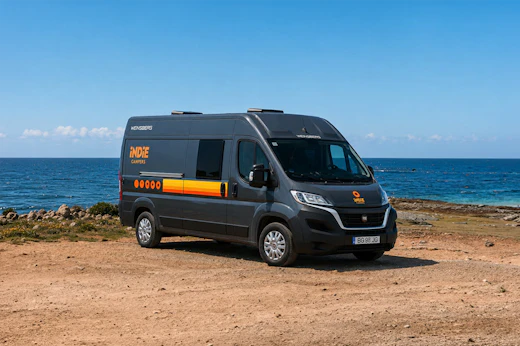
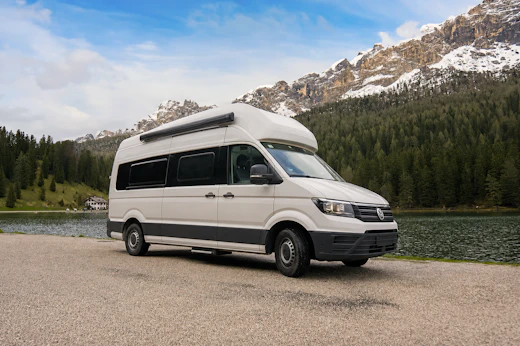
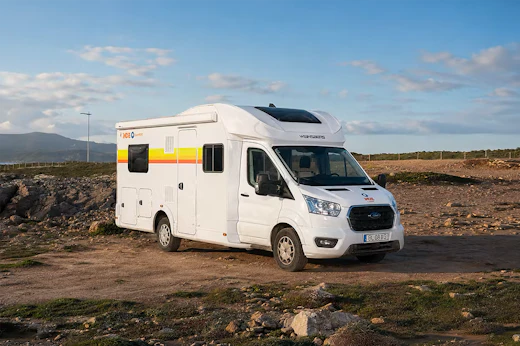
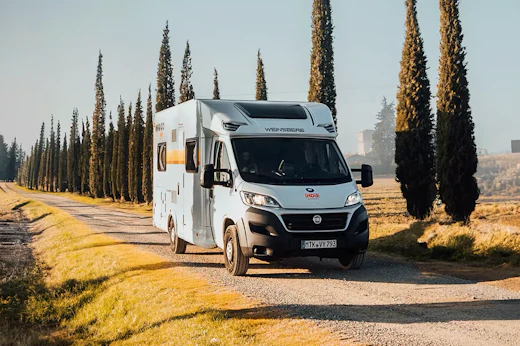
Our Campervans





Our Road Trips Itineraries
“Una muy buena experiencia en general, muy muy recomendable.”
“Everything was great! The van, the pickup and drop off all great! Would recommend with no hesitation!staff”
“È stato perfetto per la nostra prima esperienza in camper, tutto è andato come doveva andare e igor è stato fantastico nelle spiegazioni di tutte le funzionalità ”