Embark on an RV rental in Canada journey with Indie Campers and explore vast landscapes, from rugged mountain peaks to scenic coastal highways. Drive through the breathtaking beauty of Banff and Jasper, cruise the Sea-to-Sky Highway toward Whistler, or wind your way along the Cabot Trail in Nova Scotia. Choose from comfortable Class B and C RVs with unlimited miles, flexible one-way travel, 24/7 online assistance, and practical extras like foldable bicycles, snow-ready kits, or outdoor furniture to match every kind of journey and season. Trusted by thousands of travelers and backed by a reliable fleet, Indie Campers makes cross-country Canadian adventures safe, easy, and unforgettable.


Our Road Trips Itineraries
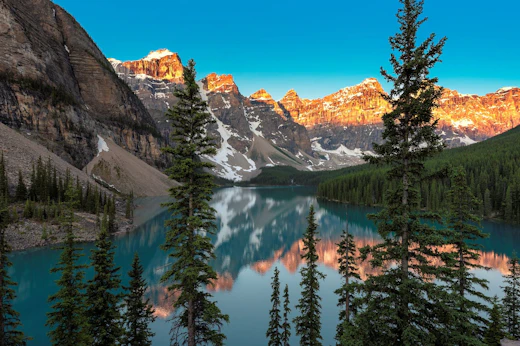
The national park system is reason enough. Canada has 37 national parks covering 340,000 square kilometers, and the most significant ones (Banff, Jasper, Yoho, Kootenay, Waterton Lakes, Pacific Rim, Gros Morne, Cape Breton Highlands) are in remote or semi-remote locations where the logistics without a self-contained vehicle become genuinely complicated. Banff town has limited budget accommodation and books out months ahead in summer. Staying inside the park at a campground, waking up before the day-trippers arrive from Calgary, and having coffee looking at Peyto Lake in the morning quiet is a different experience than driving in from a hotel.
For anyone renting an RV for Banff, the numbers are straightforward: a hotel room in Banff town averages CAD $450 per night in July. A campsite at Tunnel Mountain, 4 km from downtown inside the park boundary, costs CAD $28-$38 per night through Parks Canada Reservations. Over a 10-night trip, that's a CAD $4,120 to CAD $4,620 difference for accommodation alone, before counting the rental car you'd still need.
The infrastructure is solid throughout the southern corridor. Every major gas station network (Petro-Canada, Esso, Canadian Tire) sells propane cylinder exchanges and many locations have bulk propane refills. The highway system connecting Vancouver, Calgary, Toronto, and Montreal is well-maintained and manageable year-round between May and October. Dump stations appear at provincial parks and many commercial campgrounds. The Parks Canada Reservation system (reservation.pc.gc.ca) handles all national park campground bookings in one place. And the Crown Land system means that west of Ontario, a significant portion of your camping nights can cost nothing at all.
Here's what sets Indie Campers apart from other Canada RV rental companies:
Unlimited mileage on all fleet vehicles. Calgary to Vancouver via the Icefields Parkway and Rogers Pass covers 1,200 km. The Gaspésie loop from Montreal runs 1,900 km. Driving the Trans-Canada from Vancouver to Calgary without a mileage cap is the only way to do these routes without managing the odometer against your itinerary. Most competitors cap at 200-250 km per day.
Four strategically placed depots aligned with Canada's actual geography. Pick up in Vancouver, drop off in Calgary after the Rockies. Start in Toronto, end in Montreal after Quebec. The one-way network connects the country's major travel corridors without forcing you to retrace your route.
One-way hires connecting into the US network. The Vancouver depot connects directly with Seattle, and Calgary routes can connect southward through the US network. If your trip spans both countries, confirm cross-border authorization at booking.
24/7 road assistance included on every booking. On the Icefields Parkway north of Saskatchewan Crossing, the nearest town is 90 km in either direction. A breakdown there at 10 p.m. in September is a serious situation without a reliable assistance line.
Basic Protection Plan included as standard. Upgrade options available at booking for fuller coverage.
Flexible cancellation up to 31 days before pickup without penalty, and book-now-pay-later so you can secure your vehicle before the peak-season availability closes out.
The Canadian Rockies Loop: Calgary to Calgary (860 km, 7-10 days)
Start/End: Calgary
Passes through: Banff, Lake Louise, Icefields Parkway, Jasper, Hinton, Rocky Mountain House, Red Deer
The full Rocky Mountain circuit from Calgary covers both Banff and Jasper national parks, the full length of the Icefields Parkway in one direction, and the return through the foothills on the eastern slope. This loop works as a 7-day minimum trip without feeling rushed, and comfortably fills 10 days for anyone adding Yoho National Park (just west of Lake Louise) or Waterton Lakes in southern Alberta.
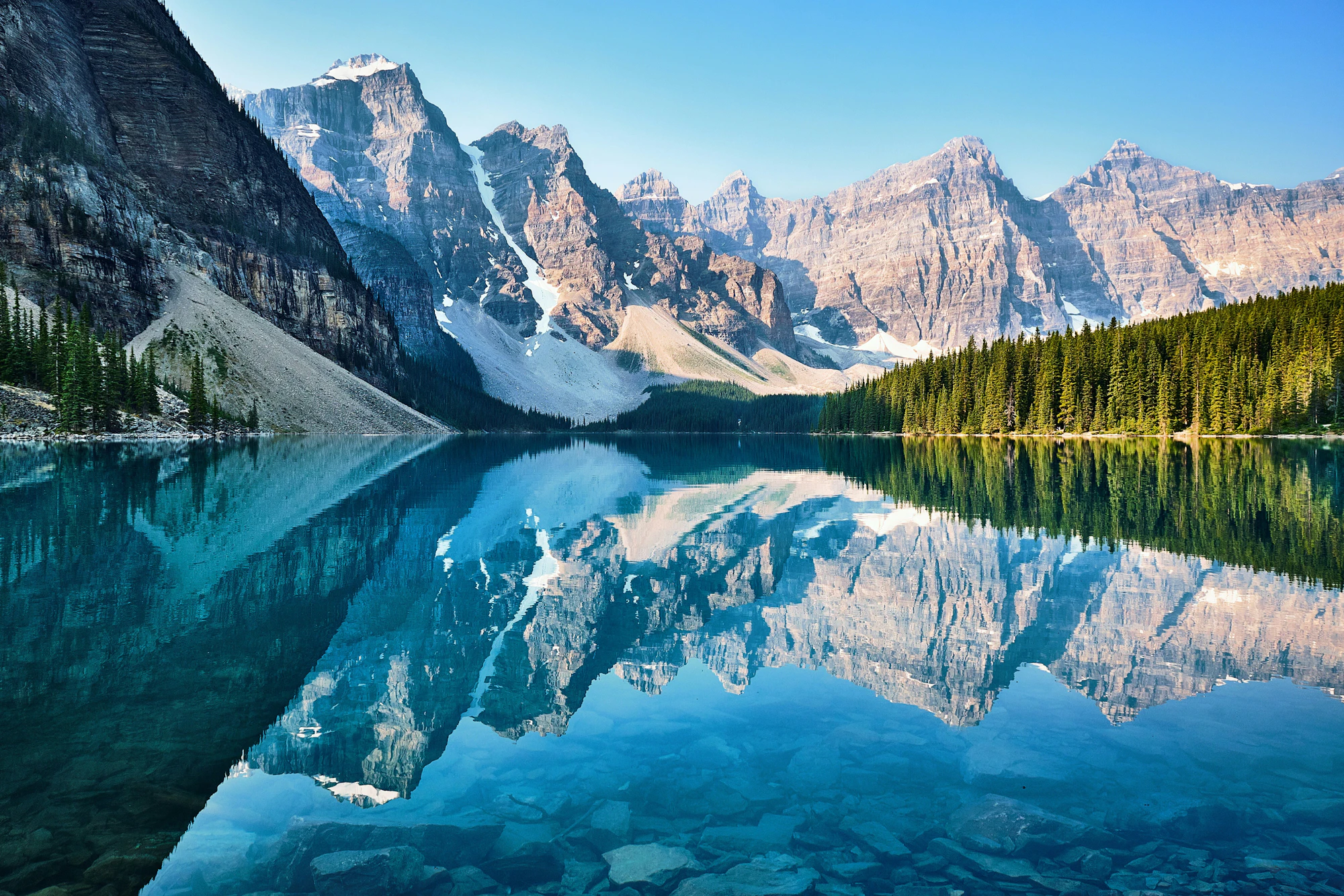
Highlights: Moraine Lake, Johnston Canyon (Banff), Emerald Lake (Yoho), Maligne Canyon and Spirit Island (Jasper), Miette Hot Springs
Best season: June through September (park campgrounds operate late May through late September)
One-way option: Calgary to Vancouver via Rogers Pass and Trans-Canada if extending west into BC
Vancouver to Calgary: Trans-Canada Through the Rockies (970 km, 5-8 days)
Start: Vancouver, BC End: Calgary, AB
Passes through: Hope, Kamloops, Revelstoke, Golden, Field (Yoho National Park), Banff
The Trans-Canada Highway between Vancouver and Calgary crosses four mountain ranges (Coast, Cascade, Monashee, and Rockies), passes through three national parks (Glacier, Revelstoke, Yoho), and enters Banff from the west before descending to Calgary through the foothills. The Rogers Pass section through Glacier National Park, at 1,330 meters elevation, is the highest point on the Trans-Canada and the most technically demanding drive. The stretch from Golden through Yoho and into Banff is where the Rockies proper begin, and the scenery transition from interior BC plateau to high alpine is sharp enough that most people remember exactly where they were when it happened.
Highlights: Emerald Lake (Yoho), Natural Bridge (Yoho), Lake Louise, Banff townsite and Bow Valley
Best season: May through October (Rogers Pass can see snow in September)
One-way option: Yes. Vancouver pickup, Calgary drop-off.
Sea-to-Sky and Vancouver Island: Vancouver to Tofino (500 km including ferry, 5-7 days)
Start/End: Vancouver, BC (or one-way with ferry adjustment)
Passes through: Squamish, Whistler, Pemberton, Horseshoe Bay ferry to Nanaimo, Port Alberni, Tofino
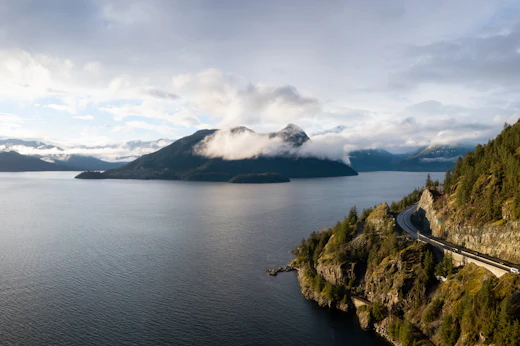
The Sea-to-Sky Highway (Hwy 99) north of Vancouver is a 120-kilometer drive from sea level at Horseshoe Bay up to Whistler at 670 meters, with Howe Sound on one side and the Coast Mountains on the other. It's one of the few drives in Canada where you can see saltwater and glaciers simultaneously from the same viewpoint. From Whistler you can continue north through Pemberton or return south for the ferry to Vancouver Island at Horseshoe Bay, then cross the island from Nanaimo to Tofino through the MacMillan Provincial Park old-growth forest and the Clayoquot Sound UNESCO biosphere reserve.
Highlights: Shannon Falls (Squamish), Sea to Sky Gondola, Whistler Village, Cathedral Grove old-growth Douglas firs, Tofino surf beaches, Clayoquot Sound
Best season: May through October for Whistler and the island; Tofino surf is year-round
One-way option: Ferry logistics make pure one-ways complicated; loop from Vancouver works best
The Gaspésie Peninsula and Cabot Trail (2,500 km, 14-16 days from Montreal)
Start: Montreal, QC End: Montreal or Halifax (one-way)
Passes through: Quebec City, Rivière-du-Loup, Matane, Gaspé, Percé, Campbellton, Moncton, Cape Breton, Sydney
The eastern loop from Montreal through Quebec, around the Gaspésie Peninsula, across New Brunswick and into Cape Breton covers more cultural ground than anywhere else in the Canadian network. The language shifts from French to Acadian French to English as you move east. The coastline shifts from the wide St. Lawrence estuary to the dramatic cliffs of Forillon to the red sandstone of PEI (if you add the Confederation Bridge detour) to the Celtic highlands of Cape Breton. The Cabot Trail's 298-kilometer loop through Cape Breton Highlands National Park closes the trip.
Highlights: Quebec City's Old Town, Percé Rock, Bonaventure Island gannet colony (105,000 northern gannets nesting), Fundy National Park tides (tidal range 16 meters), Cape Breton Highlands
Best season: July through October; October is the best month for fall color in Quebec and New Brunswick
One-way option: Loop from Montreal works best
Summer (July through August)
National picture: Peak season across every region. All national park campgrounds open; long daylight hours (18+ hours in northern Alberta and BC in late June and early July); most reliable weather. Also the most competitive booking window. Tunnel Mountain in Banff and Whistler campgrounds fill within minutes of the 4-month reservation window opening. Expect company in the Rockies; July and August are when Banff sees the highest daily visitor counts in the park's history.
Regional variation:
Best for: First-time Canada visitors who want reliable weather and access to everything. Families with school-age children.
Skip if: You dislike crowds and can travel in shoulder season instead. The Rockies in July at major viewpoints like Moraine Lake require shuttle systems and timed entry.
Booking note: Parks Canada reservations open 4 months ahead. Set up your account at reservation.pc.gc.ca and enable notifications. The Tunnel Mountain campground in Banff fills within 5 minutes of the booking window opening for July and August.
Fall (September through October)
National picture: The single best season for the Canadian Rockies and Quebec. Crowds drop sharply after Labor Day (early September). Temperatures cool but stay comfortable for hiking (10-18°C). Elk rutting season in Banff and Jasper (mid-September through October) brings bugling bulls into the townsite at dawn and dusk. Quebec and New Brunswick peak foliage runs mid-September through mid-October depending on latitude.
Regional variation:
Best for: Experienced travelers. The Rocky Mountain fall is the region at its best. Quebec fall color is among the strongest in North America.
Skip if: High-elevation road access is a priority and you're going late October; the first snow on the Icefields Parkway can arrive by mid-October.
Booking note: September demand in the Rockies has grown significantly. Book campgrounds when the 4-month window opens; don't assume fall means easy walk-up availability.
Winter (November through March)
National picture: Most national park campgrounds in BC and Alberta close October through May. Ontario and Quebec's parks similarly limited. Winter RV travel in Canada means planning around commercial campgrounds with hookups and understanding that vehicle winterization matters; temperatures in Calgary regularly drop below -20°C in January.
Best for: Not the primary Indie Campers Canada season. If you're interested in northern lights in the Yukon or winter driving in BC's milder coastal areas, confirm depot availability and vehicle suitability directly.
Skip if: You're planning the standard Rocky Mountains or Ontario lakes itinerary.
Spring (April through June)
National picture: Variable and underrated. Waterfalls at their highest volume from snowmelt. Campgrounds reopening progressively through May and June. Wildlife most active as animals move to lower elevations after winter. The risk is weather: a late snowstorm in May on the Icefields Parkway is not unusual.
Regional variation:
Best for: BC coastal trips, early-season pricing, and wildflower season at lower elevations in the Rockies.
Skip if: Icefields Parkway is your priority and you're going before late June.
The most popular months for Canada campervan hires are July, August, and September.
A week is the right length for the Alberta loop or the Vancouver-to-Calgary Trans-Canada crossing. Don't try to combine both with Toronto in the same trip at this duration; the distances don't work.
Canadian Rockies Loop from Calgary (860 km, 7-10 days)
Day 1: Pick up in Calgary, drive west on Trans-Canada to Banff (130 km, 1 hr 30 min). Check in at Tunnel Mountain Village II Campground. Walk downtown Banff, Bow Falls, Vermilion Lakes at sunset.
Day 2: Full Banff day. Moraine Lake (shuttle from Lake Louise parking area from late May; arrive early or take the 6:30 a.m. shuttle). Lake Louise. Johnston Canyon afternoon hike (Lower Falls 1.1 km, Upper Falls 2.7 km return).
Day 3: Yoho National Park detour. Field, BC: Emerald Lake (8 km round loop, 3 hours), Natural Bridge. Back to Banff area overnight.
Day 4: Begin Icefields Parkway north. Bow Lake, Peyto Lake viewpoint (Bow Summit, 2,069 m), Saskatchewan Crossing. Overnight at Rampart Creek Campground or Wilcox Creek Campground.
Day 5: Columbia Icefield. Brewster Ice Explorer tours on the glacier (optional, book ahead). Continue to Sunwapta Falls (two tiers, 0.8 km return). Overnight Jasper area.
Day 6: Jasper full day. Athabasca Falls (2 km return), Maligne Canyon (optional add, 48 km east), Miette Hot Springs (61 km east).
Day 7-8: Drive back Calgary via Yellowhead Highway (Hwy 16) east to Edmonton, then south on QE2 (550 km, 5 hours). Or return via Hwy 93 south for a second southbound pass on the Parkway.
Day 9-10 optional extension: Waterton Lakes National Park, 270 km south of Calgary. The International Peace Park combines Waterton with Glacier National Park across the US border.
Sea-to-Sky and Tofino from Vancouver (500 km including ferry, 5-7 days)
Day 1: Pick up in Vancouver (Delta). Drive Hwy 99 north to Squamish (70 km, 1 hr). Shannon Falls (3-min walk from parking). Sea to Sky Gondola optional. Continue to Whistler. Overnight at Nairn Falls Provincial Park (30 km north of Whistler) or Whistler/Cheakamus Campground.
Day 2: Whistler exploration or Joffre Lakes hike (75 km north of Whistler, 11 km return with significant elevation gain to the upper lake). Drive back south to Horseshoe Bay for late afternoon ferry.
Day 3: BC Ferries Horseshoe Bay to Departure Bay, Nanaimo (1 hr 40 min sailing; book large vehicle space in advance at bcferries.com). Drive west from Nanaimo through Cathedral Grove (MacMillan Provincial Park; 800-year-old Douglas firs beside Hwy 4). Overnight near Port Alberni.
Day 4-5: Arrive Tofino. Long Beach for surf watching or lessons. Meares Island old-growth walk (water taxi from Tofino, 20 min, $20). Clayoquot Sound kayaking. Overnight at Bella Pacifica Resort or Crystal Cove Beach Resort.
Day 6: Drive back across island, ferry from Departure Bay to Horseshoe Bay, return to Vancouver depot or continue east toward Kamloops for the Trans-Canada leg.
Two weeks lets you connect BC and Alberta properly: the Icefields Parkway in one direction combined with the Sea-to-Sky loop. Or, from the east, Toronto to Montreal via Quebec with Algonquin and the Ottawa Valley as the connecting thread.
Vancouver to Calgary via Trans-Canada and Icefields Parkway (1,450 km, 14 days)
Day 1-2: Vancouver pickup, Sea-to-Sky Highway north to Whistler, Joffre Lakes
Day 3: Vancouver Island ferry and Tofino (if adding the island) or continue east on Trans-Canada toward Kamloops
Day 4: Kamloops to Revelstoke (210 km). Mount Revelstoke National Park drive to summit (26 km paved access road, Summit Trail).
Day 5: Revelstoke to Golden via Rogers Pass, Glacier National Park (140 km). Great Glacier Trail (1.9 km return to the base of the Illecillewaet Glacier).
Day 6: Golden to Yoho and Lake Louise (75 km). Emerald Lake, Natural Bridge, Takakkaw Falls (one of Canada's highest waterfalls, 384 m, 1 km walk from parking).
Day 7-8: Banff. Moraine Lake, Johnston Canyon, Banff Gondola, Bow Valley Parkway.
Day 9-11: Icefields Parkway north. Three days for the 232-km stretch is the right pace: Peyto Lake, Columbia Icefield, Sunwapta Falls, overnight in the Parkway campgrounds.
Day 12-13: Jasper. Athabasca Falls, Maligne Canyon, Miette Hot Springs.
Day 14: Drive east on Yellowhead Highway to Edmonton (360 km), then south to Calgary (290 km) for drop-off.
Three weeks opens up the full Vancouver to Montreal crossing, which at a functional daily driving pace covers the Trans-Canada from the Rockies through the Prairies, into Ontario, along the north shore of Lake Superior, and into Quebec. The Prairies (Manitoba and Saskatchewan) are flat, fast, and genuinely empty in a way that works as a driving meditation or serves as logistics for covering ground between the more vertical landscapes on either side.
Vancouver to Montreal via Trans-Canada (4,400 km, 21+ days)
The logical structure is roughly: Days 1-7 BC and Rockies, Days 8-10 Prairies (Medicine Hat, Swift Current, Moose Jaw, Brandon), Days 11-13 Winnipeg and Lake of the Woods, Days 14-16 Lake Superior North Shore (the most underrated driving section in Canada), Days 17-18 Sudbury and Georgian Bay, Days 19-21 Ottawa and Montreal. Drop at Montreal depot.
Pacific West
Prairies and the Rockies
Central Canada
Quebec and Eastern Canada
Minimum age and license: 21 minimum. Standard driver's license sufficient; IDP required for non-Roman script licenses.
Parks Canada Discovery Pass: CAD $75.25 per adult or CAD $152.25 per vehicle for 12 months covering all 37 national parks. Buy at any national park gate or at pc.gc.ca/pass before arrival. Banff's daily vehicle entry fee is CAD $10.50; the pass pays for itself after 15 days of park access.
Parks Canada Reservations: reservation.pc.gc.ca. Create an account, register payment, and note your target campground's booking window opening date. The 4-month advance booking window applies to all national park campgrounds. Popular campgrounds (Tunnel Mountain in Banff, Wapiti in Jasper, Broad Cove on the Cabot Trail) fill within minutes of opening.
Discover Camping (BC): discovercamping.ca for BC provincial park campgrounds. Separate system from Parks Canada; separate account required.
Ontario Parks: ontarioparks.com for Ontario provincial parks. Algonquin corridor campgrounds open 5 months ahead; book immediately when the window opens for July and August dates.
Propane: Fill in city or gateway town before entering national parks. No propane service inside national parks. Canadian Tire, Petro-Canada, and U-Haul locations across the country handle bulk propane fills (CAD $3-$5/liter). Gateway town options: Canmore (Banff), Hinton (Jasper), Nanaimo (Pacific Rim), Nipigon (Lake Superior North Shore).
Credit card and deposit: Credit card in the primary driver's name required at pickup for the security deposit.
Campfire permits (Alberta): Required for any open fire on Crown Land or in provincial parks. Free at MyFirePermit.ca. Check fire restriction status before lighting any fire; summer fire bans in Alberta and BC can last weeks.
License and Age Requirements
The minimum rental age with Indie Campers in Canada is 21. A standard driver's license is sufficient for all Indie Campers vehicles in Canada; no special class is required. Non-English and non-French script licenses must be accompanied by an International Driving Permit (IDP). International visitors are recommended to carry an IDP regardless of license script. All North America fleet vehicles are automatic transmission with left-hand drive. Traffic drives on the right in all provinces and territories.
Speed Limits
Speed enforcement is primarily police-operated. BC and Ontario have photo radar programs on specific urban corridors. Alberta uses mobile photo radar on highways.
Toll Roads
Canada's toll network is minimal compared to the US. The main tolls relevant to Indie Campers trips are in Ontario:
BC, Alberta, and Quebec have no highway tolls on the routes used for standard national parks itineraries.
Road Rules Specific to Canada
Winter tires: BC law requires winter tires (or chains) on designated mountain highways between October 1 and April 30. This includes the Trans-Canada through the Rockies and Rogers Pass, and the Sea-to-Sky Highway. Confirm with the depot whether the vehicle is equipped for the season when picking up in spring or fall.
Radar detector prohibition: Radar detectors are illegal in Ontario, Quebec, Manitoba, the Maritimes, and the Yukon. They're legal in Alberta, BC, and Saskatchewan. This has no practical effect for Indie Campers customers since fleet vehicles don't carry them, but it's worth knowing if crossing between provinces.
Open container: Open alcohol in the driver's or passenger compartment is prohibited nationally. This includes vehicles where the driver is in a shared living space with an accessible alcohol supply. Store any alcohol in locked storage while driving.
Right on red: Legal in all provinces except where posted, with the exception of the island of Montreal where right-on-red is prohibited throughout.
Four-way stops: Same rules as the US: first in, first through; simultaneous arrivals yield to the driver on the right.
Wildlife: Slow down immediately when wildlife is sighted near the road. Moose are particularly dangerous at dusk and in forested areas; at 700+ kg, a moose strike is a write-off at almost any highway speed. Parks Canada has wildlife warning signage throughout Banff and Jasper; the Parkway has designated wildlife closure areas that rotate seasonally and are enforced.
BAC Limit
0.08% nationally. "Warn range" between 0.05% and 0.08% triggers a 24-hour roadside suspension in most provinces (no criminal charge, but a significant inconvenience when you need to drive to the next campground). First DUI conviction in Canada carries a minimum $1,000 fine, a mandatory driving prohibition, and an Ignition Interlock program requirement for reinstatement. Zero tolerance for drivers under 22 in most provinces.
7 Days
Budget: CAD $1,500 (smaller vehicle, cook all meals, Crown Land camping in Alberta, Discovery Pass)
Mid-range: CAD $3,100 (mid-size family van, mix of cooking and dining, national park campgrounds with electrical hookups)
Premium: CAD $5,500+ (largest motorhome, frequent dining, full-hookup national park campgrounds, multiple paid activities)
14 Days
Budget: CAD $2,900 (smaller RV, cook all meals, Crown Land dispersed camping combined with no-hookup provincial park sites, Discovery Pass, Alberta or BC route with no tolls)
Mid-range: CAD $5,500 (mid-size family van, mix of cooking and dining, Parks Canada electrical hookup campgrounds, one or two paid activities, Rocky Mountains or Ontario route)
Premium: CAD $9,500+ (largest motorhome, frequent dining, full-hookup national park campgrounds throughout, multiple paid activities per stop, transcontinental route with Ontario toll exposure)
Canada sits in the middle-to-upper range of the Indie network for total trip cost, primarily because of fuel prices (consistently higher than the US) and the cost of national park campgrounds with electrical hookups. The Crown Land free camping system in Alberta and BC meaningfully reduces campground costs for western Canada itineraries. A trip combining 4-5 nights Crown Land or BC Recreation Sites camping with 3-4 nights paid national park campgrounds cuts the accommodation line substantially.
Vancouver → Calgary (970 km, allow 5-8 days via Trans-Canada and Icefields Parkway) — The classic Rocky Mountain crossing. BC coast to Alberta foothills, three national parks en route, no backtracking.
Calgary → Vancouver (970 km, allow 5-8 days) — Same route in the opposite direction for those flying into Calgary and out of Vancouver.
Toronto → Montreal (540 km direct, allow 3-5 days with Quebec City detour) — The St. Lawrence corridor: Ottawa, Quebec City, and Montreal in a single one-way. Add 270 km for the Quebec City stop, which most people would regret skipping.
Montreal → Toronto (540 km, allow 3-5 days) — As above but westbound.
Vancouver → Toronto (4,400 km, allow 18-24 days via Trans-Canada) — The full transcontinental. Pick up Vancouver, drop off Toronto. Every landscape between the Pacific and the Great Lakes.
Calgary → Toronto (3,450 km, allow 14-18 days via Trans-Canada) — The Prairies and Ontario combined. Medicine Hat, Regina, Winnipeg, Kenora, Sault Ste. Marie, Sudbury, Toronto.
Toronto → Vancouver (4,400 km, allow 18-24 days) — As above but westbound.
Cross-border one-way options connecting with the US network: Vancouver to Seattle is the most practical (300 km). Cross-border authorization must be confirmed in writing in your rental agreement before departure; do not cross the Canada-US border in an Indie Campers vehicle without this documentation.
One-way fees vary by route and season. Confirm availability and cross-border authorization at the time of booking.
In general, a special licence is not required to rent our RVs in Canada. However, a valid driving license is required to operate our vehicles. For some non-EU citizens, a IDP is required, in addition to their home country's drivers licence. Other considerations such as a valid vehicle licence to the vehicle type (manual or automatic) will also be required. For more information regarding our licence requirements read this.
Yes, our campervans are pet-friendly you can bring your pet along in our campervans. Just make sure to purchase the extra cleaning service after during your booking. This service includes professional anti-allergic cleaning after your trip. Please note that only one pet is allowed per campervan, and it must weigh no more than 30kg. Keep in mind, we are not responsible for any legal fees related to traveling with your pet. For marketplace bookings, check the "vehicle rules" section for the pet-friendly icon to confirm if pets are allowed in that specific vehicle.
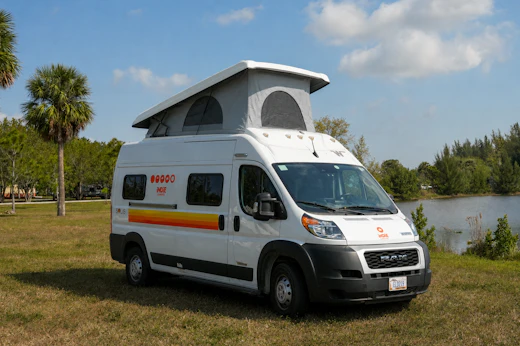
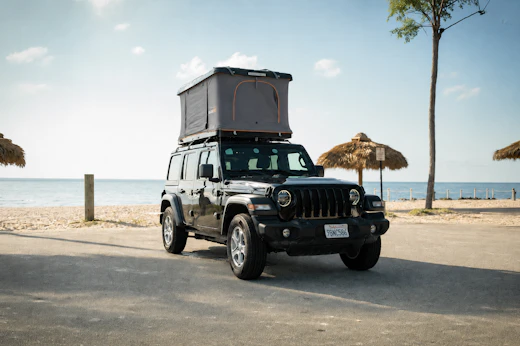
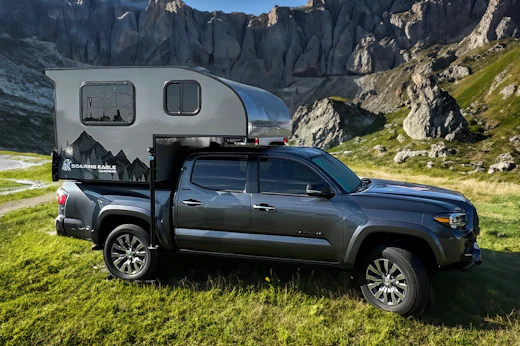
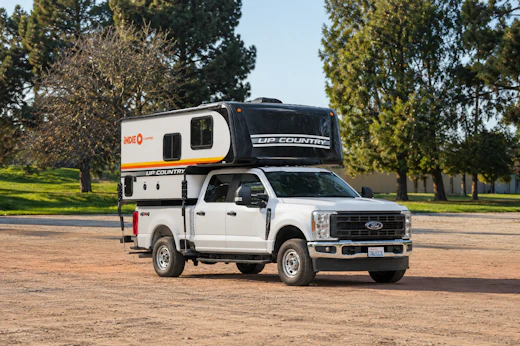
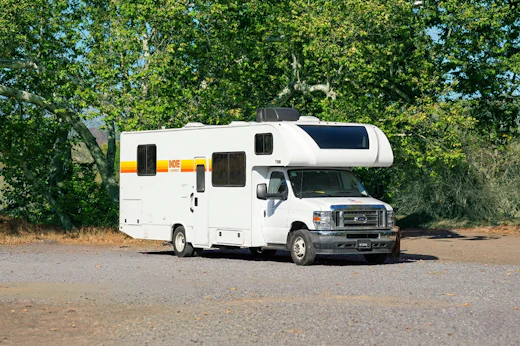
The number of people who can sleep in our campervans/motorhomes will depend on the size of the vehicle and the model. In general, our class C motorhome models can sleep up to 4-8 people, whereas our class B motorhomes and campervans can sleep up to 2-4. For cars with a rooftop tent, around 2 people can sleep in this vehicles. More details on our models and sleeping capacities can be found here.
If you are travelling in a motorhome, campervan or caravan around Canada, it is important to understand official camping rules of the country you are visiting. As natural areas are generally protected by laws, using an official campsite or designated overnight parking area is highly recommended. This helps protect local communities and ensures you can all enjoy safely. Read more safety tips and protocols here.
We offer three protection plans to cover incidents and damages during your rental period. All Indie Campers campervans come with insurance for third-party vehicles and property damage (valid insurance will depend on the country). For marketplace vehicles, insurance options may vary based on the host. Learn more about our protection plans here.
Yes, our search filter allows you to find a campervan near your location using a 60km radius system. This means depending on the location you are searching from, you will be able to find an Indie campervan rental pick-up centre near you.
Yes, a selected number of Indie Campers RV rentals in Canada include unlimited mileage, allowing you to explore freely and make the most of your road trip! Please note that unlimited mileage applies exclusively to Indie Campers RVs and is subject to responsible use.
Our Campervans




Our Road Trips Itineraries
“Great, effortless. Will use again thanks”
“Indie Campers made our trip Amazing & fantastic.”
“Had an amazing experience and would highly recommended to anyone! ”