

Explore with Indie Campers
Banff is the kind of place that makes you stop mid-drive just to stare for a second. One minute you’re cruising through pine forests, the next you’re surrounded by sharp peaks, glacial lakes, and viewpoints that look like they belong on a postcard. But Banff is also one of the busiest places in the Canadian Rockies, which means hotels book up early and day parking around Lake Louise can feel like a competitive sport.
That’s why a Campervan trip works so well here. You can stay closer to the scenery, set off early before the crowds build up, and plan your days around the drives that make Banff famous. This guide covers Campervan-friendly routes like the Icefields Parkway and Bow Valley Parkway, what to do beyond the lakes, where to camp, waste disposal planning, and the best time to visit Banff by season.
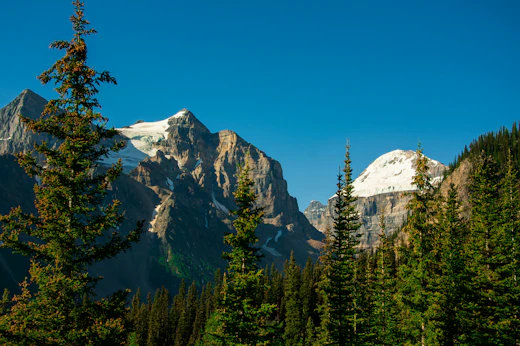
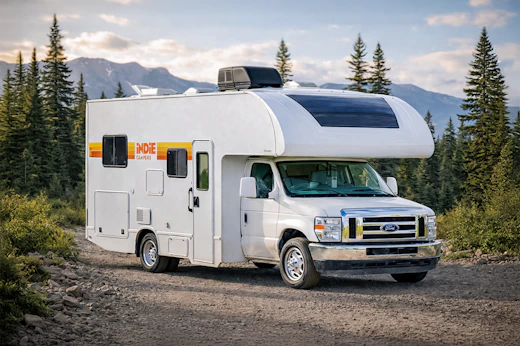
Icefields Parkway (Highway 93 North)
Key stops: Lake Louise area, Bow Lake, Peyto Lake viewpoint, Columbia Icefield area
Approx driving time: Plan a full day if you want stops and short walks, even if you're not driving all the way to Jasper
Best time to go: Morning to midday for visibility and time for pull-outs
Campervan notes: Services are spaced out, so plan fuel and food carefully
Bow Valley Parkway (Highway 1A)
Key stops: Castle Mountain viewpoint, Johnston Canyon, scenic pull-outs between Banff and Lake Louise
Approx driving time: Similar to the faster highway if you keep stops short, longer if you turn it into a sightseeing day
Best time to go: Early morning or late afternoon when wildlife activity is higher
Campervan notes: Quieter and more scenic than the main road, but parking at popular stops can fill up
Lake Minnewanka Loop (near Banff townsite)
Key stops: Lake Minnewanka shoreline, Two Jack Lake, short lakeside viewpoints
Approx driving time: 1 to 2 hours depending on stops
Best time to go: Late afternoon for the light on the water
Campervan notes: Easy add-on day when you want scenic stops without a long drive
Banff townsite scenic loop
Key stops: Bow Falls, Surprise Corner viewpoint, Banff Gondola area
Approx driving time: Half a day with stops
Best time to go: Morning for less traffic
Campervan notes: This is where Campervan travellers benefit most from planning parking and timing

Parks Canada notes that July is usually the warmest month, with average highs of around 22°C in the town of Banff, and January the coldest, with average lows of about −15°C.
Spring (April to May): Cooler days and quieter trails. Some higher hikes still have snow. It’s great for scenic drives, waterfalls and avoiding the peak crowds.
Summer (June to August): The most reliable season for full access and long days, but also the busiest. Campsites and popular stops book up early, and access to the Lake Louise area often needs planning.
Autumn (September to October): Crisp mornings, good hiking temperatures and a slightly calmer pace after the summer rush. Some services start to reduce later in the season.
Winter (November to March): A different kind of Banff trip with winter sports, snowy scenery and fewer hikers. Road conditions and the weather become a bigger factor when planning.
Campsites and Parking Options
Banff National Park has several campsites across the Banff townsite area and the Lake Louise corridor. Most are seasonal and popular dates fill quickly, so the best approach is to plan your route first, then match your campsite to the part of the park you want to spend time in. Parks Canada provides the official list of campsites and booking access.
If you want a practical shortlist for campervan travellers, these are the common starting points:
Campervan parks and campsites outside the park
If sites inside the park are full or you want more full-service amenities, Canmore is the most common backup base with straightforward access back into Banff.
Waste disposal points (dump stations)
Planning for waste disposal points matters in Banff because drives are long, services are spaced out, and you'll often spend several nights in one area. Many campervan travellers use campsite dump stations when available, especially in the Banff townsite and Lake Louise camping areas. The easiest approach is to plan one dump stop when you arrive in your camping zone and another on the way out, rather than trying to fit it into a day of sightseeing.
The Icefields Parkway is the classic scenic drive — especially if you plan on stopping at spots like Peyto Lake and Bow Lake. The Bow Valley Parkway is a quieter alternative between Banff and Lake Louise.
Yes. Indie Campers offers collection in Calgary, Alberta, which is about a 1.5-hour drive from Banff.
You generally can't drive a Campervan directly to Moraine Lake in peak season. Parks Canada recommends using shuttle services and public transport to reach both Lake Louise and Moraine Lake.
If your aim is to see both Lake Louise and Moraine Lake in one day, booking public transport or shuttle services is the surest bet.
Campsites near the town of Banff, such as those in the Tunnel Mountain area, are a common base because they keep you close to facilities while staying inside the park.
Some Banff-area campsite options include electric hook-up sites, but many sites are unserviced. Check the campsite and loop details when booking.
For summer and early autumn dates, the earlier the better. Banff is one of Canada's most in-demand parks and campsites fill up quickly. Check availability on the Parks Canada reservation platform.
Summer has the most reliable access and long days, while autumn is often preferred for hiking temperatures and slightly fewer crowds. Parks Canada notes July is typically the warmest month and January the coldest.
Lake Agnes Tea House and Johnston Canyon are common first choices because they're accessible and offer great scenery for the effort involved.
Yes. Many travellers use Banff as a starting point for a longer Rockies itinerary that includes Jasper via the Icefields Parkway.
