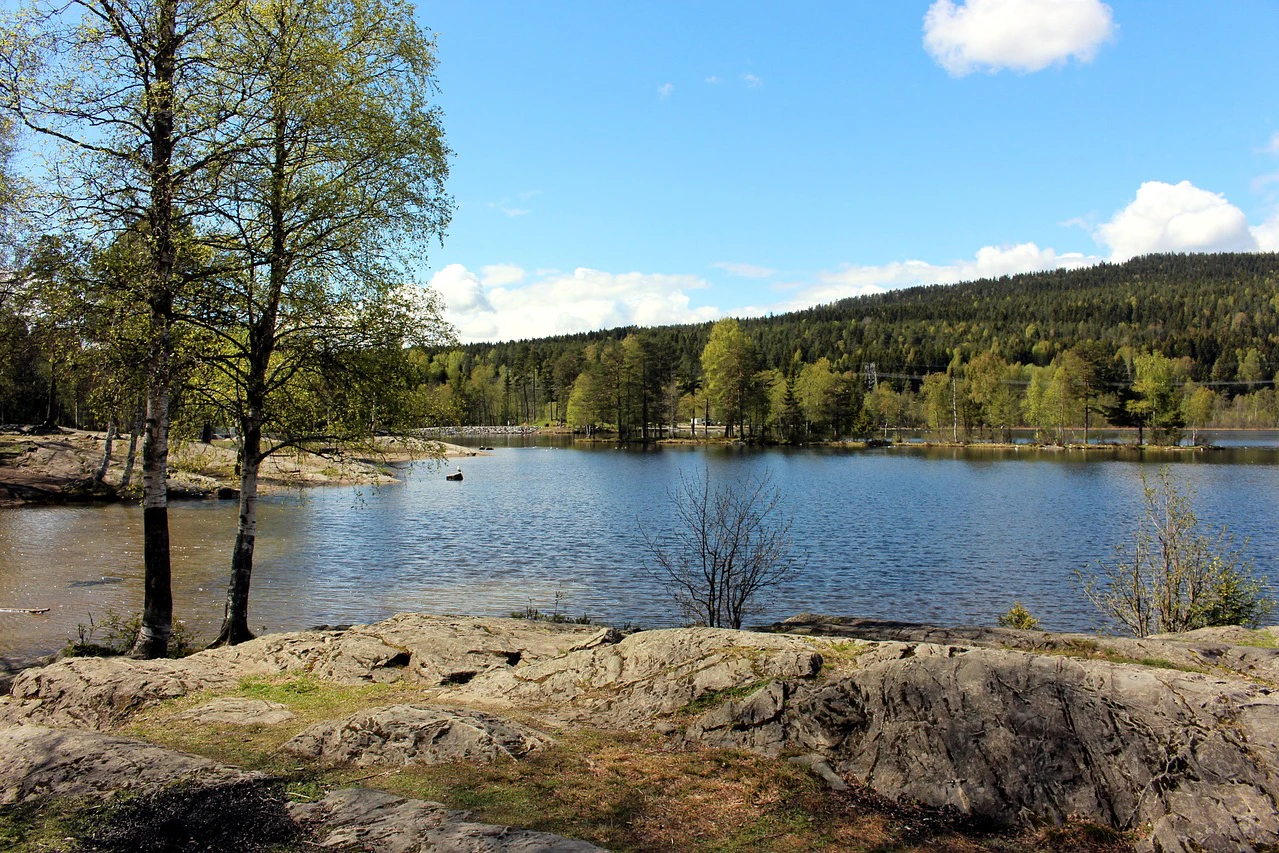
Start your Nordic adventure with a campervan hire in Oslo from Indie Campers and explore Norway in every season. Drive toward the Lofoten Islands for dramatic coastal views, explore winding fjords carved into the mountains, or head south through Sweden and into Denmark. Choose from our wide range of vehicles with unlimited kilometres, one-way hire options, and useful extras like snow chains, heating kits, and bedding kits to stay prepared wherever you roam. Indie Campers offers a Europe-wide fleet and 4.7 star service to help you explore Norway with comfort and confidence.

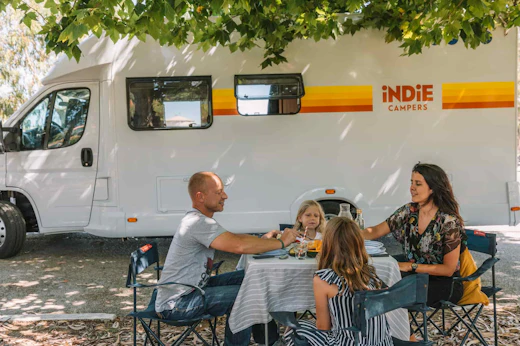

Our Road Trips Itineraries
Eastern Norway between Oslo and the Swedish border is low drama, deliberately. The Østfold farmland south of the city, the Hedmark forests east of the E6, and the Romerike plain north of the airport are the productive interior of a country that most visitors experience only by its coastline. The road trip value of the Oslo depot is not the city's immediate surroundings; it is the access it provides to three mountain systems within a half-day's drive that collectively contain the most demanding and most rewarding long-distance walking terrain in northern Europe.
Jotunheimen sits 300km northwest on the E6 and the RV15: 60 peaks above 2,000 metres, the Besseggen ridge (the single most walked day route in Norway, 15km connecting the Gjende and Bessvatnet lakes along a ridge 1,743 metres above sea level with a 400-metre sheer drop on both sides), and the Galdhøpiggen summit hike from the Juvasshytta DNT hut (GPS 61.6350°N, 8.3581°E, 1,841 metres, 6km return from the hut to the summit, 628 metres ascent). The Rondane massif, Norway's first national park, is 200km north on the E6 with 10 peaks above 2,000 metres and the most accessible alpine terrain from any Scandinavian capital. Neither is reachable on a day trip from an Oslo hotel; both are natural single-night or two-night campervan stops with the full landscape at your disposal from first light.
The Telemark canal system west of Oslo is the third axis and the least visited by international road trippers: a 105km waterway of 18 locks connecting the inland valley lakes from Skien (GPS 59.2090°N, 9.6091°E) to Dalen (GPS 59.4406°N, 8.0026°E), built between 1861 and 1892 and considered the most significant engineering achievement in Norwegian history after the Bergen railway. The canal corridor runs through a landscape of birch forest, black-water lakes, and 19th-century lock-keeper farms; the RV36 and the RV38 follow the waterway closely enough that a campervan on the canal road matches pace with the heritage boats on the water.
Spring (March-May)
Temperatures: 2-16°C (36-61°F)
The E6 Gudbrandsdalen corridor is open year-round but Jotunheimen valley roads including the Juvasshytta approach and the RV55 Sognefjellet are closed until late May; the Besseggen ridge carries snow into late May and is not safe for casual hiking before early June. The Telemark canal boat season opens in late June; spring visits to the canal use the road without the waterway element. Vigeland Park, the Bygdøy museums, and the Oslo city circuit are fully accessible year-round; spring is the least crowded period for all city attractions. Campsite availability is excellent; Ekeberg and Bogstad run at 20 to 30% capacity outside Easter weekend.
Best for: Oslo city combined with the lower Gudbrandsdalen; photographers targeting spring birch-green in the Numedal and Telemark valleys; travellers who prefer uncrowded museums and campsite availability without competition.
Skip if: Your itinerary requires Jotunheimen, the Besseggen ridge, or any mountain pass road above 1,000 metres; all remain closed or snow-affected until late May at the earliest.
Summer (June-August)
Temperatures: 15-25°C (59-77°F)
The complete Oslo circuit is accessible from mid-June: Jotunheimen fully open, Besseggen ridge walkable, Telemark canal boats running, all 18 National Scenic Routes accessible. Oslo in July is warm by Norwegian standards; the Oslofjord islands carry swimmable water temperatures from late June through August and the Bygdøy peninsula beaches are in active use. The Bessheim campsite at Gjendesheim fills completely for July; book by March for any July Besseggen date. Oslo city campsites (Ekeberg, Bogstad) require advance booking for July weekends. The Bislett Games Diamond League meeting in June or July and the Holmenkollen March festival are the two peak events; neither affects summer road trip logistics directly.
3 to 5 Days
Oslo City and Gudbrandsdalen Circuit (approx. 400km, 4 days)
Fuel Stations
Norway fuel note: Diesel approximately NOK 18 to 22/litre; petrol NOK 20 to 24/litre in summer 2026. Fill whenever the tank drops below half on any mountain circuit.
Age and Licence Requirements
Minimum hire age: 21 years.
EU licence holders: A full EU driving licence is valid in Norway without additional documentation through the EEA mutual recognition framework.
UK licence holders: A full UK driving licence is valid in Norway for short-term visits without an IDP.
International visitors (non-EU/non-EEA): An International Driving Permit (IDP) is recommended alongside the national licence. Norway recognises the 1968 Vienna Convention IDP. Obtain before departure; IDPs are not available at Norwegian airports or hire counters.
Credit Card and Deposit
A credit card in the primary driver's name is required at pickup. Debit cards and prepaid cards are not accepted. The security deposit is held on the credit card at pickup; the amount varies by vehicle class and selected protection plan. Confirm the exact deposit amount at indie-campers.com during booking.
National Park and Attraction Passes
Norway has no unified national park pass. Jotunheimen, Rondane, Hardangervidda, and all Norwegian national parks are free to enter. Individual attraction charges apply at the Viking Age Museum, Munchmuseet, Holmenkollen, Fløibanen, and the Telemark canal boats; no combination pass covers all of these. The Oslo Pass (covering most city museums and Ruter public transport) is worth calculating against individual ticket costs for a full 2-day Oslo city itinerary.
Speed Limits
Campervan hire: NOK 7,000-18,000 / €600-1,600 (varies by vehicle size and season; July adds 20-30% across all categories; book 3 to 4 months ahead for July and August to lock in lower rates)
Fuel: NOK 2,000-3,500 / €180-320 (diesel approximately NOK 20/litre; typical weekly distance 700-900km divided by 10L/100km = 70-90 litres; Jotunheimen mountain approach roads and Filefjell plateau crossing add 10-15% to consumption on gradient sections)
LPG/Autogas: NOK 150-400 / €15-35 (fill in Oslo on collection day; LPG unavailable at Otta, Fagernes, Lom, and throughout the Jotunheimen interior)
Tolls and AutoPASS: NOK 400-1,000 / €37-92 (Oslo Bomringen charges on every city entry; E6 and E18 corridor toll points; accumulated charges on a full Oslo circuit reach NOK 600 to 1,200; register the AutoPASS transponder at pickup)
Campgrounds: NOK 1,400-3,500 / €130-320 (NOK 200-500/night x 7; Allemannsretten Jotunheimen and Rondane positions at zero cost; Ekeberg and Bogstad city sites at the high end; Bessheim at mid-range)
Food: NOK 2,500-6,000 / €230-550 (self-catering from Rema 1000 approximately NOK 350/day; mixed cooking and dining out approximately NOK 600/day; Mathallen provisioning day approximately NOK 600 to 800 for quality road trip kitchen items; Maaemo or Kontrast tasting menu NOK 1,400 to 4,500 per person if splurging on the departure dinner)
Oslo to Bergen (approximately 500km via E16, approximately 6 hours 30 minutes direct) — The most logical Norwegian one-way. Oslo pickup; Filefjell National Scenic Route; Sognefjord; Nærøyfjord; Flåm; Hardangerfjord; drop in Bergen. Fly home from Bergen Airport Flesland (BGO). Allow 10 to 12 days for a complete cross-Norway circuit covering Jotunheimen, the western fjords, and the Hardangerfjord before the Bergen drop.
Oslo to Trondheim (approximately 550km via E6, approximately 6 hours direct) — The northern one-way through the Gudbrandsdalen valley and the Dovrefjell plateau. Oslo pickup; Lillehammer; Rondane; Oppdal; Dovrefjell musk ox country; drop in Trondheim. Trondheim Airport Værnes (TRD) connects to London, Amsterdam, and Copenhagen. Allow 7 to 10 days for a full Gudbrandsdalen and central Norway circuit before the Trondheim drop.
Oslo to Tromsø (approximately 1,750km via E6, approximately 22 hours direct) — The full Arctic one-way. Oslo pickup; Gudbrandsdalen; Dovrefjell; Trondheim; Helgeland coast; Arctic Circle; Lofoten Islands; Narvik; drop in Tromsø. Tromsø Airport Langnes (TOS) connects to Oslo and international hubs. Allow 18 to 21 days minimum for a comprehensive itinerary that covers both central Norway and the Arctic north.
Oslo Airport Gardermoen (OSL, GPS 60.1939°N, 11.1004°E) is Norway's largest airport and its primary international hub, sitting 48km north of Oslo city centre on the E6. Direct connections from London, Manchester, Edinburgh, Dublin, Amsterdam, Copenhagen, Frankfurt, Munich,

Best for: First-time Norway visitors wanting the complete circuit including Jotunheimen, Telemark, and the Oslofjord; families with school-age children; anyone combining Oslo city with a full mountain itinerary.
Skip if: You want the Besseggen ridge without queuing at the Gjendesheim ferry; July Besseggen departures queue 30 to 45 minutes for the Gjendesheim boat. June and late August have the same access with half the foot traffic.
Autumn (September-October)
Temperatures: 6-16°C (43-61°F)
The best season for the Gudbrandsdalen valley, Rondane, and the Telemark canal for experienced travellers. Autumn colour on the Rondane massif peaks in mid-September; the Numedal and Telemark birch forest turns gold through October. Campsite rates drop from mid-August; Ekeberg and Bogstad have available pitches without advance booking from late August. The Oslo Marathon in September brings road closures in the city centre on race morning; otherwise the autumn circuit is the quietest and most rewarding window for the eastern Norway road trip. The Jotunheimen access roads begin closing in late September; the RV55 Sognefjellet closes in October.
Best for: Photographers targeting Rondane and Numedal autumn colour; experienced travellers wanting Jotunheimen in September before the passes close; anyone combining Oslo with Røros and the Gudbrandsdalen on an autumn circuit.
Skip if: Your itinerary requires the Juvasshytta Galdhøpiggen approach or the RV55 Sognefjellet; both close in late September or October depending on snowfall.
Winter (November-February)
Temperatures: -8 to 3°C (18-37°F)
Oslo is a fully functioning winter city; the Holmenkollen Ski Festival in March is the largest winter sporting event in Norway and the Julemarked (Christmas market) at the Spikersuppa rink adjacent to the Storting (GPS 59.9133°N, 10.7369°E) runs from late November through 23 December. Cross-country skiing in the Nordmarka forest (accessible directly from the T-bane at Frognerseteren GPS 59.9836°N, 10.6697°E) is the defining Oslo winter activity; the ski track network opens from the first significant snowfall. Very few campsites operate year-round in the Oslo area; Bogstad Camp confirms winter opening for ski-season visitors. Winter campervan travel from Oslo requires a vehicle with rated heating, winter tyres, and a pre-planned itinerary of confirmed open campsites.
Best for: Holmenkollen Ski Festival in March; Oslo Christmas market season; ski-adjacent overnight stays at Bogstad or Lillehammer for Gudbrandsdalen cross-country.
Skip if: You are planning Jotunheimen, Rondane, or any mountain circuit; all are inaccessible or dangerous without specialist winter equipment from November through May.
The most popular months for Oslo campervan hire are June, July, and August.
Oslo, Jotunheimen, and Telemark Circuit (approx. 900km, 8 days)
14 Days or More
Oslo to Bergen: The Full Cross-Norway One-Way (approx. 1,400km, 14 days)
Confirm the one-way Oslo to Bergen fee and availability at indie-campers.com. Book Bessheim campsite for Besseggen dates and Flåm Camping for the Nærøyfjord nights simultaneously with the vehicle reservation for any July or August departure.
Average fuel price: NOK 18-22/litre diesel; NOK 20-24/litre petrol (2026 estimate).
LPG/Autogas Refill
LPG availability drops sharply beyond the Oslo urban fringe; confirmed stations at Otta and Fagernes are limited and cannot be relied upon. Fill the LPG tank in Oslo on collection day without exception.
Average LPG price in Norway: approximately NOK 10-13/litre (2026 estimate).
Dump Stations (Tømmestasjoner)
Essential Apps
Road Conditions
Driving Culture
Norway drives on the right-hand side of the road; overtake on the left. The conventions most relevant to the Oslo circuit:
Yield to the right (høyreregelen): At unmarked junctions throughout Norway, the vehicle from the right has priority. Actively observed; apply it at every unmarked crossroads on the RV15, RV52, and RV36 rural sections.
Headlights: Dipped headlights mandatory at all times on all Norwegian roads, regardless of daylight conditions.
Oslo city driving: The Oslo Bomringen toll ring charges automatic entry at multiple points on the E6, E18, and E16 approaches; there is no way to avoid it when entering the city by any main road. Ring road transits (the E6/E18 combined ring around central Oslo) are the practical route for any north-south transit that does not require a city centre stop; use it rather than the surface streets through Frogner or Grünerløkka.
Jotunheimen mountain weather: Conditions on the RV55 Sognefjellet and the Juvasshytta approach road can shift from clear to fog or snow within an hour even in July; the plateau sits above 1,400 metres and is exposed to weather systems that do not affect the valley floor. Check Yr.no before any mountain pass departure and carry warm layers regardless of the valley temperature.
Reindeer and sheep on Jotunheimen and Rondane approach roads: Free-ranging sheep are common on the RV15 and RV27 approach roads throughout summer; reduce speed through any farm valley section and expect sheep on the carriageway without warning, particularly in the early morning and evening.
Mountain road single-track sections: The Juvasshytta approach road and sections of the RV52 Filefjell carry single-track stretches with passing places. The standard Norwegian convention applies: the vehicle closer to the nearest passing place reverses to accommodate oncoming traffic.
Speed enforcement: Norwegian speed limits on the E6 corridor north of Oslo are enforced by both fixed ATK cameras and mobile units. The day-fine system applies; fines are proportional to income and are significantly higher than equivalent excess-speed fines in most of Europe.
Campervan-Specific Notes
Height: Standard campervans at 2.9 to 3.2 metres encounter no significant height restrictions on the E6, E18, RV15, or RV55 main alignments.
Length:
Winter tyres: If the trip extends into October, confirm the vehicle carries seasonal tyre requirements. The RV55 Sognefjellet and Juvasshytta approach roads require winter tyres from October; for a summer itinerary June through September, standard tyres are appropriate throughout.
Waste disposal: Primary service points are Ekeberg Camping, Bogstad Camp, Lillehammer Camping, and Bessheim. The Jotunheimen interior and the Telemark canal valley have no service infrastructure between the main town campsites; plan cassette and grey water capacity accordingly before entering either circuit.
Legal Notes
Blood alcohol limit: 20mg per 100ml (0.02%); effectively zero tolerance. Do not drive after any alcohol consumption in Norway. The Politiet conduct routine roadside breath tests on the E6 north of Oslo and the E18 corridor on summer weekends.
Penalties: 0.02% to 0.05%: fine calculated as a proportion of annual income (typically NOK 10,000 to 50,000) and 6 months' licence suspension. Above 0.05%: criminal prosecution, unconditional suspension, and potential imprisonment for high readings or repeat offences.
Mobile phone use while driving: NOK 6,000 fine for a first offence holding a phone while driving. Hands-free via a mounted holder is legal.
Seatbelts: Mandatory for all occupants in all seats at all times; applies equally to habitation area passengers in designated travel seats when the vehicle is moving.
Compulsory equipment: Warning triangle and high-visibility vest required; confirm at pickup that the vehicle carries both, accessible from inside without exiting.
Oslo Bomringen toll invoicing: Unregistered toll passage is invoiced automatically to the registered keeper. Indie Campers passes toll invoices to the renter with an administrative handling charge. Register the AutoPASS transponder at pickup; the Oslo Bomringen alone can generate NOK 400 to 800 in charges across a week's circuit with multiple city entries.
Allemannsretten obligations: As covered in the Bergen and Trondheim sections; leaving waste, discharging grey water onto open land, or making open fires within 150 metres of forest between 15 April and 15 September are contraventions of the Outdoor Recreation Act subject to fines. All vehicle access must remain on paved or established gravel roads; driving off-road onto the open fell is not permitted under Allemannsretten.
Activities: NOK 500-2,500 / €45-230 (Munchmuseet approximately NOK 160/adult; Holmenkollen museum and zip-line approximately NOK 175/adult; Bygdøy museum combination approximately NOK 200-300/adult; Fløibanen Bergen return if extending the circuit approximately NOK 145/adult; Flåmbanen Bergen return approximately NOK 500-600/adult; all national park terrain and National Scenic Route viewpoints free)
Parking: NOK 0-400 / €0-37 (Allemannsretten mountain positions free; Ekeberg and Bogstad campsite overnight as above; Oslo city centre surface car parks NOK 40-80/hour; avoid all multi-storey car parks throughout)
Total estimates:
Budget: approximately NOK 13,500 / €1,230 — Compact vehicle, all self-catering from Rema 1000 and Kiwi, maximum Allemannsretten overnight positions in Jotunheimen and Rondane, Vigeland Park and Akershus Fortress as the only Oslo attractions (both free), no Munchmuseet or Bygdøy museums, 3 to 4 AutoPASS toll points, no restaurant meals.
Mid-range: approximately NOK 22,000 / €2,000 — Mid-size vehicle, mix of self-catering and 2 to 3 restaurant meals including Mathallen provisioning and one Smalhans or Fiskeriet dinner, formal campsites with EHU at Oslo and Lillehammer, Munchmuseet and one Bygdøy museum, Jotunheimen with guide fee for Galdhøpiggen glacier route, full AutoPASS toll coverage.
Premium: approximately NOK 40,000+ / €3,650+ — Larger Comfort category motorhome, Maaemo or Kontrast departure dinner, Mathallen provisioning plus restaurant meals throughout, full-hookup campsites throughout, complete Bygdøy museum combination, Galdhøpiggen guide fee, Holmenkollen and Oslo Pass, Flåmbanen if extending to Bergen one-way, full AutoPASS transponder registered at pickup.
Oslo sits at the high end of the Indie Campers European network for overall trip costs, consistent with the other Norwegian depots; the fuel pricing and restaurant costs are the primary drivers rather than activity entry fees, which are modest by western European standards. The single biggest variable is accommodation: a 7-day circuit using four Allemannsretten overnight positions in Jotunheimen and Rondane saves NOK 1,200 to 2,000 over formal campsite use throughout. The Oslo Bomringen toll accumulation is the second most commonly underestimated budget line; register the AutoPASS transponder at pickup and track the daily toll charges through the Fremtind app to avoid an unexpectedly large invoice at the end of the hire.
Oslo to Stockholm (approximately 530km via E18, approximately 5 hours 30 minutes direct) — The eastbound Scandinavian one-way through the Swedish lake district. Oslo pickup; Norwegian Oslofjord circuit; E18 east via Karlstad and Lake Vänern; drop in Stockholm. Stockholm Arlanda Airport (ARN) connects to the full European network. Confirm cross-border hire terms at indie-campers.com before booking.
Oslo to Copenhagen (approximately 600km via E6 and E20, approximately 6 hours 30 minutes including Øresund bridge) — The full southbound Scandinavian one-way. Oslo pickup; Oslofjord and Telemark; E6 south through Gothenburg; E20 via Malmö and the Øresund bridge to Copenhagen. Øresund bridge vehicle toll approximately NOK 500/€45 each way. Copenhagen Airport (CPH) is Scandinavia's largest international hub. Confirm cross-border hire terms at indie-campers.com before booking.
One-way pricing and availability vary by route and season. Book Bessheim campsite for Besseggen dates, Flåm Camping for the Bergen one-way, and Lofoten ferry vehicle deck spaces for any Tromsø one-way simultaneously with the vehicle reservation for July or August departures. Confirm all cross-border logistics and one-way fees at indie-campers.com before finalising any itinerary.
For travellers arriving by train, Oslo Sentralstasjon (GPS 59.9109°N, 10.7528°E, Jernbanetorget 1) is the hub of the Norwegian mainline network: the Bergen Railway west to Bergen (7 hours 15 minutes via Voss and Myrdal), the Dovre Line north to Trondheim (6 hours 30 minutes via Lillehammer and Oppdal), the Sørlandet Line south to Stavanger (8 hours via Kristiansand), and the Østfold Line south to Gothenburg, Sweden (3 hours 45 minutes via Fredrikstad and Halden). Road trippers arriving by any mainline service and collecting a campervan from the Oslo depot have the full Norwegian road network immediately accessible.
For travellers arriving by sea, DFDS operates the Copenhagen-Oslo overnight ferry from Copenhagen Nordhavn (GPS 55.7167°N, 12.6000°E) to Oslo Utstikker II terminal (GPS 59.9083°N, 10.7267°E, Akershusstranda) in approximately 19 hours; a cabin berth on the Copenhagen-Oslo sailing is the most civilised way to arrive in Norway from Denmark or northern Germany and places the traveller at the Oslo waterfront with a full day ahead. Color Line operates the Kiel-Oslo ferry (19 hours) to the Hjortneskaia terminal (GPS 59.9019°N, 10.6967°E).
In general, a special licence is not required to rent our campervans in Oslo. However, a valid driving licence is required to operate our vehicles. For some non-EU citizens, a IDP is required, in addition to their home country's drivers licence. Other considerations such as a valid vehicle licence to the vehicle type (manual or automatic) will also be required. For more information regarding our licence requirements read this.
Yes, our campervans are pet-friendly. Just make sure to purchase the extra cleaning service during your booking. This service includes professional anti-allergic cleaning after your trip. Please note that only one pet is allowed per motorhome, and it must weigh no more than 30kg. Keep in mind, we are not responsible for any legal fees related to travelling with your pet. For marketplace bookings, check the "vehicle rules" section for the pet-friendly icon to confirm if pets are allowed in that specific vehicle.
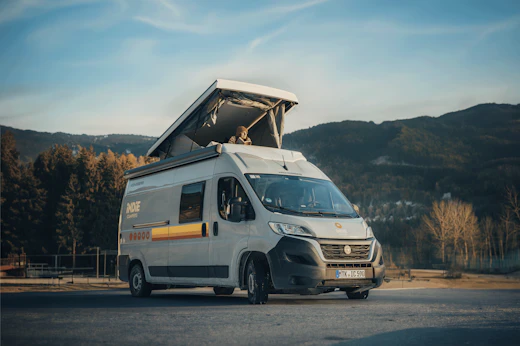
The number of people who can sleep in our campervans will depend on the size of the vehicle and the model. In general, our class C motorhome models can sleep up to 4-8 people, whereas our class B motorhomes can sleep up to 2-4. For cars with a rooftop tent, around 2 people can sleep in this vehicles. More details on our models and sleeping capacities can be found here.
If you are travelling in a campervan, motorhome or caravan around Oslo, it is important to understand official camping rules of the country you are visiting. As natural areas are generally protected by laws, using an official campsite or designated overnight parking area is highly recommended. This helps protect local communities and ensures you can all enjoy safely. Read more safety tips and protocols here.
We offer three protection plans to cover incidents and damages during your hire period. All Indie Campers motorhomes come with insurance for third-party vehicles and property damage (valid insurance will depend on the country). For marketplace vehicles, insurance options may vary based on the host.
Learn more about our protection plans here.
Yes, our search filter allows you to find a campervan near your location using a 60km radius system. This means depending on the location you are searching from, you will be able to find an Indie campervan hire pick-up centre near you.
Yes, a selected number of Indie Campers campervan hire in Oslo include unlimited kilometres, allowing you to explore freely and make the most of your road trip! Please note that unlimited kilometres applies exclusively to Indie Campers campervans and is subject to responsible use.
RVs, Motorhomes & Campervans for Every Kind of Traveller
/night
/night
/night

/night

/night
/night
/night

/night
/night

/night
“Very welcome and helpful. Can’t fault the experience! ”
“I enjoy my experience with Indiecampers. Our host is friendly and instruction is very clear. Highly recommend”
“We had a amazing trip skiing around andalsnes area.”