Start your Spanish adventure with a campervan hire in Barcelona from Indie Campers and discover the best of northeastern Spain by road. Explore the Costa Brava's rugged coastline, the peaks and valleys of the Pyrenees, or the quiet countryside of inland Catalonia filled with medieval villages and vineyards. Travel your way in a campervan with unlimited kilometres, one-way hire options, and convenient extras like foldable bicycles, surf kits, or outdoor furniture to enhance every stop along the way. Indie Campers is trusted across Europe, backed by thousands of 4.8 star reviews and a flexible fleet built for all trip types.


Our Road Trips Itineraries
The ZBE, the city parking, the tourist density: those are the facts of starting in Barcelona, not reasons to choose a different starting city. The reach from Barcelona by campervan is unmatched in the Spanish network. The Costa Brava from Blanes to Cap de Creus is 214 miles of the most intact non-resort Mediterranean coastline in Spain, accessible in one direction from the pick up centre. The Catalan Pyrenees in the other direction give 200 miles of Pyrenean access from the Cerdanya to the Vall d'Aran. Southwest, the Ebro Delta is the largest wetland in the western Mediterranean at 2 hours. West, Ordesa is 4 hours. Southeast, Valencia is 3 hours. Tarragona and the Roman colony of Tarraco (UNESCO, 250 miles southwest, 2 hours 30 minutes) are the intermediate stop on the way south.
The second reason is one-way hire reach. A campervan picked up in Barcelona and dropped off in Madrid (620 miles via AP-2, 5 hours 30 minutes) covers Zaragoza, the central Ebro valley, and the southern Castilian meseta. A Barcelona-to-Valencia one-way (350 miles via AP-7, 3 hours) covers the Costa Daurada, the Ebro Delta, and the northern Valencia coast. A Barcelona-to-Bilbao one-way (620 miles via AP-7/AP-68, 5 hours 30 minutes) covers the Rioja wine country and the Basque coast. A Barcel
Unlimited kilometres: Drive the full Pyrenees-to-Valencia circuit (1,200+ miles) or a Barcelona-to-Lisbon one-way (1,360 miles via AP-7 and A-4) without watching a daily counter. Most Barcelona campervan competitors cap at 200-300 miles per day; Indie Campers does not cap at all.
One-way hire across 70+ locations: Pick up in Barcelona, drop off in Málaga, Seville, Bilbao, Lisbon, or anywhere in the French network. The Barcelona-to-
Spring (March to May)
Temperatures: 12-22°C (54-72°F)
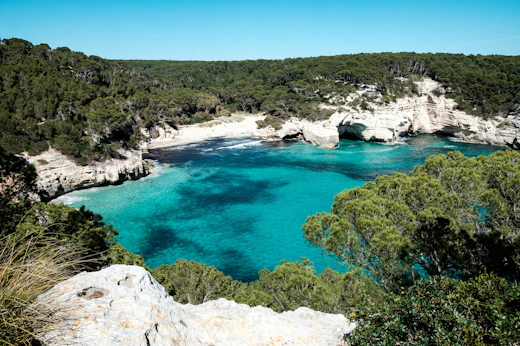
The Costa Brava in spring has the light that the summer photographs do not capture: a lower sun angle, cleaner air from residual tramontane events, water temperatures rising from 13°C in March to 18-19°C in May. The Montserrat approach road has no queue before the Easter week peak (Setmana Santa, typically March or April); the Cadí-Moixeró routes north of Berga open progressively from April. The Ebro Delta in April and May is the best period for flamingo observation: the colony is breeding (nests active from March, chicks hatching April to May) and the wader migration is at peak numbers.
Best for: Costa Brava cala swimming from May, Montserrat without summer crowds, Ebro Delta flamingo breeding season, Pyrenees road access from late April.
Skip if: You want reliable warmth for swimming; the sea is cold until mid-May. Setmana Santa (Easter week) brings extreme road traffic on the AP-7 north toward the Costa Brava; avoid Friday departures.
Summer (June to August)
Temperatures: 24-32°C (75-90°F)
The peak season on the Costa Brava is the most crowded period in the history of European mass tourism and the most commercially profitable for every business on the coast simultaneously. The Platja de la Concha equivalent on the Costa Brava does not exist; the beaches are not oversized for the demand, and the car parks, campsites, and roads fill progressively from the last week of June through mid-August. Practical implications for a campervan: the Tossa de Mar car park fills by 10:00 a.m. in July and August; the Cadaqués access road is impassable on Saturday mornings in summer due to opposing traffic; the Aiguablava track is single-file with backing required. None of these are reasons to not go; they are reasons to arrive before 9:00 a.m. or after 5:00 p.m. and to book campsites by April for August.
Barcelona City and the Costa Brava (approx. 350 miles, 4 days)
Barcelona, Montserrat, and the Pyrenees (approx. 400 miles, 4 days)
Fuel Stations
Barcelona fuel prices track the Spanish national average; the Eixample and Zona Franca city stations run at city pricing (typically €0.05-0.10/litre below motorway service stations). Avoid the AP-7 north motorway service stations near Granollers and Girona, which typically run €0.10-0.15/litre above urban pump prices.
Age and Licence Requirements
Minimum hire age: 21 years. EU licence valid in Spain and all Schengen states without additional documentation. UK licence valid in Spain for tourist use; IDP recommended for extended EU travel. IDP not available in Barcelona; obtain before departure from the UK.
Credit Card and Deposit
Credit card in the primary driver's name required at vehicle pickup. Deposit amount varies by vehicle class and selected protection plan.
Reservation Systems
Speed Limits
Road Conditions
Campervan hire: €700-1,900 (varies by vehicle size and season; June through August peak, book 6-8 weeks ahead; September pricing drops 15-25% from August)
Fuel: €80-150 (diesel approximately €1.65/litre; typical 7-day Catalonia circuit covering Barcelona, Costa Brava north, and Pyrenees covers 600-800 miles)
Tolls: €40-80 (AP-7 Barcelona to Figueres return approximately €20-28; C-16 Cadí Tunnel approximately €14-18 return; AP-7 to Ebro Delta and back approximately €24-32)
LPG: €8-20 (one to two refills)
Campgrounds: €98-280 (€14-40/night x 7; Área de Autocaravanas options at €10-15/night at the low end; Costa Brava beachfront campsites in August at €35-40/night at the top)
Food: €140-420 (self-catering from Mercat de Sant Antoni and Caprabo approximately €30/day; full Costa Brava restaurant meals: €20-35/person for lunch with wine; one fine dining dinner approximately €80-120/person)
Activities: €50-120 (Sagrada Família €26; Park Güell €10; MNAC €15 or free Saturday p.m.; Tossa de Mar Vila Vella €5; Cap Roig botanical garden €12; Dalí House €14; Dalí Theatre-Museum Figueres €14; Montserrat rack railway €12.50 return; Cap de Creus free)
Barcelona → Bilbao (620 miles, 5 hours 30 minutes via AP-7/AP-68 north): The Catalan-Basque one-way. Natural stops: Zaragoza (310 miles, 2 hours 45 minutes via AP-2), Logroño and Haro (Rioja Alta, 520 miles, 4 hours 30 minutes via AP-68). Drop off at Indie Campers Bilbao depot.
Barcelona → Madrid (620 miles, 5 hours 30 minutes via AP-2/A-2): East-to-centre. Natural stops: Zaragoza (310 miles, 2 hours 45 minutes), Guadalajara and the Alcarria plateau (580 miles, 5 hours 15 minutes). Drop off at Indie Campers Madrid depot.
Barcelona → Valencia (350 miles, 3 hours via AP-7 south): The Catalan-Valencian one-way. Natural stop: Delta de l'Ebre (180 miles, 2 hours); Peñíscola castle (GPS: 40.3597° N, 0.4012° E, 270 miles, 2 hours 30 minutes). Drop off at Indie Campers Valencia depot.
Barcelona → France / rest of Europe
The argument for Barcelona is not the Sagrada Família, although that is a specific reason to spend a morning before collecting the vehicle. The argument is position: Barcelona sits equidistant between the French border and the Valencia coast, between the Pyrenean spine and the Mediterranean. No other city in Spain gives you simultaneous access to a World Heritage coastline, the second-largest mountain range in western Europe, and a major international transport hub in a single 200-mile radius.
The practical argument for road trippers specifically: Barcelona-El Prat is one of the best-connected airports in Europe, with direct flights from North America (New York, Miami, Toronto, Los Angeles on multiple carriers), the UK (London,
24/7 roadside assistance: Included on every booking. If something fails on the GI-682 cliff road above the Costa Brava calas or on the N-260 through the Pyrenees after dark, there is a number to call.
Basic Protection Plan included: Covered from day one. Additional protection upgrades are available at booking and worth considering for unpaved Pyrenees tracks and the dirt roads of the Ebro Delta natural park.
Flexible cancellation available: Cancel up to 31 days before pickup without penalty.
Book now, pay later: Reserve your Barcelona vehicle today; full payment is not due until closer to the departure date.
The Pyrenees in summer are the counterargument: temperatures on the N-260 transversal road are 18-24°C at altitude while Barcelona is at 32°C. The Cerdanya valley cycling is at peak access from June through August. The Aigüestortes national park taxi-jeep services are fully operational.
Best for: Costa Brava swimming (sea reaches 26-28°C in August), Pyrenees hiking above 2,000 metres, Cerdanya cycling, Aigüestortes.
Skip if: You want uncrowded roads and campsites. July and August require planning 6-8 weeks ahead for Costa Brava campsites.
Autumn (September to October)
Temperatures: 15-26°C (59-79°F)
September is the most practical month for a Barcelona-origin campervan circuit. The Costa Brava sea temperature peaks in September (27-28°C average, the warmest month), the crowds from August have left, and the Costa Brava campsite prices drop 20-30% from peak season after 1 September. The Ebro Delta rice harvest runs from mid-September through October: the delta changes character from a green agricultural plain to a flooded landscape of harvested paddies reflecting the October sky, and the flamingo and wader numbers build toward their autumn maximum. The Catalan Pyrenees deciduous forests (beech and oak in the Berguedà, birch in the Cerdanya valley) turn from mid-October; the Vall d'Aran in late October is specifically worth the 3 hours 30 minute drive from Barcelona.
Best for: Warmest sea temperatures for Costa Brava swimming, Ebro Delta harvest and autumn birds, Pyrenees autumn colour (mid to late October), all campsites available without advance booking after 1 September.
Skip if: You want guaranteed dry weather for Pyrenees hiking. September Atlantic fronts can reach the Pyrenees from the northwest, causing 2-4 day rain events at altitude from late September onward.
Winter (November to February)
Temperatures: 6-15°C (43-59°F)
Barcelona in winter is 12-15°C and sunny on most days; the Mediterranean climate does not produce the sustained cold-weather rain of the Atlantic north. The Ebro Delta in winter (November through February) holds its largest concentrations of wintering waterfowl: duck numbers on the Encanyissada and Tancada lagoons typically reach 50,000-80,000 birds from November through January, with species including ferruginous duck, marbled duck, and greater flamingo remaining through the cold months. The Costa Brava out of season: the calas are accessible, the car parks are empty and free, and the coastal walking paths (the GR-92 runs the full 200 miles of Costa Brava coast) are walkable in mid-winter temperatures. Montserrat in winter is accessible year-round (the monastery has no seasonal closure); the rack railway operates all year.
Best for: Ebro Delta winter wildfowl (maximum numbers November through January), Costa Brava coastal walking without crowds, Barcelona city sightseeing in reasonable temperatures, Vall d'Aran ski season (Baqueira-Beret from December).
Skip if: You want the Pyrenees high-country roads. The Bonaigua pass, the Coll de la Gallina, and the Cadí-Moixeró northern approach roads can close from November with snow. Check transit.gencat.cat before heading north.
The most popular months for Barcelona campervan hire are June, July, August, and September.
Catalonia Complete Circuit: City, Coast, Pyrenees, Delta (approx. 900 miles, 8 days)
Catalonia, Aragon, and the Pyrenean Grand Circuit (approx. 1,800 miles, 14 days)
Dump Stations
Essential Apps
Driving Culture
Barcelona ring road driving: aggressive by northern European standards, with close following distances and fast lane changes. Maintain larger following distances and use mirrors continuously on the Ronda Litoral and Ronda de Dalt. The tram network (Trambaix west, Trambesòs east) has priority crossings on the Diagonal and the Gran Via; campervans must yield at all tram surface crossings.
Costa Brava coastal roads: local drivers know every bend of the GI-682 and GI-614 at speed; pull to the right on approach to blind bends to give passing room and accept that overtaking in the other direction will be fast and committed. This is normal.
Pyrenees mountain roads: lower gears on extended descents; the N-260 Bonaigua descent (18 miles, 1,200 metres of altitude drop from 2,072 metres to 900 metres) requires second or third gear throughout on a loaded campervan to avoid brake fade.
Campervan-Specific Notes
Barcelona city centre parking: Not feasible for any campervan. Use the peripheral campsites (Masnou, Castelldefels) with Cercanías rail access and transit in. Do not attempt to park in the Eixample, Gòtic, or Born districts.
Eixample superblocks: The 2023 Eixample superblock scheme has permanently blocked several through-roads for private vehicles; older satnav maps route campervans into pedestrian zones. Use the most current Google Maps version and select "avoid pedestrian zones" in route settings.
AP-7 toll plazas: All accept cash and contactless card. The French border toll (Péage Le Perthus on the A9 in France) accepts cash and card; the Spanish side (AP-7 at La Jonquera) is free for southbound entry from France.
Campervans over 3.5 tonnes on AP-7 and AP-2: Speed limit 100 mph (not 120 mph). Verify your vehicle weight category at depot pickup.
Tramontane wind (Cap de Creus and northern Costa Brava): Wind gusts of 80-120 mph from the northwest are common from October through April. Do not drive a high-sided campervan on the GI-614 or the Cap de Creus lighthouse road in sustained winds above 70 mph; the road runs directly into the wind direction on the final 3 miles. Check Windy before departing Cadaqués for the cape.
Budget: approx. €900 -- Compact vehicle, Mercat de Sant Antoni provisioning, AP-7 south to Ebro Delta (cheapest campsite route), Área de Autocaravanas overnight stops at €10-15/night, free attractions (Costa Brava cliff walks, Cap de Creus, Ebro Delta lagoons), toll-free N-II coastal road instead of AP-7.
Mid-range: approx. €1,600 -- Mid-size vehicle, Sagrada Família and Park Güell visits, AP-7 north Costa Brava circuit (Tossa to Cadaqués), Cap Roig botanical garden, Dalí House Port Lligat, Montserrat rack railway, mixed campsites at €20-30/night, Catalan fish lunch at Barceloneta €25/person.
Premium: approx. €3,000+ -- Large motorhome, all major Barcelona monuments (Sagrada Família, Park Güell, MNAC, Palau de la Música), Costa Brava full north circuit, Dalí triangle (Cadaqués house + Figueres museum + Púbol castle), Pyrenees Vall d'Aran circuit, Cap Roig Festival concert (€80-120/ticket), peak-season Costa Brava beachfront campsite (€35-40/night), fine dining one evening in Barcelona.
Barcelona is the highest baseline campervan hire cost in the Indie Campers Spain network, reflecting peak Mediterranean tourist season demand and the concentration of premium attractions. The cost differential between June and September for the same vehicle and itinerary can be 25-35%; September delivers equivalent or better conditions (warmer sea, empty campsites, all attractions open) at substantially lower cost.
One-way fees vary by route and season. Confirm at indiecampers.com.
The food note: Barcelona's eating scene is not the Basque pintxo culture (which requires San Sebastián or Bilbao). It is Catalan cooking: pa amb tomàquet (bread rubbed with ripe tomato and olive oil, served with everything), botifarra amb mongetes (pork sausage with white beans, the specific Catalan lunch), fideuà (noodle paella with seafood, invented in Gandia, adopted by Barcelona), and esqueixada de bacallà (salt cod salad with tomato and olive, eaten cold, an August lunchtime staple). The Cal Pep counter (GPS: 41.3836° N, 2.1830° E, Tuesday through Saturday, no reservations, arrive at 1:00 p.m., queue 20-30 minutes maximum), the Sant Antoni market stalls, and a bottle of Priorat or Penedès from the Bodega Sepúlveda: that is the provisioning logic for the vehicle kitchen before you head north.
In general, a special licence is not required to rent our campervans in Barcelona. However, a valid driving licence is required to operate our vehicles. For some non-EU citizens, a IDP is required, in addition to their home country's drivers licence. Other considerations such as a valid vehicle licence to the vehicle type (manual or automatic) will also be required. For more information regarding our licence requirements read this.
Yes, our campervans are pet-friendly. Just make sure to purchase the extra cleaning service during your booking. This service includes professional anti-allergic cleaning after your trip. Please note that only one pet is allowed per motorhome, and it must weigh no more than 30kg. Keep in mind, we are not responsible for any legal fees related to travelling with your pet. For marketplace bookings, check the "vehicle rules" section for the pet-friendly icon to confirm if pets are allowed in that specific vehicle.
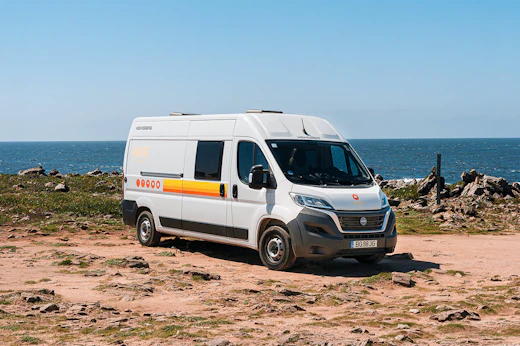
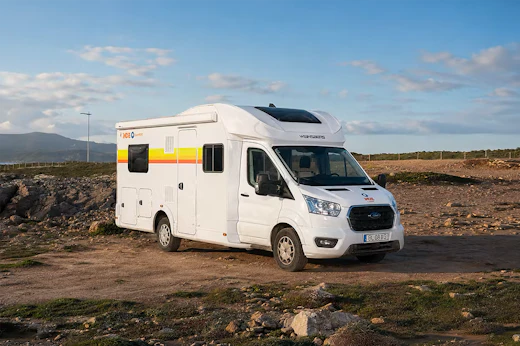
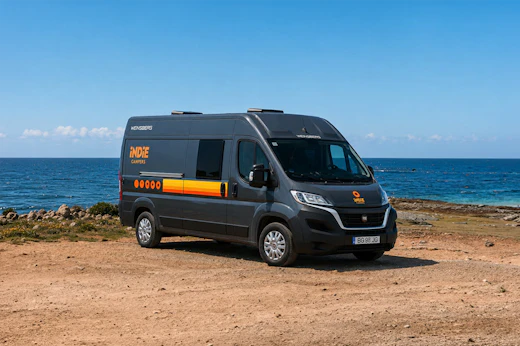
The number of people who can sleep in our campervans will depend on the size of the vehicle and the model. In general, our class C motorhome models can sleep up to 4-8 people, whereas our class B motorhomes can sleep up to 2-4. For cars with a rooftop tent, around 2 people can sleep in this vehicles. More details on our models and sleeping capacities can be found here.
If you are travelling in a campervan, motorhome or caravan around Barcelona, it is important to understand official camping rules of the country you are visiting. As natural areas are generally protected by laws, using an official campsite or designated overnight parking area is highly recommended. This helps protect local communities and ensures you can all enjoy safely. Read more safety tips and protocols here.
We offer three protection plans to cover incidents and damages during your hire period. All Indie Campers motorhomes come with insurance for third-party vehicles and property damage (valid insurance will depend on the country). For marketplace vehicles, insurance options may vary based on the host.
Learn more about our protection plans here.
Yes, our search filter allows you to find a campervan near your location using a 60km radius system. This means depending on the location you are searching from, you will be able to find an Indie campervan hire pick-up centre near you.
Yes, a selected number of Indie Campers campervan hire in Barcelona include unlimited kilometres, allowing you to explore freely and make the most of your road trip! Please note that unlimited kilometres applies exclusively to Indie Campers campervans and is subject to responsible use.

“Experiencia increíble con maravillosas condiciones ”
“Brilliant experience from start to finnish. Our flight had been delayed so had to contact prior to collection as we were going to arrive after closing time. Had quick informative response and reassured. Took time at pick up to show us all facilities, welcoming and helpful. Same at drop off. Definitely recommend this company and can't wait to book again.”
“El servicio de personal buenísimo. ”
Our Road Trips Itineraries
RVs, Motorhomes & Campervans for Every Kind of Traveller
/night
/night

/night

/night
/night

/night
/night

/night
/night
/night
/night

/night

/night

/night