
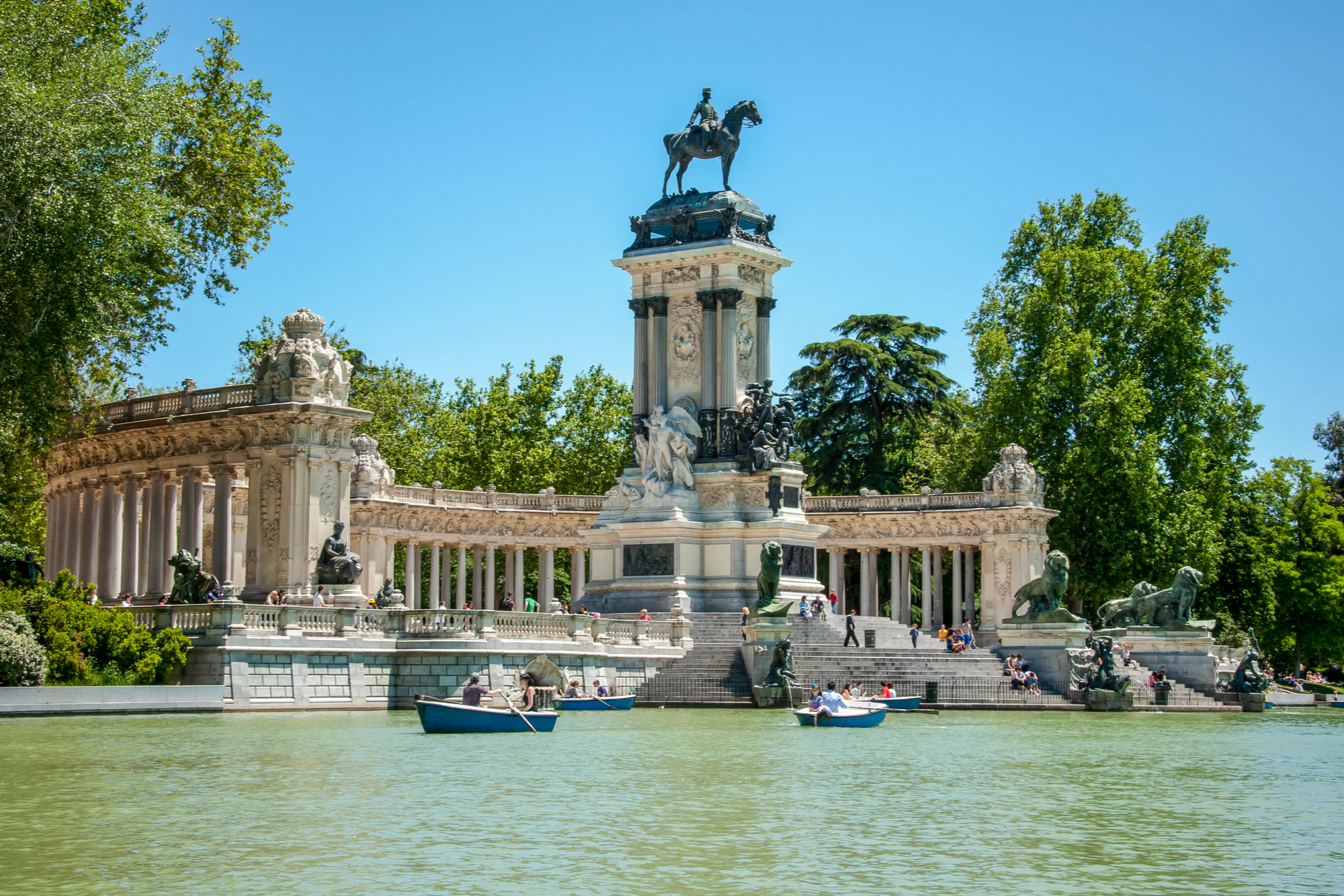


Monfragüe, one of Spain’s 15 National Parks, is the world’s largest and best-preserved patch of Mediterranean forest. At the confluence of the Tagus and Tietar Rivers, the park is home to 280 species of vertebrates. Over 200 of them are birds, with the Iberian Imperial Eagle the star of Monfragüe.
Bring binoculars and spend the afternoon birdwatching, one of the most unique activities the park offers and a perfectly zen way to begin your Madrid road trip.
Besides spotting the diverse wildlife, other activities worth enjoying at Monfragüe are hiking, biking, and horse riding. There are several well-marked paths to explore although you’ll need to request a permit to access some.
Watersports are prohibited within the park, but there are several kayaking options in the outskirts of Monfragüe, both on the Tagus and on the Tietar rivers.
Extremadura’s two most important contributions to Spain have been conquistadores and jamón ibérico. From this land were some of the leading conquerors of America. Hernán Cortés, Pizarro, Nuñez de Balboa, and Orellana, just to name a few, all come from the region.
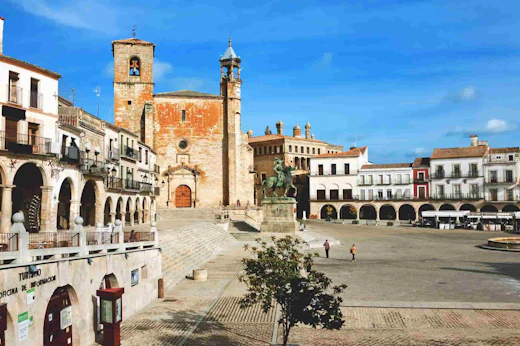
Your second stop on this Madrid road trip takes you to Trujillo, a stunningly well-preserved medieval town. Francisco Pizarro, conqueror of Peru, and Francisco de Orellana, the first person to entirely navigate the Amazon River (first named Orellana River) were both born here.
Spend half a day admiring the main square, old palaces and churches, and its castle. Sample some jamén ibérico at one of the bars on Plaza Mayor, the town’s main square with the imposing Pizarro statue.
Resume your road trip and head to the province capital, Cáceres, which old quarter is one of the officially best-preserved in the continent.
As soon as you walk through Cáceres narrow old streets, you feel as you’ve travelled back to medieval times. Palaces, churches, and convents built in beautiful golden stones will transport you to its glorious past.

From the Middle Ages to the Roman Empire! Your next stop in this wonderful Madrid road trip is Mérida, a town founded in 25 BC under the name of Emerita Augusta by order of Emperor Augustus.
Declared a UNESCO World Heritage Site in 1993, Mérida’s archaeological ensemble is one of the most impressive in the country. The Roman theatre and the amphitheater, the Roman circus, the bridge over the Guadiana River, the aqueduct, and many other buildings and remains are mind-blowing due to their state of preservation and beauty.
Leave the old architecture behind and give yourself rest in nature. Drive your campervan East towards Puerto Peña Reservoir, a hidden spot only known by locals and ideal for watersports. Swimming, canoeing, and motorboating are all fun activities to do at the reservoir.
Close to Puerto Peña, pay a visit to the old town of Puebla de Alcocer, which castle offers spectacular views of the reservoir and the whole region.
We exit Extremadura to enter La Mancha, Don Quixote’s land. Your next stop on this Madrid road trip is at one of La Mancha’s main cities, Ciudad Real often called The Capital of La Mancha.
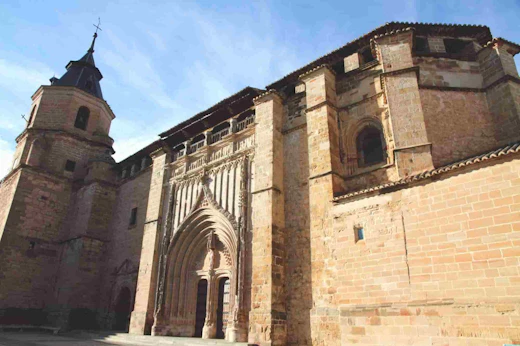
Ciudad Real is a small city, perfect to explore on foot. The Romanesque cathedral and Santiago’s Church are both impressive buildings worth visiting. Toledo’s Gate, at the North end of the old city, is a magnificent gothic gate of military origins.
The city also boasts Don Quixote’s Museum, a small free museum that combines an artwork exhibition related to the novel and multimedia presentations about the Cervantine period.
A traditional dish worth trying is migas, which literally means bread crumbs. Shepherd-style migas are small pieces of stale white bread mixed with garlic and bacon that has been sauteed in lard or olive oil.
Don’t forget that Manchego cheese is one of the most famous Spanish cheeses and that La Mancha also produces plenty of good quality red wines. There you have your lunch for the day! After, head to Toledo instead of spending the night in Ciudad Real.
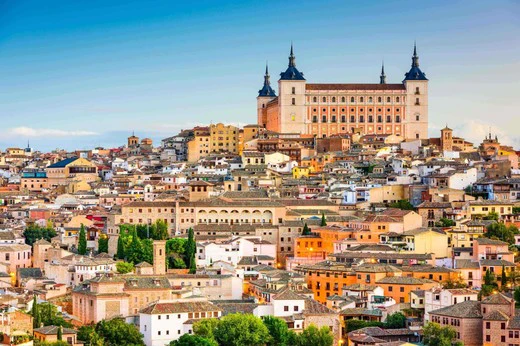
Toledo is known as the City of the Three Cultures because for many years Christians, Jews, and Muslims lived peacefully together in its narrow hilly streets.
The old city sits on a mountaintop surrounded by the Tagus River on three sides. As you reach the city by campervan, the view of Toledo in the distance is unforgettable.
An hour’s drive from the capital, Toledo is last on your Madrid road trip. A UNESCO World Heritage Site since 1987, it’s packed with medieval churches, synagogues, and mosques. The old city walls and gates still stand, as do the iconic Roman Alcántara and San Martin Bridges.
