Start your Nordic road trip with a campervan hire in Helsinki and explore Finland's forests, lakes, and coastal islands at your own pace. Drive north toward Lapland, visit lakeside retreats in the Finnish countryside, or head to the archipelago along the southern coast. Choose from Indie Campers' California, Active, or Comfort range, all with unlimited kilometres, flexible one-way options, 24/7 online assistance, and winter-ready extras like snow chains, heating kits, and outdoor furniture. With a trusted Europe-wide fleet and 4.8-star reviews, Indie Campers makes exploring Finland simple, comfortable, and unforgettable.


The Kalajärvi depot's real advantage is that it puts genuine wilderness closer than the city centre. Most Helsinki visitors budget a half-day trip out to Nuuksio and back; starting from this depot, you're already at the park's edge before you've driven anywhere, which means you can spend a full first day hiking Nuuksio's longer trails and still make it into central Helsinki by evening for dinner, rather than choosing one or the other.
The specific experience that only works with a self-contained vehicle here is the Turku Archipelago Trail. Hotel-based travellers typically do Turku as a single day trip from Helsinki by train, seeing the city but none of the archipelago beyond it. A campervan lets you actually cross the small car ferries between islands, overnight near Nagu or Korpo, and experience the trail's genuinely slow, island-hopping pace rather than a single city stop.
Helsinki Airport (HEL, Vantaa, GPS 60.3183°N, 24.9633°E) sits roughly 20 km north of the city centre and, relevantly, closer to the Kalajärvi depot than central Helsinki is; expect a 25-30 minute drive or transfer either way. There's no realistic secondary airport for this itinerary. Turku Airport (TKU), 165 km west, and Tampere-Pirkkala Airport (TMP), 175 km northwest, are both too far from the depot to serve as a practical arrival point unless your itinerary specifically starts in one of those cities and transfers to Helsinki for pickup.
From the depot, the destinations that matter most: Nuuksio National Park at 10 km/15 min, central Helsinki at 20 km/25-30 min, Sipoonkorpi National Park at 45 km/45-50 min, Porvoo at 65 km/50 min, Turku at roughly 180 km/2h15, Tampere at roughly 190 km/2h15.
Here's what sets Indie Campers apart from other Helsinki hire companies:
Unlimited kilometres. A Helsinki-Nuuksio-Porvoo loop alone covers 150-200 km, and adding the Turku Archipelago Trail or a Tampere extension easily pushes a week's trip past 600-700 km. Most competitors cap daily distance at 200-250 km and bill extra past that. Indie Campers doesn't cap it, so an extra ferry crossing on the Archipelago Trail or a spontaneous detour to Sipoonkorpi doesn't turn into a surprise line item at drop-off.
One-way hire across multiple locations. Pick up in Helsinki and drop off at another confirmed European depot instead of looping back. Given Finland's geography, sea crossings (notably the Helsinki-Stockholm ferry) can extend a one-way itinerary further than a road-only route would, worth factoring into planning if a Nordic-wide trip is the goal.
24/7 road assistance, included on every booking, genuinely useful on the smaller island roads of the Turku Archipelago or the more remote stretches around Sipoonkorpi and Nuuksio, where cell coverage isn't guaranteed.
Basic Protection Plan included, with optional upgrades available at booking, worth considering before tackling Porvoo's narrower Old Town-adjacent streets or an archipelago ferry crossing with a larger vehicle.
Flexible cancellation available up to 31 days before pickup, useful if you're timing the trip around archipelago ferry schedules, which run reduced outside the June-August peak.
Book now, pay later option available, so full payment isn't due until closer to departure.
On vehicle choice: the Adventure category is the strongest fit for the Turku Archipelago's narrower island roads and smaller ferry crossings, and for confidently navigating Nuuksio's and Sipoonkorpi's trailhead parking areas. The California and Active categories suit a Helsinki-Porvoo-Tampere loop well, with enough space for a longer trip without sacrificing too much maneuverability. A larger Comfort-category motorhome is fine on the main highways (E18, Highway 3) but should stick to those corridors rather than the smallest island or forest-access roads
Winter (December to February)
Temperatures: -8 to 0°C (18-32°F). Daylight runs short, roughly 6 hours around the winter solstice, and snow cover is reliable through the season. Helsinki's Christmas market runs through December in Senate Square. Nuuksio becomes a cross-country skiing destination rather than a hiking one; Turku's archipelago ferries run a sharply reduced winter schedule.
Best for: a short city-and-Christmas-market trip, or winter sports at Nuuksio if you're equipped for it.
Skip if: the Turku Archipelago Trail or Nuuksio hiking is the priority; both are considerably harder to access in winter conditions.
Spring (March to May)
Temperatures: -2 to 12°C (28-54°F). Snow and ice persist into April in most years, with the Helsinki region typically clear by late April to mid-May. Nuuksio's lakes break up from ice through April, and the forest floor greens rapidly in May.
Best for: an early-season Nuuksio and Helsinki city trip once the thaw sets in, generally from mid-May.
Skip if: you specifically want the archipelago ferries at full frequency; that ramps up closer to June.
Summer (June to August)
Temperatures: 14-22°C (57-72°F). This is the defining season here: near-continuous daylight around the June solstice (Helsinki gets roughly 18-19 hours of daylight), warm enough for lake swimming at Nuuksio and coastal swimming near Porvoo, and the only period when the Turku Archipelago Trail's smaller ferries run at full frequency.
Best for: the full Helsinki-Nuuksio-Porvoo-Turku Archipelago circuit; book campsites 3-4 weeks ahead for July, and expect the Midsummer weekend (nearest June 24) to see much of Finland's own population head to lake cottages, so plan around it rather than into it.
Skip if: you're trying to avoid crowds at Suomenlinna or central Helsinki's main sights, both busiest in July.
Autumn (September to November)
Temperatures: 2-14°C (36-57°F). Ruska, Finland's autumn foliage season, peaks in the Helsinki region through late September into early October, turning Nuuksio's forest a genuine gold-and-red. Daylight shortens fast into November.
Best for: Nuuksio hiking and photography with minimal crowds.
Skip if: warm-water swimming or full archipelago ferry access is the goal; both wind down through September.
The most popular months for Helsinki campervan hire are June, July, and August.
The City-and-Forest Loop (approximately 130 km, 3-4 days)
Day 1: Pick up at the Kalajärvi depot, spend the afternoon on Nuuksio's Haukkalampi loop (10 km from the depot). Overnight at a campsite near the park.
Day 2: Drive into central Helsinki (20 km), Suomenlinna ferry and Senate Square. Overnight at Rastila Camping, eastern Helsinki (GPS 60.2068°N, 25.1211°E).
Day 3: Porvoo's Old Town (50 km from central Helsinki), riverside walk and cathedral grounds. Overnight at a Porvoo-area campsite.
Days 4-5 (extending): Return via Sipoonkorpi National Park for a second forest day before heading back to the depot.
The Design and Market Loop (approximately 100 km, 3 days)
Day 1: Pick up, spend the day in Helsinki's design district (Punavuori, Ullanlinna) and Hakaniemi market. Overnight at Rastila Camping.
Day 2: Suomenlinna sea fortress, a full day given the site's scale. Overnight at Rastila Camping again or a second night nearby.
Day 3: Nuuksio National Park on the way back to the depot for drop-off.
Helsinki-Porvoo-Turku Archipelago Loop (approximately 500 km, 7-8 days)
Days 1-2: Nuuksio and central Helsinki as above.
Day 3: Porvoo (65 km from the depot). Overnight at a Porvoo-area campsite.
Day 4: Drive to Turku (roughly 165 km from Helsinki). Overnight at a Turku-area campsite.
Days 5-6: The Archipelago Trail loop, including the Nagu-Korpo ferry crossing, with an overnight on one of the outer islands or back in Turku.
Day 7: Return east via Highway 1/E18 toward Helsinki, with a stop at Sipoonkorpi National Park.
Day 8: Return to the depot for drop-off.
Follow the 7-10 day circuit above, then instead of returning to the depot, take the vehicle to the Helsinki harbour for the overnight Tallink Silja or Viking Line car ferry to Stockholm (roughly 17-18 hours), continuing the trip in Sweden for a one-way drop-off at the Copenhagen (Malmö) or Stockholm-area depot rather than a road route. Confirm car ferry booking, vehicle size, and cost directly with the ferry operator well in advance, since this is a booked-crossing dependency rather than a standard drive-off route. This uses confirmed Indie Campers depots only.
Fuel Stations
Diesel in Finland runs approximately €1.72/litre, among the more moderate prices in Northern Europe. A Neste station in Espoo, close to the Kalajärvi depot, is the practical first and last fill-up point. An ABC station on Highway 1/E18 toward Turku is the last reliable stop before the archipelago's smaller islands, where fuel is not available. On the Tampere route (Highway 3), a Neste or ABC station near Hämeenlinna, roughly halfway, is a sensible midpoint fill. On the Porvoo route (E18 east), stations are frequent the entire way, so no specific fill-up point is critical.
LPG
Available at larger Neste and ABC stations in Espoo, Helsinki, and Turku; less consistent on the smaller archipelago islands, so fill up in Turku before setting out on the trail.
Dump Stations
Rastila Camping in eastern Helsinki and campsites in Turku and Porvoo all run dump points as part of standard site services. There's no dedicated dump station inside Nuuksio, Sipoonkorpi, or on the smaller archipelago islands; plan tank management around the named campsites instead.
Essential Apps
An HSL app for Helsinki's public transport if you're leaving the vehicle at a campsite to explore the city centre by ferry, tram, or metro. A Finnish fuel-price comparison app to track the (generally modest) local price spread. The Ferryhopper or a similar app for checking Archipelago Trail ferry schedules and the Helsinki-Stockholm overnight crossing if extending the trip into Sweden. Offline maps for Nuuksio's, Sipoonkorpi's, and the archipelago's more remote stretches, where signal isn't always reliable.
Minimum renter age is 21, with a young-driver surcharge commonly applied under 25; a valid credit card is required at pickup for the security deposit. Non-EU/non-Nordic drivers should carry an International Driving Permit alongside their home licence.
There's no toll transponder to set up in Finland, since the country charges no road tolls at all; the only advance booking that matters here is the Suomenlinna HSL ferry ticket (available on the HSL app) and, if extending to Sweden, the Helsinki-Stockholm car ferry, which should be booked weeks ahead for summer sailings given limited vehicle deck space.
Book Rastila Camping and Turku-area campsites 2-3 weeks ahead for July, and expect Midsummer weekend (nearest June 24) to affect both city sights and campsite space, since much of the local population travels to lake cottages that weekend rather than staying in the cities.
Cross-border driving into Sweden via the Helsinki-Stockholm ferry is standard on Indie Campers bookings within the EU/Schengen area, but confirm ferry-specific vehicle documentation and booking directly with the ferry operator, since this depends on a booked crossing rather than a road border.
Speed Limits
Finnish motorways run 120 km/h in summer, commonly reduced to 100 km/h in winter by local authority decision; rural main roads run 80 km/h, town centres 50 km/h down to 30 km/h in designated zones. Speed cameras, including average-speed enforcement on some stretches, are common and strictly enforced.
Road Conditions
Highway 1/E18 toward Turku and Highway 3 toward Tampere are modern, well-maintained primary roads for their entire length. The Turku Archipelago Trail's smaller island roads narrow considerably and some sections see reduced winter maintenance. Nuuksio's and Sipoonkorpi's access roads are ordinary paved rural roads, fine for standard motorhomes but narrower near the trailheads themselves.
Driving Culture
Finnish driving culture is calm, rule-following, and quiet by broader European standards; horn use is rare and lane discipline is strong. Headlights on at all times, day and night, is a legal requirement year-round given how far daylight hours swing by season, and it's worth building into habit from the first day of the hire.
Campervan-Specific
Watch for elk and, less commonly, deer on rural roads near Nuuksio and Sipoonkorpi, especially at dawn and dusk; warning signage is posted on the relevant stretches. Winter tyres are legally mandatory roughly December through February, relevant mainly if hiring in the shoulder season rather than peak summer. No specific propane or tunnel restrictions apply on this route. Parking in central Helsinki is limited to designated lots and metered street parking sized for cars; use Rastila Camping or a park-and-ride approach rather than looking for street parking downtown.
Legal
Finland's BAC limit is 0.5 g/L (0.05%), applying uniformly to all drivers. Exceeding it can bring a fine scaled to income under Finland's day-fine system, licence suspension, and for higher readings, potential imprisonment of up to six months.
Helsinki, Nuuksio, Porvoo, and Turku Archipelago Circuit (approximately 450 km)
Campervan hire for a mid-size campervan over seven days runs in a broad range depending on season and category; June-August peak pricing runs above May or September rates.
Fuel: at roughly 450 km round trip and typical campervan consumption of 20-25 L/100km, that works out to approximately 90-113 litres of diesel at approximately €1.72/litre, putting fuel at roughly €155-195 for the week.
Motorway tolls: €0 (Finland charges no road tolls anywhere in the country).
Campgrounds: seven nights across a Nuuksio-area site, Rastila Camping, a Porvoo-area site, and a Turku-area site average out to roughly €24-34/night, so budget €168-238 for the week's pitches.
Ferries: the Suomenlinna HSL ferry runs €3.30/adult per single trip; the Nagu-Korpo and similar Archipelago Trail crossings are largely free as part of the road network, though some longer archipelago legs (toward Åland, for instance) carry a separate fare if added to the itinerary.
Food: for a week blending Finnish grocery self-catering (S-market, K-market, Lidl) with a handful of restaurant or market-hall meals, a market hall lunch averaging €12-18/person and a sit-down dinner in Helsinki or Turku averaging €25-40/person, figure €35-70 per person per day.
Activities: Suomenlinna's ferry fare covers entry (the fortress itself has no separate charge); a Nuuksio guided nature walk, if booked, runs approximately €25-40/adult; a Porvoo bakery stop and market-hall meals round out a typical activity-light, food-and-nature-focused week at roughly €60-120 for two adults.
Budget (2 people, 7 days, vehicle hire not included): approximately €650-870. Assumes an Adventure-category van, cooking most meals, free or low-cost activities, and standard campsite pitches.
Mid-range (2 people, 7 days, vehicle hire not included): approximately €1,000-1,350. Assumes a California-category vehicle, a mix of cooking and restaurant/market-hall meals, and a guided Nuuksio nature experience.
Premium (2 people, 7 days, vehicle hire not included): approximately €1,700-2,300. Assumes an Active or Comfort-category motorhome, peak summer timing, frequent restaurant meals including a proper Helsinki dinner and Turku seafood, full-hookup campsite pitches throughout, and an extended Archipelago Trail loop with an added Åland ferry leg.
Helsinki sits toward the moderate end of the Nordic cost spectrum in this network, meaningfully helped by Finland's complete absence of road tolls, a genuine and consistent saving compared to Denmark's Great Belt Bridge or the Öresund crossing near Copenhagen. The primary cost variables here are food, which runs comparable to the rest of Northern Europe, and any archipelago ferry legs beyond the free Trail crossings; confirm current fuel prices via a site like polttoaine.net before departure.
Helsinki to Stockholm: no direct road route exists; the practical option is the overnight Tallink Silja or Viking Line car ferry (roughly 17-18 hours), continuing the trip in Sweden for a one-way drop-off at a confirmed Swedish depot. Confirm ferry vehicle size limits, cost, and availability directly with the operator, since this is a booked-crossing dependency, not a standard drive-off route.
Helsinki to Copenhagen (Malmö): combining the Helsinki-Stockholm ferry with a road continuation south through Sweden to the Malmö-area depot, roughly 615 km and 7 hours of driving after the ferry crossing, for travellers building a genuine multi-country Nordic itinerary.
Helsinki's own geography limits standard road-based one-way options within Finland, since Turku, Tampere, and other Finnish cities don't currently host a confirmed Indie Campers depot. For most travellers, plan a Finland-based trip as a loop back to the Kalajärvi depot, and treat any international one-way as a ferry-dependent special case to confirm directly at booking.
One-way fees vary by route and season. Confirm availability and pricing at the time of booking.
This depot's real advantage is proximity to genuine wilderness before the trip even properly starts: Nuuksio National Park sits closer to the Kalajärvi pick-up centre than central Helsinki does, which means the forest, not the city, can be day one. From there, the loop widens naturally west to the Turku Archipelago's islands and east to Porvoo's river town, all reachable within a half-day's drive of a depot most visitors don't realise sits at the edge of a national park.
The singular experience only available from this starting point is the Turku Archipelago Trail done properly, as a multi-day, ferry-hopping route rather than a single city day trip from Helsinki by train. Crossing the small free car ferries between Nagu and Korpo, timing an overnight on one of the outer islands, and waking up somewhere the train from Helsinki simply doesn't reach, is a genuinely different trip than the standard Turku day excursion.
The departure morning worth building in: an early stop at Kauppatori for a bowl of salmon soup from a market stall before the tour groups arrive, followed by the short HSL ferry out to Suomenlinna for a walk along the fortress ramparts while the morning light is still low over the harbour. Then head back to the depot, load the van, and point it toward Nuuksio's forest trails or west along Highway 1 toward the archipelago, whichever direction the rest of the trip calls for.
In general, a special licence is not required to rent our campervans in Helsinki. However, a valid driving licence is required to operate our vehicles. For some non-EU citizens, a IDP is required, in addition to their home country's drivers licence. Other considerations such as a valid vehicle licence to the vehicle type (manual or automatic) will also be required. For more information regarding our licence requirements read this.
Yes, our campervans are pet-friendly. Just make sure to purchase the extra cleaning service during your booking. This service includes professional anti-allergic cleaning after your trip. Please note that only one pet is allowed per motorhome, and it must weigh no more than 30kg. Keep in mind, we are not responsible for any legal fees related to travelling with your pet. For marketplace bookings, check the "vehicle rules" section for the pet-friendly icon to confirm if pets are allowed in that specific vehicle.
The number of people who can sleep in our campervans will depend on the size of the vehicle and the model. In general, our class C motorhome models can sleep up to 4-8 people, whereas our class B motorhomes can sleep up to 2-4. For cars with a rooftop tent, around 2 people can sleep in this vehicles. More details on our models and sleeping capacities can be found here.
If you are travelling in a campervan, motorhome or caravan around Helsinki, it is important to understand official camping rules of the country you are visiting. As natural areas are generally protected by laws, using an official campsite or designated overnight parking area is highly recommended. This helps protect local communities and ensures you can all enjoy safely. Read more safety tips and protocols here.
We offer three protection plans to cover incidents and damages during your hire period. All Indie Campers motorhomes come with insurance for third-party vehicles and property damage (valid insurance will depend on the country). For marketplace vehicles, insurance options may vary based on the host.
Learn more about our protection plans here.
Yes, our search filter allows you to find a campervan near your location using a 60km radius system. This means depending on the location you are searching from, you will be able to find an Indie campervan hire pick-up centre near you.
Yes, a selected number of Indie Campers campervan hire in Helsinki include unlimited kilometres, allowing you to explore freely and make the most of your road trip! Please note that unlimited kilometres applies exclusively to Indie Campers campervans and is subject to responsible use.

RVs, Motorhomes & Campervans for Every Kind of Traveller
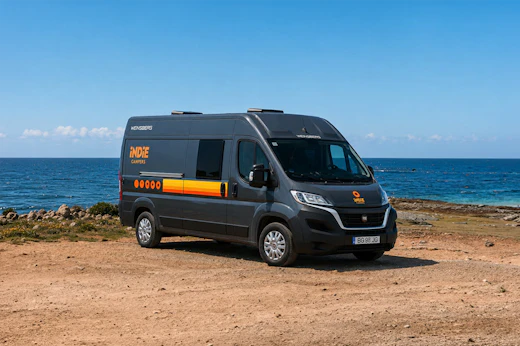
/night
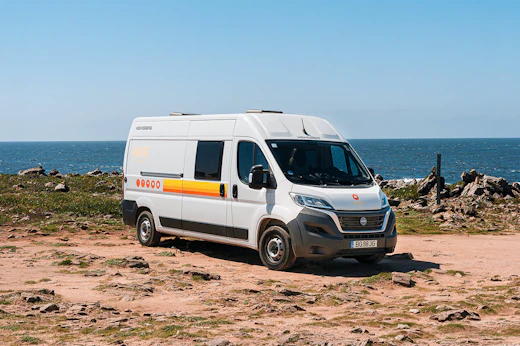
/night
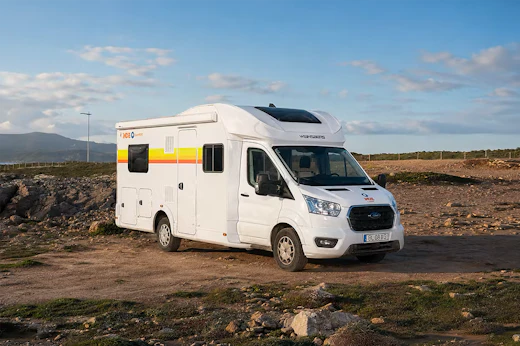
/night
“Nuestra experiencia fue genial. Kashem fue muy atento y nos explicó todo muy bien. Estuvo pendiente durante el viaje. Tuvimos un pequeño problema con el adblue y el equipo de apoyo nos lo solucionó muy rápido. ”
“Wir waren sehr zufrieden mit mit Camper und dem Service. Gerne wieder! ”
“Ha sido una experiencia inolvidable, hemos ido en pareja y recorrido desde Helsinki hasta el norte de Laponia. Lo recomiendo muchisimo, pero teneis que ir mentalizados alfrio. Nos ha encantado el camper, lo unico que es que para las temperaturas del lugar el van no està muy equipado. Hay que tener en cuenta que no hay que escatimar con las botellas del gas y nunca dejar que el deposito de aguas grises se llene, porque se congela la puertita del WC. De resto, hemos pasado una de las experiencias mas hermosas de nuestras vidas. Gracias Indie Campers.”