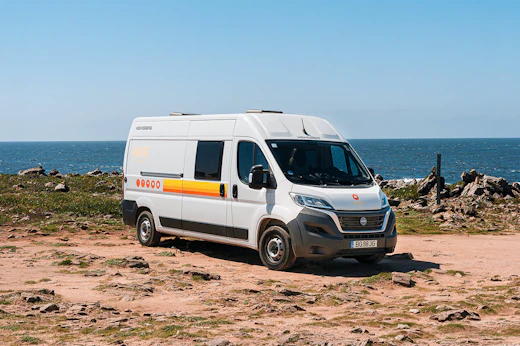
Start your Scottish Highlands adventure with a campervan hire in Inverness, the gateway to dramatic lochs and ancient castles. Drive the North Coast 500, explore Glen Coe, or head toward the Isle of Skye—all within a few scenic hours. Indie Campers' vans are ideal for winding Highland roads, equipped with heating for cool nights and full comfort for long drives. Enjoy unlimited miles and one-way options that let you travel freely across Scotland. Trusted by thousands of travellers worldwide, Indie Campers ensures your Highland road trip is both adventurous and worry-free.

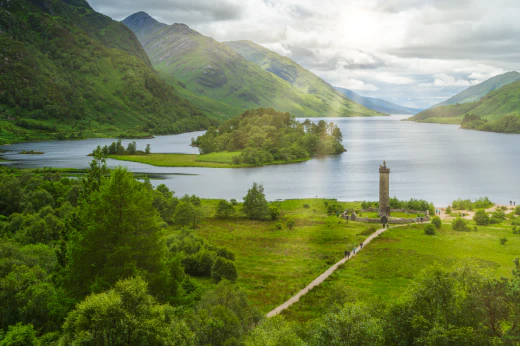


Our Road Trips Itineraries
The Scottish Highlands is one of the least car-friendly regions in Europe for conventional tourism and one of the most rewarding for campervan travel. The logic is simple: the places worth visiting are not served by public transport, hotel infrastructure is thin and expensive, and the distances between points of interest require a vehicle regardless. A campervan resolves all three constraints simultaneously.
The Highlands cover approximately 41,000 square kilometres, roughly the size of Switzerland, with a population of around 235,000 people. The road network is predominantly single-track with passing places north and west of the A9 corridor. There are no train lines to Ullapool, Torridon, Applecross, Durness, or the Outer Hebrides. The bus network covers the main A-road corridors but operates infrequently and stops entirely on Sundays in many areas. Reaching Sandwood Bay, Suilven, Quinag, or the Knoydart peninsula without a vehicle is either logistically complex or physically demanding to the point of being impractical for most travellers.
Hotel and guesthouse availability north of Inverness is limited by geography. In July and August, rooms in Ullapool, Lochinver, Durness, and Gairloch sell out weeks in advance and carry rates that frequently exceed £150 per night for standard accommodation. A campervan eliminates the accommodation booking constraint entirely; you stop where the road takes you rather than where a confirmed reservation dictates.
The wild camping legislation in Scotland is the most permissive in the UK. The Land Reform (Scotland) Act 2003 provides a statutory right of responsible access to almost all land in Scotland, including the right to camp responsibly on unenclosed land. In practical terms, this means a campervan can park overnight on open moorland, loch shores, and mountain glens without trespassing, provided the Scottish Outdoor Access Code guidelines are followed: no fires on dry or peaty ground, no waste left behind, and no obstruction of farm access tracks. This legal framework makes Highlands campervan travel categorically different from equivalent travel in England, Wales, or most of continental Europe, where wild camping is either illegal or tolerated rather than formally enshrined in law.
The North Coast 500 (NC500), a 830km signed route circling the northern Highlands from Inverness, has become one of the most recognised road trip routes in Europe since its launch in 2015. It is specifically designed for self-contained road travel; the route passes through landscapes and communities that have no alternative tourism infrastructure. The campervan is the vehicle the NC500 was built around.
Unlimited kilometres — The NC500 loop alone is 516 miles. Adding an Isle of Skye return detour from the Kyle of Lochalsh adds 60 miles. A Cairngorms day trip and return from Aviemore adds 80 miles. An Orkney return via Scrabster adds 220 miles. Most UK hire companies cap at 100 to 150 miles per day. There is no daily distance cap on any Indie Campers hire.
One-way hire across 100+ locations — The natural Inverness one-ways include Edinburgh (155 miles south via A9, 2.5 to 3 hours), Glasgow (175 miles via A9/M9, 3 hours), or into Europe via an Edinburgh or Glasgow ferry connection. The NC500 is a loop and returns to Inverness, but a northern arc option connecting Inverness to Edinburgh via the Cairngorms, Pitlochry, and the Trossachs works well over 7 to 10 days. Confirm availability and one-way pricing at booking.
24/7 road assistance — Included on every hire. Relevant specifically on the northwest coast where breakdown coverage is the practical difference between a minor issue and a major problem on a single-track road 30 miles from the nearest garage. The stretch from Durness to Ullapool has no recovery services for most of its 100-mile length.
Basic Protection Plan included from day one. Optional upgrades available.
Flexible cancellation available — Cancel up to 31 days before pick-up without penalty.
Book now, pay later — Secure the vehicle now; payment is due closer to departure.
Spring (April to June)
Temperatures: 7 to 16°C. May is the best overall month for the NC500 and for the Scottish Highlands generally. The midge season has not reached its July to August peak: midges are present from late May in sheltered western glens but at nothing like summer density. Roads are significantly quieter than July and August. The campsite network along the NC500 is fully open from the Easter weekend. Daylight hours are extraordinary: Inverness is at 57°N latitude and by late May has over 18 hours between sunrise and sunset; the sky doesn't fully darken until after 11pm. Golden light at 9pm from the summit of Stac Pollaidh or the ridge above Torridon is one of the specific experiences of a May or June Highland trip that simply is not available anywhere south of the Highlands at the same latitude.
The Cairngorm plateau in May before the summer walking season has open parking at the CairnGorm Mountain car park and the reindeer herd at full early-season visibility. Chanonry Point dolphin watching on the Black Isle in May and June coincides with peak salmon runs in the Moray Firth; the dolphins feed actively and the light at the afternoon incoming tide is low and warm.
Best for: NC500 without crowd pressure; minimum midge density; extraordinary daylight hours; full campsite availability; Cairngorms spring wildlife; Chanonry Point dolphin activity. Book campgrounds 4 to 6 weeks ahead for May bank holiday weekends on the NC500 west coast.
Skip if: You need guaranteed warm weather for outdoor swimming. Sea temperatures in May are 10 to 12°C in the Moray Firth.
Summer (July to August)
Temperatures: 17 to 22°C on good days, averaging 13 to 17°C. The Scottish summer is not the Mediterranean summer: wet days are common on the west coast in any month, and on the northwest coast in July you should expect 3 to 5 wet days in any week. That said, July and August bring the longest services, fully stocked campsite facilities, all distillery tours operational, and the daylight that makes driving at 10pm on the northwest coast feel entirely natural.
The midge situation on the west coast in July and August is real. At Torridon, Applecross, and in the glens of Skye on warm still evenings, midges are not a minor inconvenience — they are a meaningful disruption to outdoor time between approximately 7pm and dark. Smidge repellent (Picaridin 20%), purpose-made Scottish midge head nets with smaller mesh than standard mosquito nets, and long sleeves at dusk are not optional; they are a fixed kit requirement for a July or August west-coast Highland trip. The midgeforecast.co.uk website uses live trap data across Scotland and gives a 5-day regional midge forecast. Check it before deciding where to camp each night. The east coast — the A9 corridor, the Black Isle, Caithness — is significantly less affected by midges than the west.
Best for: Full services across all four major routes; maximum daylight; all distillery tours, campsite facilities, and ferry connections fully operational; NC500 has the highest concentration of other travellers if meeting people along the route is part of the appeal.
Skip if: Midge sensitivity is a concern. Quiet roads and low campsite pressure are priorities. Budget is a priority: peak-season campsite rates across the NC500 west coast run 20 to 30% higher than May or September.
Autumn (September to October)
Temperatures: 10 to 15°C in September, 5 to 12°C in October. September is operationally the best month to combine good weather probability, low midge density, lower campsite prices, and dramatic Highland colour. The bracken on the hillsides turns rust and copper from mid-September; the birch and rowan in the glen floors go yellow and red through October. The Cairngorm plateau in September has the mountain hares beginning to turn white for winter, the deer in rut on the open hillsides (audible from miles in the still morning air), and the loch light changing colour hour by hour through the shorter days.
Campsite pricing on the NC500 west coast drops 20 to 30% after the last weekend of August. Most sites remain open through September and October; some close mid-October. The Glenmore Forest site near Loch Morlich and the major CAMC and Camping and Caravanning Club sites run through October.
The NC500 roads are significantly quieter after the first week of September. The Bealach na Bà in September morning light with no other vehicles is a fundamentally different experience from the July version.
Best for: Autumn colour in the glens and on the Cairngorm plateau; NC500 without summer crowds; rutting red deer season on the open hillside; September sea temperatures reach their annual peak in the Moray Firth (14 to 16°C); significant cost savings across all sites; midges essentially finished by mid-September.
Skip if: Some west coast campsites reduce to limited facilities or close in October. October weather on the northwest coast includes the first serious Atlantic storms of the season; plan accordingly.
Winter (November to March)
Temperatures: -2 to 7°C. The NC500 in winter is a different proposition: some campsite facilities close, the Bealach na Bà and some minor Highland passes close in snow and ice, and darkness arrives before 4pm by December. What the winter offers is the Cairngorm plateau in snow, the possibility of aurora borealis displays on clear nights at 57°N latitude, and the same landscape that draws 500,000 summer visitors per year, empty. Inverness itself is fully operational year-round; the Victorian Market and Leakey's Bookshop are unchanged. Culloden in frost and low winter light is a specific experience distinct from the well-visited summer version.
The A9 between Inverness and Aviemore stays gritted and rarely closes; the major Highland passes (Drumochter, which the A9 crosses at 462 metres, can close in serious snowfall). The A82 along Loch Ness stays open. The northwest coast minor roads close intermittently in hard winters. Check Traffic Scotland at trafficscotland.org for live road conditions before any winter Highland departure.
Best for: Aurora viewing; Cairngorms skiing (CairnGorm Mountain ski area operates December through April depending on snow); empty landscapes; off-season campsite pricing; Inverness Christmas market and December city atmosphere.
Skip if: You need consistent formal campsite availability across the NC500 west coast. A linear A9/A82 winter route through the Great Glen and Cairngorms is more reliable in winter than the full NC500 circuit.
Most popular months for Inverness campervan hire: June, July, August, and September.
3 to 5 Days
Loch Ness and the Great Glen Loop (300km, 3 days)
Day 1: Pick up campervan, Culloden Battlefield (15 min from depot), Clava Cairns (10 min from Culloden); south on A82 to Urquhart Castle (Drumnadrochit); overnight Loch Ness area campsite
Day 2: Invermoriston Falls (quick stop); Fort Augustus canal locks (morning, free); south on A82 to Fort William; optional Ben Nevis visitor centre in Glen Nevis; overnight Fort William or Glen Nevis
Day 3: A82 southeast through Glen Coe (Three Sisters viewpoint, Glencoe Visitor Centre); Buachaille Etive Mòr viewpoint; return north via A82 to Inverness (80 miles, 2 hours 30 minutes); Foyers waterfall stop on B862 south shore if time allows
Inverness and the Cairngorms (250km, 4 days)
Day 1: Pick up campervan; A9 south 16 miles to Tomatin Distillery tour (9:30am); continue to Aviemore (40 miles total); afternoon at Loch Morlich beach; overnight Glenmore Forest campsite
Day 2: CairnGorm Mountain funicular morning (book ahead); afternoon Cairngorm Reindeer hill trip (pre-book, 11am or 2:30pm); Loch an Eilein circular walk (5km, free); overnight Aviemore area
Day 3: A95 east toward Speyside; Glenfarclas Distillery (30 miles from Aviemore); Aberlour village; return via A9 to Inverness
Day 4: Chanonry Point dolphin watching morning (Black Isle, 40 min from Inverness; check tide times before departure); Beauly Priory afternoon; return to Inverness
7 to 10 Days
The NC500 Core Circuit (700km+, 7-8 days clockwise from Inverness)
Day 1: Inverness; A9 north; Glenmorangie Distillery Tain; Dunrobin Castle (exterior and gardens); overnight Dornoch or Golspie area
Day 2: A9 north; Berriedale Braes descent and ascent; Wick; Castle of Mey; Dunnet Head (mainland Britain's most northerly point); John o'Groats signpost; Duncansby Head (stacks walk, 1 hour); overnight Thurso area
Day 3: A836 west; Bettyhill Strathnaver Museum; Tongue; Durness; Smoo Cave (boat tour if water levels allow); Balnakeil Bay; overnight Sango Sands campsite, Durness
Day 4: A894 south from Durness; Kylesku Bridge; Stac Pollaidh detour from B835 (car park 1 hour); Ullapool Tesco stock-up; Corrieshalloch Gorge (NTS, short walk); overnight Ullapool area
Day 5: A832 south from Ullapool toward Gairloch; Poolewe; Torridon (A896); overnight Torridon area
Day 6: Applecross decision — Bealach na Bà (compact campervans only, check conditions) or coastal road via Shieldaig; Lochcarron; Eilean Donan Castle; overnight Kyle of Lochalsh area
Day 7: Optional Skye day: A87 across bridge; Portree; Kilt Rock; Old Man of Storr; return to mainland via Skye Bridge; A87/A82/A887 east; overnight Invermoriston or Drumnadrochit
Day 8: A82 north along Loch Ness; Urquhart Castle; optional Foyers waterfall detour; return to Inverness
Inverness + Skye + Glen Coe + Cairngorms (1,000km, 10 days)
Days 1 to 2: Inverness city (Castle Experience, Leakey's, Culloden, Clava Cairns, Chanonry Point dolphins)
Days 3 to 4: A82 south; Loch Ness; Fort William; Glen Coe; overnight Glen Coe area
Day 5: Glen Coe morning; A82 north return to Fort William; A87 west through Glen Shiel; Eilean Donan Castle; Skye Bridge; overnight Skye (Portree or Sligachan)
Day 6: Skye — Old Man of Storr morning (early start); Quiraing; Kilt Rock; Dunvegan Castle; overnight Skye
Day 7: Fairy Pools (Glenbrittle); return via Skye Bridge; overnight Applecross via coastal road or Kyle area
Day 8: A890/A835 to Ullapool; Corrieshalloch Gorge; A835 return toward Inverness; detour A832 to Chanonry Point (Black Isle, if not yet visited)
Days 9 to 10: A9 south to Cairngorms; Aviemore; reindeer herd; Loch Morlich; Speyside distillery
14+ Days
The Full Highland Circuit with Orkney (1,400km+, 14 days)
Days 1 to 2: Inverness city and east circuit (Culloden, Clava Cairns, Chanonry Point, Cawdor Castle)
Days 3 to 8: NC500 clockwise (Dunrobin, Duncansby Head, Smoo Cave, Kylesku, Ullapool, Torridon, Applecross, Eilean Donan)
Days 9 to 10: Isle of Skye (Portree, Storr, Quiraing, Fairy Pools, Dunvegan)
Days 11 to 12: North again via A9; Scrabster; NorthLink ferry to Stromness; Orkney (Ring of Brodgar, Skara Brae, Maeshowe, Italian Chapel)
Day 13: Return ferry Stromness to Scrabster; south on A9; overnight near Inverness
Day 14: Cairngorms detour south on A9; Tomatin Distillery; Aviemore; reindeer herd; return to Inverness
Inverness to Edinburgh One-Way (7 to 10 days)
Inverness → Cairngorms/Aviemore (2 nights) → Speyside Whisky Trail (1 night) → Pitlochry and Killiecrankie Pass (1 night) → Trossachs National Park / Loch Lomond (2 nights) → Stirling Castle (half day; Bannockburn 1314 battlefield, free Historic Environment Scotland site, GPS approximately 56.0900°N, 3.9360°W) → Edinburgh depot drop (3 hours from Stirling on A9/M9).
Most travellers find 7 to 8 days sufficient for the NC500 alone at a reasonable pace. Adding Skye and the Cairngorms requires 10 to 12 days without feeling rushed. Orkney adds a minimum of 2 extra days to any trip and requires 2 days' notice minimum for ferry booking outside peak season, months ahead in July and August.
The cardinal rule on the NC500, particularly on the northwest section between Durness and Ullapool, is: fill the tank whenever you pass a fuel station. A 100-litre tank running at half can leave you in difficulty on a section where the next guaranteed fuel is 80 miles away.
Fuel price note: Scottish Highland pump prices typically run 5 to 12 pence per litre above UK national averages due to transportation costs. Remote stations on the northwest coast charge the highest. As of mid-2026, Highlands diesel runs approximately 155 to 175 pence per litre at remote stations; verify current prices at petrolprices.com or the government fuel price checker at gov.uk/check-fuel-prices before departure. Fill at Tesco or Asda in Inverness on departure for the best available price before heading into the Highlands.
Essential Apps for a Scottish Highlands a Campervan Trip
Age and Licence Requirements
Minimum hire age: 21 years.
UK licence holders: A full UK driving licence is valid throughout Scotland, England, Wales, and Northern Ireland without additional documentation.
EU licence holders: A full EU driving licence is valid in the UK without additional documentation following the post-Brexit licensing agreement. No IDP is required for EU nationals driving in Great Britain.
International visitors (non-EU, non-EEA): An International Driving Permit (IDP) is required alongside your national licence for visitors from most non-EU countries. The UK recognises the 1949 and 1968 Geneva Convention IDPs. Obtain your IDP from your home country's automobile association before departure; IDPs cannot be obtained at UK airports or hire counters.
Credit Card and Deposit
A credit card in the primary driver's name is required at pickup. The security deposit is held on the credit card at pickup; the amount varies by vehicle class and selected protection plan. Confirm the exact deposit amount during the booking process at indie-campers.com.
Low Emission Zone
Inverness does not operate a Low Emission Zone. Scotland's LEZ programme covers four cities only: Aberdeen, Dundee, Edinburgh, and Glasgow, all fully enforced as of June 2024. If your itinerary passes through any of these four cities, check your vehicle's LEZ compliance status at cleanaircotland.com before entering the zone boundary. No charge applies in Inverness itself.
National Park and Attraction Passes
Scotland has no unified national park pass. Entry to the Cairngorms National Park and the Loch Lomond and The Trossachs National Park is free; no admission charge applies to enter the park areas themselves.
National Trust for Scotland (NTS) membership: Approximately £62 per year for a standard adult membership. Covers entry to Culloden Battlefield Visitor Centre (8km from Inverness), Glencoe Visitor Centre, and dozens of Highland and island properties. Pays for itself within two or three visits on a Highlands itinerary.
Historic Environment Scotland (HES) Explorer Pass: Covers entry to over 70 staffed HES sites including Urquhart Castle (Loch Ness), Fort George (18km northeast of Inverness), and Skara Brae (Orkney). Available for 3 days (approximately £35 adult) or 7 days (approximately £50 adult). The pass pays for itself within two visits; Urquhart Castle alone is approximately £12 adult walk-up.
Reservation Systems
There is no single Scottish booking platform equivalent to Recreation.gov. Book campsites through Pitchup.com, Campsites.co.uk, or directly through individual campsite websites.
Speed Limits
Speed cameras: Fixed cameras operate on the A9 between Inverness and Perth, including average speed camera sections. The A9 average speed camera network covers significant sections of the road between Dunblane and Inverness; it is one of the most extensively average-speed-enforced roads in Scotland. Average speed enforcement calculates your mean speed between two fixed camera points; briefly slowing before the second camera is not a defence. Mobile camera vans operate on the A82, A835, and A9 north toward Wick.
Road Conditions
Driving Culture
Passing places: Single-track roads with passing places are the defining feature of Highland driving and the one element that catches first-time visitors most consistently. The rules are straightforward but non-negotiable:
Sheep and livestock: Open hillside sheep graze onto Highland roads year-round and are a genuine hazard, particularly on unlit roads at night and on moorland sections of the A836, A894, and B869. Sheep have no road sense; they stand in the middle of the road and do not move predictably when approached. Reduce speed to 20 to 30mph on unlit moorland roads at night. A collision with a sheep at road speed causes significant vehicle damage and is distressing; slow down.
Midges: Not a driving hazard, but a critical practical planning factor. The Highland midge (Culicoides impunctatus) is active from late May through September in still, humid conditions, particularly at dawn and dusk near water, woodland, and sheltered glens. The west coast (Torridon, Gairloch, Knoydart, Kintail) carries the highest midge density in Scotland. When parked overnight, keep windows and roof vents screened; most campervans have insect screens fitted but verify at pickup. Smidge repellent (available at outdoor shops in Inverness) is significantly more effective against Highland midges than DEET-based products.
Single-track road etiquette: Wave to oncoming drivers at passing places; it is standard Highland courtesy and costs nothing. Aggressive or impatient behaviour on single-track roads is rare and immediately noticeable in small communities where the same vehicles pass the same points repeatedly. Drive calmly and allow extra time for every Highland journey.
Campervan-Specific Notes
Height: Standard campervans run approximately 2.9 to 3.2 metres. Inverness city centre has no multi-storey car parks accessible by campervan; surface car parks at Millburn Road and the Eastfield Retail Park are the practical alternatives. Input your vehicle's height into CoPilot or Sygic Truck before routing through any urban area on the itinerary.
Length: Vehicle length is the most critical dimension for Highlands campervan travel. The NC500 northwest section, Skye B-roads, and most west coast minor roads accommodate campervans up to 6 to 7 metres comfortably. Vehicles over 7.5m should plan routes carefully and avoid the following:
Wild camping and waste: Scotland's Land Reform Act gives the right to camp responsibly on unenclosed land, but waste disposal is the road tripper's primary responsibility. Cassette toilet waste must be disposed of at a chemical disposal point (Elsan point), not at public toilets or in open ground. Elsan points are available at most formal campsites along the NC500; plot them in advance on Park4Night. Grey water (washing-up water) should be disposed of responsibly, not on loch shores or near water courses.
River crossings and fords: Some remote Highland tracks shown on OS maps involve unbridged river fords. These tracks are not suitable for campervans regardless of 4WD capability. Stick to sealed public roads; if in doubt, check the road surface status before turning onto an unmarked track.
Fuel: As detailed in the Renting Tips section, fuel management is critical on remote Highland routes. Fill at Inverness before every departure. Do not leave Ullapool, Lairg, or Lochinver without a full tank on the northwest section.
Propane and LPG: No tunnel restrictions on LPG for campervans on Highland routes. LPG availability north and west of Inverness is extremely limited; carry a full cylinder from the depot.
Legal Notes
Blood alcohol limit (Scotland): 50mg of alcohol per 100ml of blood (0.05%); 22 micrograms per 100ml of breath. Scotland's drink drive limit is lower than England and Wales (0.08%). This is not a technicality; it is a meaningful difference. A single pint of standard-strength lager (4%) will bring most adult males close to the Scottish limit. The practical position: do not drive after any alcohol consumption in Scotland.
First-offence drink driving (Scotland): Minimum 12-month driving ban; unlimited fine; potential custodial sentence. Police Scotland operates regular breath test checkpoints on the A9, A82, and at Highland Games, festival, and major event sites throughout summer.
Mobile phone use while driving: Illegal to hold or use a phone while driving in Scotland, including at traffic lights or in a queue. Fixed penalty: £200 fine and 6 points on licence.
Seatbelts: Mandatory for all occupants in all seats at all times. Rear passengers in the habitation area must be seated in designated travel seats with seatbelts fitted when the vehicle is in motion.
Random breath tests: Police Scotland does not require reasonable cause to conduct a roadside breath test. Checkpoints operate on the A9 south of Inverness and at Highland event sites throughout the summer season.
Campervan hire: £800 to £1,600 (compact Adventure in May or September at the lower end; large Comfort motorhome in August at the upper end; verify current rates at indie-campers.com)
Fuel: £120 to £200 (Highlands diesel approximately 155 to 175p/litre at remote stations; estimated 500 to 750km for a 7-day NC500 core circuit; fill at Tesco Inverness on departure for the lowest available city price before the Highland premium applies)
Ferry crossings: £0 to £160 (no charges for the Skye Bridge since 2004; Scrabster to Stromness return for a standard campervan with 2 passengers approximately £200 to £260 at peak season if adding Orkney; Corran Ferry short crossing approximately £10 to £15 for a vehicle; Mallaig to Armadale Skye CalMac approximately £30 to £40 return for a campervan)
Campgrounds: £70 to £245 (£20/night at budget city sites; £25 to £35/night at Sango Sands Durness, Broomfield Ullapool, and Glenmore Forest; some CAMC and C&CC sites at the top of the range; 7 nights averaging £22 to £35/night depending on season and site choice)
Food and provisioning: £140 to £350 (Tesco Inverness for departure provisioning £30 to £50 for two for several days of supplies; Tesco Ullapool for NC500 west coast restocking; Wensleydale equivalent: Mull of Kintyre Cheddar from the Ullapool Tesco or the Stornoway Black Pudding from any northbound supermarket; restaurant meals in Ullapool or at Eilean Donan area approximately £25 to £45 for two for a main and drink)
Activities and admissions: £30 to £150 (Urquhart Castle £16 adult walk-up; Cairngorm Reindeer Paddock £5.50 adult; Eilean Donan Castle £13 adult; CairnGorm funicular verify current pricing; Dunvegan Castle approximately £17.50 adult; Glencoe Visitor Centre free; all beaches, mountains, and castleside walks free; Smoo Cave boat tour £15 adult if water levels permit; NorthLink Orkney return additional £200+ if Orkney added)
Parking: £0 to £30 (most Highland and NC500 car parks are free or charged at £2 to £5; NTS car parks at Glencoe and Corrieshalloch Gorge approximately £4 to £6; Fairy Pools campervan parking £10; Old Man of Storr approximately £5)
Total estimates:
Budget (£1,200): Compact campervan in May; 7 nights mix of Glenmore Forest, Sango Sands, and informal NC500 lay-bys; Tesco provisioning throughout; Urquhart Castle only paid admission; no Orkney ferry; Smoo Cave outer chamber only (free); all mountain walks free; total distance approximately 600km.
Mid-range (£2,200): California campervan in September; Bught Park Inverness (1 night), Loch Ness Shores C&CC (1 night), Sango Sands Durness (2 nights), Broomfield Ullapool (1 night), Glenmore Forest Cairngorms (2 nights); Urquhart Castle, Eilean Donan Castle, Clava Cairns (free), Culloden Visitor Centre, Glencoe NTS visitor centre (free), Chanonry Point (free), Smoo Cave boat tour, Cairngorm Reindeer Paddock; Ullapool seafood dinner for two.
Premium (£3,800): Large Comfort motorhome in August; all formal CAMC or rated sites; Tomatin Distillery full tour; Glenmorangie Distillery Innovation Tour; CairnGorm funicular return; Cairngorm Reindeer Hill Trip (pre-booked); Dunvegan Castle; full Orkney day trip via Scrabster NorthLink ferry including Skara Brae, Ring of Brodgar, and Italian Chapel; Kylesku Hotel dinner booking; Portree seafood restaurant; Inverness Castle Experience (£20/person) on arrival.
Inverness to Edinburgh (155 miles south via A9, approximately 2 hours 30 minutes to 3 hours, allow 7 to 10 days for a proper circuit): South via the A9 through Pitlochry and the Highlands to the Trossachs and Loch Lomond, dropping at the Edinburgh depot. The A9 from Inverness to Perth is one of the most scenic A-roads in Britain: it crosses Drumochter Pass (462 metres, the highest trunk road pass in Britain), passes through the Cairngorms National Park, and descends through Perthshire to the central belt.
Inverness to Glasgow (175 miles south via A9/M9/M80, approximately 3 hours, allow 7 to 10 days): South via the Cairngorms and Trossachs; Stirling Castle half-day stop; Glasgow depot drop. The Trossachs National Park between Callander and Loch Lomond is the accessible southern equivalent of the Highland landscape, 45 minutes from Glasgow.
Inverness Airport (INV) connects to London, Bristol, Birmingham, Manchester, Dublin, and Amsterdam, with seasonal additions in summer. For travellers arriving from continental Europe or on connecting flights from major UK hubs, Inverness Airport eliminates the need to land in Edinburgh or Glasgow and transit 180km north before beginning the road trip. Pick up the campervan at or near the depot and be on the NC500 within the hour.
Inverness sits at the geographic start of the North Coast 500. The official NC500 route begins at Inverness Castle, loops clockwise or anticlockwise around the northern Highlands, and returns to Inverness after approximately 830km. Starting in Inverness means starting at the designated beginning of one of Europe's most recognised road trip routes, with the full circuit available in either direction from day one.
The city is also the last reliable provisioning point before the remote northwest. Every supply category: supermarkets, fuel, AdBlue, vehicle servicing, banking, pharmacy, and outdoor equipment is available in Inverness to a standard that does not exist anywhere north or west of the city. Starting in Inverness allows a full vehicle and supply check before committing to sections of the Highlands where the nearest town with a full supermarket may be 100km away.
For travellers combining a Scotland road trip with a one-way itinerary, Inverness and Edinburgh bracket the Highlands naturally. Pick up in Inverness, complete the NC500 or a Highlands circuit heading south, and drop the vehicle in Edinburgh, Glasgow, or another Scottish depot. Edinburgh Airport (EDI) and Glasgow Airport (GLA) provide the broadest range of international departures for the return flight. The one-way routing from Inverness south through the Cairngorms, Perthshire, and the Trossachs covers terrain that a circular Inverness-based trip would not reach.
In general, a special licence is not required to rent our campervans in Inverness. However, a valid driving licence is required to operate our vehicles. For some non-EU citizens, a IDP is required, in addition to their home country's drivers licence. Other considerations such as a valid vehicle licence to the vehicle type (manual or automatic) will also be required. For more information regarding our licence requirements read this.
Yes, our campervans are pet-friendly. Just make sure to purchase the extra cleaning service during your booking. This service includes professional anti-allergic cleaning after your trip. Please note that only one pet is allowed per motorhome, and it must weigh no more than 30kg. Keep in mind, we are not responsible for any legal fees related to travelling with your pet. For marketplace bookings, check the "vehicle rules" section for the pet-friendly icon to confirm if pets are allowed in that specific vehicle.
The number of people who can sleep in our campervans will depend on the size of the vehicle and the model. In general, our class C motorhome models can sleep up to 4-8 people, whereas our class B motorhomes can sleep up to 2-4. For cars with a rooftop tent, around 2 people can sleep in this vehicles. More details on our models and sleeping capacities can be found here.
If you are travelling in a campervan, motorhome or caravan around Inverness, it is important to understand official camping rules of the country you are visiting. As natural areas are generally protected by laws, using an official campsite or designated overnight parking area is highly recommended. This helps protect local communities and ensures you can all enjoy safely. Read more safety tips and protocols here.
We offer three protection plans to cover incidents and damages during your hire period. All Indie Campers motorhomes come with insurance for third-party vehicles and property damage (valid insurance will depend on the country). For marketplace vehicles, insurance options may vary based on the host.
Learn more about our protection plans here.
Yes, our search filter allows you to find a campervan near your location using a 60km radius system. This means depending on the location you are searching from, you will be able to find an Indie campervan hire pick-up centre near you.
Yes, a selected number of Indie Campers campervan hire in Inverness include unlimited kilometres, allowing you to explore freely and make the most of your road trip! Please note that unlimited kilometres applies exclusively to Indie Campers campervans and is subject to responsible use.

“Fantastic staff at Inverness depot. Very kind and personalised. General vehicle ok. Could use either rear parking sensors or reversing camera”
“Richard did an amazing job. Kind, helpful and very nice. Would book with him anytime and would recommend him highly.”
“Easy and polite staff. Camper was easy to use and very practical”
RVs, Motorhomes & Campervans for Every Kind of Traveller
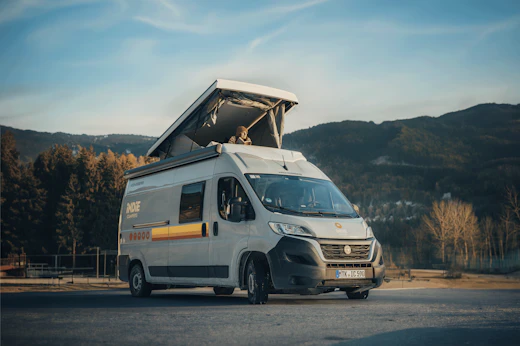
/night
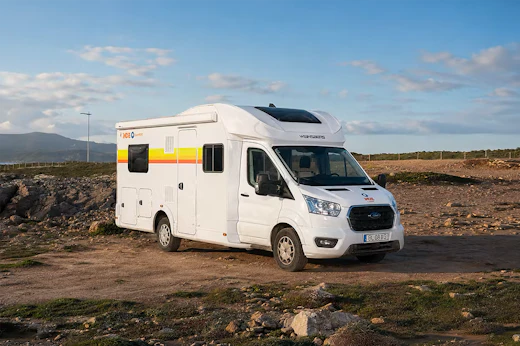
/night
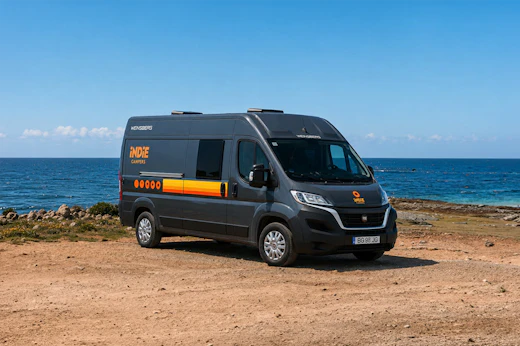
/night
/night

/night
/night

/night




