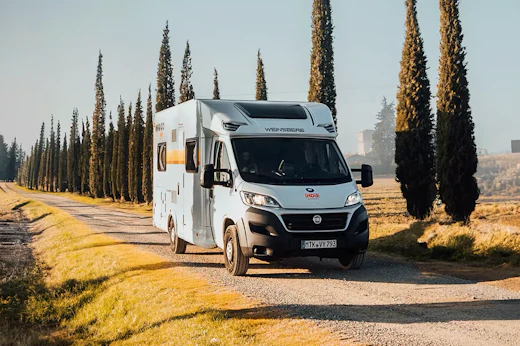
Kick off your journey with a campervan hire in Bristol and explore the rich landscapes and stories of southwest Britain. Stroll through honey-stone villages in the Cotswolds, follow coastal trails in Devon, or venture into the wild beauty of the Brecon Beacons. Whether you're drawn to seaside campsites or woodland hideaways, Indie Campers offers a selection of campervans designed to suit every kind of traveller. All hire include unlimited kilometres, kitchen and cleaning kits, optional extras like outdoor gear or child seats, and the freedom to shape your route as you go. Loved by thousands of travellers across Europe and the UK, Indie Campers helps turn weekend escapes or longer road trips into unforgettable experiences.


Our Road Trips Itineraries
The practical argument is about radius. Within 55 miles of the Indie Campers Bristol pick up centre you can reach: an Exmoor dark sky reserve with one of the last truly dark night skies in England; a limestone gorge at Cheddar with cliffs three times the height of the Clifton Suspension Bridge; the Wye Valley's medieval abbey ruins in a forested river canyon; the start of the Roman Fosse Way through the Cotswolds; and a UNESCO-listed castle city at Bath. That is five entirely different landscape and architectural types before you have left the 55-mile radius.
The Severn Bridges being toll-free since December 2018 changes the calculus for Wales. The M48 crossing to Chepstow adds no cost to a drive that previously charged £6.70 for a standard vehicle. Pembrokeshire is now a genuine two-night option from Bristol without the financial premium that the bridge toll used to impose. The Brecon Beacons are under 70 miles of straight motorway and fast A-road. The Welsh side of the river has campgrounds, national parks, and mountain access that the English Southwest simply cannot match for space and freedom per acre.
Bristol Airport's route network brings travellers from across the UK and Europe within 20 minutes of the depot. For visitors arriving from Ireland, mainland Europe, or northern England, Bristol is a more practical starting point for a southwest England and Wales campervan trip than London (which requires driving through the outer orbital before reaching any scenery) or the Southwest ports (Plymouth, Portsmouth) which lack Bristol's urban infrastructure and provisioning.
Unlimited kilometres — A Bristol-based 7-day circuit covering the Cotswolds, the Exmoor coastal road, the Dartmoor high moor, and a return via the Jurassic Coast runs approximately 800 to 900 miles. A Bristol to Pembrokeshire run and back via the Brecon Beacons adds another 350 miles. Most UK competitors impose a daily distance cap of 100 to 150 miles. We do not cap at all.
One-way hire across 100+ locations — Pick up in Bristol, drop off in Edinburgh, London, or Manchester. Confirm availability and pricing at booking.
24/7 road assistance — Included on every booking. Exmoor's back lanes, the Dartmoor moor roads after dark, and the Pembrokeshire peninsula roads are remote in a practical sense. If something fails on Countisbury Hill at midnight, you have a number to call.
Basic Protection Plan included — Covered from day one. Optional upgrades available.
Spring (April to June)
Temperatures: 8 to 18°C. The Exmoor rhododendrons bloom on the combes below the moorland from late April through May in a density that the park's planting history does not entirely explain. The Cotswolds wildflower meadows in May pre-dating the hay cut are the version of the landscape that the region's tourism photography cannot quite reproduce. Wye Valley bluebells in April and May carpet the gorge floor in the 10 days of peak flowering that shift slightly year to year but are reliably present in the third and fourth weeks of April. The Pembrokeshire Coast Path from St Govan's Head to Broadhaven in May has thrift and sea campion on the cliff-top turf above the limestone arches.
Campground availability across all four corridors is good through May; June brings the first summer arrivals and coastal Exmoor and Pembrokeshire sites start filling on weekends. Book 3 to 4 weeks ahead for any June coastal site.
Best for: Exmoor birdlife and rhododendrons; Cotswolds in full leaf; Wye Valley bluebells; Pembrokeshire wildflowers on the coastal path; Dartmoor before the school holiday crowds.
Skip if: You need reliable warm-water swimming. Bristol Channel and South Wales coastal water temperatures in April and May are 11 to 14°C.
Summer (July to August)
Temperatures: 18 to 28°C with occasional heat periods above 30°C. Everything is open and accessible. The Glastonbury Festival (if the year's edition falls on the June/July cusp) draws 200,000 people to the Somerset Levels; the A361 and A303 in that radius on the Thursday and Friday of festival week should be avoided entirely in a campervans. The Croyde surf beach in north Devon and the St Ives beaches in Cornwall reach capacity by 10am on July and August weekends; arrive at any beach car park after mid-morning and expect to queue or be turned away.
3 to 5 Days
Bristol + Bath + Cotswolds (350km, 3-4 days)
Day 1: Pick up campervan in Bristol, park at the Baltic Wharf CAMC site (15 minutes from depot), afternoon Clifton Suspension Bridge walk and harbourside; evening at Wapping Wharf Cargo
Day 2: Morning at SS Great Britain and harbourside, drive east to Bath on the A4 (13 miles, 30 minutes); Bath Roman Baths and Georgian architecture; overnight at a campground near Cirencester
Day 3: A433/A429 north into the Cotswolds; Cirencester Roman amphitheatre and Corinium Museum (free); Burford main street and the Windrush; Bourton-on-the-Water in the afternoon; overnight Hogsdown Farm or equivalent Cotswolds site
Day 4: Stow-on-the-Wold market square; Chipping Campden wool church; return to Bristol via A44/A40 (55 miles, 1h20)
Bristol + Exmoor Coastal Road (280km, 3 days)
Day 1: Pick up campervan, M5 J24 to A358 to Minehead (55 miles, 1h25); fill fuel at Minehead; Porlock Weir harbour afternoon; overnight at a Porlock area campground
Day 2: A39 coastal road from Porlock through Lynton (Porlock Toll Road £3 westbound if using the toll road alternative), Valley of Rocks, Watersmeet; overnight near Lynmouth
Day 3: Tarr Steps via B3224 through the moorland (40 minutes inland from Lynmouth); Dulverton town; return to Bristol via M5 (65 miles, 1h30 from Dulverton)
7 to 10 Days
Bristol + Wales Loop: Wye Valley, Brecon Beacons, Pembrokeshire (900km, 7-8 days)
Fuel Stations
Regional fuel notes:
Age and Licence Requirements
Minimum hire age: 21 years.
UK licence holders: A full UK driving licence is valid throughout England, Scotland, Wales, and Northern Ireland without additional documentation. UK licence holders driving in the Republic of Ireland require no additional permit.
EU licence holders: A full EU driving licence is valid in the UK without additional documentation following the post-Brexit licensing agreement. No IDP is required for EU nationals driving in Great Britain or Northern Ireland.
International visitors (non-EU, non-EEA): An International Driving Permit (IDP) is required alongside your national licence for visitors from most non-EU countries driving in the UK. The UK recognises the 1949 and 1968 Geneva Convention IDPs. Obtain your IDP from your home country's automobile association before departure; IDPs are not available at UK airports or hire counters. Visitors from the United States, Canada, Australia, and New Zealand require a 1949 Convention IDP for the UK specifically.
Driving in the Republic of Ireland: If the itinerary includes crossing from Bristol by ferry into the Republic of Ireland (Cork or Rosslare via Brittany Ferries or Irish Ferries from Pembroke), the same IDP applies. Confirm cross-border driving permissions with Indie Campers at booking.
Speed Limits
Campervan hire: £700 to £1,500 (varies significantly by season and vehicle size; July and August peak pricing on a large Comfort motorhome is toward the top; April or October compact Adventure vehicles begin considerably lower)
Fuel: £100 to £180 (supermarket petrol approximately £1.52 to £1.56 per litre; estimated 500 to 800km for a 7-day circuit covering Exmoor, the Cotswolds, and possibly Wales at 9 to 12L/100km = 45 to 100 litres; fill at Tesco Patchway on departure)
Toll roads: £5 to £15 (Severn Bridges free; Clifton Bridge £1 if used; Porlock Toll Road approximately £3 if relevant; no other significant tolls in the region)
Campgrounds: £45 to £280 (£0 for tolerated aire-style stops on Park4Night up to £55/night at Baltic Wharf or a Pembrokeshire coastal premium site in peak season; mix of municipal and CAMC sites for a week averages £25 to £40/night)
Food: £150 to £450 (groceries £20 to £30/day from Tesco or Asda; one or two restaurant meals per day £40 to £60; St Nicholas Market provisioning for a departure day is excellent value at £15 to £25 for two; Wapping Wharf Cargo dinner for two approximately £40 to £60)
Activities: £40 to £130 (SS Great Britain £22/adult; Clifton Bridge £1; Tintern Abbey admission £ Cheddar Gorge approximately £22/adult; Pembrokeshire boat trips £; OS Maps app approximately £4/month; Exmoor, Dartmoor, Brecon Beacons, Wye Valley gorge drive: all free to access)
Bristol to London (approximately 190km via M4, approximately 2 hours): The most straightforward Southwest one-way. Pick up in Bristol, cover the Cotswolds, Stonehenge, and the North Wessex Downs heading east, and drop at the London depot. Alternatively run it in reverse: London pickup, drive west through Bath and the Mendips, cover Exmoor and the Devon coast, and drop at Bristol on return.
Bristol to Manchester (approximately 280km via M5/M6, approximately 3 hours): A natural northbound one-way for travellers covering the Midlands, Peak District, or Lake District en route. Bristol pickup; north on the M5 through the Severn Vale and Worcestershire; Peak District or Lake District circuit; drop at Manchester. Fly from Manchester Airport (MAN), which handles significantly more transatlantic and European routes than Bristol Airport.
Bristol to Edinburgh (approximately 650km via M5/M6/M74/M8, approximately 7 hours direct): The full-length Great Britain one-way. Pick up in Bristol; cover the Cotswolds, Peak District, and Lake District heading north; cross the border into Scotland at Gretna; continue to Edinburgh. Practical over 10 to 14 days with stops; too long to drive in a single day. Edinburgh Airport (EDI) provides extensive European and transatlantic connections for the return flight.
From the Bristol depot you can reach three National Parks, two UNESCO World Heritage Sites, the Atlantic Coast of Wales, and the Jurassic Coast of Dorset, all without using the same road twice and without the journey feeling like a corridor run to a single destination. The Severn Bridges are free. The motorway network is direct. The national park access roads are better maintained than most comparable European routes.
The one experience that is structurally specific to a Bristol starting point: driving the A39 Atlantic Highway across Exmoor from Minehead to the Valley of Rocks on a clear morning in late September, with the Bristol Channel 300 metres below and the South Wales coast visible across the water, in a campervan at a pace the road sets rather than one imposed by a schedule. You can reach this road in 90 minutes from the depot. You cannot reach its equivalent from London in under three hours. The road is entirely free. The campgrounds in the valleys below it are rarely full outside of August. The dark sky above it after 10pm in October is the darkest in southern England.
Pick up the vehicle on a Tuesday or Wednesday morning before the weekend M5 traffic builds. Fill the tank at Tesco Patchway on the exit from Bristol. Head south on the M5. Turn off at J23 for Glastonbury if the Somerset Levels detour calls, or continue to J24 and the A358 toward Minehead and Exmoor. The sea is visible from the A39 ridgeline inside 90 minutes of the depot. That is the Bristol campervan starting argument in practical terms.

Wild camping is the one thing Bristol's radius does not easily provide. England's only statutory wild camping right is on Dartmoor, 80 miles south, and it covers backpacking tents only, not campervans. For genuine vehicle-based freedom camping, the Brecon Beacons high moorland in Wales is the closest practical option, operating on the widely-tolerated principle rather than legal right. For everything else, the campground network across all four corridors from Bristol is extensive and well-maintained.
Book now, pay later — Secure your vehicle; payment is not due until closer to departure.
The M5 southbound on the first Saturday of August, the peak of the British school holiday season, is the most congested day of the year on any route from Bristol toward Devon and Cornwall. Leave before 7am or plan to leave on the Friday evening. The first Saturday of August is not a viable mid-morning departure date for a Southwest-bound campervans from Bristol.
Best for: Full access to all routes; maximum daylight hours for Exmoor moor walks; Pembrokeshire boat trips to Ramsey Island and Skomer (puffin season ends in late July); Cornwall beach days; long summer evenings at Cotswolds campgrounds.
Skip if: Cost and quiet are the priorities. Peak rates apply at major campgrounds across all four corridors throughout July and August.
Autumn (September to October)
Temperatures: 10 to 20°C in September, 5 to 15°C in October. September is the strongest month for a Bristol campervan hire. School summer holidays end in early September and campground occupancy drops sharply. Prices fall 20 to 30% at most sites from September 1. The Exmoor red deer stag rut begins in late September and runs through October: stags roar and spar on the open moor at Dunkery Beacon and in the Horner Wood valley below, audible and visible from a distance that does not require any approach closer than 100 metres. The Wye Valley in mid-October has some of the best deciduous autumn colour in England, the limestone gorge running yellow and copper above the river. The Pembrokeshire grey seal pupping season starts in September at Ramsey Island and Skokholm, with pups present on the beaches through November.
Best for: Exmoor stag rut; Wye Valley autumn colour; Pembrokeshire seal pups; Dartmoor in clear autumn air; significant cost savings over peak summer.
Skip if: You need warm-water beach swimming. Atlantic coast temperatures drop below 17°C by mid-September.
Winter (December to March)
Temperatures: 2 to 9°C. Most Exmoor and Pembrokeshire campgrounds close November through March or operate on reduced winter-only pitches. The Cotswolds in December and January with the market town Christmas markets (Chipping Campden, Bourton-on-the-Water) and the Wye Valley running at its most atmospheric in frost is a specific winter offering. Bristol itself is fully operational year-round with all major attractions open except on Christmas Day; Nantes-Camping's year-round equivalent in Bristol is the Caravan and Motorhome Club site at Baltic Wharf in the city (see campgrounds section), which operates through winter as a harbourside motorhome base. Snowfall on Dartmoor and the Brecon Beacons above 400 metres is possible from December through March; carry appropriate footwear and check mountain weather forecasts before any high-level walk.
Best for: Cotswolds in frost without summer crowds; Wye Valley winter atmosphere; Bristol city exploration year-round; off-season pricing; Dartmoor and Brecon Beacons snowy high moorland.
Skip if: You need an open network of rural campgrounds across all four corridors. Availability reduces substantially in winter.
The most popular months for Bristol campervan hire are July, August, and September.
Bristol + Southwest England Loop (1,000km, 8-9 days)
Bristol → M5 J23/A39 to Glastonbury (28 miles; Glastonbury Tor, abbey ruins) → A37 south to Sherborne, Dorset (50 miles; medieval abbey and castle) → A35 east to Lyme Regis and the Jurassic Coast (30 miles) → Durdle Door and Lulworth Cove (30 miles west via B roads) → A35/A350 to Dorchester and Hardy Country → A35 west to Axminster → B3165/A39 north to Exmoor (40 miles; Porlock, Lynton, Valley of Rocks) → A399/A361 to Croyde surf beach, North Devon (45 miles) → A361 south toward Barnstaple → A39/A399/A361 back toward M5 and Bristol. The full Somerset and Dorset circuit, combining the Jurassic Coast, the Somerset Levels, and Exmoor without repeating a road.
14+ Days
Bristol to Edinburgh One-Way: The Welsh Borders and Northern England (1,600km+, 14-16 days)
Bristol → Wye Valley and Forest of Dean (1 night) → Hereford and the Welsh Marches, A49 (1 night) → Brecon Beacons via A40 (2 nights) → Pembrokeshire via M4/A40 (2 nights) → Snowdonia National Park via A470/A5 (2 nights; Snowdon, Llanberis Pass, Harlech Castle) → Anglesey via A55 (1 night) → back east via A55 to Chester (1 night; Roman walls and medieval rows) → north on M6 to the Lake District (2 nights; Windermere, Helvellyn, Langdale Valley) → M6 north to Edinburgh (3 hours; 1 night). The complete western arc of Britain from a single depot.
Most travellers find 7 to 9 days ideal for combining one full corridor (Exmoor and north Devon, or Wales with the Brecon Beacons and Pembrokeshire) with a day in Bristol before or after. Doing both the Welsh circuit and the Somerset/Devon circuit requires 10 to 12 days and does not feel rushed. Cornwall alone on a round trip from Bristol needs a minimum of 5 days to justify the drive.
Essential Apps for Your Bristol Campervan Trip
A credit card in the primary driver's name is required at pickup. The security deposit is held on the credit card at pickup; the amount varies by vehicle class and selected protection plan. Confirm the exact deposit amount during the booking process at indie-campers.com.
Clean Air Zone (CAZ): Bristol
Bristol operates a Class C Clean Air Zone covering the city centre, active since November 2022. The zone applies 24 hours a day, 7 days a week.
Campervans and motorhomes fall under the CAZ as private light goods vehicles or heavy goods vehicles depending on weight, and are subject to a daily charge if they do not meet the minimum emission standard.
What this means in practice: All Indie Campers vehicles are modern fleet; confirm the Euro emission standard of your specific assigned vehicle before arrival. If the vehicle meets Euro 6 diesel, no charge applies. If you are uncertain, check the vehicle registration against the CAZ checker at bristolcleanairzone.co.uk using the number plate.
The CAZ boundary covers the inner ring road. Routes that bypass the city centre entirely, such as the M32 to M4 junction 19, or the A4 Portway through the Avon Gorge, do not cross the CAZ boundary. If the depot is outside the CAZ zone, you may be able to depart Bristol without entering the zone at all.
Fuel: Diesel, Petrol, and LPG
Most Indie Campers vehicles run on diesel. Confirm your fuel type at pickup; misfuelling a petrol vehicle with diesel (or vice versa) voids the insurance cover and incurs significant recovery costs.
AdBlue: Larger diesel motorhomes (Euro 6 engines) require AdBlue (diesel exhaust fluid) top-ups. AdBlue is available at most UK motorway service stations and at Tesco Extra and Asda forecourts in Bristol. Check the AdBlue warning light on the dashboard before departing any major urban area; running out of AdBlue will trigger an engine-start restriction on Euro 6 vehicles.
LPG (Autogas) near Bristol: Limited but available.
National and Regional Passes
The UK has no unified national park pass equivalent to the US America the Beautiful Pass. Entry to Dartmoor, Exmoor, the Brecon Beacons (Bannau Brycheiniach), the Wye Valley, and the Forest of Dean is free; no admission charge applies to enter the park areas themselves. Individual attractions, car parks, and visitor centres within national park boundaries charge separately.
National Trust (NT) membership: At £84 per year for a standard adult membership (£143 for two adults at the same address), NT membership pays for itself quickly if the itinerary includes multiple NT properties in Southwest England and Wales. From Bristol, relevant NT sites include: Lacock Abbey, Stourhead, Tyntesfield (12km south of Bristol), Dyrham Park (13km northeast), and dozens of Cotswold and Dorset properties. NT car parks at non-NT-member fee sites frequently charge £5 to £8 per vehicle; membership eliminates this cost across all NT car parks.
English Heritage membership: Covers Stonehenge (currently approximately £22 adult walk-up; EH members enter free with pre-booking), Tintagel Castle, and numerous other English Heritage sites in the Southwest and further afield.
Reservation Systems
There is no single UK booking platform equivalent to Recreation.gov. Use the following:
Campsite booking:
Attraction booking:
Overnight motorhome parking (aires equivalent):
The UK has a limited but growing network of designated motorhome overnight parking areas, loosely equivalent to the French aire system. They are not as systematically developed as in France or Germany, but they exist:
Speed cameras: Fixed Gatso cameras are common on urban approaches into Bristol (A38, A4, A4174 ring road). Average speed cameras (SPECS) operate on sections of the M4 and M5 smart motorways and on the A303 approach to Stonehenge. Average speed enforcement calculates your mean speed between two fixed camera points; briefly slowing before the second camera is not a defence.
Road Conditions
Driving Culture
The UK is a left-hand drive, right-hand overtaking country. Keep left on all roads unless actively overtaking. On motorways, sustained middle or outside lane driving without overtaking is enforceable as careless driving under the Highway Code Rule 264; motorway police use this provision, particularly on the M4.
Roundabouts: Give way to traffic already on the roundabout, approaching from your right. This is the reverse of the instinct for many continental European drivers where priority applies to traffic entering from the right. On multi-lane roundabouts (common on the M5 and A38 approaches into Bristol), position in the correct lane before entry; lane-switching on the roundabout itself is the source of most Bristol junction collisions.
Headlight flashing: In the UK, flashing headlights conventionally means "I am here" as a warning, not "go ahead" as in some continental European conventions. Do not interpret a headlight flash from an oncoming vehicle as an instruction to proceed.
Speed humps (traffic calming): Bristol has an extensive network of speed humps on residential streets, including full-width humps on 20mph zones and sinusoidal (wave) humps on 30mph roads. Large motorhomes with rear-heavy load distribution should cross at low speed and at a slight angle if the hump spans the full carriageway width. Approaching at speed causes undercarriage and chassis stress on vehicles over 3.5 tonnes.
Courtesy and horn use: Horn use in the UK outside genuine safety warnings is an offence under the Highway Code Rule 112. Urban Bristol driving is patient by European city standards; expect significant pedestrian priority in the Harbourside, Clifton, and Stokes Croft areas where cyclists and pedestrians cross without formal crossings.
Cyclists: Bristol has a high cycling modal share relative to most English cities outside Cambridge and Oxford. Cycle lanes are present on many central Bristol roads; some are mandatory (solid white lines, no stopping or overtaking into them). The A38 and A4 Bath Road carry significant cycle commuter traffic during peak hours. Give cyclists 1.5 metres of clearance when overtaking; the 2022 Highway Code update formalised this distance as guidance.
Campervan-Specific Notes
Height: Standard Rvs run approximately 2.9 to 3.2 metres roof height. Bristol city centre multi-storey car parks have clearances of 1.8m to 2.1m; none are accessible by campervan. Surface car parks (Anchor Road Harbourside, Millennium Square, Brunel Way Portway area) have no height restrictions and are the practical alternatives. Input your vehicle's specific height into Google Maps or use CoPilot or Sygic Truck GPS (both have campervan/motorhome height and weight profile routing) before entering Bristol city.
Low bridge warnings: The UK's most-documented campervan bridge strikes occur on rural B-roads in Somerset, Wiltshire, and the Cotswolds where medieval stone bridges have clearances of 2.4m to 2.8m and pre-GPS signage. Check the DVSA Safer Lorry Scheme app or CoPilot for bridge clearance routing. The B3130 near Chew Magna (Chew Valley, 12km south of Bristol) has a documented low bridge that has caught campervans; verify your route on OS maps before using Chew Valley B-roads.
Length: Most campsite approaches in the Cotswolds, Mendips, and Exmoor accommodate campervans up to 7 to 8 metres. Vehicles over 7.5m should verify individual approach roads in advance; the final kilometre to many Somerset and Wiltshire farm campsites involves single-track lanes with passing places that require a three-point turn to exit if the pitch is occupied. Telephone ahead.
Propane and LPG: The UK has no tunnel restrictions on LPG for campervans on primary road routes. The Severn Crossing (M4 Prince of Wales Bridge and Second Severn Crossing) does not restrict LPG-equipped vehicles. If the route extends into France via the Channel Tunnel (from Dover, not from Bristol), LPG restrictions apply in the Eurotunnel; campervans with LPG systems must use Le Shuttle's separate LPG vehicle service. This does not affect Bristol-based Southwest England and Wales routes.
Parking in Bristol: Bristol city centre on-street metered parking is £3.50 to £4.50 per hour in the core zone with 2-hour maximum stay limits. Not practical for rv overnight use. The Harbourside surface car park (Anchor Road, BS1) has no height restriction and is the best day-access parking for the Harbourside, SS Great Britain, and Clifton; it operates on a pay-and-display basis with no overnight provision.
For city access without daily parking costs, use the Park and Ride sites at:
Wildlife: Badgers are the most likely large mammal road hazard on rural B-roads south and east of Bristol, particularly on the Mendip plateau roads (B3135, B3371) and the Chew Valley lanes at night. The Mendips carry one of the highest badger densities in England. The A368 between Bishop Sutton and West Harptree has documented badger crossing corridors. Reduce speed to 40mph on unlit Mendip and Exmoor roads after dark.
Legal Notes
Blood alcohol limit (England and Wales): 80mg of alcohol per 100ml of blood (0.08%); 35 micrograms per 100ml of breath. This is higher than Scotland (0.05%) and higher than most EU countries. The practical advice does not change: do not drive after drinking.
First-offence drink driving (England and Wales): Up to 6 months imprisonment; unlimited fine; minimum 12-month driving ban. Readings significantly above the limit or involving an accident result in longer bans and custodial sentences. The 0.08% limit applies equally to campervans over 3.5 tonnes.
Mobile phone use while driving: It is illegal to hold or use a phone while driving in the UK, including at traffic lights or in a queue. This applies to handheld use for any purpose including GPS operation. Hands-free calling via a properly mounted phone holder or Bluetooth is legal. Fixed penalty: £200 fine and 6 points on licence.
Seatbelts: Mandatory for all occupants in all seats at all times. Campervans are not exempt; rear passengers in the habitation area must be seated in designated travel seats with seatbelts fitted when the vehicle is in motion.
Random breath tests: UK police do not require reasonable cause to conduct a roadside breath test; any driver stopped for any reason (including a routine check or minor traffic stop) can be breathalysed. Police checkpoints operate throughout Southwest England and Wales on summer Bank Holiday weekends.
Parking: £10 to £40 (Bristol city Parc-Relais or street parking per day; Durdle Door car park £4 to £9; Dartmoor and Exmoor National Park car parks £2 to £5)
Total estimates:
Budget: £1,050 — Compact vehicle in shoulder season (April or October), all cooking from Tesco provisioning at departure and along the A38/M5 corridor, Mix of free Park4Night tolerated spots and municipal campgrounds on Exmoor, Wye Valley crossing free, SS Great Britain late entry ticket, Cheddar Gorge drive (free; skip cave entry), all Exmoor and Brecon Beacons access free, Wye Valley walk free.
Mid-range: £1,900 — Mid-size vehicle in early July or September, Bristol night at Baltic Wharf CAMC, Hogsdown Farm for Cotswolds night, Exe Valley Caravan Site for Exmoor nights, mix of Tesco provisioning and 2 to 3 restaurant meals (Wapping Wharf Cargo and a Pembrokeshire fish restaurant), SS Great Britain full ticket, Cheddar Gorge & Caves entry, Tintern Abbey entry, Pembrokeshire boat trip.
Premium: £3,000 — Large motorhome in August peak season, Baltic Wharf for city nights, Caerfai Bay Pembrokeshire for 2 nights, Freshwater East CAMC for 1 night, frequent dining including a set-menu restaurant in Bristol and Pembrokeshire, full activity programme including SS Great Britain, Cheddar Gorge, Tintern Abbey, Ramsey Island puffin boat, Dartmoor guided walking tour, Cotswolds food stops in Burford.
Southwest England is competitive for campervan travel by UK standards. The Severn Bridge tolls being removed makes the Wales circuit genuinely cost-neutral compared to an England-only trip. Campgrounds in Somerset, Devon, and the Welsh national parks are generally less expensive than equivalent sites on the Scottish NC500 or the Jurassic Coast's Dorset sections. The main cost driver on a premium trip is the accommodation rate at CAMC and premium sites in July and August; September reduces this by 20 to 30% across the board.
Bristol to Glasgow (approximately 600km via M5/M6/M74, approximately 6.5 hours direct): Similar distance to Edinburgh but routes through the west of Scotland rather than the east. Bristol pickup; Lake District; Dumfries and Galloway; Glasgow drop. Alternatively, continue from Glasgow to Loch Lomond and the Trossachs before dropping the vehicle. Glasgow Airport (GLA) serves Ryanair, easyJet, and British Airways routes to Europe and some transatlantic services.
Bristol to Inverness (approximately 830km via M5/M6/M74/A9, approximately 9 hours direct): The longest practical one-way from Bristol and the natural choice for a Scotland Highlands itinerary. Bristol pickup; north through the Lake District; Glasgow; Perth; the A9 Drumochter Pass to Inverness. Inverness Airport (INV) connects to London, Edinburgh, and Amsterdam. The drive is not intended as a single-day transit; plan 12 to 14 days minimum to justify the distance with meaningful stops in the Lake District, Cairngorms, and northern Highlands.
One-way pricing and availability vary by route and season; confirm at booking.
In general, a special licence is not required to rent our campervans in Bristol. However, a valid driving licence is required to operate our vehicles. For some non-EU citizens, a IDP is required, in addition to their home country's drivers licence. Other considerations such as a valid vehicle licence to the vehicle type (manual or automatic) will also be required. For more information regarding our licence requirements read this.
Yes, our campervans are pet-friendly. Just make sure to purchase the extra cleaning service during your booking. This service includes professional anti-allergic cleaning after your trip. Please note that only one pet is allowed per motorhome, and it must weigh no more than 30kg. Keep in mind, we are not responsible for any legal fees related to travelling with your pet. For marketplace bookings, check the "vehicle rules" section for the pet-friendly icon to confirm if pets are allowed in that specific vehicle.
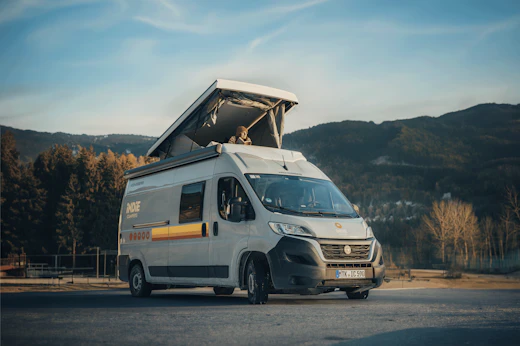
The number of people who can sleep in our campervans will depend on the size of the vehicle and the model. In general, our class C motorhome models can sleep up to 4-8 people, whereas our class B motorhomes can sleep up to 2-4. For cars with a rooftop tent, around 2 people can sleep in this vehicles. More details on our models and sleeping capacities can be found here.
If you are travelling in a campervan, motorhome or caravan around Bristol, it is important to understand official camping rules of the country you are visiting. As natural areas are generally protected by laws, using an official campsite or designated overnight parking area is highly recommended. This helps protect local communities and ensures you can all enjoy safely. Read more safety tips and protocols here.
We offer three protection plans to cover incidents and damages during your hire period. All Indie Campers motorhomes come with insurance for third-party vehicles and property damage (valid insurance will depend on the country). For marketplace vehicles, insurance options may vary based on the host.
Learn more about our protection plans here.
Yes, our search filter allows you to find a campervan near your location using a 60km radius system. This means depending on the location you are searching from, you will be able to find an Indie campervan hire pick-up centre near you.
Yes, a selected number of Indie Campers campervan hire in Bristol include unlimited kilometres, allowing you to explore freely and make the most of your road trip! Please note that unlimited kilometres applies exclusively to Indie Campers campervans and is subject to responsible use.
“Nick has been wonderful and we loved the van! ”
“It was nice. A lot of thanks to Nikhil!!”
“Great van and great support in pick up and drop off”

Our Road Trips Itineraries
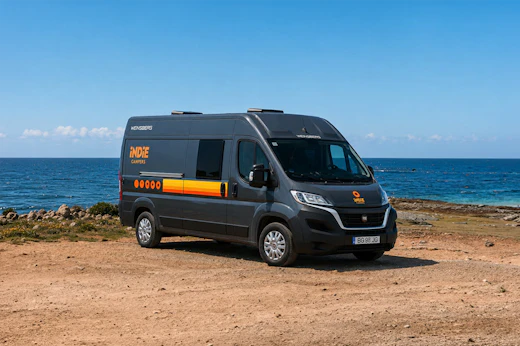
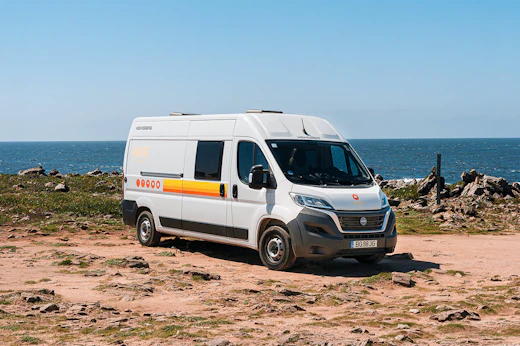
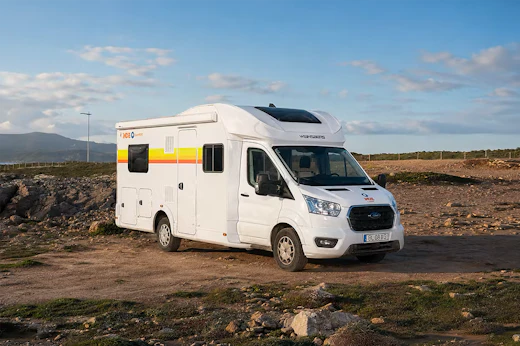
RVs, Motorhomes & Campervans for Every Kind of Traveller
/night
/night
/night
/night
/night
/night