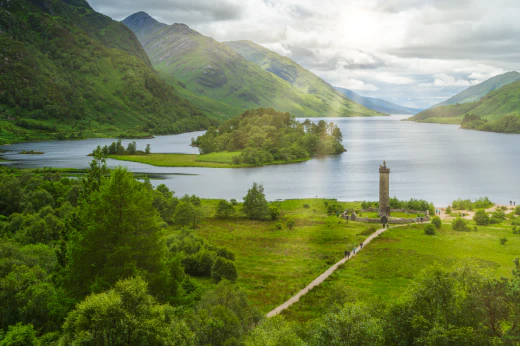
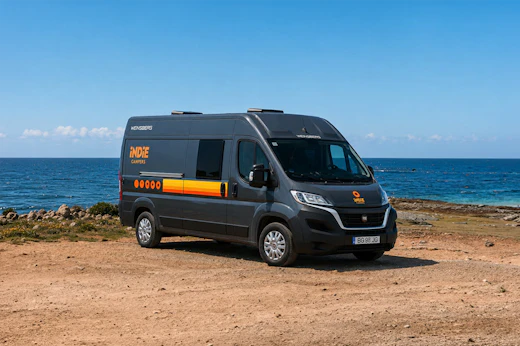
Pick up your campervan hire in Glasgow and hit the open road to discover Scotland's wild beauty. From Loch Lomond to the Isle of Skye, epic routes begin right at the city's edge. Indie Campers provides fully equipped campervans with heating, compact builds for narrow roads, and unlimited miles for ultimate flexibility. Create your own Scottish road trip with one-way options and 24/7 support wherever you go. With top traveller ratings and thousands of journeys completed across the UK, Indie Campers is your trusted companion for exploring Scotland in comfort and style.


Our Road Trips Itineraries
Glasgow is the gateway to the most accessible concentration of Scottish Highland scenery from any major UK city. Loch Lomond is 30 minutes north of the city centre. The Trossachs are 45 minutes northeast. The Argyll coast, Kintyre peninsula, and the ferry terminals for Arran, Islay, Jura, and the Inner Hebrides are within 90 minutes west and southwest. No other city in Scotland or northern England puts this volume of loch, mountain, and island scenery within a single morning's drive of the depot.
Glasgow Airport (GLA) handles direct transatlantic flights to New York and Washington, and European connections across more than 100 destinations. For road trippers flying into Scotland from North America or continental Europe, Glasgow is frequently the more direct entry point than Edinburgh, with less tourist infrastructure pressure and shorter transfer times to the campervan depot.
The city itself rewards a day of exploration before departure. Glasgow's museum infrastructure is exceptional by any European standard: the Kelvingrove Art Gallery and Museum, the Riverside Museum, the Burrell Collection, and the Hunterian are all free and collectively represent one of the strongest publicly accessible art and design collections in the UK. A Glasgow pickup allows a first-day city exploration on foot before the Highland itinerary begins the following morning.
The practical case for campervanning from Glasgow is also straightforward. The west coast of Scotland, the Argyll islands, and the Kintyre peninsula have minimal hotel infrastructure outside of Oban and Inveraray. Wild camping under Scotland's Land Reform Act is legal on unenclosed land throughout the region. A campervan removes the accommodation constraint entirely on a west coast itinerary where pre-booking a hotel in Tarbert, Craignish, or Kilmartin is either impractical or prohibitively expensive in summer.
Unlimited kilometres: The Loch Lomond west shore, Glencoe, Fort William, and Inverness circuit on the A82 alone covers over 340 miles return. Add an Arran ferry return and the Trossachs loop and a 7-day trip will cover 500 to 700 miles. Standard UK hire companies cap at 100 to 150 miles per day. No daily distance cap applies on any Indie Campers hire.
One-way hire across 10+ locations: The natural Glasgow one-ways include Edinburgh (47 miles, 1 hour via M8), and Inverness (170 miles via A82). The logical multi-week Scotland circuit is Glasgow pickup, west Highland routes, A82 north to Inverness, NC500 loop, return south via A9 through Cairngorms and Perth, drop at Edinburgh. Confirm route availability and one-way pricing at booking.
24/7 road assistance: Included. Relevant specifically in Argyll (A83 landslip country), Mull's single-track roads, and remote Kintyre, where breakdown coverage is the difference between a minor inconvenience and a significant disruption.
Basic Protection Plan included from day one. Optional upgrades available.
Flexible cancellation available: Cancel up to 31 days before pick-up without penalty.
Book now, pay later: Secure the vehicle; payment due closer to departure.
Spring (April to June)
Temperatures: 8 to 16°C. Loch Lomond at its quietest before the Easter and May bank holiday peaks. The national park east shore and Trossachs campsites open from Easter weekend. May is the best single month for the Argyll circuit: the rhododendrons at Brodick Castle and in the Inveraray estate policies are at peak bloom in May and early June; midge density on the west coast is low compared to July and August; Arran is visibly green and accessible without the summer vehicle queue at Ardrossan.
Whisky distillery tours on Islay run full schedules from April. CalMac summer timetables generally commence in late March or April; verify specific routes before booking for early April travel. The A83 at the Rest and Be Thankful carries its highest landslip risk in late winter and spring, coinciding with the heaviest rainfall months; check Traffic Scotland before any A83 departure in April and May.
Best for: Loch Lomond without CMZ pressure (April is still outside the peak CMZ period, though byelaws run from 1 March); Argyll rhododendrons; Arran spring wildlife; Islay full distillery operations; quiet A83 once past any spring weather issues; dolphins at Chanonry Point (Black Isle) if the route extends north to Inverness.
Skip if: Guaranteed warm swimming weather is a priority; sea temperatures around Arran in April are 9 to 11°C.
Summer (July to August)
Temperatures: 16 to 22°C on good days, averaging 13 to 17°C. The Arran ferry queue at Ardrossan in July and August requires a pre-booked vehicle space — walk-up vehicle places on popular summer sailings are frequently unavailable. The Islay ferry vehicle space fills similarly. Book both before booking the campervan if these are the itinerary anchors.
The Loch Lomond CMZ is at full enforcement from 1 March through 30 September; in July and August the 20 designated campervan permit spaces on the east shore fill completely and the designated campsite system operates at capacity on summer weekends. Plan the Loch Lomond element with booked sites or use the west shore A82 layby exception.
On the positive side: July and August give the longest days in Scotland (Inverness at 57°N latitude has over 17 hours of light in midsummer), fully operational distillery tours on Islay, all CalMac timetables at maximum frequency, and the warmest sea temperatures of the year for swimming around Arran (14 to 16°C in August by the south coast beaches).
Best for: Maximum daylight; warmest temperatures; all ferry routes fully operational; peak Islay whisky season; full campsite facilities throughout; Glencoe and Loch Lomond at maximum visual drama on clear days.
Skip if: Quiet roads and easy campsite booking are priorities; midge density on the west coast from Mull northward peaks July to August; Loch Lomond CMZ restrictions and campsite pressure are at their highest.
Autumn (September to October)
Temperatures: 10 to 15°C in September, 5 to 12°C in October. September is the strongest single month for the Glasgow departure if you are flexible on dates. Campsite prices on the Arran circuit and the A83 Argyll route drop 20 to 30% after the last weekend of August. The bracken on the lower hillsides of Glencoe and the Trossachs turns copper from mid-September. The red deer rut begins across the Highland glens from late September; hearing it at dawn from a campsite in Glen Coe or on Arran's northern hills is a specific experience available only in this 4-week window.
Midge density on the west coast drops sharply after mid-September; camping in Argyll and Mull in September is a fundamentally different experience from July in terms of midge pressure.
Most Argyll and Arran campsites remain open through September and into October. CalMac reduces to winter timetables on some routes in October; verify specific sailings before planning an October Islay or Mull itinerary.
Best for: Autumn colour; red deer rut; post-peak price reduction; minimal midges; Galloway Forest Park dark sky viewing begins in earnest as nights lengthen; October is one of the best months for Galloway night skies.
Skip if: Some smaller campsites in Argyll and Mull close mid-October. October Atlantic weather on Kintyre and the Argyll coast is the beginning of the west-coast storm season; plan buffer days.
Winter (November to March)
Temperatures: 1 to 8°C. The A82 through Glencoe in winter snow is a different road from the summer version: the mountains are white above the dark rock, the road itself is gritted and reliable (the A82 trunk road is maintained as a priority route by Transport Scotland), and the tourist traffic is absent. The Glencoe ski area at CairnGorm Mountain (Glencoe Mountain Resort has its own ski area at the Kings House end of the pass; CairnGorm is further north) operates when snow conditions allow. Galloway Forest Park offers the clearest night skies of the year from November through February.
Loch Lomond CMZ byelaws do not apply outside 1 March to 30 September; the east shore and Trossachs areas in winter carry no formal permit requirement for campervans, though sensible site choice and responsible camping principles apply regardless.
Best for: Snow-covered Glencoe; Galloway dark sky season; quiet Loch Lomond; off-peak campervan rates; Glasgow itself (Celtic Connections music festival in late January and early February transforms the city).
Skip if: Some Argyll and Mull ferry services reduce to winter timetables; some west coast campsites close November through February; sustained winter driving on single-track island roads requires winter tyre confidence.
Most popular months for Glasgow campervan hire: June, July, August, and September.
3 to 5 Days
Loch Lomond and Arran (3 to 4 days, approximately 250 miles)
Day 1: Pick up campervan; A82 north along Loch Lomond west shore (Luss stop, 25 miles); Trossachs detour: Aberfoyle, Duke's Pass, Loch Katrine (38 miles from Glasgow); overnight Cobleland Forest Campsite near Aberfoyle or booked site near Callander
Day 2: Rob Roy's Grave at Balquhidder (morning; 56 miles from Glasgow via A84); A84 south back to A811/A737; Ardrossan (30 miles from Glasgow); afternoon CalMac ferry to Brodick; arrive Arran; overnight Brodick area
Day 3: Brodick Castle and Goat Fell trailhead (morning); clockwise A841 to Lochranza; red deer at Lochranza Castle at dusk; overnight Lochranza area
Day 4: A841 south down west coast; Machrie Moor standing stones (west Arran via B880); Blackwaterfoot; coast road back to Brodick; afternoon ferry to Ardrossan; return to Glasgow for drop
Glencoe and Fort William (3 days, approximately 230 miles)
Day 1: Pick up campervan; A82 north through Loch Lomond west shore; Tyndrum Green Welly Stop (fuel and provisions); Rannoch Moor; Buachaille Etive Mòr viewpoint layby; overnight Glencoe area (Red Squirrel Campsite PH49 4JX or Invercoe Caravan and Camping Park PH49 4HP)
Day 2: Glencoe morning; Three Sisters viewpoint; NTS Glencoe Visitor Centre (free exhibition, parking £6 for motorhomes); Glen Nevis afternoon (Fort William, 17 miles north of Glencoe); Ben Nevis Visitor Centre; overnight Fort William area
Day 3: A82 return south; Loch Ness optional detour (Urquhart Castle, Drumnadrochit, 66 miles further north then back); or return via A82 south; stop at Inverarnan Drover's Inn; return Glasgow
7 to 10 Days
The Glasgow West Circuit: Argyll, Islay, and Mull (7 to 8 days, approximately 600 miles)
Day 1: Glasgow; A82 north; Tyndrum Green Welly Stop (fuel); A85 west to Oban (93 miles, 2 to 2.5 hours); afternoon: McCaig's Tower walk; Oban Distillery; overnight Oban Caravan and Camping Estate
Day 2: CalMac morning ferry Oban to Craignure (45 to 55 minutes); drive A849 to Fionnphort (1 hour 15 minutes); foot passenger ferry to Iona (10 minutes); Iona Abbey; return to Mull; overnight on Mull (A849 corridor)
Day 3: Mull: Calgary Bay (west coast, via B8073); Tobermory (north); Duart Castle on return to Craignure; afternoon CalMac back to Oban; overnight Oban area or begin A816 south
Day 4: A816 south; Kilmartin Glen (outdoor monuments free; museum if time); continue A83 to Tarbert; overnight Tarbert or Kennacraig area
Day 5: CalMac Kennacraig to Port Askaig (Islay, 1 hour 55 minutes); Port Askaig and Bunnahabhain; Bowmore; overnight Islay (Bowmore or Bridgend area)
Day 6: Islay: south coast distilleries — Laphroaig, Lagavulin, Ardbeg (all within 3 miles on A846 east of Port Ellen village); Bruichladdich afternoon; overnight Islay
Day 7: Morning ferry back to Kennacraig; A83 north; Loch Fyne Oyster Bar for lunch (Cairndow, A83); Inveraray Castle (or afternoon drive north on A82 return to Glasgow); overnight Inveraray area or return to Glasgow
Day 8 (optional): Rest and Be Thankful viewpoint stop; Arrochar; Luss; return Glasgow
Glasgow to Edinburgh via the Highlands (10 days)
Days 1 to 2: Glasgow; A82 north to Glencoe; Fort William; overnight 2 nights Glencoe/Fort William area
Days 3 to 4: A82 north along Great Glen; Urquhart Castle/Loch Ness; Inverness (165 miles from Glasgow); overnight Inverness 2 nights; Culloden Battlefield; Clava Cairns; Chanonry Point dolphins
Day 5: A9 south from Inverness; CairnGorm Mountain funicular; Cairngorm Reindeer Centre (Glenmore); overnight Aviemore area
Day 6: Speyside: Glenfarclas Distillery; Aberlour village; A9 south
Day 7: Pitlochry; Killiecrankie Pass (National Trust for Scotland, battle 1689, free to walk); Blair Castle (PERTHSHIRE, not to be confused with Blair Atholl castle, though they are the same place; Blair Castle GPS approximately 56.7681°N, 3.8537°W, PH18 5TL, admission approximately £14 adult; ancestral seat of the Dukes of Atholl, who maintain the only private army in Europe); overnight Pitlochry area
Day 8: A9 south to Stirling; Stirling Castle morning; Bannockburn afternoon; overnight Stirling area
Day 9: A811 south and west to Loch Lomond; Trossachs: Loch Katrine SS Sir Walter Scott sailing (pre-book); overnight Callander or Trossachs area
Day 10: Rob Roy's Grave (Balquhidder); A84 south; A811; A8/M9 east; Linlithgow Palace (birthplace of Mary Queen of Scots, 30 minutes from Edinburgh); Edinburgh depot drop
14+ Days
The Complete Scotland Circuit (Glasgow pickup, Edinburgh or Glasgow drop)
Days 1 to 2: Glasgow city; Loch Lomond and Trossachs
Days 3 to 5: A83 west; Rest and Be Thankful; Inveraray; Oban; Isle of Mull and Iona (2 nights on Mull)
Days 6 to 8: Kilmartin Glen; Kennacraig; Islay ferry; 2 to 3 nights on Islay (south coast distilleries + Bowmore + Bruichladdich)
Days 9 to 10: Return to mainland; A83 north; A82; Glencoe; Fort William; overnight 2 nights
Days 11 to 12: A82 north along Great Glen; Inverness; Culloden; Cairngorms
Days 13 to 14: NC500 launch (Inverness start if extending, or return south via A9)
Or return south via Cairngorms, Speyside, Pitlochry, Trossachs, Edinburgh drop.
Glasgow to Inverness one-way via Arran, Argyll, and the West (12 to 14 days): Glasgow pickup; Arran 2 nights; Ardrossan return ferry; A83 Argyll circuit; Mull 2 nights; Islay 2 nights; Oban; A82 north; Glencoe 1 night; Fort William 1 night; A82 to Inverness; drop at Inverness.
Fill the tank in Glasgow before departure on any route. Fuel becomes progressively more expensive as you move west and north into Argyll, and dramatically less available on the islands.
Best Glasgow departure fuel stations:
A82 north — key fuel stops:
A83 west — key fuel stops:
Age and Licence Requirements
Minimum hire age: 21 years.
UK licence holders: A full UK driving licence is valid throughout Scotland, England, Wales, and Northern Ireland without additional documentation.
EU licence holders: A full EU driving licence is valid in the UK without additional documentation following the post-Brexit licensing agreement. No IDP is required for EU nationals driving in Great Britain.
International visitors (non-EU, non-EEA): An International Driving Permit (IDP) is required alongside your national licence for visitors from most non-EU countries. The UK recognises the 1949 and 1968 Geneva Convention IDPs. Obtain your IDP from your home country's automobile association before departure; IDPs cannot be obtained at UK airports or hire counters.
Credit Card and Deposit
A credit card in the primary driver's name is required at pickup. Debit cards and prepaid cards are not accepted. The security deposit is held on the credit card at pickup; the amount varies by vehicle class and selected protection plan. Confirm the exact deposit amount during the booking process at indie-campers.com.
Low Emission Zone
Glasgow operates a Low Emission Zone (LEZ) covering the city centre, fully enforced as of June 2024. The LEZ boundary broadly follows the inner ring road: Dobbie's Loan to the north, the M8 to the west and south, and High Street to the east.
The LEZ applies 24 hours a day, 7 days a week.
What this means in practice: All Indie Campers vehicles are modern fleet. Confirm the Euro emission standard of your specific assigned vehicle before arrival and check the registration against the LEZ vehicle checker at cleanaircotland.com. Euro 6 diesel vehicles enter the zone without restriction or charge.
The M8 motorway itself runs through and around the Glasgow LEZ boundary but is not subject to LEZ restrictions as a trunk road. Routes using the M8 to bypass the city centre do not trigger LEZ enforcement.
National Park and Attraction Passes
Scotland has no unified national park pass. Entry to Loch Lomond and The Trossachs National Park and the Cairngorms National Park is free; no admission charge applies to enter the park areas themselves.
National Trust for Scotland (NTS) membership: Approximately £62 per year for a standard adult membership. From Glasgow, directly relevant NTS properties include Culzean Castle and Country Park (Ayrshire, 80km southwest), the Glenfinnan Monument (130km northwest via A82), and properties throughout Argyll and the west coast. NTS car parks at member-entry sites are covered by membership.
Historic Environment Scotland (HES) Explorer Pass: Covers entry to over 70 staffed HES sites. From Glasgow, relevant sites include Bothwell Castle (15km southeast), Dumbarton Castle (24km northwest), and Stirling Castle (45km northeast). Available for 3 days (approximately £35 adult) or 7 days (approximately £50 adult).
Reservation Systems
There is no single Scottish booking platform equivalent to Recreation.gov. Book campsites through Pitchup.com, Campsites.co.uk, or directly through individual campsite websites.
Speed Limits
Speed cameras: Fixed cameras operate on the M8 approaches to the city centre and on the A82 north of Dumbarton. Average speed cameras operate on sections of the M74 and on the A77 south toward Ayrshire. Mobile camera vans operate on the A82, A83, and A85 throughout Argyll.
Road Conditions
Driving Culture
The UK is a left-hand drive, right-hand overtaking country. Keep left on all roads unless actively overtaking.
Glasgow motorway lane discipline: The M8 through Glasgow is a three and four-lane motorway through the city. The inside lane carries heavy HGV traffic; the middle lanes are the practical campervan transit lanes. Return to the left lane after overtaking; sustained outside lane use without overtaking is enforceable under Highway Code Rule 264.
Passing places: The same single-track road rules that apply in the Highlands apply to Argyll, Kintyre, and Arran. Pull left into passing places; do not park in passing places; allow faster vehicles to pass from behind; wave to oncoming drivers. First-time visitors to Scottish single-track roads find the passing place system straightforward once the logic is understood; it is the standard rhythm of driving anywhere west of Loch Lomond.
Glasgow urban driving: Glasgow's one-way road system in the city centre grid (laid out on a strict northeast-southwest/northwest-southeast alignment) can disorient drivers from continental Europe accustomed to a different grid convention. Use GPS navigation through the city centre without exception; the grid is logical once understood but is not intuitive on first approach.
Roundabouts: Give way to traffic already on the roundabout, approaching from your right. Multi-lane roundabouts are common on Glasgow's arterial roads including the Charing Cross interchange and the Great Western Road/Crow Road junction. Position in the correct lane before entry.
Sheep and livestock: Sheep graze onto A and B roads throughout Argyll, Kintyre, and the islands. The A83, B8001, and the minor roads of Kintyre carry regular sheep crossings. Reduce speed on unlit rural roads at night; a sheep at road speed causes significant vehicle damage.
Campervan-Specific Notes
Height: Standard campervans run approximately 2.9 to 3.2 metres. Glasgow city centre multi-storey car parks have clearances of 1.8m to 2.1m; none are accessible by campervan. Surface car parks at the SECC/SEC Armadillo area (Exhibition Way, G3), Kelvin Way (adjacent to Kelvingrove), and the Great Western Retail Park are the practical city-access alternatives. Input your vehicle's height into CoPilot or Sygic Truck before routing into Glasgow city.
Length: Most campsite approaches in Argyll, Loch Lomond, and the Trossachs accommodate campervans up to 7 to 8 metres. Vehicles over 7.5m should avoid the following:
Propane and LPG: No tunnel restrictions on LPG for campervans on standard Scottish road routes. LPG availability decreases significantly west of the Central Belt; fill any LPG cylinder in Glasgow before departing for Argyll or the islands.
Parking in Glasgow: Glasgow city centre on-street metered parking is approximately £3 to £4.50 per hour in the core zone. Not practical for campervan overnight use. For city access, use:
Wildlife: Red deer crossings are documented on the A82 between Loch Lomond and Crianlarich at dawn and dusk, particularly on the forested sections north of Tarbet. The A83 through Argyll carries deer, badger, and occasional otter crossings near the lochside sections. Reduce speed on unlit rural roads after dark throughout Argyll and the west coast.
Legal Notes
Blood alcohol limit (Scotland): 50mg of alcohol per 100ml of blood (0.05%); 22 micrograms per 100ml of breath. Scotland's limit is lower than England and Wales (0.08%). Do not drive after any alcohol consumption in Scotland; the margin between a single drink and the legal limit is narrow.
First-offence drink driving (Scotland): Minimum 12-month driving ban; unlimited fine; potential custodial sentence. Police Scotland operates regular checkpoints on the M8, M74, A82, and at major event sites including Celtic Park and Ibrox on matchdays.
Mobile phone use while driving: Illegal to hold or use a phone while driving in Scotland, including at traffic lights or in a queue. Fixed penalty: £200 fine and 6 points on licence.
Seatbelts: Mandatory for all occupants in all seats at all times. Rear passengers in the habitation area must be seated in designated travel seats with seatbelts fitted when the vehicle is in motion.
Random breath tests: Police Scotland does not require reasonable cause to conduct a roadside breath test. Checks operate on M8 and M74 approaches and throughout the Argyll road network, particularly on Bank Holiday weekends.
Campervan hire: £800 to £1,600 (compact Adventure in May or September at the lower end; large Comfort motorhome in July at the upper end; verify current rates at indie-campers.com)
Fuel: £100 to £190 (estimated 450 to 650km for a 7-day Loch Lomond/Arran/Argyll circuit; Glasgow city pump prices approximately 140 to 150p/litre; Argyll remote stations 5 to 12p/litre premium; fill at Glasgow Tesco/Asda before departure)
Ferry crossings: £42 to £320 (Arran return in compact campervan with 2 passengers approximately £47 to £53; add Oban-Craignure-Mull return approximately £42 to £106 per crossing depending on vehicle length; Kennacraig-Port Askaig Islay return approximately £71 to £150 depending on vehicle length; Cairnryan-Belfast return for a Scotland-Ireland combined trip additional costs; verify current CalMac fares at calmac.co.uk before planning)
Campgrounds: £70 to £245 (Cashel Forest/Cobleland Forestry Scotland sites from approximately £15/night; Milarrochy Bay C&CC from approximately £15 to £25/night members; Red Squirrel Glencoe from approximately £15 to £20/night; Lomond Woods from approximately £25 to £40/night; 7 nights averaging £20 to £35/night depending on season and site choice)
Food and provisioning: £140 to £350 (Asda/Tesco Glasgow departure provisioning £30 to £50 for two people for several days' supplies; Loch Fyne Oyster Bar stop approximately £40 to £80 for two; Tobermory or Oban seafood dinner approximately £30 to £50 for two; Arran Cheese Shop provisions; island provisions from Co-ops in Bowmore and Brodick)
Activities and admissions: £30 to £150 (Inveraray Castle £18.50 adult; Kilmartin Museum £15.40 adult; Brodick Castle NTS approximately £15 to £20 adult; Iona Abbey £10 online adult; Culzean Castle £22 adult; Glencoe NTS Visitor Centre free, parking £6 for motorhomes; all beaches, hill walks, and lochside access free; Laphroaig or Ardbeg Islay distillery tour from approximately £20)
Parking: £0 to £40 (most west coast and island parking free or £2 to £5; Inveraray Castle parking now charged from June 2026; Fionnphort car park for Iona ferry charged; Fairy Pools Skye £10 for campervans if extending route north)
Total estimates:
Budget (£1,200): Compact Adventure in May; Glasgow to Loch Lomond east shore (Cashel Forest £15/night); Arran via CalMac (compact vehicle return approximately £47); Glencoe Red Squirrel; Oban without Mull ferry; Kilmartin Glen outdoor sites free; Loch Fyne Oyster Bar deli provisions rather than full restaurant; Tesco provisioning throughout.
Mid-range (£2,200): California campervan in September; Lomond Woods Balloch first night; Milarrochy Bay C&CC east shore; Arran 2 nights (Seal Shore Camping); Oban Caravan Estate; Mull CalMac ferry return; Invercoe Caravan Park Glencoe; Inveraray Castle visit; Iona Abbey; Kilmartin Museum; Loch Fyne Oyster Bar restaurant lunch; Oban seafood dinner.
Premium (£3,800): Comfort motorhome in August; all full-service sites with EHU; Inveraray Castle + Inveraray Jail; Kilmartin Museum; CalMac Oban-Mull return; Iona Abbey; Kennacraig-Islay ferry; 2 nights Islay with Laphroaig + Ardbeg + Bruichladdich tours; Arran CalMac with Brodick Castle NTS; Culzean Castle; Ubiquitous Chip dinner in Glasgow before departure.
Glasgow to Edinburgh (47 miles via M8, 1 hour; allow 7 to 10 days for full Scotland Central circuit): South and east via the Trossachs, Stirling, Bannockburn, Linlithgow, and Edinburgh. A natural arc that covers the west Highlands first and delivers at Scotland's capital city.
Glasgow to Inverness (170 miles via A82, approximately 3.5 to 4 hours; allow 10 to 14 days for a full circuit): North via Loch Lomond, Glencoe, Fort William, and the Great Glen, dropping at Inverness for NC500 departure. The most popular long-form one-way from Glasgow.
Glasgow to Edinburgh via Argyll and the Islands (allow 12 to 14 days): Glasgow pickup; west through A83 Argyll; ferry to Islay; return to mainland; Mull; Oban; north to Glencoe and Fort William; A82 north to Inverness or south A9 via Cairngorms and Pitlochry to Perth and Edinburgh drop.
One-way pricing and availability vary by route and season. Confirm at booking.
Glasgow Airport (GLA) is Scotland's second-busiest airport and handles a broader range of budget European routes than Edinburgh, with Ryanair and easyJet operating extensive networks to continental Europe and the UK regions. For travellers arriving from Ireland, continental Europe, or on transatlantic connections via London, Glasgow is a practical and often cheaper entry point than Edinburgh.
The city sits at the western end of the Central Belt, with the M8 connecting directly east to Edinburgh (70km, approximately 1 hour) and the M74 running south toward the Lake District and England. The A82 north from Glasgow reaches Loch Lomond in 30 minutes and the southern Highlands within an hour. In every direction, the road network from Glasgow is fast, well-maintained, and straightforward to navigate for the first day of a campervan trip before drivers have fully adjusted to left-hand driving and single-track road conditions.
Glasgow also brackets naturally with Inverness for one-way itineraries. Pick up in Glasgow, drive the west coast through Argyll, Oban, Glencoe, and the Great Glen, and drop in Inverness before flying home from Inverness Airport. Alternatively, pick up in Inverness, complete the NC500 circuit, drop south through the Cairngorms and Perthshire, and drop the vehicle in Glasgow. Both routings cover the full geographic range of the Scottish Highlands without doubling back.
For travellers combining Scotland with a broader UK road trip, Glasgow and London bracket the entire country. Pick up in Glasgow, drive south through the Lake District, Peak District, and Cotswolds, and drop in London. Or reverse it: London pickup, north through the Midlands, Lake District, and Southern Uplands, drop in Glasgow. Either direction covers the full length of Great Britain in a logical linear progression.
In general, a special licence is not required to rent our campervans in Glasgow. However, a valid driving licence is required to operate our vehicles. For some non-EU citizens, a IDP is required, in addition to their home country's drivers licence. Other considerations such as a valid vehicle licence to the vehicle type (manual or automatic) will also be required. For more information regarding our licence requirements read this.
Yes, our campervans are pet-friendly. Just make sure to purchase the extra cleaning service during your booking. This service includes professional anti-allergic cleaning after your trip. Please note that only one pet is allowed per motorhome, and it must weigh no more than 30kg. Keep in mind, we are not responsible for any legal fees related to travelling with your pet. For marketplace bookings, check the "vehicle rules" section for the pet-friendly icon to confirm if pets are allowed in that specific vehicle.
The number of people who can sleep in our campervans will depend on the size of the vehicle and the model. In general, our class C motorhome models can sleep up to 4-8 people, whereas our class B motorhomes can sleep up to 2-4. For cars with a rooftop tent, around 2 people can sleep in this vehicles. More details on our models and sleeping capacities can be found here.
If you are travelling in a campervan, motorhome or caravan around Glasgow, it is important to understand official camping rules of the country you are visiting. As natural areas are generally protected by laws, using an official campsite or designated overnight parking area is highly recommended. This helps protect local communities and ensures you can all enjoy safely. Read more safety tips and protocols here.
We offer three protection plans to cover incidents and damages during your hire period. All Indie Campers motorhomes come with insurance for third-party vehicles and property damage (valid insurance will depend on the country). For marketplace vehicles, insurance options may vary based on the host.
Learn more about our protection plans here.
Yes, our search filter allows you to find a campervan near your location using a 60km radius system. This means depending on the location you are searching from, you will be able to find an Indie campervan hire pick-up centre near you.
Yes, a selected number of Indie Campers campervan hire in Glasgow include unlimited kilometres, allowing you to explore freely and make the most of your road trip! Please note that unlimited kilometres applies exclusively to Indie Campers campervans and is subject to responsible use.

RVs, Motorhomes & Campervans for Every Kind of Traveller
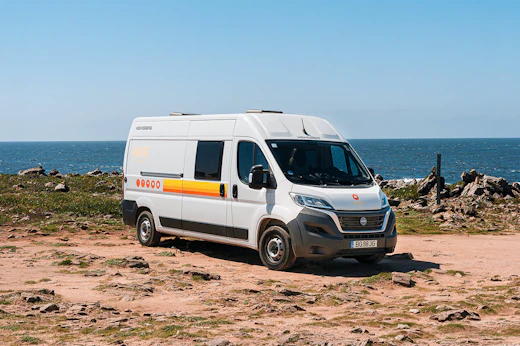
/night
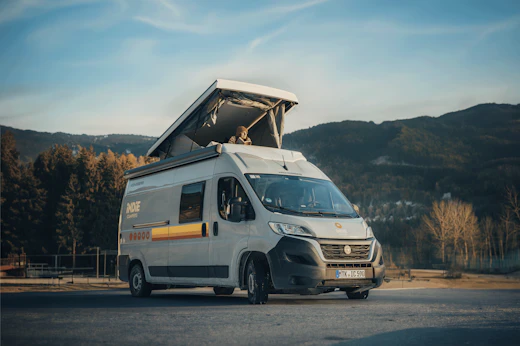
/night
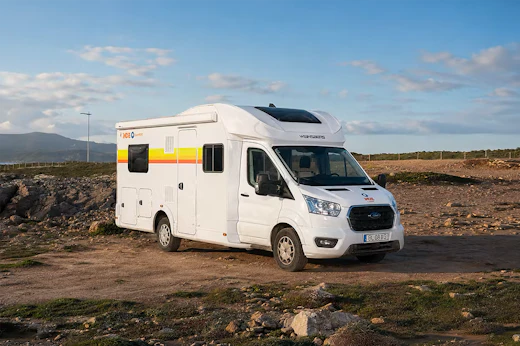
/night
/night

/night
/night
“Campervan was clean, fully functional and comfortable. Pick up & drop off was straight forward. Would use again”
“First down broke down but in 24 hours we were back on the road with a new van and it was wonderful ”
“Emily at the Glasgow depot is brilliant. ”