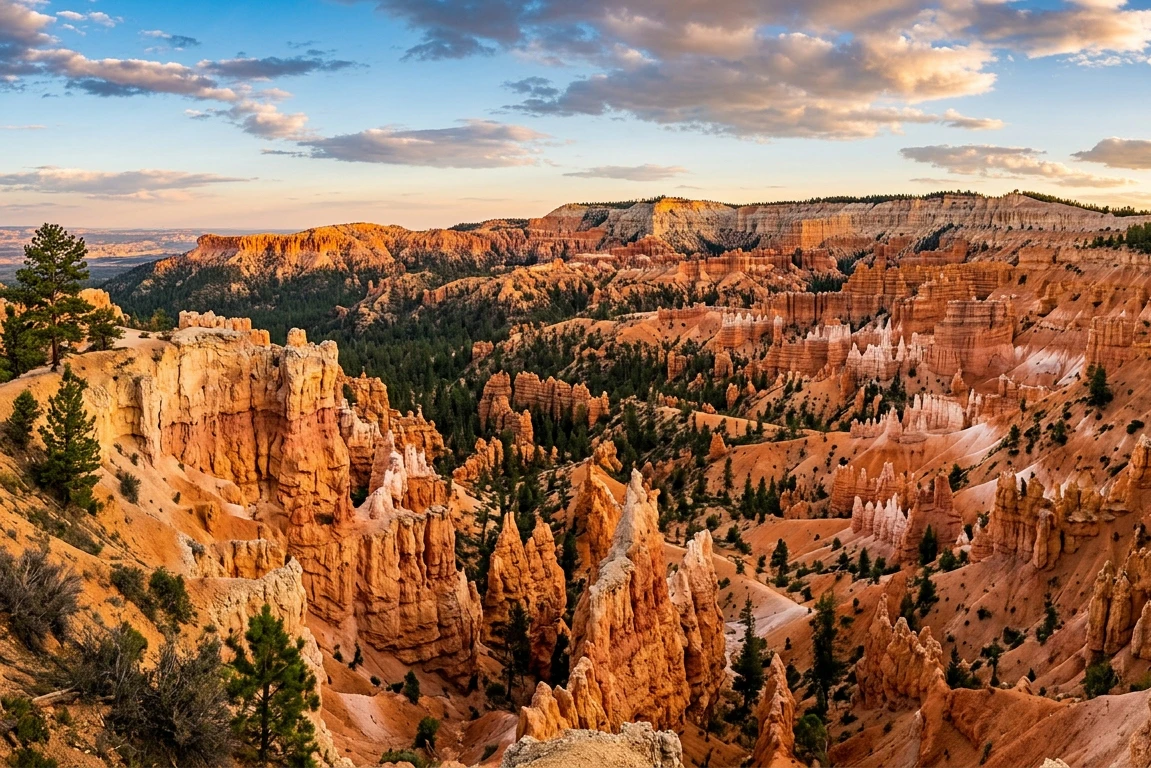
Bryce Canyon National Park, located in southern Utah, is famous for its unique geological structures called hoodoos. The nearest Indie Campers depot is in Las Vegas, approximately a 4-hour drive away. The park offers two campgrounds suitable for RVs, North Campground and Sunset Campground, both with limited hookups. The best time to visit in an RV is during the spring and fall for mild weather and fewer crowds. Be aware of length restrictions on some scenic drives.
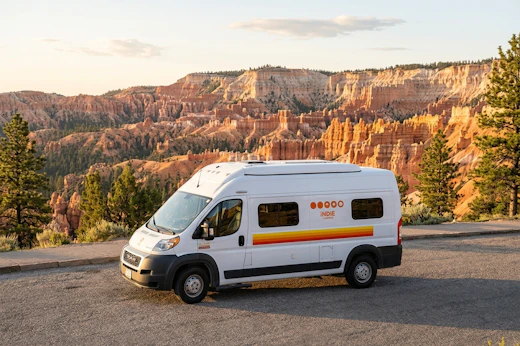
It starts with the drive. Our Las Vegas depot is just 260 miles from Bryce Canyon’s entrance, a straight shot of about four hours on I-15 and UT-20. Pick up your campervan in the morning. You can be setting up camp by late afternoon.
Our fleet is built for national park travel. While the roads in Bryce are well-maintained, parking gets tight. Incredibly tight. Especially at popular spots like Sunset Point. Our Compact and Standard vans are nimble enough to navigate these lots with ease. For this trip, we recommend keeping your vehicle under 25 feet, which gives you maximum flexibility, ensures you can access every viewpoint, and keeps you exempt from the seasonal parking restrictions at the Bryce Amphitheater for vehicles over 23 feet.
Every rental comes with unlimited mileage. Go ahead. Explore Scenic Byway 12. Detour to Zion National Park without once looking at the odometer. And with 24/7 roadside support, you have total peace of mind on the high-altitude roads of Southern Utah.
Bryce isn't a thoroughfare like Zion or Yellowstone; it's an out-and-back scenic drive along the rim. Here, the drive is the destination.
Bryce Canyon Scenic Drive (Highway 63)
This is the main road. It's an 18-mile route running south from the park entrance to Rainbow and Yovimpa Points, and you should plan on at least three hours for the round trip if you're stopping at the major overlooks. The first three miles contain the main event. The Bryce Amphitheater. Here you'll find Bryce Point, Inspiration Point, Sunset Point, and Sunrise Point. RV parking is available. It fills by 10 a.m. in peak season. Our advice? Simple. Drive all the way to the end of the road first, then work your way back, pulling into the overlooks on your right to avoid making tricky left turns across traffic.
Utah Scenic Byway 12
This road is a destination in itself. From Bryce, head east on UT-12 to drive right through the Grand Staircase-Escalante National Monument, passing the tiny town of Tropic, the wild rock formations of Kodachrome Basin State Park, and the town of Escalante. The road then climbs over Boulder Mountain. It offers huge, expansive views before dropping down into Capitol Reef National Park. Drive a section as a day trip or make it part of a larger Utah National Parks loop.
Scenic Backway: Johnson Canyon Road to Kodachrome Basin
Want a taste of the backcountry without a high-clearance 4x4? Take this graded dirt road. From UT-12 near Cannonville, just follow the signs for Kodachrome Basin State Park. The road is generally passable for a standard campervan when dry, but you should always check conditions with a ranger first. It offers a much quieter alternative to the main paved roads, getting you deep into the red rock landscape that defines this entire region.
Stay inside the park. That should be your first choice for pure convenience. If the park is full, you have excellent options just outside the boundaries in Dixie National Forest and on public lands.
What if the park campgrounds are full?
Don't panic. Can't get a spot inside the park? You have options. The land surrounding Bryce Canyon is mostly Dixie National Forest and Bureau of Land Management (BLM) territory. This allows for dispersed camping. It means you can camp for free in designated areas if you are self-contained and practice Leave No Trace principles. The iOverlander app is a good resource for finding these spots, with popular areas along Forest Road 087 off Highway 12. Just remember that dispersed camping is primitive. No water. No toilets. No tables. You must pack out everything you pack in.
For those who prefer amenities, several private RV parks are located just outside the park entrance in Bryce Canyon City and along Highway 12 in Tropic.


Your experience in Bryce is dictated entirely by the season. The park sits at a high elevation (8,000 to 9,000 feet). That means the weather is dramatic. And unpredictable.
Spring (April to May): This is a great time to visit. Temperatures are mild, with daytime highs hitting the 50s and 60s Fahrenheit (10-20°C) as the snow melts away before the big summer crowds arrive. The main risk is a late-season snowstorm, which can temporarily close roads. Be prepared for cold nights. They often drop below freezing.
Summer (June to August): The most popular season. Expect warm to hot days (70s-80s°F / 24-29°C). And expect frequent afternoon thunderstorms. Lightning. Hail. Flash floods. These storms are serious, so start your hikes early to avoid the heat and the danger. Campgrounds will be fully booked months in advance.
Fall (September to October): This is the best season for a Bryce trip. Hands down. The summer crowds are gone and the air is crisp and clear. Daytime temperatures are perfect for hiking (60s°F / 15-20°C) and the risk of thunderstorms plummets. The surrounding aspen trees turn a brilliant gold, but nights get cold quickly. Your RV's heater will be a welcome friend.
Winter (November to March): The park becomes a different world, blanketed in snow. The contrast between the white powder and the red rock is sharp. Stunningly beautiful. It's peaceful and uncrowded. But RVing is a challenge. The main park road is plowed to Bryce Point, but the Fairyland and Paria View roads are closed. Only one loop of North Campground remains open (first-come, first-served), and the dump station is closed. You must be fully self-sufficient and prepared for sub-zero temperatures.
A little planning for your RV stay goes a long, long way.
The nearest Indie Campers depot is in Las Vegas, Nevada, approximately a 4-hour drive from Bryce Canyon National Park.
Yes, Bryce Canyon has two campgrounds, North Campground and Sunset Campground, that can accommodate RVs. Hookups are limited.
Trying to 'do' Bryce in a single day from Vegas is a mistake. A huge one. You'll spend eight hours in the van and two hours in the park, feeling rushed and exhausted. Give it at least two nights. That gives you one full day for hiking and seeing the viewpoints, plus the critical sunset and sunrise bookends that make the whole trip worthwhile.
Some scenic drives within Bryce Canyon National Park have length restrictions for RVs. Always check the park's official website for current regulations and road conditions.