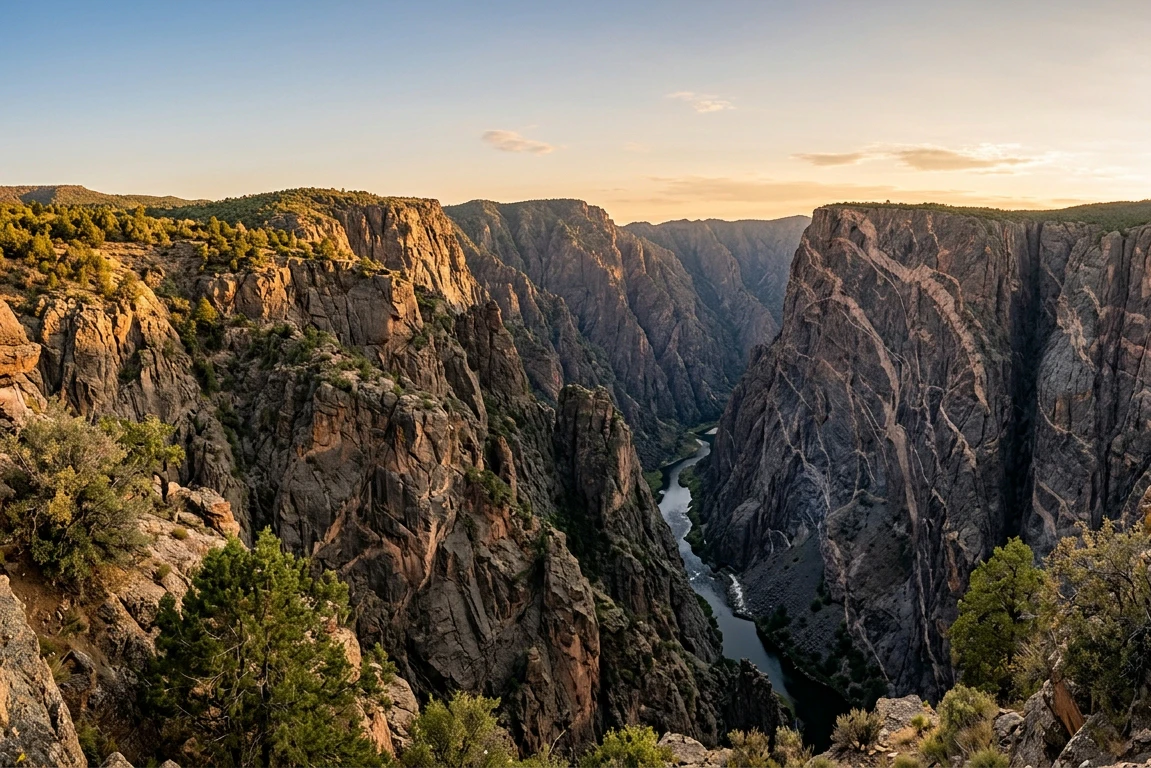
Black Canyon of the Gunnison drops in sheer, narrow walls of dark gneiss — some of the steepest cliffs in North America — with overlooks strung along the South Rim Road above the Painted Wall. Loop B of South Rim Campground has electric hookups. Indie Campers' Denver depot is about a 4.5-hour drive west.
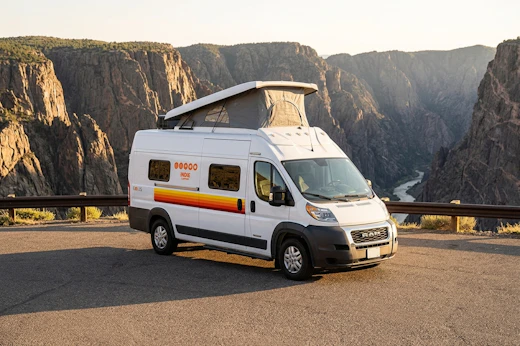
The roads inside Black Canyon are well-maintained. But they are narrow. Very narrow. They were built for scenic driving, not for lumbering 40-foot motorhomes. Our fleet is sized for that agility.
The drive from our Denver depot is 260 miles. It's a 4.5-hour route west on US-285 and US-50, and it gets more scenic the closer you get. With our unlimited mileage packages, you can add a side trip to the Curecanti National Recreation Area or detour through Gunnison without watching the odometer. Don't worry about the miles. Plus, our 24/7 support means someone is there to help if you have a question about the fridge at 10 p.m. at your campsite. You're never alone.
For Black Canyon, we recommend our Standard or Compact class RVs. They are nimble enough for any overlook pullout and fit comfortably into the sites at the South Rim Campground, giving you maximum flexibility without sacrificing an ounce of comfort.
The park's layout is refreshingly simple. Forget complex plans. The main attractions are the rim drives, revealing one stark view after another. All you need is time.
South Rim Drive
This 7-mile paved road is the park's main artery, running from Tomichi Point to High Point with 12 overlooks. Sure, you can drive the whole thing in under an hour. But you should budget half a day to do it right. Pick a few spots. Park the rig. Walk the short trails to the railings. The road is easily navigable for any RV under 30 feet. Key Stops: Gunnison Point (at the visitor center), Chasm View, Painted Wall View, and Sunset View. Approx Drive Time: 2-3 hours with stops at 4-5 overlooks. Best Time to Go: Early morning or late afternoon. This is when you'll get the best light and the fewest people. Midday sun can bleach the canyon's texture. RV Notes: Parking at overlooks is limited. In summer, the lots at popular spots like Gunnison Point can fill up fast. Arrive early or visit midweek.
North Rim Drive
This is the quieter side. The more rugged side. The road is unpaved gravel for its last few miles but is well-maintained and suitable for a campervan in dry conditions. The views feel more primitive. More isolated. The drive to the North Rim entrance is long (2-3 hours from the South Rim), so you should plan it as a dedicated day trip.
Camping is the best way to experience the park. It's the only way. You have a few solid choices inside and just outside its boundaries, but know that hookups are a rarity here.


The park's 8,000-foot elevation dictates its seasons. Winter comes early and stays late. Your entire visit will be shaped by the time of year.
Summer (June to August): This is peak season. Expect comfortable daytime temperatures, usually in the 70s or 80s°F, but be ready for common afternoon thunderstorms. All park roads and facilities are open. Book campsites months in advance. Arrive at popular overlooks early to get a parking spot.
Fall (September to October): This is an excellent time to visit. The crowds thin out. The weather is typically cool and stable, and the scrub oaks on the canyon floor turn a brilliant gold. The North Rim Road and its services usually close by mid-to-late fall, so you must check the official NPS website for exact dates.
Spring (April to May): This is a season of transition. While the South Rim Road is open, the North Rim and East Portal roads remain closed until later in the season. Snow can linger on trails and the weather is wildly unpredictable. The upside is deep solitude.
Winter (November to March): Access becomes very limited. The South Rim Drive is closed to vehicles beyond the visitor center. It's groomed for cross-country skiing and snowshoeing. Loop A of the South Rim Campground remains open, but it has no water. This season is for the truly self-sufficient RVer. The North Rim is completely inaccessible.
Booking a campsite is the most critical part of your trip planning. Here’s the breakdown.
Waste Disposal
Yes. Indie Campers’ Denver depot is about 4.5 hours (260 miles) west; the park sits near Montrose, Colorado.
Loop B of the South Rim Campground has electric hookups; the rest of South Rim and the remote North Rim have none. There is a dump station near the South Rim entrance.
East Portal Road down to the river bans vehicles over 22 ft — it drops at a 16% grade. The South Rim Drive along the overlooks is fine for RVs.
East Portal Road (RESTRICTED)
This is the only road that drops to the Gunnison River inside the park. East Portal Road is steep. It has 16% grades and tight hairpin turns. For that reason, access is restricted to vehicles 22 feet or shorter. This excludes most RVs. If you have a small campervan that meets the length requirement, the drive is spectacular. Otherwise, park your rig at the top and consider walking or biking part of it.
Nearby Private Campgrounds and Public Lands
If the in-park campgrounds are full, you have other options. Don't panic. Montrose / Black Canyon KOA Journey: Offers full hookups, a pool, and other amenities just a short drive from the park entrance. Curecanti National Recreation Area: Just east of the park, this NRA has several campgrounds on the shores of Blue Mesa Reservoir. Elk Creek and Lake Fork campgrounds have some sites with electric hookups and can accommodate larger RVs. They are also reservable on Recreation.gov. Dispersed Camping:* For free camping, vast tracts of Bureau of Land Management (BLM) and National Forest land surround the park. The iOverlander app is a good resource for finding established dispersed sites. Follow Leave No Trace principles: pack out everything you pack in and use existing fire rings.
Late spring through fall. The South Rim Road is plowed intermittently in winter and the North Rim road closes with snow.
Explore with Indie Campers