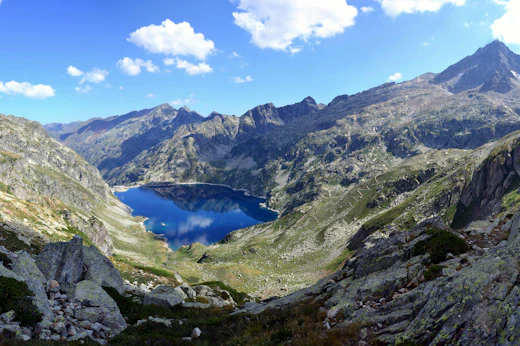
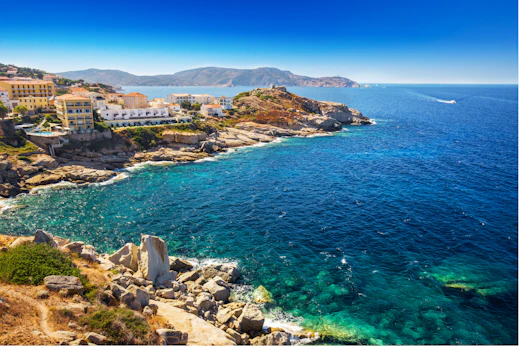
Embark on a campervan hire in France journey with Indie Campers and discover everything from the romantic streets of Paris to the lavender fields of Provence, alpine peaks, and sunlit Atlantic beaches. Choose from our wide range of campervans designed for every kind of traveller, all with unlimited kilometres, one-way hires, 24/7 online assistance, and practical extras like kitchen kits, outdoor furniture, or foldable bicycles to enhance your adventure. Backed by a trusted fleet across Europe and thousands of 4.8-star reviews, Indie Campers gives you the freedom to experience France at your own pace, with comfort and confidence from start to finish.


Our Road Trips Itineraries
France's campground and aire network makes the practical case for campervan travel before any scenic argument is needed. A summer hotel room in central Paris runs €200–400/night in July. The Camping Huttopia Versailles (GPS: 48.7990° N, 2.0550° E), 3 km from the Palace of Versailles and 35 minutes from central Paris by RER C commuter train, runs €28–42/night for a motorhome pitch with electric hookup. In Saint-Tropez on the Côte d'Azur in August, a two-star hotel in the village costs €250–500/night. Camping Les Tournels in Ramatuelle (GPS: 43.2180° N, 6.6270° E), 4 km from the beaches of Pampelonne, runs €40–85/night in peak season. Applied over 14 nights, the accommodation saving across a typical Côte d'Azur circuit generates €2,000–5,000 before activities or food are considered.
France's campground pricing is also well-structured for shoulder-season travel. The national average for a motorhome pitch at a three-star campground in high season (July through August) is €28–45/night. In low and shoulder season (October through May), the same pitch runs €18–28/night. The aire network fills the calendar gap: most municipal aires operate year-round and cost €0–8/night, making winter and spring travel in southern France genuinely affordable.
The practical arguments combine with a geographic reality that is harder to replicate in a hotel itinerary: France's most compelling landscapes sit between its cities, not within them. The Gorges du Verdon, the deepest canyon in western Europe at 700 metres (GPS: 43.7280° N, 6.3570° E), sits between Marseille and Nice with no practical hotel base for exploring both rims. The Dordogne valley (GPS: 44.8340° N, 1.0740° E), 500 km of medieval castles, troglodyte villages, and prehistoric cave art sites running east to west through the Périgord, has no single hub. The Loire Valley's UNESCO châteaux circuit (GPS: 47.5600° N, 1.1400° E) spreads 280 km between Sully-sur-Loire and Chalonnes-sur-Loire, with 42 classified châteaux between those two endpoints. Covering all three of these in a single trip requires a base that moves.
Unlimited mileage — Drive the Route des Grandes Alpes (684 km mountain road), the full Loire Valley circuit (350 km), and the Provence inland loop without a daily kilometre calculation. Most French hire operators cap distances at 200–300 km/day. A single Gorges du Verdon to Calanques to Luberon circuit covers 600+ km before you reach the Alps.
9 pickup locations across France — Start in Paris and end in Marseille. Pick up in Bordeaux and drop off in Toulouse for the southwest circuit. Begin in Lyon for the Alps and end in Nice for the Côte d'Azur. No return journey to your start city.
One-way hires across 100+ locations globally — Extend from France into Spain (Nice to Barcelona is one of the most popular cross-border one-ways in the European network), Italy (Lyon to Milan for an Alpine crossing), or Germany (Paris to Frankfurt or Munich). The European network connects French locations to the full Indie Campers grid.
24/7 road assistance — Available across all 9 French depots and all cross-border routes, including on mountain passes and in Corsica.
Basic Protection Plan included — Covered from day one on every booking. Upgrade options at booking.
Flexible cancellation available — Cancel up to 31 days before pickup without penalty.
Book now, pay later — Full payment not required until 30 days before pickup.
Route des Grandes Alpes: Thonon-les-Bains to Menton (684 km, 7–10 days recommended)
Start: Lyon → End: Nice
Highest point: Col de l'Iseran, 2,764 metres; Season: Mid-June through mid-October only
The Route des Grandes Alpes is the benchmark mountain road trip in France. It runs from Lake Geneva to the Mediterranean coast across 16 passes, six of which exceed 2,700 metres, in a continuous south-trending line through three Alpine departments: Haute-Savoie, Savoie, and the Alpes-de-Haute-Provence. The route connects the northern Alps (the Aravis and Beaufortain massifs), the Vanoise national park (GPS: 45.4000° N, 6.7500° E, France's first national park, established 1963, 53,500 hectares of Alpine terrain between the Tarentaise and Maurienne valleys), the Écrins national park in the Dauphiné, and the Mercantour national park in the final southern section before Menton.
The road does not follow a single numbered route: it assembles sections of D-numbered departmental roads, most of which are single-lane above 2,000 metres. The driving is demanding and slow — plan 80–120 km/day when in the high passes, not the 200–300 km/day possible on the autoroute. Mountain campgrounds cluster at valley floor towns (Bourg-Saint-Maurice for the Iseran approach, Briançon at 1,326 metres for the Galibier approach, Barcelonnette for the southern section). The Col de la Bonette (GPS: 44.3260° N, 6.8040° E, 2,802 metres at the road's summit circuit, the highest paved road in France and the highest in the Alps accessible to standard vehicles) sits in the southern section, 180 km from Menton.
Highlights: The Vanoise national park chamois herds visible from the road at the Iseran summit in July and August; the medieval hilltop town of Entrevaux (GPS: 43.9500° N, 6.8040° E, a Vauban-fortified citadel at the junction of the Var river and the N202, free exterior access, €4 to climb to the citadel, 110 km from Menton); the train des Pignes narrow-gauge railway running parallel to the final section of the route between Digne-les-Bains and Nice (GPS: 43.9440° N, 6.2310° E, the most scenic train journey in mainland France, relevant as a day trip option from a campground base)
One-way potential: Yes, Lyon to Nice; the natural direction is north to south
Route Napoléon: Cannes to Grenoble (325 km, 3–4 days recommended)
Start: Nice → End: Lyon
Named after: Napoléon Bonaparte's march from the Golfe Juan (Cannes) to Grenoble in March 1815 after escaping Elba
The Route Napoléon (N85 and D-road sections) follows Napoleon's 20-day 1815 return march through the pre-Alpine limestone landscape from the Côte d'Azur to the Dauphiné in a single, coherent road trip line. The route passes through Grasse (GPS: 43.6570° N, 6.9240° E, the perfume capital of France with 36 active perfume houses, including Fragonard — €0 entry for factory visits, guided tour €8/adult), Castellane (the natural starting point for the Gorges du Verdon detour to the west), Sisteron (GPS: 44.1980° N, 5.9390° E, the dramatic citadel on a limestone spine above the Durance river, €6/adult), Gap, and Corps before descending to Grenoble through the Vercors foothills.
Highlights: The Gorges du Verdon detour (GPS: 43.7280° N, 6.3570° E, turn west from Castellane at the D952; the full circuit adds 130 km and one full day); the Lac de Serre-Ponçon reservoir (GPS: 44.5000° N, 6.3000° E, the largest artificial lake in France at 2,800 hectares, created 1961 by damming the Durance, motorhome camping at Camping La Vieille Ferme on the north shore at approximately €25–40/night)
One-way potential: Yes, Nice/Antibes depot to Lyon depot (350 km total with detours)
Loire Valley Châteaux Circuit: Orléans to Nantes (350 km, 5–7 days recommended)
Start: Paris → End: Nantes
Passes through: Blois, Amboise, Tours, Saumur, Angers
The Loire Valley circuit follows the river downstream from Orléans to Nantes along the D-road river-bank system, stopping at the 12 major châteaux open for public visits. The route has no technical difficulty — the Loire plain is entirely flat — and is one of the most campground-dense itineraries in France: 40+ campgrounds in the 280 km UNESCO-designated section alone. The practical strategy for the circuit: drive the south bank (D952 and D751) from Orléans to Saumur and the north bank (D58 and D952 again) from Saumur to Nantes, covering both river perspectives and the major châteaux at Chambord (inland on the D112, 6 km from the river), Chenonceaux (spanning the Cher, a Loire tributary), Amboise, Villandry, and Langeais.
Highlights: The son-et-lumière (sound and light) shows at Chambord (GPS: 47.6163° N, 1.5172° E, June through September, €13/adult, 45-minute projected mapping show on the château exterior using the original Renaissance stone as canvas, separate from daytime entry); a cave-cellar Vouvray wine tasting east of Tours (GPS: 47.4000° N, 0.8000° E, the Vouvray appellation produces still and sparkling Chenin Blanc from chalk-cut cellars in the tuffeau cliff — tastings typically free or €5–8 with purchase)
One-way potential: Yes, Paris Orly depot to Nantes depot (the natural direction for the Loire follows the river westward)
Normandy and Brittany Coastal Loop (800 km, 7–10 days recommended)
Start and end: Nantes (loop)
Passes through: Rennes, Saint-Malo, Mont-Saint-Michel, Bayeux, Caen, Étretat, Rouen, Chartres, and back
This is France's best single-hire loop from the Nantes depot: a coastal circuit combining the Breton west coast (Saint-Malo and the Rance estuary), the World War II D-Day beaches and memorials (Bayeux, Arromanches, Omaha Beach, Pointe du Hoc), and the Norman interior (Bayeux Tapestry, Caen Mémorial, the Impressionist coast at Étretat). The inland return via Chartres adds the Cathédrale Notre-Dame (GPS: 48.4475° N, 1.4877° E, UNESCO, the most completely intact High Gothic cathedral in France, the stained glass in the nave is the largest surviving 12th and 13th-century glass program in the world, free entry, €7.50 for north tower climb). Total distance: approximately 800 km. One full week is the minimum; ten days allows the Breton west coast (Quimper, Finistère, Carnac) to be added before reaching Saint-Malo.
One-way potential: Loop, Nantes return; no natural one-way for this circuit
Bordeaux to the Pyrenees: Atlantic Coast to Mountain (500 km, 5–7 days recommended)
Start: Bordeaux → End: Toulouse
Passes through: Arcachon, Hossegor, Biarritz, Bayonne, Pau, Lourdes, Gavarnie
The southwestern diagonal from the Atlantic coast to the Pyrenean cirques is one of the most geographically varied road trips available in France within a single region. The Bordeaux to Bayonne section (190 km via A63) follows the Landes coast: 100 km of straight Atlantic beach backed by the maritime pine forest, interrupted by the Arcachon Basin (the Dune du Pilat at 107 metres, the Arcachon oyster beds, the Île aux Oiseaux in the centre of the tidal basin). Biarritz (GPS: 43.4832° N, 1.5586° W) and Bayonne (GPS: 43.4900° N, 1.4730° W) mark the Basque coast: surf culture in Biarritz (the Grand Plage beach, the Rocher de la Vierge promontory walk, free access), the fortified old city and Bayonne ham market in Bayonne. From Bayonne, the D932 and D935 run east through Pau toward the mountain front: the Pau château (GPS: 43.2950° N, 0.3680° W, birthplace of Henri IV, €8/adult) and the Boulevard des Pyrénées promenade above the Gave de Pau river with the Pyrenean panorama visible on clear days at 200 km distance.
One-way potential: Yes, Bordeaux to Toulouse (500 km, with Lourdes and Gavarnie as the mountain climax before the final drive east to Toulouse)
Summer (June through August)
France's peak hire and campground season coincides with July and August. Coastal Brittany (18–22°C sea temperature in August), the Mediterranean coast (26–28°C), and the Alpine passes (15–20°C at altitude) are all at their most accessible. The flip side: the most-visited campgrounds in Provence, the Côte d'Azur, and the Loire Valley require 3–4 months advance booking for July and August. The Paris region campgrounds fill for the July 14 Bastille Day holiday and the first two weeks of August when Parisians leave the city en masse.
Regional picture in summer:
Best for: Alpine passes; Mediterranean beaches; Breton coast camping; festival season (Avignon Theatre Festival in July, GPS: 43.9493° N, 4.8059° E, France's largest performing arts festival; the Tour de France mountain stages in the Alps and Pyrenees in July)
Booking note: Provence, Alps, and Côte d'Azur campgrounds for July and August: 3–4 months ahead. Brittany and Loire: 6–8 weeks. Normandy and Alsace: 4–6 weeks
Autumn (September through November)
France's most underrated season for a campervan circuit. The Mediterranean sea is warmest in September and early October (25–26°C); the coastal campgrounds start emptying from the second week of September while water conditions remain at their best. The harvest season begins simultaneously across Bordeaux (September), Burgundy (September to October), Alsace (September to October), and the Loire (September). Campground prices fall 15–25% from peak by mid-September except in the Côte d'Azur, where premium sites maintain rates through September.
Regional picture in autumn:
Best for: Wine harvest tourism; autumn colour in the Vosges and Burgundy; value travel (campground prices fall, vehicle availability improves from the summer backlog); the September mushroom season in the Dordogne (cèpe mushroom markets in Périgueux and Sarlat from late September)
Booking note: September requires early booking for the Côte d'Azur and Corsica (still peak until mid-September). October and November: 2–4 weeks sufficient across most regions
Spring (March through May)
Spring is France's wildflower and blossom season. The Loire Valley orchards are in bloom in March and April (the pear, apple, and cherry orchards of the Anjou are the regional highlight). The Normandy hedgerow country (bocage) is at its deepest green in May before the summer sun dries the grass. The Pyrenees meadows open from late May with Pyrenean iris, gentian, and orchid meadows at 1,000–1,500 metres. Most campgrounds reopen from Easter weekend, with full operations across all regions by mid-April.
Regional picture in spring:
Best for: Garden tourism (Giverny in May is the peak window; book campsites near Vernon/Giverny 4–6 weeks ahead); Loire blossom season; the Alsatian wine route before summer crowds; Corsica (May and June are the best months on the island before July heat and ferry congestion)
Booking note: Giverny area campgrounds in May: 4–6 weeks. Corsica ferries in May and June: 6–8 weeks for vehicle bookings. General spring across mainland France: 3–4 weeks sufficient
Winter (November through February)
Winter campervan travel in France concentrates in three zones: the southern Mediterranean coast (the Côte d'Azur from Nice to the Italian border averages 12–15°C in January, with year-round campground operations in Menton, Roquebrune-Cap-Martin, and Cap-Ferrat), the Provence hinterland (mistral wind aside, the Luberon and Alpilles are mild and uncrowded from November through February), and the ski resort valleys of the Alps and Pyrenees (campgrounds near Chamonix and Cauterets operate in ski season at February prices of €25–45/night).
The aire de service network is particularly useful in winter: most municipal aires operate year-round. Provence and Languedoc have the densest winter-operational aire network outside of the Côte d'Azur campgrounds. The Camargue (flamingo population is highest in winter: up to 150,000 birds in the lagoons from November through March) and the Carmargue wetland circuit from Arles is entirely viable in January and February.
Best for: Winter sun on the Côte d'Azur; the Alsace Christmas markets (late November through December 24); Corsica in February (warm enough for coastal walks, deserted beaches, ferry fares at minimum); skiing with a campervan as basecamp in the Alps (Chamonix valley floor campgrounds at 1,000 metres provide the most cost-efficient ski base in France)
Skip if: Extended touring in Normandy, Brittany, or the Loire from December through February without preparation for cold, wet conditions (4–8°C, 100+ mm monthly rainfall on the Atlantic coast)
The most popular months for France campervan hires are July, August, and September.
7 to 10 Days: One Region or One Corridor
A single week covers one named route or one region in reasonable depth: Provence and the Côte d'Azur from the Nice or Marseille depot, the Loire Valley circuit from Nantes, the Alpine foothills from Lyon, or the Atlantic coast from Bordeaux. It is not enough to combine multiple distinct regions (the drive from Bordeaux to Nice alone is 840 km and would consume two full driving days).
Best approach for 7 days from the Nice depot: Provence and the Gorges du Verdon
14 to 16 Days: Two Connected Regions
Two weeks enables the combination of two geographically adjacent regions: the Côte d'Azur with the Route Napoléon up to Grenoble (Nice to Lyon); Normandy and Brittany as a complete Atlantic loop from Nantes; the Loire Valley extended north to the Paris region châteaux (Nantes to Paris); or the Bordeaux wine country combined with a Pyrenees mountain section to Toulouse.
The Southwest Circuit (14 days, Bordeaux to Toulouse):
This is the widest thematic range available in the French southwest on a single hire: Atlantic surf coast and Basque Country (3 days), the Périgord Dordogne valley and prehistoric cave art (4 days), the Midi-Pyrénées mountain front via Lourdes and Gavarnie (3 days), and the Languedoc via Carcassonne and the Canal du Midi to Toulouse (4 days). Total driving: approximately 1,100 km. Pickup Bordeaux, drop-off Toulouse.
21 Days or More: France's Full Depot Network
Three weeks enables use of the full French network. The logical sequence connects all nine depots in a south-north or north-south arc: Paris (start) to Nantes (Loire Valley, 4 days) to Bordeaux (Aquitaine, 3 days) to Toulouse (Pyrenees, 3 days) to Marseille (Provence, 3 days) to Nice/Antibes (Côte d'Azur, 2 days) to Lyon (Alps, 3 days) to Bastia by ferry for a Corsica extension (5–7 days optional). Total mainland driving: approximately 2,800 km, no backtracking, each location a natural handoff.
Minimum age: 21 years. Drivers 21–24 incur a young driver surcharge; confirm the specific rate at booking.
License requirements: EU and UK license holders require no IDP. US, Canadian, and Australian holders require a Geneva Convention IDP alongside their national license. Obtain it from AAA (US), CAA (Canada), or the NRMA-affiliated club in your state (Australia) before departure. Carry both documents together in the vehicle at all times.
Crit'Air sticker: Order from certificat-air.gouv.fr before departure (€5.11 including international postage, 5–15 business days delivery). Required for Paris, Lyon, Grenoble, Toulouse, Bordeaux, Lille, Montpellier, and approximately 35 additional ZFE cities. Do not order from third-party sites.
Toll planning: Download the ViaMichelin app (viamichelin.com) or use Google Maps with toll avoidance selected to route via free N and D roads. For real-time toll calculations before departure, use the Autoroutes.fr calculator for French routes and TollGuru for cross-border toll estimates. The Liber-t transponder (if installed in your vehicle) uses the orange "t" lanes at all péage plazas — confirm at pickup.
Campground booking: France has no centralised booking platform. Use Camping-Car Park (campingcarpark.com), ACSI CampingCard (campingcard.com, approximately 400 French partner sites at discounted shoulder-season rates), Pitchup.com, or PiNCAMP for advance booking. For Provence, Alps, and Côte d'Azur in July and August: book 3–4 months ahead. For Brittany and Normandy: 6–8 weeks. For spring and autumn circuits: 3–4 weeks is generally sufficient.
France Passion: The €35/year membership card gives access to 1,200+ farm, vineyard, and artisan producer stopovers across France at no additional nightly charge. The producers expect you to visit their shop or cellar; overnight stays are typically 1 night maximum. The membership pays for itself in 2–3 nights. Order at france-passion.com before departure.
LPG/Propane supply: LPG is widely available in France through Butagaz (blue bottles) and Campingaz cartridges at Intermarché, Carrefour, E.Leclerc, and most roadside supermarkets. Confirm your vehicle's gas bottle type and adaptor requirements at depot pickup.
Alpine passes: The Route des Grandes Alpes passes above 2,500 metres are typically open from mid-June to mid-October. Check pass status at cols.altitudinal.com and at the local prefecture weather services before attempting any pass route. Campervans under 3,500 kg handle all open Alpine passes in good summer conditions; passes are not recommended after the first autumn snowfall.
Credit card and deposit: A valid credit card in the primary driver's name is required at pickup in France. Security deposit amounts vary by vehicle class and protection tier. Debit cards are not generally accepted for the deposit hold.
The minimum hire age for Indie Campers in France is 21 years. Drivers aged 21–24 incur a young driver surcharge; confirm the rate at booking.
EU and EEA license holders drive in France on their national license with no additional documentation required. UK license holders are directly recognised in France under current post-Brexit tourist driving arrangements — no IDP required. US, Canadian, and Australian license holders are required to carry an International Driving Permit (IDP) alongside their national license at all times. The French authorities and most campervan hire companies require a Geneva Convention IDP (1949 series) for non-EU hirers. In the US, obtain one from AAA before departure for approximately $20, valid for 12 months. In Canada, apply through CAA. In Australia, apply through your state's NRMA-affiliated motoring club. The IDP is not a standalone document and must be carried with the original national license; without both, a police stop creates a legal problem.
France drives on the right; steering is on the left.
France's speed limits for campervans and motorhomes under 3,500 kg GVWR follow standard passenger car limits. For vehicles over 3,500 kg GVWR, separate lower limits apply.
For campervans and motorhomes under 3,500 kg: on motorways (autoroutes) the limit is 130 km/h in dry conditions and 110 km/h in wet conditions. On dual carriageways with a central barrier, the limit is 110 km/h dry and 100 km/h wet. On national and departmental roads (single carriageway outside urban areas), the limit is 80 km/h in all weather. In urban areas, the standard limit is 50 km/h. In poor visibility — defined as under 50 metres — all roads apply a 50 km/h maximum.
For campervans and motorhomes over 3,500 kg GVWR: motorways 110 km/h, dual carriageways 100 km/h, national roads 80 km/h, urban 50 km/h. Vehicles over 3,500 kg or over 7 metres in length must also maintain a minimum 50-metre following distance from similar vehicles on non-urban roads, and on roads with three or more lanes per direction are restricted to the two rightmost lanes. Mandatory "Angles Morts" (blind spot warning) stickers are required on both sides and at the rear for these vehicles.
The Paris Périphérique ring road has a 70 km/h limit. Many city centres including Paris, Grenoble, Nantes, and Lille operate 30 km/h zones across residential and secondary streets.
Speed enforcement in France combines fixed radar cameras (over 4,000 on the network, locations published at securite-routiere.gouv.fr), mobile vans, and unmarked police vehicles. Fines begin at €135 for up to 20 km/h over the limit in a zone of 50 km/h or above, rising to €1,500 and license suspension for excess of 50 km/h over the limit.
France uses a 12-point driving license system. New drivers start with 6 points, increasing to 12 over three years without an offence. Speeding and other infractions remove points; reaching zero triggers license revocation.
France operates approximately 9,000 km of tolled autoroutes, managed by private concession holders including Vinci Autoroutes, Sanef, and APRR. The toll system charges by distance at each péage (toll plaza), with rates set per vehicle class. Campervans fall into Class B (vehicle height 2–3 metres) or Class C (height over 3 metres with tow vehicle), paying approximately 30–50% more than a standard Class A car.
On the major routes most relevant to Indie Campers hirers, approximate Class B campervan tolls are: Paris to Nice (930 km via A6 and A7 and A8), approximately €130–150; Paris to Bordeaux (587 km via A10), approximately €90–100; Lyon to Marseille (315 km via A7), approximately €35–45; Paris to Lyon (465 km via A6), approximately €43–65.
The average toll cost for a campervan on French motorways is approximately €13–18 per 100 km, compared to €9.50–12 per 100 km for a standard car.
Toll-free alternatives exist for every major route. The N and D road network runs parallel to the tolled autoroutes throughout France. The toll-free routing adds 30–90 minutes to long-distance journeys but routes through towns and landscapes rather than motorway service areas. For shorter regional circuits (Loire Valley, Provence, Normandy), the free road network is entirely practical as the primary routing choice.
The Liber-t electronic transponder (order via the télépéage provider network at autoroutes.fr or from VINCI at ulys.vinci-autoroutes.com) works in all tolled lanes displaying the orange "t" logo, allows pass-through without stopping, and is accepted across France, Spain, Portugal, Italy, and Belgium through the EETS European agreement. A refundable deposit of approximately €20 applies; an annual subscription of approximately €5 covers account maintenance. The French Liber-t transponder is compatible with Italian Telepass lanes and Spanish VIA-T lanes. Confirm whether your vehicle is already equipped with a Liber-t at depot pickup.
France's Zones à Faibles Émissions (ZFE, Low Emission Zones) require a Crit'Air windscreen sticker to drive in designated city centre areas. The sticker classifies your vehicle's emission standard on a scale of 0 (electric) to 5 (pre-2006 diesel). Most modern campervans in the Indie Campers fleet qualify for Crit'Air 1 or 2, which are permitted in all current ZFEs.
The sticker costs approximately €5.11 including international postage and is ordered from the only official government website: certificat-air.gouv.fr. Third-party sites charging €20–50 for the same sticker are scams operating on similar-looking domains. Allow 5–15 business days for postal delivery from outside France; order before departure.
Active ZFEs where Crit'Air 3 vehicles (Euro 4 diesel, 2005–2010) are restricted Monday through Friday include Paris (Greater Paris metropolitan area, 8 a.m. to 8 p.m.), Lyon (with a 52-day exemption pass option for occasional visitors), Grenoble, Toulouse, Bordeaux, Lille, and Montpellier. Nice, Marseille, and Strasbourg have been classified as reduced-enforcement zones for 2025 following improved air quality data, but the sticker is still required to drive in their ZFE perimeters. Fine for non-compliance: €68, rising to €180 if unpaid within 45 days.
Note: The French National Assembly voted in committee in 2025 to abolish the ZFE system nationally. As of June 2026, no law has been passed and all ZFEs remain active. Monitor developments at certificat-air.gouv.fr before departure.
Breathalyser kits: French law previously required single-use breathalyser kits to be carried in the vehicle, though enforcement of this rule was suspended. Confirm current requirement status at your time of travel.
Warning triangles and reflective vests: Each vehicle must carry one warning triangle (placed at least 30 metres behind the vehicle in case of breakdown) and one high-visibility vest per occupant, carried inside the vehicle (not the boot) for immediate access when exiting on a road. Failure to wear the vest when exiting on a motorway: €135 fine.
Priority à droite (priority to the right): At unsigned intersections, the vehicle approaching from the right has absolute priority, regardless of road width or road type. This rule surprises drivers from the UK, US, and most other countries. It is rigorously applied in French towns and villages on secondary roads. Signage indicating you have priority (the yellow diamond "route prioritaire" sign) or must yield (the red-bordered triangle Cédez le passage) overrides the rule on classified roads. Roundabouts: vehicles already in the roundabout have priority over entering traffic.
Handheld mobile use: €135 fine and 3 license points. Hands-free use permitted if the phone is mounted in a fixed holder; earpiece use is banned.
BAC limit: 0.5 g/l (0.05%) for standard drivers; 0.2 g/l for drivers in their probationary period (less than two years of license). First offence at 0.5–0.8 g/l: €135 fixed fine plus 6 license points. Above 0.8 g/l: criminal offence, up to €4,500 fine, up to two years imprisonment, license suspension up to three years. French police conduct over 9 million random breath tests annually — this is not a country where DUI enforcement is passive.
If your itinerary from France includes Switzerland or Italy, two separate toll systems apply beyond the French autoroute network.
For Switzerland: all vehicles under 3,500 kg using the Swiss motorway (autoroute) network require an annual vignette (motorway sticker). The 2026 vignette costs CHF 40 (approximately €42–45). It is valid from December 1, 2025 through January 31, 2027 — 14 months. Switzerland offers no daily, weekly, or monthly option: you pay for the full annual period regardless of how many days you drive. Buy it at the Swiss border crossing, online at e-vignette.ch, or in advance from national motoring clubs (ADAC, AA). The fine for driving on a Swiss motorway without the vignette is CHF 200 plus the cost of the vignette purchased on the spot. For the Mont Blanc Tunnel (Chamonix to Courmayeur, Italy) and the Great St Bernard Tunnel (Switzerland to Italy), separate tunnel tolls apply: the Mont Blanc Tunnel costs approximately €56–75 per one-way crossing for a Class B campervan (2025 rates, verify at atmb.com).
For Italy: no vignette system applies. Italy uses a distance-based toll system at toll booths similar to France. Average campervan toll cost in Italy: approximately €14–18 per 100 km for Class B vehicles. The Fréjus Tunnel (Modane, France to Bardonecchia, Italy) costs approximately €74–75 one-way for a campervan. Once in Italy, the Telepass electronic transponder works in dedicated lanes; French Liber-t is accepted in Italian Telepass-compatible lanes through the EETS European agreement.
7 Days (One Region: Provence or Loire Valley)
Budget (per couple, 7 days, vehicle hire not included): approximately €900–1,500
Mid-range (per couple, 7 days, vehicle hire not included): approximately €1,600–2,400
Premium (per couple, 7 days, vehicle hire not included): approximately €2,800–4,200 (adds fine dining in a Michelin-starred Provence restaurant at €80–150/person per meal, premium Côte d'Azur campground pitches at €60–85/night, Aiguille du Midi cable car at €67/adult, private Calanques boat charter)
14 Days (Full Circuit: Route des Grandes Alpes or Northwest France Loop)
Budget (per couple, 14 days, vehicle hire not included): approximately €1,700–3,000
Mid-range (per couple, 14 days, vehicle hire not included): approximately €3,200–4,800
Premium (per couple, 14 days, vehicle hire not included): approximately €5,500–8,500
France sits at the mid-range end of the Western European cost spectrum. The toll-free alternative road network significantly reduces the autoroute toll burden; the aire de service network eliminates hotel costs entirely on nights when a municipal aire replaces a campground. The primary variable beyond the vehicle hire is toll road usage: a Lyon-to-Nice autoroute run costs approximately €50–70 Class B; the toll-free N and D road alternative costs €0 and adds 45–90 minutes.
Monitor current diesel prices at prix-carburants.gouv.fr or the Station Service en France app before departure.
Paris Orly → Nantes (380 km, 3.5 hours via A11, toll-free alternative via N23) — The Loire Valley one-way: depart Paris with Chartres as the first stop (80 km, 1 hour), drive the Loire Valley circuit from Orléans to Amboise to Tours to Saumur, and end at the Nantes depot. The most natural downstream movement of the Loire river followed in a hire.
Paris CDG → Lyon (460 km, 4 hours via A6) — The Burgundy and Rhône corridor: Fontainebleau château (GPS: 48.4040° N, 2.7010° E, UNESCO, €14/adult, 60 km from Paris CDG) and the wine villages of Beaune (GPS: 47.0260° N, 4.8340° E) and Mâcon as intermediate stops before the Lyon Alps gateway.
Paris CDG → Bordeaux (580 km, 5 hours via A10) — The Atlantic southwest one-way: the Loire Valley châteaux (Chambord, Chenonceaux, Villandry) as stopovers before the descent into Poitou and the Bordeaux wine country.
Lyon → Nice (310 km, 3 hours direct via A7 and A8; or 684 km via the Route des Grandes Alpes in 7–10 days) — The Alps to Côte d'Azur one-way: the Route des Grandes Alpes as the ultimate version; the direct autoroute as the practical rapid connection.
Bordeaux → Toulouse (245 km, 2.5 hours via A62) — The southwest diagonal: Périgord Noir and Dordogne valley detour (Lascaux IV, Les Eyzies, Sarlat-la-Canéda) adds 200 km and 2 days; Bordeaux wine estates of the Médoc and Saint-Émilion as opening stops before the Pyrenees gateway.
Nice → Marseille (200 km, 2 hours via A8, tolled approximately €20–25 Class B; or 3.5 hours via N98 coastal road toll-free) — The Riviera to Provence one-way: the three Corniches coastal roads above Monaco as the opening section, then the Corniche de l'Estérel volcanic coast, Fréjus and Saint-Raphaël, and the final approach into Marseille.
Nantes → Bordeaux (350 km, 3.5 hours via A837 and A83) — The Loire Atlantique to Aquitaine one-way: the Marais Poitevin wetland (GPS: 46.3500° N, 0.8500° W, the "Venise Verte" waterway system between Niort and the coast, €5–10 for a punt tour of the canals) as the midpoint stop between Nantes and Bordeaux.
Nice → Barcelona, Spain (680 km, 6.5 hours via A8 and AP-7) — The Mediterranean coast international one-way: Monaco, the Ligurian Riviera, Genoa, and the French-Italian border at Ventimiglia, then the Spanish border at La Jonquera. Confirm cross-border vehicle authorisation at booking.
Paris CDG → Frankfurt or Munich, Germany (560–790 km, 5–7.5 hours via A4) — The northern European connection: Alsace wine route and Strasbourg (which lacks its own depot but works as a stopover on the Paris-to-Germany routing) as an intermediate stop. Confirm cross-border authorisation and German low-emission zone sticker requirement (Umweltplakette, available at ADAC and German customs offices) before departure.
Lyon → Milan, Italy (310–340 km, 3–3.5 hours via Fréjus Tunnel or Mont Blanc Tunnel) — The Alpine crossing: Fréjus Tunnel toll approximately €74–75 one-way for Class B campervan; Mont Blanc Tunnel approximately €56–75 one-way. Confirm cross-border authorisation, Swiss vignette if routing via Switzerland, and Italian Crit'Air equivalent (not currently required for tourist hires in Italy, but confirm at booking).
One-way fees vary by route and season. Confirm availability and cross-border vehicle authorisation at the time of booking.
For most travelers, a special licence is not necessary to hire a campervan in France. A valid driving licence is required, though, to operate any of our vehicles. If you are a non-EU citizen, an International Driving Permit (IDP) may be required in addition to your home country’s driving licence. Additionally, your licence must match the transmission type of the vehicle (manual or automatic). You can find more details about driving licence requirements here.
Yes, our campervans are pet-friendly. Just be sure to add the extra cleaning service when booking. This ensures a professional anti-allergy cleaning is carried out after your trip. Please note that only one pet is allowed per campervan, and it must not exceed 30kg in weight. Also, we are not liable for any legal fees related to traveling with pets. If you’re booking through our marketplace, check the “vehicle rules” section to confirm if the vehicle is pet-friendly.
The sleeping capacity of our campervans and motorhomes varies depending on the model and size. Our Class C motorhomes can typically accommodate 4 to 8 people, while our Class B campervans can sleep between 2 to 4 people. Vehicles equipped with a rooftop tent generally have space for around 2 people. For a full breakdown of our models and sleeping capacities, click here.
If you're exploring France in a campervan rental, it's essential to be aware of the country’s official camping regulations. Many natural areas are legally protected, so using designated overnight parking spots or official campsites is strongly recommended. This not only helps preserve the environment but also ensures a safe and enjoyable experience. For more guidance on safety and responsible camping, click here.
We provide three different protection plans to cover any incidents or damages that might occur during your campervan rental. All Indie Campers campervans come with third-party vehicle insurance, and property damage coverage (which varies based on the country). For marketplace rentals, insurance options may differ depending on the host. For further details on campervan insurance, visit this page.
Yes, our search filter makes it easy to rent a campervan close to your location by using a 60km radius system. Depending on where you're searching from, you can quickly find the nearest Indie Campers campervan rental pick-up centre.
Yes, a selected number of Indie Campers RV rentals in France include unlimited mileage, allowing you to explore freely and make the most of your road trip! Please note that unlimited mileage applies exclusively to Indie Campers RVs and is subject to responsible use.

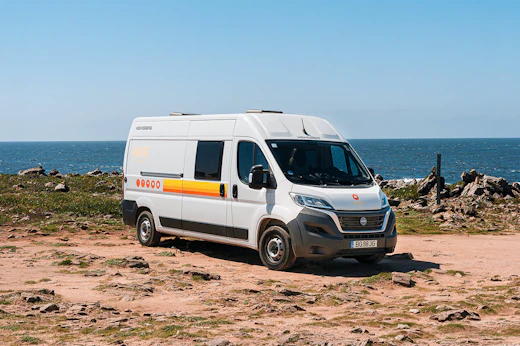
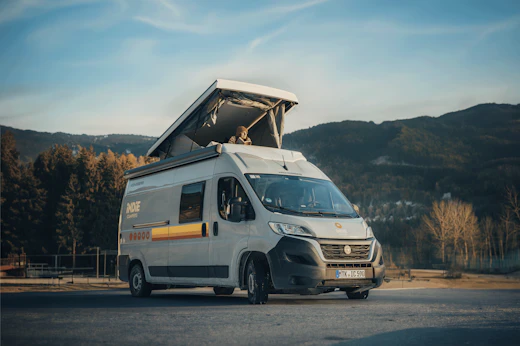
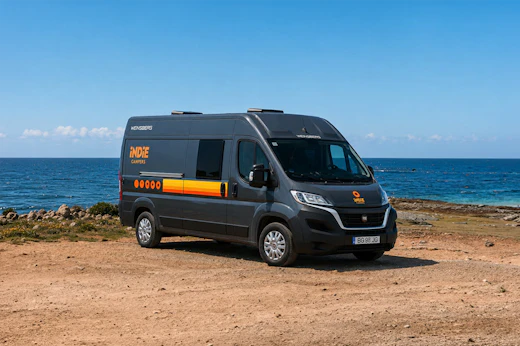
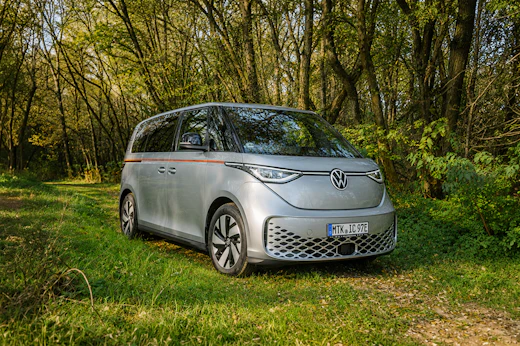
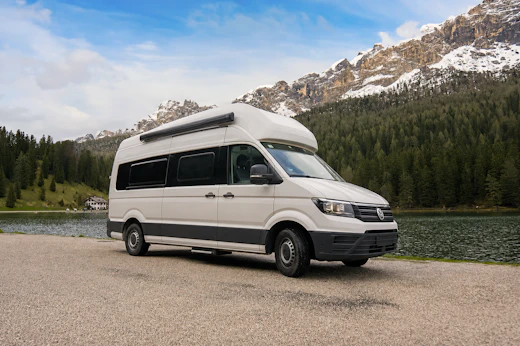
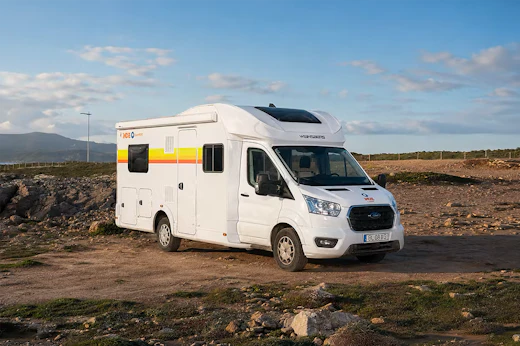
Our Campervans





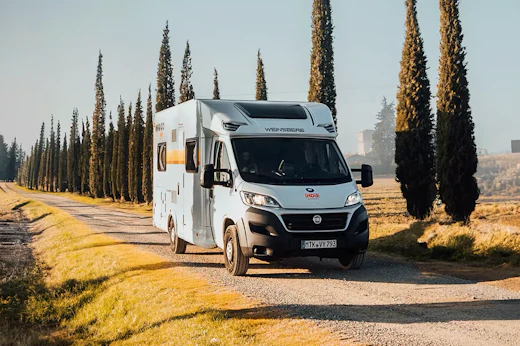
Our Road Trips Itineraries
“Super facile d’utilisation que ce soit la réservation, le pick-up ou la communication pendant le voyage”
“They provided us with an excellent van. Of course, there was a mechanical issue along the way where the water stopped running, but I believe that’s something that can reasonably happen. What was truly impressive was how they handled it. The team came together to help me and offered appropriate compensation. In particular, Corey (Complaints & Incidents Analyst) was incredibly kind and excellent in his support, and Adeem (based in Geneva — I’m sorry if I got the name slightly wrong) was also extremely helpful. I highly recommend Indie Campers.”
“Camping Car neuf au départ, très confortable et facile à conduire, équipe au top!”