Kick off your next Canadian adventure with an RV hire in Toronto from Indie Campers, built for exploration. Discover Niagara Falls, go paddling in Algonquin, or head east to Montreal and Quebec. Every hire includes unlimited kilometres, one-way options, and extras like kitchen or bedding kits. Indie Campers is trusted by thousands across North America, backed by 4.8-star reviews and global road trip experience.


Our Road Trips Itineraries
Toronto's position on Lake Ontario and its proximity to both wilderness and US border crossings make it ideal for diverse road trips. Here's what you can reach:
The roads are excellent. Highway 401 through Toronto is North America's busiest (500,000 vehicles/day at peak sections)—avoid rush hours (7-9am, 4-7pm). 407 ETR is electronic toll highway (bypass 401 congestion but expensive: $0.25-0.30/km + $4.60 trip charge). Highway 400 north to cottage country flows well. Scenic routes include Niagara Parkway, Highway 60 through Algonquin, Highway 6 to Bruce Peninsula.
Here's what sets us apart:
May-June and September-October are ideal. Ontario has distinct seasons. Late spring and autumn offer comfortable temperatures, fewer crowds, and autumn colours (September-October).
Spring (April to June)
Temperatures: 5-15°C (April), 15-25°C (June)
Rainfall: Moderate (60-70mm/month)
Late spring (May-June) is excellent. Weather warms up, trees green out, longer days. Victoria Day long weekend (Monday before May 25) marks unofficial summer start—campgrounds open, cottages come alive. June is perfect—20-25°C, low humidity, manageable crowds, all attractions open. April can still be chilly (snow possible early April), many seasonal attractions closed. Black flies (late May-early June) in wilderness areas can be intense—bring bug spray.
Best for: City exploring, Niagara Falls (less crowded than summer), hiking, early season pricing, avoiding peak summer heat.
Summer (July to August)
Temperatures: 25-32°C, occasional 35°C+ heatwaves, high humidity
Rainfall: Moderate but can include intense thunderstorms
Peak tourist season. Busy everywhere—Niagara Falls, Muskoka, Algonquin. Long days (sunset 9pm), warm lake swimming, cottage country buzzing, festivals (Toronto Caribbean Carnival, Toronto Jazz Festival). Book campgrounds 3-4 weeks ahead. Traffic to Muskoka/cottage country Friday afternoons and Sunday evenings (cottage rush). Humidity can make 30°C feel like 40°C. Mosquitoes in wilderness. Prices highest.
Best for: Lake activities, beach camping, long daylight, festivals, guaranteed warm weather, family holidays (school break).
Autumn (September to October)
Temperatures: 20-25°C (early Sept), 8-15°C (late Oct)
Rainfall: Moderate (70-80mm/month)
Spectacular season, especially for autumn colours. Peak autumn foliage: Late September in Algonquin, first two weeks of October in southern Ontario (Muskoka, Bruce Peninsula). After Canadian Thanksgiving (second Monday in October), crowds disappear, prices drop 30-40%. September has ideal weather—warm days, cool nights, low humidity, fewer bugs. Wine harvest season in Niagara-on-the-Lake (September). November gets cold and grey—many seasonal attractions close after Thanksgiving.
Best for: Autumn colour tours (Algonquin is world-famous), wine harvest experiences, comfortable hiking temperatures, photography, fewer tourists, shoulder season pricing.
Winter (November to March)
Temperatures: -5 to +2°C (variable), -15 to -25°C cold snaps
Snowfall: Significant (50-60cm/month Dec-Feb)
Off-season for RV travel. Most campgrounds close November-April. Niagara Falls partially freezes (spectacular but very cold). Winter activities: skiing (Blue Mountain, 140km north), ice skating Rideau Canal in Ottawa, winter festivals. If attempting winter RV trip: ensure vehicle is winterised, heated water systems, winter tyres. Very few RV hirers (90% hire May-October). Ottawa's Winterlude festival (February) is major event.
Best for: Experienced winter campers only, budget travellers with proper gear, winter sports enthusiasts, those seeking solitude. Not recommended for typical RV road trips.
Most popular months: July, August, September, early October (75% of annual hires).
3 to 5 Days
Niagara Falls & Wine Country (350km, 4 days)
Muskoka Cottage Country (500km round trip, 4 days)
Prince Edward County (500km round trip, 3-4 days)
7 to 10 Days
Ontario Highlights Loop (1,400km, 9 days)
Toronto → Niagara Falls (2 nights) → Tobermory/Bruce Peninsula (2 nights, 420km from Niagara via Hamilton/Owen Sound) → Muskoka (1 night, 200km) → Algonquin Park (2 nights, 100km) → return to Toronto (260km)
Eastern Ontario & Ottawa (1,600km, 8-9 days)
Toronto → Thousand Islands (280km, overnight) → Ottawa (280km, 2-3 nights) → Gatineau Park → return via Peterborough/Kawartha Lakes (300km)
Great Lakes Circle Tour - Ontario portion (2,000km, 10-12 days)
Toronto → Niagara Falls → Detroit border crossing → Michigan shore → Sault Ste. Marie → Lake Superior north shore → Thunder Bay (very long distances—Thunder Bay is 1,400km from Toronto)
14+ Days
Toronto to Montreal & Quebec (1,800km, 14 days)
Toronto → Ottawa (3 nights) → Montreal (3 nights) → Quebec City (3 nights) → return via different route (Laurentians, Eastern Townships)
Ontario Grand Tour (3,500km+, 18-21 days)
Toronto → Niagara → Bruce Peninsula → Manitoulin Island → Sault Ste. Marie → Lake Superior Provincial Park → Thunder Bay → return south through Algonquin
Most travellers find 7-10 days ideal for Toronto + 2-3 major regions (Niagara + Muskoka + Algonquin, or Niagara + Eastern Ontario).
Fuel Stations
Average diesel price: $1.65-1.85 CAD/L (Toronto area typically $0.05-0.10 more than rural Ontario)
Ontario fuel notes:
Dump Stations
Helpful Apps
Requirements
Booking
What's Included
Seasonal Considerations
Speed Limits
Enforcement: OPP (Ontario Provincial Police) patrol highways. Photo radar in some construction zones. Fines: $5-10 CAD per km/h over limit + victim surcharge.
Stunt driving: 40+ km/h over limit = criminal charge, vehicle impound, massive fines, licence suspension. Ontario takes this seriously—don't speed excessively.
Road Conditions
Excellent: Major highways (401, 400, 402, QEW) are well-maintained, wide, multi-lane.
Cottage country: Highways narrow to 2-lane (Highway 60 through Algonquin, Highway 11 north). Winding, hilly sections. Slower traffic.
Northern Ontario: Vast distances between services. Highway 17 (Trans-Canada) can go 100-200km between towns. Fill up fuel whenever available.
Construction: Summer = construction season. Lane closures, reduced speed zones (80 km/h, automated speed enforcement, doubled fines). Add 15-20% travel time.
Driving Culture
Left lane is for passing only. Slower traffic moves right. Ontario drivers are aggressive about this—you'll get tailgated/honked if camping in left lane.
Merging: Zipper merge expected in construction zones (alternate, don't merge early).
Winter preparedness: Even April-May or October-November can have cold snaps. Ensure RV has heat, warm bedding.
Alcohol Limit
0.05% BAC (0.00% for drivers under 21 or with licence <5 years). Fines $200-10,000, immediate licence suspension, vehicle impound. Roadside tests common.
RV-Specific
Height: Know your height (typically 2.8-3.4m). Parkades in Toronto have 2.0-2.1m limits (don't attempt). Tree branches on cottage roads can be low.
Downtown Toronto: Don't drive RV downtown—streets manageable but parking impossible. Park at campground, use TTC (subway/bus, $3.25 CAD per ride, day passes $13.50).
Cottage country: Roads accommodate RVs but watch for tight corners, narrow sections. Take it slow.
Provincial park reservations: Summer weekends book out 5 months in advance (that's the maximum booking window). Book immediately when window opens for popular parks like Algonquin.
Highway 407 ETR (Electronic Toll Route)
All-electronic toll highway bypassing Highway 401 congestion north of Toronto (128km stretch).
Costs: ~$0.25-0.30 CAD/km + $4.60 trip charge + camera charge if no transponder = $30-50 CAD for full length
No toll booths. Licence plate cameras photograph vehicles. Bill mailed to registered owner (hire companies).
Hire RV: Hire company will charge your credit card for tolls + admin fee ($10-25 CAD). You may not know you've been charged until weeks later.
Avoid if budget-conscious. Use Highway 401 instead (free but congested). Or travel outside rush hours (avoid 7-9am, 4-7pm weekdays).
When 407 makes sense: Weekend trips to cottage country (Saturday morning, Sunday evening), avoiding major 401 traffic nightmares.
Highway 401 Traffic
North America's busiest highway. Sections through Toronto see 500,000 vehicles/day.
Strategy:
Alternatives: Highway 407 (toll), Highway 7 east (slower, free, scenic).
Cross-Border Travel (US)
Border crossings near Toronto:
Requirements:
Wait times: 30 minutes to 2+ hours (holidays/summer weekends). Check CBSA/CBP wait time apps.
Wildlife Safety
Moose: Highway 60 through Algonquin, northern Ontario highways. Dawn/dusk most active. Moose collisions are often fatal—600kg+ animal at windshield height. Slow down, scan roadsides, especially dawn/dusk.
Black bears: Algonquin, cottage country, northern Ontario. Store food in RV (closed containers), never leave food outside, don't approach. Bear spray recommended if hiking backcountry.
Deer: Common throughout Ontario. Vehicle collisions frequent. Dawn/dusk, slow down in rural areas.
Signs warning of wildlife: Take seriously. Slow down.
RV hire: $900-1,600 CAD (varies by season/vehicle)
Fuel: $250-400 CAD (diesel $1.65-1.85/L, 700-900km typical week, 12-15L/100km = 84-135L)
407 ETR tolls (if used): $30-50 CAD
Campgrounds: $280-490 CAD ($40-70/night × 7, provincial parks cheaper than private)
Food: $200-400 CAD (groceries vs restaurants, restaurants $25-40/person)
Activities: $150-350 CAD (Maid of the Mist $30, wine tastings $15-25, museum entries $15-20, Algonquin permit $20.50/day)
Parking: $20-60 CAD (Niagara Falls, Toronto areas, $10-20/day)
Total estimates:
Ontario is moderately expensive, cheaper than BC but pricier than US Midwest. Fuel and food costs are high.
Toronto → Montreal (540km, 5h 30min via Highway 401) - Quebec, bilingual, culture, poutine
Toronto → New York City (550km, 8 hours including border, if cross-border allowed) - US road trip start
One-way fees vary. Toronto-Montreal route often has reduced fees (high demand, vehicle redistribution). Confirm cross-border policy for US drop-offs.
Toronto combines urban sophistication (CN Tower, museums, multicultural dining) with proximity to Ontario's greatest natural attractions, Niagara Falls in 90 minutes, Algonquin Park in 3 hours, Muskoka cottage country in 2 hours, and the capital in Ottawa in 4.5 hours. You're not choosing between city or wilderness, you get both.
Most importantly, Toronto's central position means you can drive to Montreal's French-Canadian culture, cross into New York State, or explore Georgian Bay's turquoise waters without extreme distances. One-way hires open routes from Atlantic Canada to US East Coast.
Over 16,000 travellers hired from Toronto last year, with September-October being particularly popular for autumn colour tours through Algonquin. Find your campervan and start planning your Ontario adventure.
For most travelers, a special licence is not necessary to hire a campervan in Toronto. A valid driving licence is required, though, to operate any of our vehicles. If you are a non-EU citizen, an International Driving Permit (IDP) may be required in addition to your home country’s driving licence. Additionally, your licence must match the transmission type of the vehicle (manual or automatic). You can find more details about driving licence requirements here.
Yes, our campervans are pet-friendly. Just be sure to add the extra cleaning service when booking. This ensures a professional anti-allergy cleaning is carried out after your trip. Please note that only one pet is allowed per campervan, and it must not exceed 30kg in weight. Also, we are not liable for any legal fees related to traveling with pets. If you’re booking through our marketplace, check the “vehicle rules” section to confirm if the vehicle is pet-friendly.
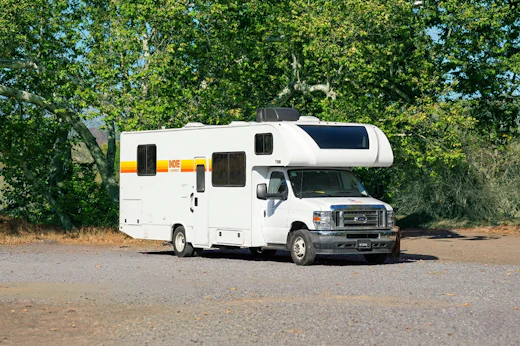
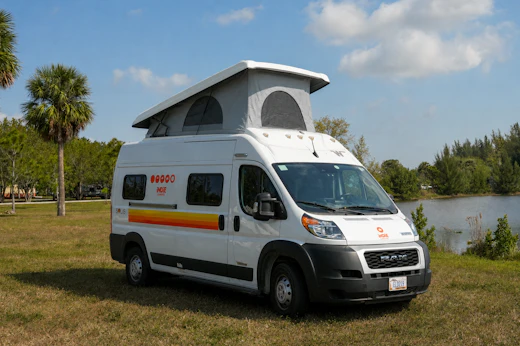
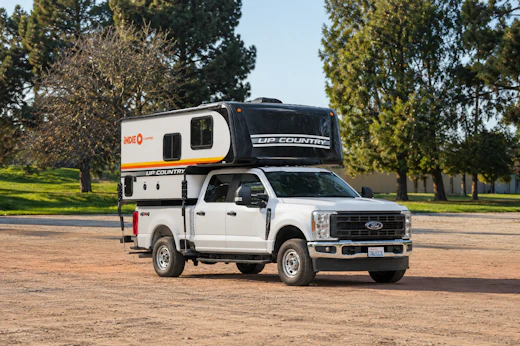
The sleeping capacity of our campervans and motorhomes varies depending on the model and size. Our Class C motorhomes can typically accommodate 4 to 8 people, while our Class B campervans can sleep between 2 to 4 people. Vehicles equipped with a rooftop tent generally have space for around 2 people. For a full breakdown of our models and sleeping capacities, click here.
If you're exploring Toronto in a campervan rental, it's essential to be aware of the country’s official camping regulations. Many natural areas are legally protected, so using designated overnight parking spots or official campsites is strongly recommended. This not only helps preserve the environment but also ensures a safe and enjoyable experience. For more guidance on safety and responsible camping, click here.
We provide three different protection plans to cover any incidents or damages that might occur during your campervan rental. All Indie Campers campervans come with third-party vehicle insurance, and property damage coverage (which varies based on the country). For marketplace rentals, insurance options may differ depending on the host. For further details on campervan insurance, visit this page.
Yes, our search filter makes it easy to rent a campervan close to your location by using a 60km radius system. Depending on where you're searching from, you can quickly find the nearest Indie Campers campervan rental pick-up centre.
Yes, a selected number of Indie Campers RV rentals in Toronto include unlimited mileage, allowing you to explore freely and make the most of your road trip! Please note that unlimited mileage applies exclusively to Indie Campers RVs and is subject to responsible use.

Our Campervans

Our Road Trips Itineraries
“Great service and great vehicle!”
“Just a few issues with the stacionary that were not any trouble to complete our journey and enjoy the ride.”
“Van perfetto per esplorare il Canada ”