Embark on a campervan hire in Greece journey with Indie Campers and uncover ancient wonders, sun-drenched coastlines, and dramatic mountain landscapes. Explore the myth-filled Peloponnese, marvel at the cliff-top monasteries of Meteora, or start your adventure near the sea and island-hop your way through the Aegean. Choose from our versatile fleet of campervans built for all travel styles, each with unlimited kilometres, 24/7 online assistance, and useful extras like beach kits, outdoor tables, or sunshades. Backed by thousands of five-star reviews and a trusted Europe-wide fleet, Indie Campers helps you discover Greece with comfort, freedom, and a spirit of adventure.


Greece's archaeological and natural sites reward exactly the kind of early-arrival, late-departure schedule that a hotel-based trip struggles to deliver. Delphi, Olympia, and Meteora are at their best before the tour buses arrive around 10am and after they leave in the late afternoon; a self-contained vehicle parked at a nearby campsite the night before puts you at the gate for opening time without a pre-dawn transfer from a distant hotel.
The country's motorway network is also genuinely fast and modern on its main arteries, the toll-funded A1 (Athens-Thessaloniki), A2 (Egnatia Odos, running east-west across northern Greece), and A7/A8 into the Peloponnese, which makes long driving days between regions realistic. That same toll system is a real, line-item cost here in a way it isn't in Germany, Belgium, or Finland, so budgeting for it matters (see the toll detail below).
A campervan also solves a genuine seasonal accommodation squeeze. Mainland towns near major sites, Kalambaka below Meteora, Nafplio near the Peloponnese's ancient sites, have limited hotel stock that fills up and prices up sharply from June through August, while a nearby licensed campsite offers a controlled-cost alternative with a kitchen and shower you're not sharing with anyone else.
Spring (April-May): 15-23°C on the mainland, wildflowers across the Peloponnese and Pindus foothills, archaeological sites at their greenest and least crowded. Best for the Peloponnese loop and Delphi; skip if you want warm-water swimming, since the sea is still cool.
Summer (June-August): 26-34°C on the coast, regularly exceeding 35-38°C inland in the Peloponnese and around Meteora in July-August. Peak season nationwide, with the Athens Riviera and Ionian coast beaches at their busiest and hottest. Best for beach time on the mainland coast; skip a Peloponnese-interior or Meteora midday visit in high summer unless you're prepared for serious heat, and plan sightseeing for early morning or early evening instead.
Autumn (September-October): 18-27°C easing through October, the sea still warm enough for swimming into early October, and archaeological sites noticeably quieter than summer. Best for combining beach time with sightseeing in more comfortable conditions; a strong contender for the single best overall window.
Winter (November-March): 6-14°C on the coast, colder and occasionally snow-dusted in the Pindus mountains and around Meteora. Many smaller mainland campsites reduce hours or close for the season. Best for a short Athens-and-Peloponnese cultural trip; skip if extensive camping or beach time is the goal.
Most popular months: June through September for the coast, with April-May and September-October the stronger choice for anyone prioritising the archaeological sites and the Peloponnese or Meteora over beach time.
7 to 10 days: Day 1: pick up in Athens, Acropolis and Plaka, overnight near the coast. Day 2: Cape Sounion (70 km, 1h15) and back. Day 3: cross the Corinth Canal to Mycenae (roughly 120 km from Athens). Day 4: Nafplio and Epidaurus (45 km from Mycenae). Day 5: Olympia (roughly 175 km from Nafplio). Day 6: the Mani peninsula and Diros Caves (roughly 150 km from Olympia). Day 7: return toward Athens via Corinth (roughly 220 km). Days 8-10 (extending): add Delphi on the return leg, roughly 180 km northwest of Athens.
14 to 16 days: Add the full run north to Meteora after Delphi, then extend into the Zagorochoria villages and Vikos Gorge before looping back through central Greece to Athens, giving the trip a genuine south-to-north arc across the mainland.
21+ days: Greece becomes a full mainland circuit. Week one: Athens, the Peloponnese, and the Mani peninsula. Week two: Delphi, Meteora, and the Pindus mountain villages. Week three: Thessaloniki and the Egnatia corridor, or a slower loop back down the Ionian coast through Parga and Preveza to Athens.
Licence and age: a full licence held at least a year is standard; drivers under 23-25 may face a young-driver surcharge. Non-EU holders should carry an International Driving Permit.
Speed limits: motorways 120 km/h, national/rural roads 90 km/h, town centres 50 km/h down to 30 km/h in designated zones. Enforcement includes fixed and mobile radar, though rural road discipline can be inconsistent, so drive defensively.
Toll roads: Greece's motorway network is genuinely tolled, unlike most of Northern Europe in this network. Expect to pay roughly €0.04-0.06 per km on the Egnatia Odos (the A2, running east-west across northern Greece) and similar or slightly higher effective rates on the A1 (Athens-Thessaloniki) and A7/A8 into the Peloponnese; a one-way Athens-to-Thessaloniki drive on the A1 can run roughly €25-35 in tolls alone for a standard passenger vehicle, with campervans and larger vehicles sometimes charged at a higher toll class depending on height and axle count. Carry cash or a card, most stations take both, and factor tolls into your route budget explicitly rather than as an afterthought.
Greece-specific rules: driving standards and lane discipline can be more assertive than in Northern Europe, particularly around Athens; stay alert for scooters filtering between lanes in urban traffic. A warning triangle, reflective vest, and first aid kit are mandatory equipment in the vehicle.
Campervan-specific rules: several historic town centres, including parts of Nafplio's old town and Kalambaka near Meteora, restrict or heavily limit vehicle access on their narrowest streets; park at a designated lot on the edge and walk in. Following the 2025 camping law changes (see below), overnight parking specifically for camping purposes is restricted in many coastal and archaeological-site-adjacent areas, so plan to use licensed campsites rather than assuming a scenic pull-off is fair game.
BAC limit: 0.5 g/L (0.05%) for standard licence holders, dropping to 0.2 g/L (0.02%) for novice drivers (holding a licence less than 2 years) and professional drivers, enforced through routine checkpoints, with fines scaled to the reading and potential licence suspension for higher levels.
7 Days (One Region: The Peloponnese and Athens)
Fuel: Approximately 700-950 km; campervan consumption 20-25 L/100 km = 140-240 litres; at €1.90-€2.05/litre = approximately €270-€490
Motorway tolls: A1/A7/A8 tolls across a Peloponnese loop (Athens-Corinth-Tripoli-Kalamata-Corinth-Athens or similar), estimated €40-€70 for the week depending on exact route and vehicle toll class
Propane: €15-€30 (one refill over 7 days; available at larger EKO, Shell, and BP stations)
Campgrounds: €18-€35/night x 6 nights; a realistic mix of standard sites (€18-€24) and higher-demand coastal sites in peak season (€28-€35) averages €22-€30/night = €132-€180
Activities: Acropolis and Acropolis Museum combined ticket approximately €20/adult x 2 = €40; Mycenae archaeological site approximately €12/adult x 2 = €24; ancient Olympia site and museum approximately €12/adult x 2 = €24; Epidaurus theatre approximately €12/adult x 2 = €24; Diros Caves boat tour approximately €18/adult x 2 = €36; typical archaeology-heavy 7-day Greece budget = €130-€200
Food: €35-€75/day including Greek supermarket self-catering (AB Vasilopoulos, Sklavenitis, Lidl) and 2-3 taverna meals; a village taverna dinner averages €12-€20/person, a seaside restaurant in Nafplio averages €20-€35/person = €245-€525 for 7 days
Budget (per couple, 7 days, vehicle hire not included): approximately €870-€1,250
Mid-range (per couple, 7 days, vehicle hire not included): approximately €1,350-€1,850
Premium (per couple, 7 days, vehicle hire not included): approximately €2,300-€3,100 (adds fine dining in Nafplio and Athens's Plaka district, premium coastal campsite pitches, a private guided Mycenae/Epidaurus tour, extra toll-road driving days)
14 Days (Full Peloponnese, Delphi, and Meteora Circuit)
Fuel: Approximately 1,500-1,900 km = 300-475 litres = approximately €570-€975
Tolls: A1 and A2 (Egnatia Odos) tolls for the Athens-Delphi-Meteora-return leg, plus the Peloponnese loop, estimated €90-€150 for the full 14 days
Propane: €25-€50 (two refills)
Campgrounds: €18-€35/night x 12 nights; average €22-€30/night = €264-€360
Activities: full circuit adds Delphi archaeological site and museum approximately €12/adult x 2 = €24; the Meteora monasteries, most charge a small individual entry fee of approximately €3-€5/adult per monastery, visiting 2-3 = €12-€30 for two; Vikos Gorge and Zagorochoria (free to hike, no entry fee); combined with the Peloponnese sites above = €280-€430 total activities
Food: €35-€75/day x 14 days = €490-€1,050
Budget (per couple, 14 days, vehicle hire not included): approximately €1,700-€2,450
Mid-range (per couple, 14 days, vehicle hire not included): approximately €2,750-€3,800
Premium (per couple, 14 days, vehicle hire not included): approximately €4,600-€6,300 (adds a Zagorochoria mountain-village stay, fine dining across Nafplio, Delphi, and Ioannina, premium campsite pitches throughout, extended toll-road driving into northern Greece)
Greece sits in the middle of the Western European campervan cost spectrum, but with a cost structure genuinely different from the toll-free countries in this network (Belgium, Finland, Germany): motorway tolls are a real, non-trivial line item here, and food costs, especially outside major tourist towns, run noticeably below Northern Europe. The primary cost variables are tolls, given how much of a Peloponnese-to-Meteora circuit runs on paid motorways, and fuel; confirm current prices via fuel-prices.eu and a toll calculator like mydiodia.gr before departure.
Greece has exactly one Indie Campers depot, in Athens, so there is no domestic one-way route: you can't pick up in Athens and drop off in Thessaloniki, Nafplio, or Kalambaka, since none of those cities has a depot. Any loop within mainland Greece returns to Athens.
There is also no practical international one-way from Greece within the confirmed depot network. Greece's nearest neighbouring depots by road, in Croatia (Split, Zagreb) or elsewhere in the Balkans, sit well beyond a comfortable direct drive (Athens to Zagreb runs roughly 1,300+ km through multiple countries), and no confirmed Indie Campers depot exists in Bulgaria, Albania, or North Macedonia along the way. Plan a Greece trip as a loop back to Athens.
For most travelers, a special licence is not necessary to hire a campervan in Greece. A valid driving licence is required, though, to operate any of our vehicles. If you are a non-EU citizen, an International Driving Permit (IDP) may be required in addition to your home country’s driving licence. Additionally, your licence must match the transmission type of the vehicle (manual or automatic). You can find more details about driving licence requirements here.
Yes, our campervans are pet-friendly. Just be sure to add the extra cleaning service when booking. This ensures a professional anti-allergy cleaning is carried out after your trip. Please note that only one pet is allowed per campervan, and it must not exceed 30kg in weight. Also, we are not liable for any legal fees related to traveling with pets. If you’re booking through our marketplace, check the “vehicle rules” section to confirm if the vehicle is pet-friendly.
The sleeping capacity of our campervans and motorhomes varies depending on the model and size. Our Class C motorhomes can typically accommodate 4 to 8 people, while our Class B campervans can sleep between 2 to 4 people. Vehicles equipped with a rooftop tent generally have space for around 2 people. For a full breakdown of our models and sleeping capacities, click here.
If you're exploring Greece in a campervan rental, it's essential to be aware of the country’s official camping regulations. Many natural areas are legally protected, so using designated overnight parking spots or official campsites is strongly recommended. This not only helps preserve the environment but also ensures a safe and enjoyable experience. For more guidance on safety and responsible camping, click here.
We provide three different protection plans to cover any incidents or damages that might occur during your campervan rental. All Indie Campers campervans come with third-party vehicle insurance, and property damage coverage (which varies based on the country). For marketplace rentals, insurance options may differ depending on the host. For further details on campervan insurance, visit this page.
Yes, our search filter makes it easy to rent a campervan close to your location by using a 60km radius system. Depending on where you're searching from, you can quickly find the nearest Indie Campers campervan rental pick-up centre.
Yes, a selected number of Indie Campers RV rentals in Greece include unlimited mileage, allowing you to explore freely and make the most of your road trip! Please note that unlimited mileage applies exclusively to Indie Campers RVs and is subject to responsible use.
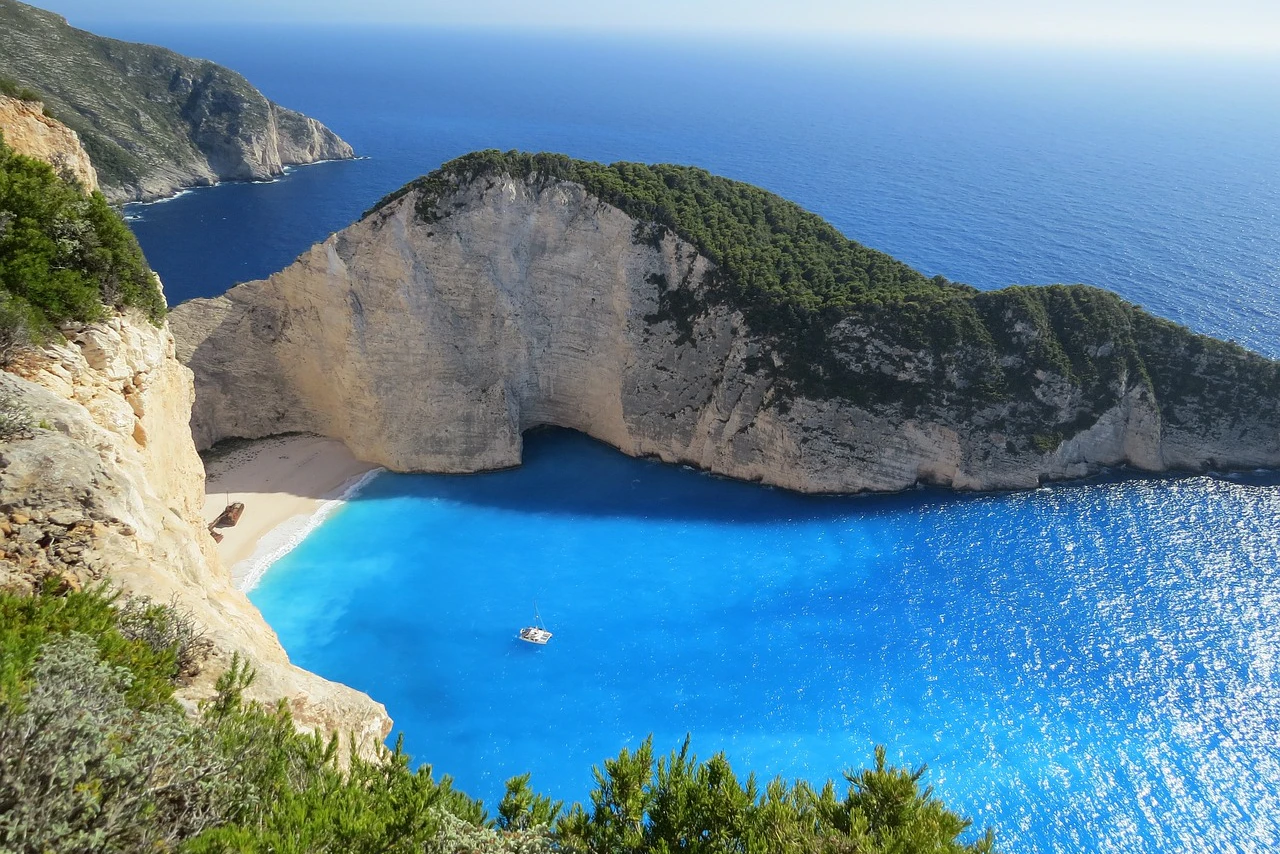
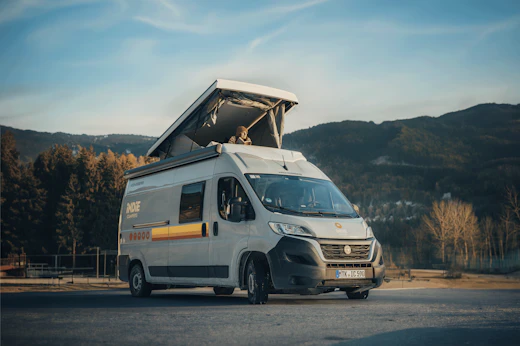
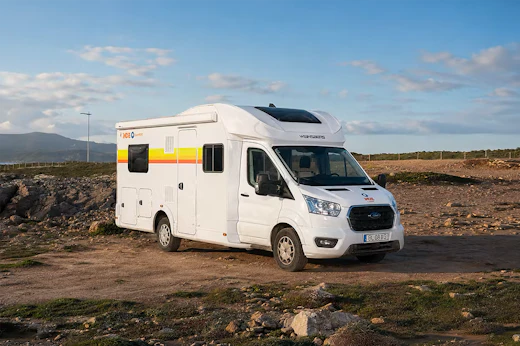
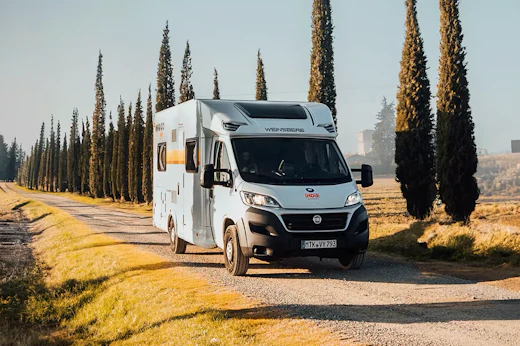
Our Campervans

“AIl viaggio è andato tutto bene solo gli ultimi giorni un problema con il funzionamento della pompa dell’acqua. Complessivamente esperienza positiva e soddisfacente!”
“Het was een geweldige reis met Indie Campers! ”
“Super disponibile, puntuale e corretto”

