Olympic packs three worlds into one park: glacier-capped peaks at Hurricane Ridge, the moss-draped Hoh Rain Forest, and a wild Pacific coastline. Kalaloch, Sol Duc and Hoh campgrounds take campervans (no hookups). Indie Campers’ Seattle depot is about 2.5 hours away including a short ferry, and US-101 loops the entire peninsula.
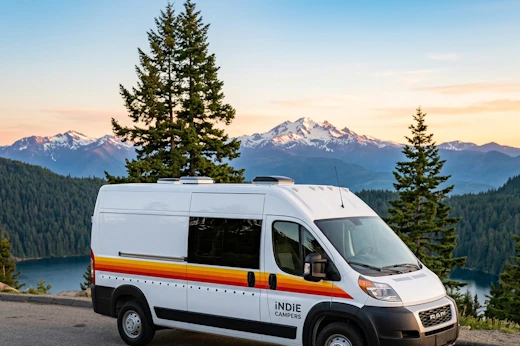
Getting the right vehicle is crucial for this trip. The roads into the park are generally well-maintained, but they can be narrow, winding, and steep in places. Our Seattle depot is your launchpad, located about 87 miles, or a 2.5-hour drive (including the ferry), from the Port Angeles entrance to the park.
Our fleet is chosen for this kind of travel. This park demands a nimble, efficient vehicle that fits into national park campsites, not a 40-foot land yacht. Our Compact and Standard models are ideal for the tight turns on Hurricane Ridge Road and the limited-size spots in campgrounds like Hoh and Sol Duc. They’re built for navigating scenic byways, not just interstates. With unlimited mileage included, you can explore every spur road on the US-101 loop without watching the odometer. And if you run into any trouble, from a flat tyre to a question about the water heater, our 24/7 support team is always on call. For this park, we recommend keeping your campervan under 25 feet to maximise your campground and parking options.
The park has no single through-road. Instead, US-101 circles the peninsula, and you take spur roads to access the different regions. Here are the essential drives for your campervan itinerary.
Hurricane Ridge Road
Key stops: Hurricane Ridge Visitor Centre, Hurricane Hill Trailhead, various overlooks Approx drive time: 45 minutes one-way from Port Angeles (17 miles) Best time to go: A clear morning for the best views of the Olympic range and across the Strait of Juan de Fuca to Canada. Check the road status before you go; it can close due to weather any time of year. Campervan notes: This road is steep and winding with several switchbacks. It is paved and well-maintained, but you'll want to use a low gear on the descent. Campervans up to 35 feet are permitted, but smaller is better for peace of mind. The car park at the top is large but can fill by 10 am on summer weekends.
Hoh Rain Forest and the Pacific Coast
Key stops: Hoh Rain Forest Visitor Centre, Hall of Mosses Trail, Ruby Beach, Kalaloch Beach Approx drive time: The drive from Forks to the Hoh Visitor Centre is about 50 minutes (31 miles). Ruby Beach is right off US-101. Best time to go: Year-round, but the rain forest is at its most lush and dramatic during the spring and autumn wet seasons. Go early to get a parking spot at the visitor centre. Campervan notes: The Upper Hoh Road is a straightforward, mostly flat drive. The challenge here is parking. The visitor centre lot is notoriously small and often has a line of cars waiting to enter by mid-morning. Arrive before 9 am or after 4 pm. Ruby Beach and the Kalaloch overlooks have dedicated campervan parking spots, but they are limited.
Lake Crescent and Sol Duc Valley
Key stops: Lake Crescent Lodge, Marymere Falls Trail, Storm King Ranger Station, Sol Duc Hot Springs Resort Approx drive time: US-101 traces the shore of Lake Crescent for about 12 miles. The turnoff for Sol Duc Hot Springs Road adds another 25-minute, 12-mile drive each way. Best time to go: Summer for swimming and paddling in the lake. Autumn for the foliage along the shore. Campervan notes: US-101 around the lake is winding but wide enough for any campervan. The Sol Duc road is narrower but manageable. The main draw for campervaners is the Sol Duc Hot Springs Resort Campground, one of the few in the park that takes reservations and has a dump station.
Finding a place to park your campervan overnight is the most critical part of planning. The park has over a dozen campgrounds, but most are first-come, first-served, and all of them are for dry camping (no hookups). Campervan length limits are strictly enforced. Always check the official NPS website for current conditions and closures.


Your experience in Olympic will be dramatically different depending on the season. The park is open year-round, but access to certain areas changes with the weather.
Summer (June to September): This is peak season for a reason. You'll find the warmest temperatures, the driest weather, and all park roads, including Hurricane Ridge, are typically open. It's the best time for high-country hiking. The trade-off is the crowds. Campgrounds are full, car parks overflow, and you'll need to book any reservable sites months in advance. Expect daytime highs of 18-24°C.
Autumn (October to November): The crowds thin out, and the forests show their autumn colour, especially the vine maples in the river valleys. It's a quiet time to visit, but the rainy season begins in earnest. Hurricane Ridge Road may have temporary closures. Be prepared for wet weather and temperatures from 7-16°C.
Winter (December to March): The park transforms. The mountains get a deep blanket of snow, and Hurricane Ridge becomes a destination for snowshoeing and skiing. The rain forests are at their most vibrant green. Many campgrounds close, and Hurricane Ridge Road is typically only open on weekends, weather permitting. You must carry tyre chains. This is for the well-prepared campervaner. Coastal temperatures are mild, usually 2-7°C.
Spring (April to May): A season of transition. Waterfalls are roaring with snowmelt, and the forests are bursting with new life. It's still very wet, but you'll get breaks of sunshine. It's a great time for viewing wildlife, including migrating grey whales and Roosevelt elk. Some campgrounds begin to reopen, but the high country is still snow-covered.
Navigating the camping system is key to a successful campervan trip. A little planning goes a long way. Most visitors try to 'do' the whole park in three days. It's a mistake. Pick one region: coast, forest, or mountain: and actually see it.
Booking National Park Campgrounds
Yes. Indie Campers’ Seattle depot is about 2–3 hours from the park (a Puget Sound ferry shortens the drive). US-101 makes a full loop around the peninsula, ideal for a one-way-style campervan circuit.
Yes, but the 17-mile Hurricane Ridge Road is steep with switchbacks — use low gear and check seasonal closures (it can be day-use or gated in winter). The Hoh and coastal roads are gentler and campervan-friendly.
The Northwestern Tip: Neah Bay and Cape Flattery
Key stops: Makah Museum, Cape Flattery Trailhead Approx drive time: About 1.5 hours (75 miles) one-way from Port Angeles to Neah Bay on WA-112. Best time to go: Summer, when the road is in its best condition and the coastal views are clearest. Campervan notes: This is a long day trip. The road (WA-112, the Strait of Juan de Fuca Highway) is scenic but very narrow and twisting in sections. It's doable in a smaller campervan, but take it slow. You must purchase a Makah Recreation Pass ($20 per vehicle, valid for the year) in Neah Bay to access Cape Flattery. The parking at the trailhead is small and not designed for large rigs.
For full hookups, you'll need to look at private campervan parks in towns like Port Angeles, Forks, or Sequim. They are a great option for a night or two to recharge batteries, dump tanks, and do laundry.
If you need guaranteed hookups (electric, water, sewer), you'll need to stay at a private campervan park outside the park. Good options are clustered around Port Angeles, Sequim, and Forks. Prices are higher, typically ranging from $50 to $80+ per night, but they offer amenities like Wi-Fi, laundry, and showers.
Waste Disposal and Water
This is a critical piece of campervan logistics. Dump stations inside the park are scarce. Your options are: - Sol Duc Hot Springs Resort Campground: Has a dump station for registered guests. - Kalaloch Campground: Has a dump station. - Public/Private Facilities: The towns of Forks and Port Angeles have public or private dump stations (some at petrol stations or other campervan parks) available for a fee, usually around $10-$15. Using an app like iOverlander or Good Sam can help you locate them. Always fill your freshwater tank before you head into a remote area of the park.
Kalaloch, Sol Duc, Hoh, Fairholme and others take campervans without hookups, with length limits (often around 21–35 ft) that vary by campground. For hookups, use private parks in Port Angeles or Forks.
June through September for the driest weather and open mountain roads. The rain forest lives up to its name the rest of the year, and Hurricane Ridge Road has winter restrictions.