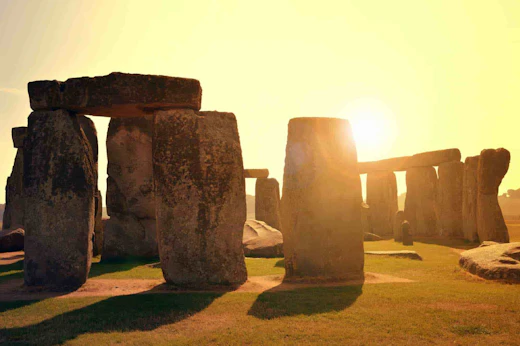
One of the most famous (and mysterious) monuments in the country is a can’t-miss on any English heritage road trip. Stonehenge has captivated the world’s imagination for centuries, baffling historians and archaeologists alike. Where did the stones come from? Who built Stonehenge, and why?
Modern carbon dating places its construction sometime between 3000 BC and 2000 BC, while theories about the monument’s actual purpose are still up for debate.
Visiting Stonehenge is easier than ever thanks to the new, modern Visitor Centre. At just over an hour’s drive from London, we recommend enjoying a leisurely brunch in the city before setting off.
Grab an audio guide and take your time strolling around the iconic stone circle, perhaps forming your own theory as to its original purpose!
Explore an extensive collection of museum-quality artefacts inside the exhibition and don’t miss the nearby Neolithic village. An important historic landmark, Stonehenge is the perfect start to your itinerary.
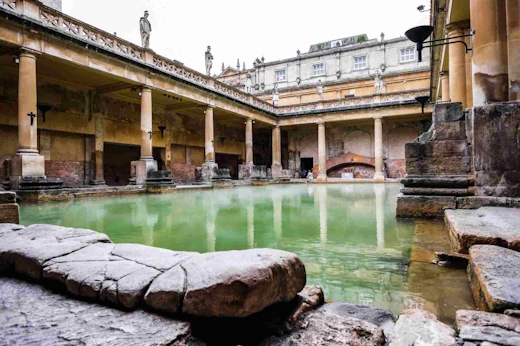
Bath is perhaps one of the country’s most picturesque cities and a perfectly relaxing stop on any heritage road trip around England. Its iconic, honey-coloured Bath stone is found throughout the city’s beautifully preserved Georgian architecture.
Also known for its natural hot springs, Bath’s Roman-era bathhouses and modern spas are an indulgent treat, while its many museums will tempt you to stick around for a few days.
Bath’s iconic Georgian architecture is on full display at Royal Crescent, a stunning half-circle row of 30 Grade I-listed terrace houses with gleaming, stone façades. Plop down on the grass opposite in Royal Victoria Park to really take in the full view!
In the centre of town, the beautifully restored Roman Baths are a must, while the nearby Thermae Bath Spa is where you can actually enjoy the thermal waters yourself.
Among Bath’s many fine museums and galleries, The Holburne is another architectural highlight with an eclectic art collection and events programme.
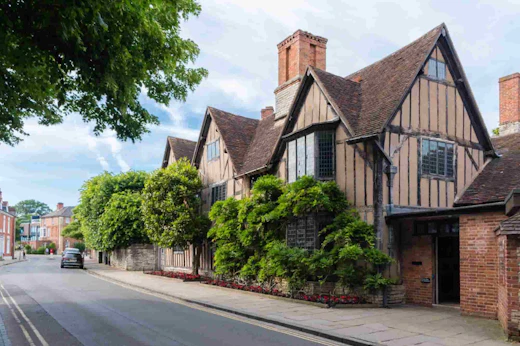
Following the River Avon north-east, you'll arrive in Stratford-upon-Avon, a medieval market town of huge cultural importance to Britain. Born here in the 16th century was none other than William Shakespeare, whose sonnets and plays are known the world over, from the tragic romance Romeo and Juliet to the dramatic Hamlet.
Stratford-upon-Avon is well worth including on any English heritage road trip due to the Bard’s huge significance to the modern English language and culture. That, and the town itself just oozes Ye Olde English charm!
Visit Shakespeare’s childhood home and the nearby Holy Trinity Church, where the great playwright was both baptised and buried.
Just outside town, Anne Hathaway’s Cottage (no, not that Anne Hathaway) is the former family home of Shakespeare’s beloved wife, now a beautifully preserved example of traditional wattle-and-daub architecture. On the banks of the River Avon, catch a performance of one of his plays at the Royal Shakespeare Theatre.
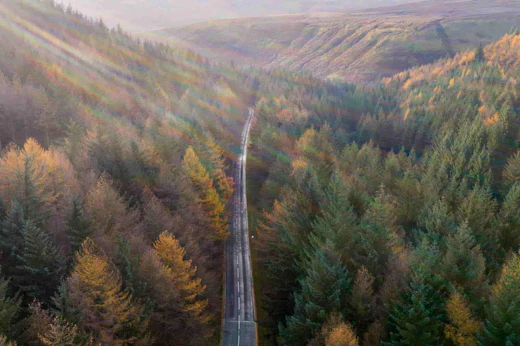
Founded in 1951, the Peak District National Park was the first of Britain’s 15 national parks. Covering about 1,440 square kilometres across five counties, the Peak District boasts scenic landscapes, historic houses and numerous campervan sites, making it ideal for a cultural road trip.
Driving up from Stratford-upon-Avon, enter the national park near Chatsworth House. This stately home is the ancestral seat of the Duke and Duchess of Devonshire, complete with lavish gardens, a play area and an incredible art collection.
As you leave, stop off in the nearby town of Bakewell to indulge your sweet tooth at the home of the traditional Bakewell pudding, or pop by Haddon Hall, another historic estate with grand Elizabethan gardens.
It’s worth planning 2–3 days in the area to fully enjoy pretty villages like Buxton or to crack on with one of the many scenic hikes, like the popular Mam Tor.
Leaving the rolling hills and postcard-perfect villages of the Peak District behind, your English heritage road trip’s final stop in Manchester marks a return to modern-day England.
This vibrant city centre has quickly become an ‘it’ cultural destination thanks to its thriving food scene, top-notch galleries, powerhouse football club and more. Either return your campervan or simply use public transport to get about.
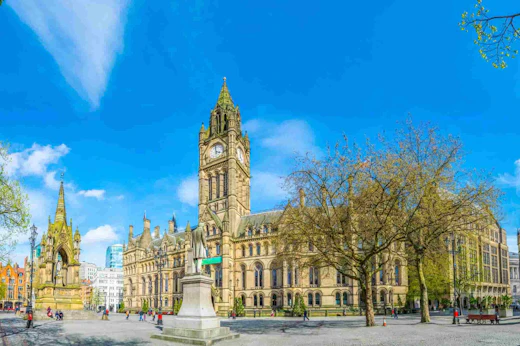
One of the most stunning examples of Neo-Gothic architecture is Manchester Town Hall, known for its 85-metre clock tower and ornate ceilings. A short walk away, the Manchester Art Gallery is free to enter and home to an impressive permanent collection.
The Northern Quarter is the creative heart of the city, with colourful street art, cool hidden bars and hip independent shops. Music purists should make a pilgrimage to Salford Lads’ Club to recreate The Smiths’ iconic album photo, while football fans can’t miss Old Trafford Stadium, even when Manchester United are away.