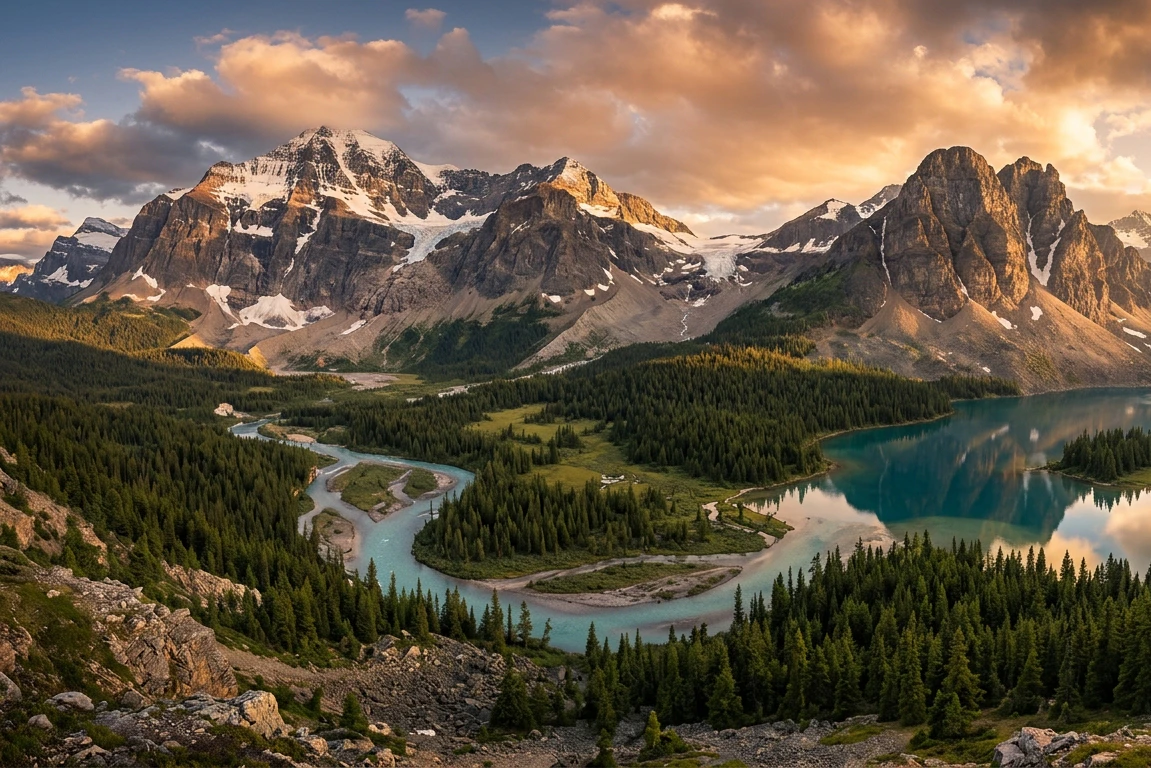
Jasper is the largest national park in the Canadian Rockies, linked to Banff by the Icefields Parkway past the Columbia Icefield, Athabasca Falls and Maligne Lake. Whistlers Campground has full hookups; Wapiti and Wabasso take campervans with limited services. Indie Campers' Calgary depot is about a four-hour drive, most scenically via Banff and the Icefields Parkway.
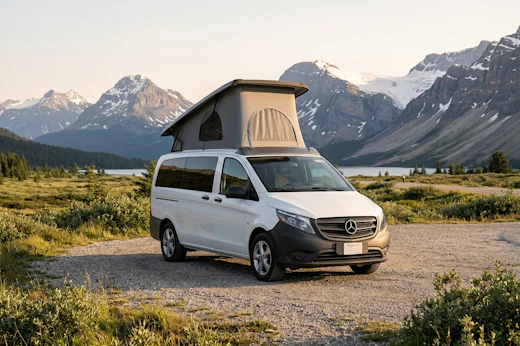
We own and maintain our fleet; we aren't a broker. When you call our 24/7 support line from a remote stretch of Highway 93A, you’re talking to our team, people who know your specific vehicle. Our model is built for the kind of self-sufficient travel Jasper demands.
The closest Indie Campers depot is in Calgary, a 414-kilometer (257-mile) drive to the Jasper townsite. That’s about four and a half hours. Our advice: don’t just blast up the highway. Pick up your campervan in Calgary, drive west to Banff, and then head north on the Icefields Parkway. It turns a simple transit day into one of the best road trips on the planet.
All our campervans are designed to fit into national park campgrounds, with most of our fleet well under the 35-foot length that can be tricky on tighter roads. For Jasper, a nimble van like our Solis or a compact campervan is ideal. You get comfort without piloting a land yacht. Unlimited kilometres is standard, because you shouldn't have to count kilometres when you're exploring a place this vast.
Driving a campervan in Jasper is straightforward. The main roads are wide, well-maintained, and built for traffic. The challenge isn't the driving; it's the constant temptation to pull over for another photo. These are the core routes.
Icefields Parkway (Highway 93)
This is the main event: a 232-kilometer (144-mile) road connecting Lake Louise in Banff to Jasper. Key stops include the Columbia Icefield, Athabasca Falls, and Sunwapta Falls. Most people drive this in a single day, which treats one of the world's great drives like a commute. Budget two full days, minimum. Campervan parking is available at all major viewpoints, but it fills up by 11 AM in July and August. Get an early start.
Maligne Lake Road
A 46-kilometer (29-mile) out-and-back drive from Jasper town. This road takes you past Maligne Canyon to the turquoise Maligne Lake. Watch for moose and bears along the roadside, especially in the evening. The road is campervan-friendly, but the parking lot at Maligne Lake gets tight. Arrive before 10 AM or after 3 PM to find a spot more easily.
Highway 93A
This quieter, older highway runs parallel to the Icefields Parkway for about 24 kilometres (15 miles). It’s a narrower, slower road, which is exactly why you should take it. It offers better chances for spotting wildlife and accesses the trailhead for the Edith Cavell Meadows hike. There's a 25-foot length restriction for the final approach to the trailhead, so check your vehicle size.
In Jasper National Park, you must stay in a designated campground. It’s illegal and strictly enforced by Parks Canada rangers to pull over and sleep on the side of the road or in a viewpoint parking lot.
Fortunately, Jasper has some of the best campgrounds in the entire park system. They are your destination, not just a place to park. All reservable campsites are booked via the Parks Canada Reservation Service, and they fill up months in advance for summer weekends.


Your experience in Jasper is deeply tied to the season you visit. It’s a series of trade-offs between weather, crowds, and access.
Summer (June to August): This is peak season. The weather is warmest, with daytime highs around 22°C (72°F), and all roads, trails, and attractions are open. The downside? Crowds and bugs. Campgrounds are fully booked, parking lots fill up early, and you'll need reservations for everything. It's spectacular, but requires significant planning.
Fall (September to October): This can be the sweet spot. The crowds thin out after Labor Day, the aspen trees turn a brilliant gold, and the air is crisp and cool. The elk rut is in full swing, offering excellent wildlife photography opportunities. The risk is an early-season snowfall, especially at higher elevations. Some services start to close after Canadian Thanksgiving (second Monday in October).
Spring (April to May): A time of transition. Lower elevation valleys begin to thaw, but the high country and many trails are still buried under snow. The Icefields Parkway might have temporary closures. It’s a quieter time to visit, and you might see bears emerging from hibernation. It's a gamble on the weather, but can be rewarding.
Winter (November to March): For the well-prepared, it's magical. Jasper is cold, with temperatures often dropping below -20°C (-4°F). Most campgrounds are closed, except for a section of Wapiti. The Icefields Parkway requires snow tyres by law. The frozen canyons, silent forests, and stargazing in the dark sky preserve offer a completely different, profound experience.
Budgeting for a Jasper campervan trip involves more than just the hire cost. You'll need to account for park entry, campground fees, fuel, and activities.
A daily pass for Jasper National Park costs $21.00 CAD per family/group in a single vehicle. If you're staying for a week or visiting multiple national parks (like Banff), the Parks Canada Discovery Pass is a better value at $145.25 CAD for a year.
Campground fees vary by service level:
For summer travel, booking is essential. If you plan to visit between mid-June and early September, you must book your campsites months in advance. For a long weekend in August, you might need to book within minutes of the reservation system opening for the season.
Yes. Indie Campers’ Calgary depot is about 4 hours away, and the drive up through Banff and the Icefields Parkway is one of the great Rockies road trips.
Whistlers Campground near Jasper town has full hookups; Wapiti and Wabasso take campervans with power or no services. Book ahead for July-August.
Yes — the 230 km Icefields Parkway connects them and is campervan-friendly, with pull-outs for glaciers, waterfalls and wildlife. Watch for elk and bighorn sheep on the road.
June through September, when the Icefields Parkway and high campgrounds are open. Winter is beautiful but most services close and roads need care.