Embark on a campervan hire in Austria journey with Indie Campers and discover alpine peaks, crystal-clear lakes, and baroque cities filled with music and history. Wind through the Tyrol mountains, explore the beauty of Hallstatt and the Salzkammergut lakes, or cruise the scenic Grossglockner High Alpine Road. Choose from Indie Campers' range of reliable campervans, all equipped with unlimited kilometres, flexible one-way travel, 24/7 online assistance, and seasonal extras like snow chains, heating kits, or outdoor furniture. Backed by thousands of five-star reviews and a 4.8-star rated fleet trusted across Europe, Indie Campers helps you experience Austria's mountain magic and cultural richness with comfort and ease.


Austria's defining landscapes sit at elevations and in valleys that a hotel-based, single-city trip cannot properly reach. The Grossglockner High Alpine Road's Edelweissspitze viewpoint, at 2,571 metres, is a genuine mountain summit experience reachable entirely by paved road, something few countries offer without a cable car or hike; a campervan overnight at one of the road's approach campgrounds means catching the early morning light on the Pasterze Glacier before the day-trip tour buses arrive from Salzburg or Zell am See. The Salzkammergut's smaller lake villages, Hallstatt in particular, see day-tripper crowds that peak between 10am and 4pm; staying overnight at a lakeside campground means experiencing Hallstatt's UNESCO old town in the early morning and evening, when the town square empties out. The high Alpine valleys of Tyrol, including the Ötztal and Zillertal, have genuine year-round communities with limited hotel capacity that books out for the summer hiking and winter ski seasons alike; campground infrastructure absorbs demand these small hotel bases cannot.
The cost case in Austria is consistent and Alpine-specific: hotel pricing in Salzburg, Innsbruck, and the more developed Salzkammergut lake towns runs high relative to the country's size, typically €150-320 a night in July, while campground pitches in the same regions run €25-45, and many mountain valleys have Alm-style farm campsites and service areas at €10-20. Applied across a 10-night circuit covering the Salzkammergut, the Grossglockner, and Tyrol, the accommodation differential alone is typically worth €1,300-2,600, before accounting for the savings of self-catering in a country where restaurant pricing in the major tourist towns has climbed steadily.
Austria's infrastructure is built to support this kind of travel at a standard matched by few other Alpine countries. Approximately 500 campgrounds are distributed across all nine federal states, including genuine density in the more remote western provinces of Tyrol and Vorarlberg, hundreds of kilometres from the Vienna depot but well within reach of a proper multi-week loop. The road network, including the high Alpine pass roads administered by companies like Grossglockner Hochalpenstraßen AG, is engineered and maintained to a standard that keeps even 2,500-metre passes safely driveable through the summer season. The national vignette system replaces per-transaction tolling with a flat annual, 10-day, or 2-month sticker, a genuinely simpler system than France's per-kilometre autoroute tolls or Norway's electronic bomringer. Combined with a long-standing domestic culture of Alpine road tripping and camping, Austria is one of the best-organised countries in Europe for a campervan itinerary, even one that starts and ends at a single depot.
Here's what sets Indie Campers apart from other Austria hire companies:
Unlimited kilometres — Drive the full loop out to the Grossglockner High Alpine Road and Tyrol and back to Vienna, or a full Salzkammergut lakes circuit, without watching the odometer. Most competitors cap you at 200-250km per day, a real constraint on a country where the western regions sit 400-500km from the only depot.
A dedicated Vienna depot — A single, well-equipped pickup and drop-off point in the capital, positioned for an immediate start into the Wachau Valley and easy access to Austria's full Alpine range as a loop.
One-way hire across our broader European network — While Austria itself has a single depot, cross-border one-way drop-offs are available into neighbouring countries such as Italy, extending your Austrian loop into a wider European trip.
24/7 road assistance — Included on every booking, regardless of which province or how high up a mountain pass you are when something goes wrong.
Basic Protection Plan included — Covered from day one. Optional upgrades available.
Flexible cancellation available — Cancel up to 31 days before pickup without penalty, useful given how weather-dependent the high Alpine pass roads can be.
Book now, pay later — Secure your dates today; full payment isn't due until closer to departure.
The Grossglockner High Alpine Road (48km, 1-2 days recommended)
Start: Fusch → End: Heiligenblut (loop back toward Vienna via Salzburg)
Passes through: Ferleiten, the Edelweissspitze, Fuscher Törl, Kaiser-Franz-Josefs-Höhe
Austria's single most famous road, built between 1930 and 1935 specifically as a tourist route through the Hohe Tauern massif, climbing to 2,504 metres with 36 hairpin bends and a dedicated 2,571-metre detour to the Edelweissspitze viewpoint. The road is a private toll road, separate from the national vignette, and remains one of the highest paved through-routes in the Alps.
Highlights: The Pasterze Glacier viewing point at Kaiser-Franz-Josefs-Höhe; the Edelweissspitze 360-degree summit viewpoint; the alpine ibex and marmot populations visible from the road's higher sections
Best season: Mid-May through October; check grossglockner.at for current opening dates before departure, as the exact window shifts year to year with snowfall
One-way option: No, Austria has a single depot in Vienna; drive this as a loop, typically combined with the Salzkammergut on the outbound or return leg
The Salzkammergut Lakes Circuit (200km, 4-6 days recommended)
Start: Salzburg area → End: Salzburg area (loop, approached from and returning to Vienna)
Passes through: Fuschl am See, St. Wolfgang, Bad Ischl, Hallstatt, Gosau
A loop through Austria's most internationally recognised lake district, connecting the Wolfgangsee, Hallstättersee, and the smaller Fuschlsee and Gosausee. The route alternates between lakeside village stops and short mountain detours, with the Hallstatt UNESCO old town as its cultural anchor and the Dachstein glacier visible from several points along the eastern leg.
Highlights: Hallstatt's lakeside old town; the Schafberg cog railway from St. Wolfgang; the Dachstein Ice Cave near Obertraun
Best season: June through September for lake swimming and full village access; May and late September for reduced crowds
One-way option: No, this is a loop within the wider trip; return to the Vienna depot via the Wachau Valley or continue on to the Grossglockner
The Timmelsjoch High Alpine Road (approx. 90km, 2-3 days recommended)
Start: Innsbruck area (via Ötztal) → End: South Tyrol, Italy
Passes through: Sölden, the Ötztal glacier road, the Timmelsjoch pass
One of the highest paved passes in the Eastern Alps at 2,509 metres, connecting Austria's Ötztal valley to Italy's South Tyrol across the main Alpine ridge. The route passes through Sölden, a genuine year-round glacier ski resort, before the final high-altitude ascent to the border crossing itself, which includes a small museum built into the pass architecture. Given the distance from Vienna, this is best built into a 14+ day itinerary rather than driven as a standalone trip.
Highlights: The Ötztal glacier road above Sölden; the Timmelsjoch border museum; the descent into South Tyrol's distinctly different, more Italian-influenced Alpine landscape
Best season: Late June through mid-October; the pass typically closes completely outside this window
One-way option: Yes, this is the one genuine one-way option out of Austria available from this route, crossing into Italy. Confirm cross-border authorisation at indiecampers.com; you will need to return the vehicle at an Italian depot or arrange transport back to Vienna.
The South Styrian Wine Road and Wörthersee Circuit (150km, 4-5 days recommended)
Start: Graz area → End: Graz area (loop, approached from and returning to Vienna)
Passes through: Graz, the Südsteirische Weinstraße, Klagenfurt, the Wörthersee
Austria's warmest and least internationally known road trip region, combining the rolling vineyard hills of southern Styria with Carinthia's warm lakes. Being the closest of the major regional loops to Vienna after the Wachau, this works well as a shorter add-on for travellers who don't have time for the full Salzkammergut and Grossglockner circuit.
Highlights: The Südsteirische Weinstraße vineyard villages, particularly around Gamlitz and Ehrenhausen; the Wörthersee lakeside towns of Pörtschach and Velden; Graz's Schlossberg viewpoint
Best season: June through September for lake swimming; September and October for the wine harvest
One-way option: No, standard loop returning to the Vienna depot
The Danube Wachau Valley Wine Route (40km, 2-3 days recommended)
Start: Vienna → End: Vienna (loop)
Passes through: Krems, Dürnstein, Weissenkirchen, Melk
A short, easy introduction to Austrian road tripping along the Danube's UNESCO-listed vineyard valley, combining wine tasting with the baroque grandeur of Melk Abbey and the ruined castle above Dürnstein where Richard the Lionheart was once imprisoned. The closest genuine road trip to the Vienna depot and a natural first or last leg of any Austrian itinerary.
Highlights: Melk Abbey; the Dürnstein castle ruins; the Wachau apricot orchards (blossom in April, harvest in July)
Best season: April through October; May for the apricot blossom, September and October for the wine harvest
One-way option: No, standard loop from Vienna depot
The Full Austrian Traverse: Vienna Loop via Salzburg, the Grossglockner, and Tyrol (approx. 1,100km return trip, 14-16 days recommended)
Start: Vienna → End: Vienna (loop)
Passes through: The Wachau Valley, Salzburg, the Salzkammergut, the Grossglockner High Alpine Road, the Zillertal, Innsbruck
The comprehensive Austrian itinerary, connecting the Danube Valley, the Salzkammergut lakes, the Hohe Tauern high Alps via the Grossglockner, and Tyrol's western mountains in a single continuous loop that starts and ends at the Vienna depot. Because Austria operates only one depot, this loop, rather than a one-way traverse, is how a full national circuit works in practice.
Highlights: Melk Abbey; Hallstatt; the Grossglockner's Edelweissspitze; the Zillertal valley villages; Innsbruck's Nordkette cable car
Best season: June through September for full access to the Grossglockner and Timmelsjoch high passes
One-way option: No, a loop returning to Vienna; extend into Italy via the Timmelsjoch for a genuine cross-border one-way instead
Spring (April through May)
National picture: Vienna and the Danube Valley warm comfortably by April; the Alpine regions further from the depot remain snow-affected at altitude, and the high pass roads (Grossglockner, Timmelsjoch) typically don't open until mid-May at the earliest.
Regional variation:
Best for: Vienna and Wachau-based sightseeing; budget-conscious travellers; avoiding peak Salzkammergut and Alpine crowds
Skip if: The Grossglockner or Timmelsjoch high pass roads are the trip's priority
Booking note: Campsites are bookable with minimal lead time outside the Easter holiday week
Summer (June through August)
National picture: Peak season nationwide and the only window in which the Grossglockner, Timmelsjoch, and every Salzkammergut lake and mountain trail are simultaneously at full access. July and August are also Austria's warmest months, with lake water temperatures in the Salzkammergut and Carinthia reaching genuinely comfortable swimming levels.
Regional variation:
Best for: Families; full access to every high Alpine road and lake in the country simultaneously; anyone with the 14+ days needed to loop the whole country from Vienna
Skip if: Avoiding Hallstatt's day-tripper crowds is a priority; visit before 10am or after 4pm regardless of season, but especially in July and August
Booking note: Book Salzkammergut and Grossglockner-area campsites 2-3 months ahead for July and August
Autumn (September through October)
National picture: Widely considered an excellent season for a comprehensive Austrian circuit: the summer crowds recede through September, the wine harvest runs in the Wachau and southern Styria, and the high Alpine roads typically remain open through most of September before closing progressively through October.
Regional variation:
Best for: Photographers targeting the Grossglockner's clear autumn visibility; wine harvest tourism in the Wachau and Styria; anyone wanting full route access with dramatically reduced crowds
Skip if: Lake swimming is the trip's priority; water temperatures drop quickly after early September
Booking note: 4-6 weeks ahead is typically sufficient outside the early September shoulder crowd
Winter (November through March)
National picture: Most Alpine pass roads (Grossglockner, Timmelsjoch) close completely, and much of the country's campground network scales back or closes for the season. This is ski season in Tyrol and parts of Salzburg province, and Vienna and Salzburg both run well-regarded Christmas markets from late November.
Regional variation:
Best for: Christmas market touring in and around Vienna; a shorter winter trip that doesn't require the long haul out to Tyrol
Skip if: A campground-based itinerary reliant on the high Alpine roads or Salzkammergut lakes is the plan; most of this infrastructure is closed
The most popular months for Austria campervan hire are June, July, and August.
7 to 10 Days: One Region in Depth
A week is enough to properly cover the Wachau Valley plus one further region reachable within a half-day's drive of Vienna: the Salzkammergut lakes, or the South Styrian Wine Road and Wörthersee circuit. It is not enough to also reach the Grossglockner or Tyrol and back with any real time on the ground; those regions sit 4-5 hours from the depot each way, and a week spent reaching them leaves little time to actually stop. Be honest about this distance when planning a shorter trip: Austria's single depot in Vienna means every region further west costs real transit time both ways.
Best approach: The Wachau Valley plus one nearby region
Vienna, the Wachau, and the Salzkammergut (approx. 650km return trip, 8 days)
Day 1: Vienna depot → provision, city walk, overnight near Vienna
Day 2: Vienna → the Wachau Valley (Krems, Dürnstein, Melk, 80km), overnight near Melk
Day 3: Melk → Salzburg (approx. 200km, 2 hours), old town walk, overnight near Salzburg
Day 4: Salzburg → Fuschl am See → St. Wolfgang (35km), Schafberg cog railway, overnight St. Wolfgang
Day 5: St. Wolfgang → Bad Ischl (20km), imperial villa, overnight Bad Ischl
Day 6: Bad Ischl → Hallstatt (20km), early morning old town walk before crowds, overnight near Obertraun
Day 7: Obertraun → Dachstein Ice Cave → begin the return toward Vienna via Linz (approx. 250km)
Day 8: Return Vienna depot (approx. 190km, 2 hours)
Vienna and Southern Austria: Styria and Carinthia (approx. 550km return trip, 7 days)
Day 1: Vienna depot → provision, overnight near Vienna
Day 2: Vienna → Graz (approx. 200km, 2 hours), old town and Schlossberg, overnight near Graz
Day 3: Graz → the Südsteirische Weinstraße wine villages (40km), overnight near Gamlitz
Day 4: Gamlitz → Klagenfurt (approx. 100km)
Day 5: Klagenfurt → Wörthersee (Pörtschach, Velden), lake swimming, overnight at the Wörthersee
Day 6: Wörthersee → begin the return toward Vienna via Graz (approx. 200km)
Day 7: Return Vienna depot (approx. 200km, 2 hours)
14 to 16 Days: The Full Salzkammergut, Grossglockner, and Alpine Loop
Two weeks is the realistic minimum for reaching the Grossglockner and returning to Vienna with proper time in the Salzkammergut along the way, and it's the tier at which an Austria trip starts to deliver the country's full range from a single Vienna pickup.
Vienna to the Grossglockner and Back (approx. 900km return trip, 14 days)
Days 1-2: Vienna depot → the Wachau Valley wine route → continue toward Salzburg (approx. 280km total)
Days 3-5: Salzburg and the Salzkammergut lakes circuit, as per the 8-day itinerary above
Days 6-8: Salzburg → the Grossglockner High Alpine Road → Zell am See or Heiligenblut
Days 9-10: Zell am See → begin the return leg, with an optional detour into East Tyrol
Days 11-13: Return east via Salzburg and Linz, with time for a second look at any Salzkammergut village missed on the outbound leg
Day 14: Return Vienna depot
21 Days or More: The Complete Austrian and Cross-Border Loop
A three-week itinerary is the tier at which Tyrol and a genuine cross-border extension become realistic from a single Vienna depot: cover the Wachau and Salzkammergut (5-6 days), the Grossglockner and Hohe Tauern (3-4 days), continue west into Tyrol including the Zillertal and Ötztal (4-5 days), and take the Timmelsjoch High Alpine Road across into Italy's South Tyrol as a one-way extension (returning the vehicle at an Italian depot, confirmed at booking) or loop back east to Vienna via the Inn Valley and Salzburg (4-6 days). Total driving distance for a full loop back to Vienna is approximately 1,600-1,900km with regional detours; a one-way finish into Italy shortens the return distance but requires cross-border authorisation arranged in advance.
Vienna
For travellers specifically targeting Tyrol or the western regions, Munich Airport (MUC), Germany sits approximately 480km / 4.5 hours from Innsbruck and closer to the western half of an Austrian loop than Vienna is, but is not an Indie Campers pickup or drop-off point; it is listed here for context only. All Indie Campers Austria hire begin and end at the Vienna depot.
Minimum age: 21 years. Confirm any young driver surcharge at the time of booking.
Licence requirements: EU licence holders require no IDP. Non-EU holders should carry an IDP alongside their national licence, obtained before departure.
Credit card and deposit: A credit card in the primary driver's name is required at pickup. Debit and prepaid cards are not accepted. The deposit amount varies by vehicle class and protection plan; confirm the exact figure during booking at indiecampers.com.
Vignette and GO-Box: Confirm at pickup whether your vehicle requires the standard sticker vignette or a GO-Box electronic toll device, which depends on gross vehicle weight. Larger motorhomes over 3.5 tonnes are typically GO-Box category; failing to register the correct system before entering the Autobahn network carries a substantial fine, and every loop out of Vienna runs on the Autobahn.
Grossglockner toll: The High Alpine Road toll is separate from both the vignette and GO-Box system and is paid directly at the road's toll station. Confirm current pricing at grossglockner.at before departure, as rates are reviewed annually.
Plan the loop distance honestly: since every Austrian trip starts and ends in Vienna, build in the return trip driving time to whichever regions you want to see. A Grossglockner or Tyrol loop adds a minimum of 700-1,000km return trip before any local exploring; a Wachau-and-Styria loop closer to Vienna keeps total driving under 600km.
National park and attraction passes: Austria has no unified national park pass; entry to Hohe Tauern and the country's other national parks is generally free, with specific activities (cable cars, glacier area lift tickets) charged separately. The Vienna City Card and similar regional city cards bundle public transport and attraction discounts and are worth calculating against individual ticket costs for a multi-day Vienna stay before departure.
Reservation systems: Book campsites through the Österreichischer Camping Club directory (campingclub.at) or directly with individual sites. Book Salzkammergut and Grossglockner-area campgrounds 2-3 months ahead for July and August.
Licence and Age Requirements
Minimum hire age for Indie Campers in Austria: 21 years. EU licence holders may drive in Austria without an International Driving Permit. Non-EU visitors should carry an IDP alongside their national licence, obtained from their home country's automobile association before departure.
Austria drives on the right; gear shifts and controls follow continental European standards.
Speed Limits
Toll Roads
Austria uses a vignette (Vignette) system rather than per-transaction tolls on its Autobahn and Schnellstraße network: a windscreen sticker or digital vignette valid for 10 days, 2 months, or a full year, priced by vehicle weight category. Campervans over 3.5 tonnes fall into a different category requiring a GO-Box electronic toll device rather than the standard sticker vignette; confirm your specific vehicle's classification and toll requirement at pickup, since any loop out of Vienna toward the Salzkammergut, Grossglockner, or Tyrol runs almost entirely on the Autobahn network. Certain mountain roads and tunnels, including the Grossglockner High Alpine Road and several Tyrolean tunnels, charge a separate toll on top of the vignette; the Grossglockner toll runs approximately €39 for a car-category vehicle for a single day pass, though campervans may fall into a higher rate band.
Road Rules Specific to Austria
Winter tyres are mandatory from 1 November to 15 April whenever road conditions require them (situational, not calendar-fixed, but effectively assumed as standard through the period on Alpine routes); confirm winter tyre fitment with the depot for any trip in this window. Headlights are recommended at all times, and mandatory in tunnels and poor visibility. Low-emission zones (Umweltzonen) exist in some Austrian regions, particularly Tyrol, where certain older diesel vehicles face restrictions on specific routes, most notably parts of the Inn Valley; this is unlikely to affect a modern hire fleet but confirm compliance if travelling that far west.
campervan-Specific National Rules
Height clearance on Austrian Autobahns and main roads is generally generous, with no significant restrictions on the core network connecting Vienna to any of the country's other regions. The Grossglockner High Alpine Road and Timmelsjoch both carry vehicle length and weight considerations at their tightest hairpins; confirm your specific vehicle's dimensions against the posted limits before attempting either route, particularly with a larger motorhome. Historic centres, including parts of Vienna's inner city, Salzburg's old town, and Hallstatt's village core, are not navigable by campervan; use designated peripheral parking.
BAC Limit
0.5g/L (0.05%), reduced to 0.1g/L (0.01%) for drivers with less than two years' driving experience. First-offence penalties at 0.5-0.8g/L: a fine of €300-3,700; above 0.8g/L or repeat offences carry licence suspension and higher fines, with criminal proceedings possible at the highest readings.
7 Days (Vienna, the Wachau, Plus One Nearby Region)
Budget (per couple, 7 days, vehicle hire not included): approximately €600-850
Mid-range: approximately €1,000-1,400
Premium: approximately €1,700-2,400
14 Days (Full Vienna Loop to the Grossglockner and Back)
Budget (per couple, 14 days, vehicle hire not included): approximately €1,250-1,700
Mid-range: approximately €2,000-2,750
Premium: approximately €3,400-4,700
Austria sits in the middle-to-upper range of the Indie Campers European network for overall trip cost, more affordable than Switzerland or Norway but somewhat above Portugal or Germany given restaurant and activity pricing in the major Alpine tourist towns. The vignette system keeps toll costs genuinely predictable and low compared to France's per-kilometre autoroutes, and campground pricing remains reasonable nationwide. Because Austria operates from a single Vienna depot, fuel cost scales more directly with how far west a trip travels than in countries with multiple depots; a Wachau-and-Styria loop close to Vienna costs meaningfully less in fuel than a full loop out to the Grossglockner or Tyrol and back.
Austria operates a single Indie Campers depot, in Vienna, so there are no domestic one-way routes within the country: every Austrian itinerary is a loop that starts and ends at the Vienna depot.
International One-Way Routes
Vienna → Venice, Italy (approximately 430km via A2, S6, and A23 through Villach and the Tarvisio border crossing, approximately 4.5-5 hours) — The natural cross-border extension from the Austrian network, ending at Indie Campers' Venice depot. Confirm cross-border hire terms at indiecampers.com.
Vienna → Munich, Germany (approximately 440km via A1 and A8, approximately 4 hours) — A cross-border connector into Bavaria, ending at Indie Campers' Munich depot. Confirm cross-border terms before booking.
Vienna → Zurich, Switzerland (approximately 700km via A1, A12, and the Arlberg tunnel, approximately 7 hours) — A longer cross-border extension via the full width of Austria into Switzerland, ending at Indie Campers' Zurich depot. Confirm Swiss vignette requirements and cross-border authorisation at indiecampers.com.
One-way fees vary by route and season. Confirm availability and cross-border authorisation at the time of booking; a cross-border one-way is currently the only way to avoid returning the vehicle to the Vienna depot.
In general, a special licence is not required to hire our campervans in Austria. However, a valid driving licence is required to operate our vehicles. For some non-EU citizens, a IDP is required, in addition to their home country's driver's licence. Other considerations such as a valid vehicle licence to the vehicle type (manual or automatic) will also be required. For more information regarding our licence requirements read this.
Yes, our campervans are pet-friendly. Just make sure to purchase the extra cleaning service during your booking. This service includes professional anti-allergic cleaning after your trip. Please note that only one pet is allowed per motorhome, and it must weigh no more than 30kg. Keep in mind, we are not responsible for any legal fees related to travelling with your pet. For marketplace bookings, check the "vehicle rules" section for the pet-friendly icon to confirm if pets are allowed in that specific vehicle.
The number of people who can sleep in our campervans will depend on the size of the vehicle and the model. In general, our class C motorhome models can sleep up to 4-8 people, whereas our class B motorhomes can sleep up to 2-4. For cars with a rooftop tent, around 2 people can sleep in this vehicles. More details on our models and sleeping capacities can be found here.
If you are travelling in a campervan, motorhome or caravan around Austria, it is important to understand official camping rules of the country you are visiting. As natural areas are generally protected by laws, using an official campsite or designated overnight parking area is highly recommended. This helps protect local communities and ensures you can all enjoy safely. Read more safety tips and protocols here.
We offer three protection plans to cover incidents and damages during your hire period. All Indie Campers motorhomes come with insurance for third-party vehicles and property damage (valid insurance will depend on the country). For marketplace vehicles, insurance options may vary based on the host.
Learn more about our protection plans here.
Yes, our search filter allows you to find a campervan near your location using a 60km radius system. This means depending on the location you are searching from, you will be able to find an Indie campervan hire pick-up centre near you.
Yes, a selected number of Indie Campers campervan hire in Austria include unlimited kilometres, allowing you to explore freely and make the most of your road trip! Please note that unlimited kilometres applies exclusively to Indie Campers campervans and is subject to responsible use.

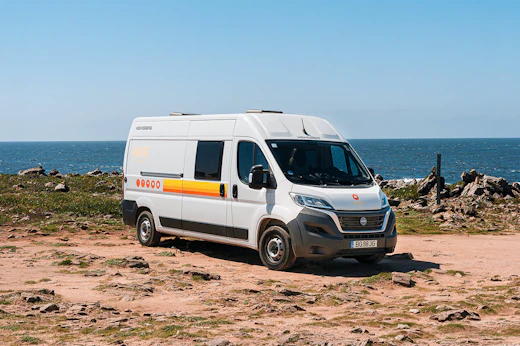
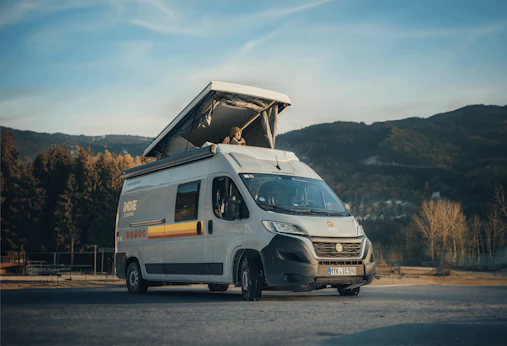
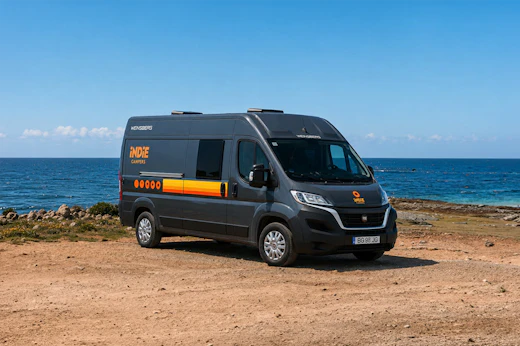
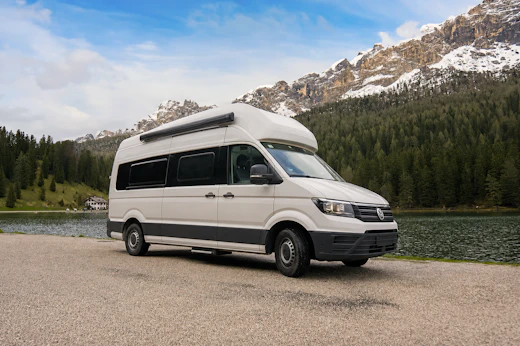
Campervans, Motorhomes & Campervans for Every Kind of Traveller




“非常方便使用,让旅途轻松惬意,吃住行一切都顺利和无烦恼,公司员工都很友善和积极配合,服务态度很好,值得推荐。”
“As Always the California is a great vehicle, in winter the internal diesel heater is fantastic, great service as always from Nelson at Fischamend ”
“Nelson y Roos lo mejor del viaje”


