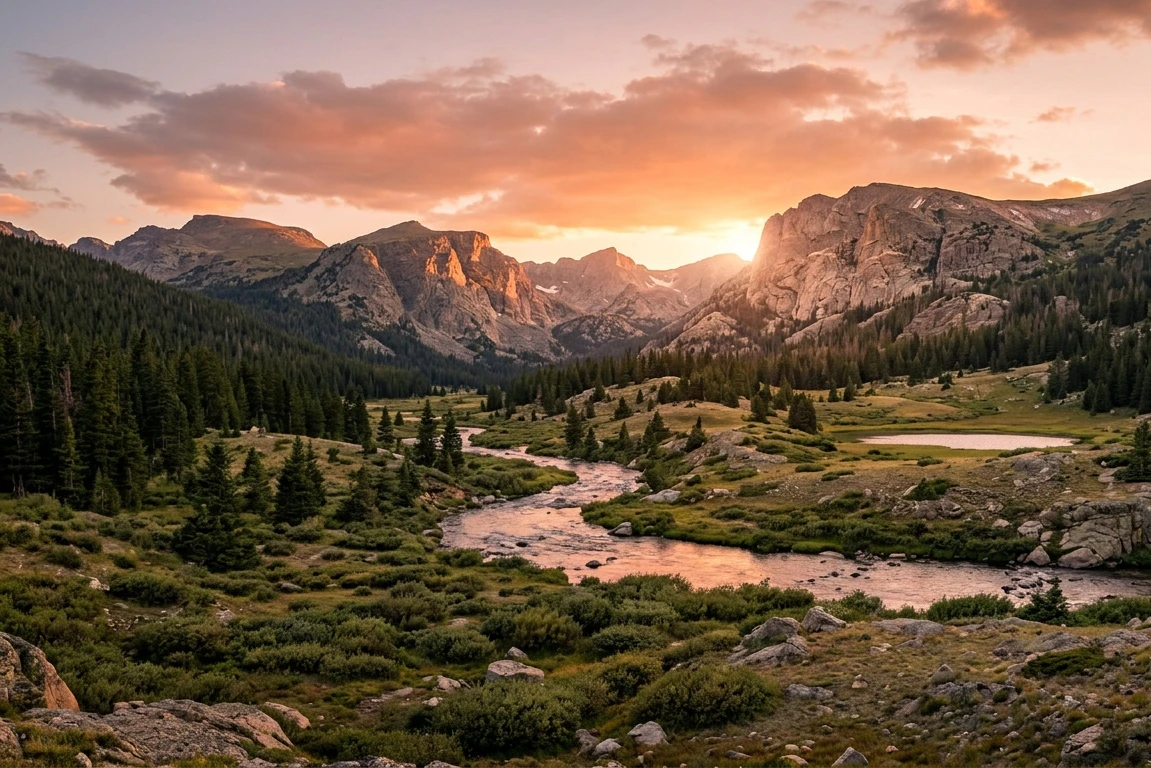
Rocky Mountain National Park crowns the Front Range above Estes Park, with Trail Ridge Road climbing past 3,658 m, Bear Lake trailheads and autumn elk in the meadows. Campgrounds such as Moraine Park, Glacier Basin and Aspenglen take campervans without hookups, and a timed-entry permit is required in summer. Indie Campers' Denver depot is only about 1.5 hours away — the closest big-city start of any park in this batch.
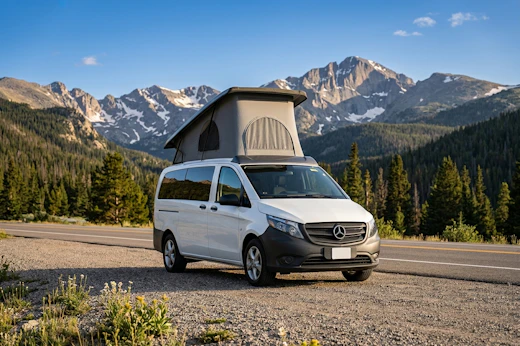
Getting the right vehicle is the first and most important decision for a trip like this. The roads here are well-maintained, but they are high. Steep. Winding. A massive Class A rig is a liability. Our fleet is chosen for this exact kind of adventure.
The Indie Campers Denver depot is just 113 km from the Beaver Meadows Entrance near Estes Park. You can pick up your keys and be setting up camp in under two hours. We focus on maneuverable, efficient campervans and compact campervans that handle mountain grades and fit into the national park’s campsites, which often have length limits around 9.14 m. Our Solis and similar models are a good fit. They are nimble enough for the switchbacks on Trail Ridge Road but comfortable enough for a week above 2,438 m. With unlimited kilometres included, you can explore both sides of the park. From Estes Park to Grand Lake. All without watching the odometer. And our 24/7 support means if you have a question at a high-altitude campground, we're there to help.
Our recommendation: A compact campervan under 7.62 m is the right tool for this park. It will fit in any campervan-designated site and make parking at popular spots like the Alpine Visitor Center far less of a headache.
While the park has over 571 km of hiking trails, its road network is what makes the vast landscapes accessible. These are the core drives you'll build your trip around.
Trail Ridge Road (U.S. Highway 34)
This is the main event. The highest continuous paved road in North America. It crests at 3,713 m, connecting Estes Park on the east side with Grand Lake on the west. Key stops include Many Parks Curve Overlook, Rainbow Curve, Forest Canyon Overlook, the Alpine Visitor Center (at 3,595 m), and Milner Pass on the Continental Divide. The drive is 77.2 km and takes at least 3-4 hours with stops. Campervans are welcome. But be prepared for steep 7% grades and high winds. The road is typically open from Memorial Day weekend until mid-October, weather permitting. Always check the NPS road status page before you go.
Bear Lake Road Corridor
This 14.8 km paved road leads to the park's most popular trailheads. It climbs from Moraine Park to the Bear Lake Trailhead, passing access to Sprague Lake, Glacier Gorge, and Bierstadt Lake. The key in a campervan? Go early. The Bear Lake car park is often full by 7:30 AM from June to September. Your best bet is to park at the large Park & Ride lot near the Glacier Basin intersection and take the free park shuttle. This road requires a separate, specific timed-entry permit (the "Bear Lake Road Corridor + Full Park Access" option) during the peak season.
Old Fall River Road
This is the park's original route to the high country. A one-way, 17.7 km gravel road that climbs steeply from the Endovalley picnic area to the Alpine Visitor Center. Campervans and trailers are strictly prohibited on this road. It's narrow. It has tight switchbacks. And no guardrails. If you have a second vehicle or want to hire a Jeep for the day in Estes Park, it's a thrilling drive. But it's not for your campervan.
Securing a campsite inside the park is the number one planning priority. It's everything. Fail here and the whole trip changes. Reservations are essential and book out months in advance, because all in-park campgrounds are dry camping only, meaning no water, sewer, or electrical hookups at any site.


Your experience in the park is dictated by when Trail Ridge Road is open. That’s it. The road is typically open from Memorial Day weekend until mid-October. Choose your timing wisely.
Summer (June to August): This is peak season for a reason. All roads are open. The weather is warmest (though still unpredictable). The high-country trails are accessible. The downside? Crowds. You must plan ahead with timed-entry permits and expect full car parks, with temperatures ranging from the 70s in the valleys down to the 40s on the tundra.
Autumn (September to October): Many consider this the best time. Why? The crowds thin out after Labour Day, the aspen trees turn a brilliant gold, and the elk rut is in full swing. Trail Ridge Road usually stays open until mid-October, making it the perfect campervan season, but be prepared for cold nights and the possibility of an early-season snowstorm.
Winter (November to April): The park transforms. It becomes a quiet, snowy wonderland. Most of Trail Ridge Road is closed, confining access to the lower elevations around Estes Park and Grand Lake. This is a time for snowshoeing and cross-country skiing. A campervan trip is possible but requires a winter-ready vehicle and a focus on the few campgrounds that remain open year-round outside the park.
Spring (May): A season of transition. Lower elevations are melting out, but the high country is still buried in snow. Plowing Trail Ridge Road is a major event, with the road typically opening on Memorial Day weekend. It's a less crowded time, but your access will be limited.
Booking a campsite is the most critical part of planning your campervan trip. Here’s how it works.
All reservable campsites (Moraine Park, Glacier Basin, Aspenglen) are booked through Recreation.gov, with prices typically between $30-$35 per night for a standard non-electric site. Reservations become available on a six-month rolling basis. This means for a July trip, you need to be online and ready to book in January. Seriously. Sites for popular weekends can sell out in minutes.
Timber Creek Campground on the west side is first-come, first-served. To get a spot in the summer, you should plan to arrive by 9 AM, especially on a weekend. Check with the rangers at a visitor centre for the most up-to-date availability.
For Full Hookups: If you need electricity, water, and sewer connections, you must camp outside the park. The gateway towns of Estes Park and Grand Lake have numerous private caravan parks.
Yes. Indie Campers’ Denver depot is only about 1.5 hours (113 km) from the Estes Park entrance — the easiest park in the region to reach by campervan.
Yes — from late May through mid-October the park requires a timed-entry permit (a separate one covers the Bear Lake Road corridor). Book on recreation.gov before you arrive.
For campervan parking during the day, arrive at trailheads and visitor centres before 9 AM. After that, lots fill up. The Park & Ride shuttle stop on Bear Lake Road is your best friend for accessing the popular trails without the parking stress.
Dump Stations and Water: Inside the park, you can find campervan dump stations with potable water at Moraine Park and Timber Creek Campgrounds (seasonal operation). There is also a dump station at the Estes Park Fairgrounds. Many private caravan parks also allow non-guests to use their dump station for a fee (typically $10-$20).
June through September, when Trail Ridge Road is open (snow-closed roughly mid-October to late May). September brings the elk rut and early gold aspens.