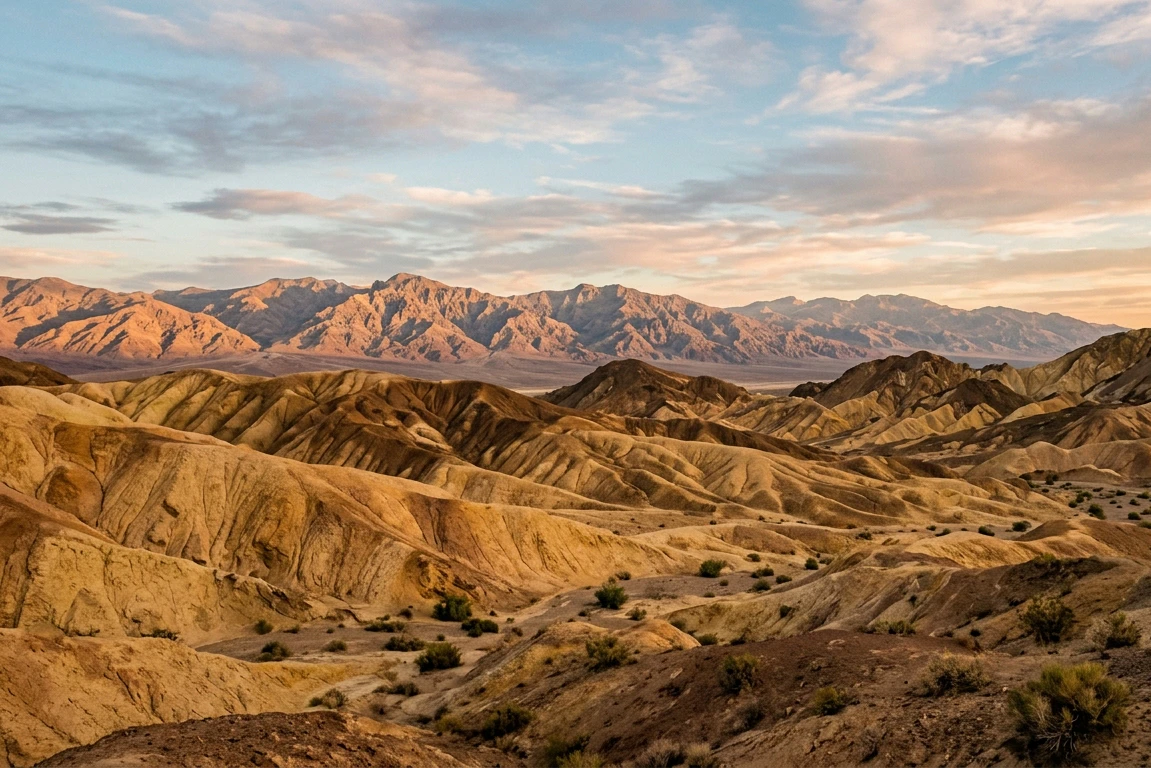
Death Valley is the largest national park in the lower 48 and the hottest, lowest place in North America — Badwater Basin sits 86 m below sea level. Furnace Creek and Sunset are the main campgrounds; Fiddlers’ Campground has hookups. Indie Campers’ Las Vegas depot is only about two hours / 193 km away, making it the easiest desert park to reach by campervan.
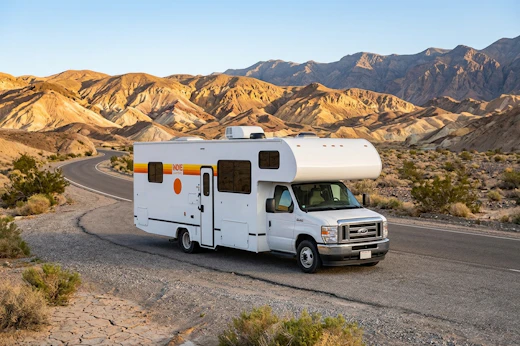
We’ve seen the hire horror stories. Old rigs breaking down in the worst possible places. In our experience, a modern, meticulously serviced fleet is the only way to tackle these conditions with confidence. The drive from our Las Vegas depot to the park entrance near Death Valley Junction is about two hours, or 193 km, making it the most common starting point for a desert loop.
Our campervans come with fresh linens, kitchen essentials, and 24/7 roadside assistance. Before you leave, we walk you through everything. How the water pump works. How to check fluids. What to do if a warning light comes on. That peace of mind matters out here.
The best campervan for Death Valley is one under 7.62 m. Period. Our Compact and Standard models are ideal. They are nimble enough for the winding, scenic Artist's Drive (which has a strict 7.62 m length limit) and easier to park at popular lots like Zabriskie Point and Dante's View. Unlimited kilometres is standard, so you can explore the park's 3.4 million acres without watching the odometer.
Death Valley’s roads are generally well-maintained. But they are remote. Seriously remote. Fuel up in Pahrump or Beatty before you even think about entering the park, because gas inside is available but painfully expensive. We're talking "take out a second mortgage" expensive. And water? Carry at least one gallon per person, per day. No exceptions.
Badwater Road (The Low Road)
Key stops: Badwater Basin, Devil's Golf Course, Artist's Palette, Golden Canyon Trailhead Approx drive time: 27.4 km from Furnace Creek to Badwater Basin; allow 3-4 hours with stops Best time to go: Early morning or late afternoon to avoid the worst heat and find parking. Campervan notes: The main road is flat. Easy. Any campervan can handle it. The turn-off for Artist's Drive, however, is a one-way, 14.5 km loop with a 7.62 m vehicle length restriction. Do not attempt it in a larger rig. The parking at Badwater Basin is large but it can fill up fast, so arriving before 10 am is your best bet.
CA-190 (The Main Artery)
Key stops: Zabriskie Point, Furnace Creek Visitor Center, Mesquite Flat Sand Dunes, Stovepipe Wells Approx drive time: Spans the park east-to-west; Furnace Creek to Stovepipe Wells is about 30 minutes (38.6 km). Best time to go: Sunrise at Zabriskie Point or sunset at the Mesquite Dunes are classic, and for good reason. Campervan notes: This is the park's main paved road, suitable for all campervans. The car park at Zabriskie Point, however, is on a hill and can be tight. The solution? Arrive early. The dunes have a huge parking area right off the highway, making it one of the easiest stops for any size rig.
Dante's View Road (The High Road)
Key stops: The panoramic viewpoint of the entire valley from 1,669 m. Approx drive time: 20.9 km off CA-190; about 30 minutes each way. Best time to go: Sunrise or just before sunset for incredible light across the valley floor. Campervan notes: The final section of this road is steep. And winding. The
Don't even think about it. Overnighting in a car park or on the roadside is strictly prohibited inside the national park. You must stay in a designated campground. For the October-to-April high season, reservations are essential and can be made up to six months in advance on Recreation.gov.


This is not a suggestion. It's a rule. Avoid summer in a campervan. The extreme heat is dangerous for you and brutally hard on your vehicle's engine, tyres, and cooling systems. Seriously. Trying to run a campervan air conditioner when it's 51.7 °C outside is a battle you will lose. Every single time.
Fall (October to November): The heat finally subsides. Daytime highs drop into the 80s and 90s. The massive crowds haven't arrived yet, which makes this a fantastic time to visit. All park roads and campgrounds are typically open.
Winter (December to February): This is peak season. For good reason. Daytime temperatures are perfect, usually in the 60s and 70s, though the nights get cold and can easily dip below freezing. Campgrounds will be full. You must book far in advance. This is the absolute ideal time for hiking and exploring the valley floor.
Spring (March to April): Temperatures are still pleasant. This is your best chance to see wildflowers. It's also incredibly busy, especially around spring break, so be prepared for company. By late April, the heat is already building again. The comfortable season is ending.
Booking a spot for your campervan in Death Valley requires planning. We're talking serious planning, especially during the October-to-April peak season. Here's the breakdown.
Reservations vs. First-Come, First-Served
Waste Disposal and Water
Yes. Indie Campers’ Las Vegas depot is about 2 hours (193 km) from the park — the closest and most popular start — and Los Angeles is about 4 hours from the western side.
Yes, on the paved roads, but plan around the heat: carry extra water and coolant, fuel up before entering, and avoid steep spur roads like Dante’s View and Artist’s Drive with large campervans (Artist’s Drive bans vehicles over 7.62 m).
Scotty's Castle & Ubehebe Crater (North End)
Key stops: Ubehebe Crater, a massive volcanic crater you can walk around. Approx drive time: About 1.5 hours north of Furnace Creek. Campervan notes: The road to Ubehebe Crater is paved. It's accessible. Easy. Scotty's Castle, however, has been closed due to flood damage for years, with a reopening tentatively planned for late 2026 so you must always check the NPS website for the latest status before making the long drive. This area is remote. Have a full tank of gas.
Fiddlers’ Campground at The Ranch at Death Valley has full hookups. Furnace Creek (reservable) and first-come Sunset and Stovepipe Wells take campervans without hookups; a dump station is at Furnace Creek.
November through March. Summer temperatures routinely top 48.9 °C, which is dangerous and hard on campervan cooling systems; the cooler months are ideal for Badwater, the dunes and the canyons.