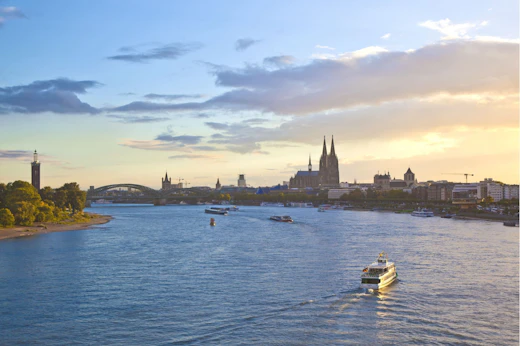
Arriving in Cologne, history buffs and culture vultures won’t believe their luck. The city offers a mega medley of attractions, especially on the museum front. But visitors mainly come here for the cathedral. Because this one’s a big deal.
Seriously ornate architecture, two iconic spires, and 533 steps to the top. And then there’s the rest of the city. Light hearted and high spirited, Cologne knows how to live well, as you’ll see if you time your visit with the city’s uproariously fun carnival.
What else does the first stop on your West Germany road trip itinerary have to offer? Well there’s Museum Ludwig with its enormous art collection. Then perhaps treat yourself to a show at the Kölner Philharmonie. Or the Rheinpark hosts outdoor concerts if you prefer your music standing up and sweaty.
Be sure to try Kölsch, a hoppy beer drunk in tall glasses known as Stangen. Pair with Kölsche Kaviar, a type of sausage, or Hämmche, pig’s trotter. Apologies in advance to the vegetarians.

Koblenz is a 2000-year-old city in the UNESCO-listed Upper Middle Rhine Valley. It sits at the confluence of the Moselle and Rhine and is best known for the monument at Deutsches Eck or "German Corner".
The whole city is a testament to unified Germany, showing off some of the country’s most renowned attractions from riverfront promenades to castles to regional Rhine-Moselle wine.
Though it may seem small, Koblenz has a lot to offer visitors. An 11th-century fortress offers spectacular views of the city and the area is dotted with picturesque squares and awesome churches.
The city is also a great base for exploring the Rhine River castles and the Moselle with its picturesque vineyards and villages. Whether you’re into good food or great sights, there’s something for everyone at Koblenz.
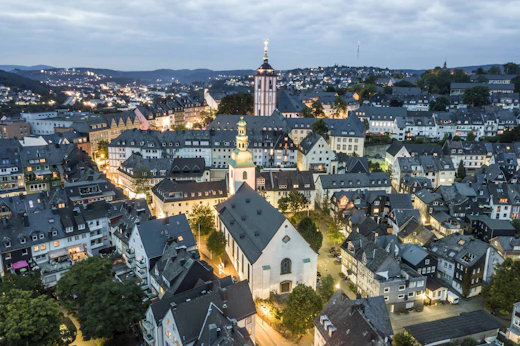
Siegen is located in the south Westphalian part of North Rhine-Westphalia in the district of Siegen-Wittgenstein in the Arnsberg region. It’s the birthplace of the world-renowned Baroque painter, Peter Paul Rubens. As a result, the city is often nicknamed the “Rubens City”.
Though not as popular as other German cities, Siegen is nonetheless a beautiful upcoming tourist destination that’s worth a visit. It has a range of unique things to do and places you can explore including museums, galleries, and even an abandoned mine.
A university city, its inhabitants are a mix of young and old. They all have one thing in common though: they’re incredibly friendly.
If you’re looking for a smaller German city to explore off the beaten track you can’t go past Siegen.

Düsseldorf, in western Germany, is known for its art scene and fashion industry. Divided by the Rhine River, its Altstadt (Old Town) is on the east bank while the west is taken up by modern commercial areas.
A highly-regarded university town, it’s a city of wide streets lined with elegant shops with a ring of gardens and parks surrounding its happening downtown area.
Visitors to the city can experience its stunning old-world architecture, incredible museums, lush inner-city greenery, and Europe’s most luxurious shopping street. The city is also a great base for exploring the surroundings including the Rhine and all its picturesque castles and villages.
Whether you’re looking for great shopping or want to explore some culturally significant museums, you’ll find something for you in this vibrant German city.